

Free Serranía del Perijá Travel Guide & Mobile App
Explore Serranía del Perijá with free travel guides. Discover regional history, expert tips, proposed trips, and audio guides on web or mobile app.


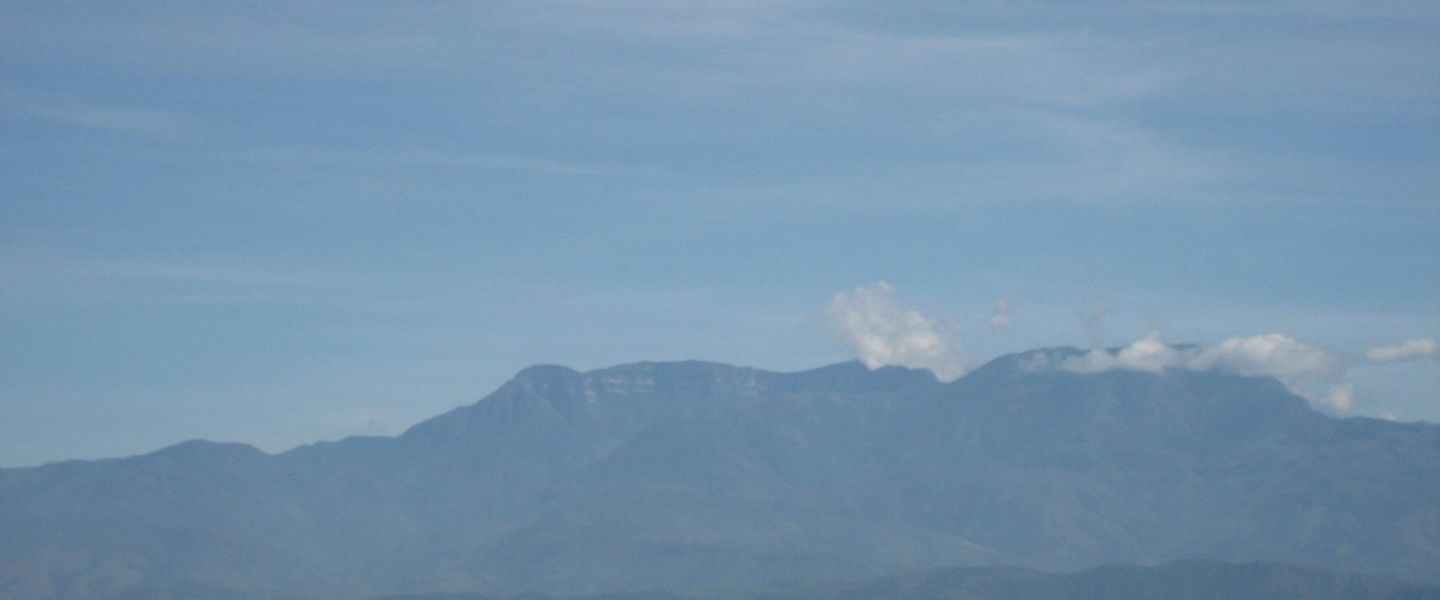


Explore Serranía del Perijá in Colombia through mountain forests, páramo landscapes, Indigenous heritage and the foothill towns of Cesar and La Guajira.
Read more about Serranía del Perijá
When is the best time to visit Serranía del Perijá?
Best: December–February · 28°C| Month | High (°C) | Rainfall (mm) |
|---|---|---|
| January (best) | 28 | 60 |
| February (best) | 28 | 60 |
| March | 29 | 70 |
| April | 29 | 80 |
| May | 30 | 100 |
| June | 30 | 120 |
| July | 31 | 120 |
| August | 31 | 120 |
| September | 30 | 120 |
| October | 30 | 110 |
| November | 29 | 90 |
| December (best) | 28 | 70 |
Getting to and around Serranía del Perijá
How to get there
Transportation
Best attractions in Serranía del Perijá
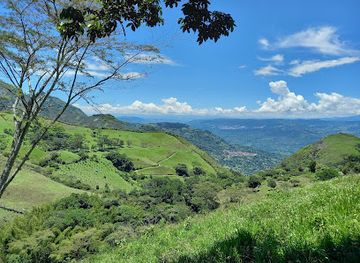
The Serranía del Perijá offers a landscape-based form of travel rather than a dense collection of ticketed attractions. Its main appeal lies in the progression from hot dry forest and cultivated foothills to humid mountain forest, high grasslands and páramo environments. Routes from Manaure Balcón del Cesar and other western foothill towns lead towards streams, viewpoints, farms and walking areas, although access is often local, informal and dependent on weather and land permissions. Birdwatching is especially rewarding for visitors prepared to move slowly and use an experienced guide. The uplands around the Perijá and La Guajira sectors are ecologically important, but should not be entered independently. Town visits add context through markets, churches, food stalls and conversations about farming, water and Indigenous life. In the southern and central foothills, the contrast between mountain scenery and the coal-producing plain provides an opportunity to understand the region’s environmental and economic tensions. Sustainable rural tourism, community-led excursions and carefully planned day walks are more appropriate here than hurried sightseeing.
-
Park
Parque Arví
Escape to Parque Arví: Discover Medellín's vast ecological park with hiking, nature, and cultural experiences in the mountains.
-
Park
El Gallineral Natural Park
Discover a moss-draped paradise in San Gil's El Gallineral Natural Park, where ancient trees and tranquil pathways create a unique natural escape.
-
Serviced accommodation
Chicaque Natural Park
Escape to Chicaque Natural Park: Hike, explore, and discover the breathtaking beauty of Colombia's cloud forest, just minutes from Bogotá.
-
National park
Serranía De Los Yariguíes National Natural Park
Discover Colombia's hidden gem: Serranía De Los Yariguíes National Park. Hike, explore diverse ecosystems, and immerse yourself in rich biodiversity.
Best landmarks in Serranía del Perijá
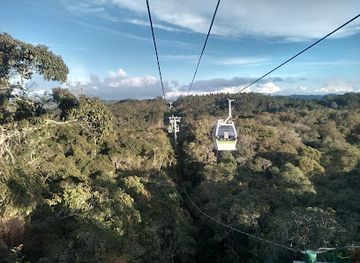
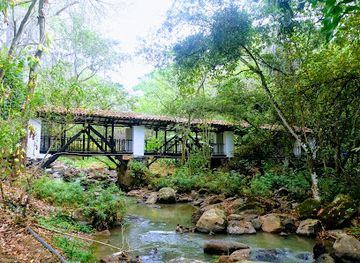
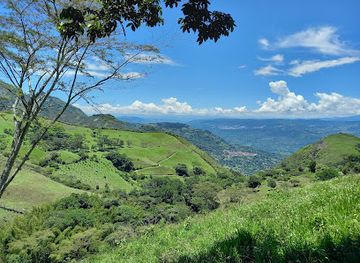
The defining landmark of the region is the Serranía del Perijá itself: a long mountain wall whose forested slopes and high, often cloud-covered ridges rise dramatically above the Cesar valley and continue towards the Venezuelan frontier. Cerro Pintao, reached from the Manaure area, is associated with highland walking and broad views over the surrounding landscape, though conditions and access should be checked locally. The upper páramo and wetland environments, including the Sabana Rubia sector in the northern Perijá, are important natural reference points because they regulate water and support specialised high-elevation vegetation. The mountain foothills also contain a succession of rural roads, streams and cultivated slopes that reveal the transition from Caribbean lowlands to upland ecosystems. In the towns, modest churches, plazas and civic buildings are useful cultural landmarks, but their significance is local rather than monumental. The most meaningful human landmarks are often Indigenous territories, farms and community spaces, which visitors should approach only with permission and appropriate guidance.
-
Historical landmark
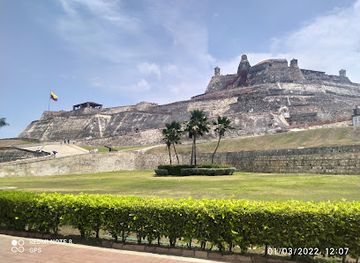
San Felipe de Barajas Fort
Explore the majestic San Felipe de Barajas Fort, a historical landmark in Cartagena, Colombia, offering breathtaking views and rich colonial history.
-
National park
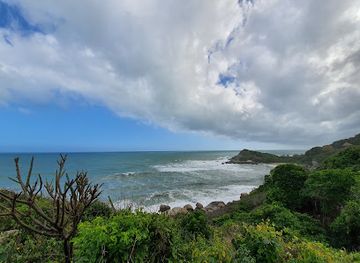
Parque Nacional Natural Tayrona
Explore the pristine beaches and rich biodiversity of Parque Nacional Natural Tayrona, a must-visit national park on Colombia's Caribbean coast.
-
National park
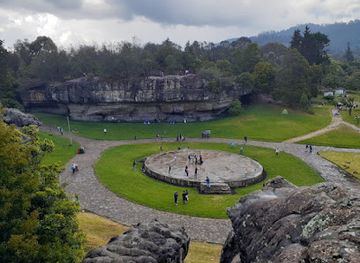
Piedras del Tunjo Archaeological Park
Discover the ancient petroglyphs and stunning landscapes at Piedras del Tunjo Archaeological Park, a must-visit destination in Cundinamarca, Colombia.
-
National park
Serranía De Los Yariguíes National Natural Park
Explore the breathtaking beauty and biodiversity of Serranía De Los Yariguíes National Natural Park, a true gem in Colombia's Santander region.
Explore Serranía del Perijá on the map
Plan your trip on one map. See where the top cities, national parks and sights are, and book hotels and experiences in a few clicks.
Best hotels in Serranía del Perijá
Best restaurants in Serranía del Perijá
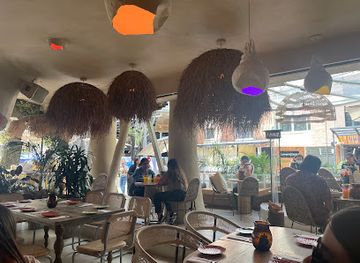
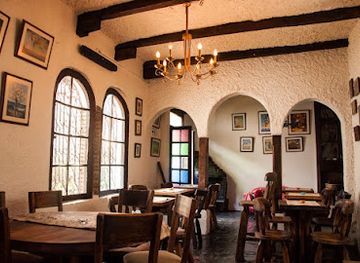
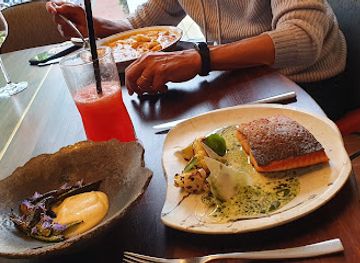
Food in the Perijá foothills reflects the meeting of Colombian Caribbean, interior and borderland traditions rather than a narrowly defined mountain cuisine. Town restaurants and roadside kitchens commonly serve arepas, rice, beans, grilled or stewed meat, chicken, plantain, cassava and soups, with tropical fruit and fresh juices varying by season. In farming areas, simple meals may feature locally grown maize, yucca, beans or plantains, while strong Colombian coffee is useful in the cooler uplands. Valledupar and the larger towns outside the range offer a wider choice of restaurants, but smaller foothill communities are better for informal, locally prepared food. Markets are practical places to find fruit, baked goods and regional snacks before a rural excursion. Visitors should carry supplies when heading towards remote trails, as cafés and restaurants cannot be assumed beyond the main settlements. Food traditions are shared with the wider Cesar and Caribbean region, so claims that a particular dish originated specifically in the Serranía del Perijá should be treated cautiously.
-
Restaurant
Malaflor
Experience authentic Colombian flavors at Malaflor, where tradition meets modernity in every delicious bite.
-
Restaurant
El Gato Gris
Discover El Gato Gris: A vibrant restaurant in La Candelaria offering delicious Colombian cuisine and an inviting atmosphere perfect for tourists.
-
Restaurant
Criterión
Discover Criterión in Bogotá: where Colombian heritage meets modern culinary artistry for an unforgettable dining experience.
-
Asian
Osaki Artisan
Discover the vibrant fusion of Asian flavors at Osaki Artisan in Bogotá's Zona G - where every meal is an unforgettable experience.
Best bars in Serranía del Perijá
Evening life in the Serranía del Perijá is concentrated in foothill towns rather than in the mountains themselves. Local bars, small restaurants and cafés provide the principal social settings, with music and conversation more prominent than a purpose-built club scene. In larger nearby centres such as Valledupar, visitors will find a broader selection of bars and venues associated with vallenato, a major musical tradition of the Cesar and wider Caribbean region. Smaller communities may have modest dancing and live-music options at weekends or during local celebrations, but opening arrangements and venues change. Rural accommodation generally offers quiet evenings, early starts and views of the night sky rather than nightlife. Drink responsibly, arrange transport before travelling after dark and avoid assuming that an isolated rural bar is a suitable route stop. The region’s evening culture is best understood through local food, music and community life, not through a search for a large nightclub district.
-
Live music bar
Gaira Café Cumbia House
Discover the vibrant rhythms of Gaira Café Cumbia House, where live music meets delicious Colombian cuisine in an unforgettable atmosphere.
-
Bar
Alquimico
Discover the vibrant nightlife of Cartagena at Alquimico, where innovative cocktails meet a lively atmosphere for an unforgettable experience.
-
Bar
Café Havana
Experience the vibrant atmosphere of Café Havana, where Caribbean cuisine meets live Latin music in the heart of Cartagena's nightlife.
-
Bar
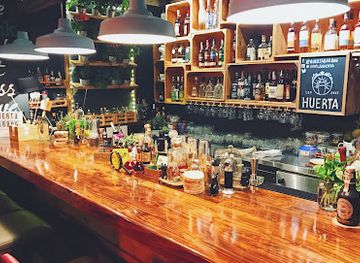
Huerta Coctelería Artesanal
Discover Huerta Coctelería Artesanal, Bogotá's premier cocktail bar blending unique flavors with a health-conscious twist for an unforgettable night out.
Best nightclubs in Serranía del Perijá
Evening life in the Serranía del Perijá is concentrated in foothill towns rather than in the mountains themselves. Local bars, small restaurants and cafés provide the principal social settings, with music and conversation more prominent than a purpose-built club scene. In larger nearby centres such as Valledupar, visitors will find a broader selection of bars and venues associated with vallenato, a major musical tradition of the Cesar and wider Caribbean region. Smaller communities may have modest dancing and live-music options at weekends or during local celebrations, but opening arrangements and venues change. Rural accommodation generally offers quiet evenings, early starts and views of the night sky rather than nightlife. Drink responsibly, arrange transport before travelling after dark and avoid assuming that an isolated rural bar is a suitable route stop. The region’s evening culture is best understood through local food, music and community life, not through a search for a large nightclub district.
-
Night club
THEATRON
Discover the heart of Bogotá's nightlife at Theatron, a vibrant nightclub with diverse music and an inclusive atmosphere for unforgettable evenings.
-
Disco club
Disco Jaguar
Discover the energetic nightlife of Bogotá at Disco Jaguar, where music, dance, and vibrant crowds create unforgettable experiences.
-
Disco club
Bar La Santa Club
Dive into Bogotá's nightlife at Bar La Santa Club, an electrifying disco experience with lively music and signature cocktails.
-
Disco club
Paradaise Natural Party
Discover Bogotá's nightlife at Paradaise Natural Party, where vibrant music and thrilling dance unite for an unforgettable experience.


Best shops in Serranía del Perijá
Shopping in the Serranía del Perijá is practical and dispersed, with small town centres, market stalls, bakeries and roadside produce sellers serving local communities rather than a concentrated tourist retail district. In foothill towns, visitors can buy fruit, cassava, plantains, arepas, coffee and other provisions for mountain excursions, while larger markets provide a wider selection of household goods and regional foods. Handicrafts and textiles may be available through Indigenous or community organisations, but they should be purchased directly and respectfully, without assuming that every item is offered for public sale or represents a single Perijá tradition. Valledupar, outside the mountain range, has the broadest choice of shops and is a convenient place to obtain equipment, medicines and cash before travelling into rural areas. Souvenirs are best chosen from locally made food products or responsibly sourced crafts, and visitors should never buy archaeological objects, wildlife products, plants or materials taken from protected landscapes.
-
Shopping mall
Andino
Explore Andino, Bogotá's top shopping mall, featuring luxury brands, local boutiques, and delightful dining options in a vibrant atmosphere.
-
Shopping mall
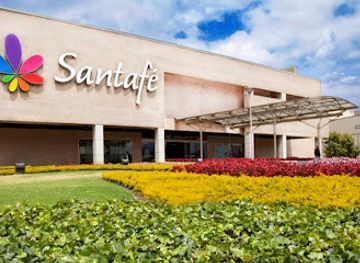
Santafé Mall
Experience the best of shopping, dining, and entertainment at Santafé Mall, Bogotá's premier retail destination with something for everyone.
-
Shopping mall
Parque La Colina Shopping Mall
Discover the shopping haven of Parque La Colina in Bogotá, where culture, dining, and entertainment come together for an unforgettable experience.
-
Shopping mall
Hacienda Santa Barbara Mall
Discover the charm of shopping at Hacienda Santa Barbara Mall, where local flair meets global brands in Bogotá's scenic Usaquén district.

Get your free copy of our complete guide to Serranía del Perijá, delivered straight to you.
Everything on this page, from attractions and restaurants to essentials and local phrases, in one PDF you can read offline, print or share.
Already have an account? Sign in
Your Serranía del Perijá guide is ready.
We'll send it to · Not you? Sign out

Getting your guide ready…
We are putting together a fresh copy of the Serranía del Perijá guide. This can take up to a minute.
This can take a few moments. If your browser asks, choose Allow so the download can start. You'll find the guide in your Downloads folder.
Nothing happened? Download it again
Sorry, the guide is taking longer than usual. Please try again in a minute, or get it by email instead.
Serranía del Perijá essentials
Currency and Payment
Safety
Emergency Situations
Do's and Don'ts
Local Tips
From Eve
Local phrases worth knowing
You don't need to get them perfect. A few words go a long way, and locals appreciate the effort.
Basics
| English | Local | Say it |
|---|---|---|
| Hello | Hola | [Ola] |
| Goodbye | Adiós | [A-dios] |
| Yes | Sí | [Si] |
| No | No | [No] |
| Please/You're welcome | Por favor/De nada | [Por fa-vor/De na-da] |
| Thank you | Gracias | [Gra-sias] |
| Excuse me/Sorry | Disculpe/Siento | [Dis-cul-pe/Sien-to] |
| How are you? | ¿Cómo estás? | [Ko-mo es-tas] |
| Fine. And you? | Bien. ¿Y tú? | [Bien. I tu] |
| Do you speak English? | ¿Hablas inglés? | [A-blas in-gle-s] |
| I don't understand | No entiendo | [No en-tien-do] |
Eating & Drinking
| English | Local | Say it |
|---|---|---|
| I'd like to see the menu, please | Me gustaría ver el menú, por favor | [Me gus-ta-ria ver el me-nu, por fa-vor] |
| I don't eat meat | No como carne | [No co-mo car-ne] |
| Cheers! | ¡Salud! | [Sa-lud] |
| I would like to pay, please | Me gustaría pagar, por favor | [Me gus-ta-ria pa-gar, por fa-vor] |
Emergencies
| English | Local | Say it |
|---|---|---|
| Help! | ¡Ayuda! | [A-yu-da] |
| Go away! | ¡Vete! | [Ve-te] |
| Call the Police! | ¡Llama a la policía! | [Ya-ma a la po-li-cia] |
| Call a doctor! | ¡Llama a un doctor! | [Ya-ma a un doc-tor] |
| I'm lost | Estoy perdido | [Es-toy per-di-do] |
| I'm ill | Estoy enfermo | [Es-toy en-fer-mo] |
Shopping
| English | Local | Say it |
|---|---|---|
| I'd like to buy... | Me gustaría comprar... | [Me gus-ta-ria com-prar] |
| I'm just looking | Solo estoy mirando | [So-lo es-toy mi-ran-do] |
| How much is it? | ¿Cuánto cuesta? | [Kuan-to cues-ta] |
| That's too expensive | Eso es muy caro | [E-so es mui ca-ro] |
| Can you lower the price? | ¿Puedes bajar el precio? | [Pue-des ba-har el pre-cio] |
Time & Numbers
| English | Local | Say it |
|---|---|---|
| What time is it? | ¿Qué hora es? | [Ke o-ra es] |
| It's one o'clock | Es la una | [Es la u-na] |
| Half past (10) | Diez y media | [Diez i me-dia] |
| Morning | Mañana | [Ma-nya-na] |
| Afternoon | Tarde | [Tar-de] |
| Evening | Noche | [No-che] |
| Yesterday | Ayer | [A-yer] |
| Today | Hoy | [Oi] |
| Tomorrow | Mañana | [Ma-nya-na] |
| 1 | Uno | [U-no] |
| 2 | Dos | [Dos] |
| 3 | Tres | [Tres] |
| 4 | Cuatro | [Cua-tro] |
| 5 | Cinco | [Cin-co] |
| 6 | Seis | [Seis] |
| 7 | Siete | [Sie-te] |
| 8 | Ocho | [O-cho] |
| 9 | Nueve | [Nue-ve] |
| 10 | Diez | [Diez] |
Transport & Directions
| English | Local | Say it |
|---|---|---|
| Where's a/the...? | ¿Dónde está un/una...? | [Don-de es-ta un/u-na] |
| What's the address? | ¿Cuál es la dirección? | [Kual es la di-rec-ción] |
| Can you show me (on the map)? | ¿Puedes mostrarme (en el mapa)? | [Pue-des mos-trar-me (en el ma-pa)] |
| When's the next (bus)? | ¿Cuándo sale el próximo (bus)? | [Kuan-do sa-le el pro-xi-mo (bus)] |
| A ticket (to ....) | Un boleto (a ....) | [Un bo-le-to (a ....)] |
History of Serranía del Perijá
Indigenous Perijá communities before European rule
The mountains and their western foothills have long been inhabited and used by Indigenous peoples, particularly the Yukpa, whose territories extend across the Colombian-Venezuelan borderlands. Their knowledge of seasonal water, forest resources and mountain routes predates the modern national boundary. The Barí are associated with the southern reaches of the broader Perijá system and neighbouring Catatumbo, while the range has also been connected to wider networks of exchange across the Caribbean interior. Indigenous presence remains a living part of the region, not simply an archaeological legacy, and contemporary travel must respect territorial rights and community decisions.
Colonial frontier and mountain-valley exchange
During the Spanish colonial period, the Perijá range formed a difficult frontier between settled lowland centres, Indigenous territories and routes towards the Venezuelan side. Colonial expansion was strongest in the valleys and foothills, where agriculture, livestock and religious missions sought to extend control over movement and land. The mountains themselves remained comparatively hard to administer. This history helped produce the region’s enduring pattern of dispersed settlements, seasonal movement and economic links between warm valley communities and cooler upland farms.
Cattle, agriculture and the formation of Cesar
After Colombian independence, the western side of the range became increasingly tied to the agricultural economy of the Cesar lowlands. Cattle raising, maize, beans, cassava, plantains and other crops linked foothill settlements with market towns, while roads gradually replaced older mule and river routes. The creation of the Department of Cesar in the twentieth century strengthened the administrative importance of towns such as Codazzi, Becerril, La Jagua de Ibirico and Manaure. The resulting landscape combined ranches and small farms with forests, Indigenous territories and increasingly pressured water catchments.
Coal mining and regional transformation
Large-scale coal extraction expanded across the Cesar basin from the late twentieth century, particularly around La Jagua de Ibirico and neighbouring mining municipalities west of the mountain foothills. Mining brought roads, employment and public revenue, but also altered land use and intensified debates about water, air quality, resettlement and the distribution of economic benefits. Although the principal mines are in the valley rather than on the high crest of the Serranía, their social and environmental effects are central to understanding the modern region and the pressures facing its rivers and forests.
Armed conflict and rural displacement
The wider Cesar and La Guajira borderlands experienced armed conflict, illegal economies, forced displacement and disputes over land during the late twentieth and early twenty-first centuries. Mountainous terrain, weak state presence and cross-border geography made parts of the Perijá particularly vulnerable. Indigenous and rural communities suffered serious disruption, while many families moved towards towns in search of security and services. The peace process changed the security context in some areas, but conditions can still vary by municipality and route; visitors should obtain current local advice before travelling into remote zones.
Conservation and Indigenous territorial stewardship
In recent decades, attention has increasingly focused on the Serranía del Perijá as a corridor of forests, headwaters and high-elevation ecosystems linking the Colombian Caribbean with the Andes and Venezuelan borderlands. Community organisations, Indigenous authorities, environmental institutions and researchers have worked to protect water sources and habitats affected by deforestation, fires, farming and mining-related pressures. Conservation is not separate from local history: it depends on land rights, rural livelihoods and Indigenous governance as well as formal environmental measures. The current story of the range is therefore one of environmental recovery, negotiation and continuing pressure.
Serranía del Perijá in Photos
Browse through our photo collection highlighting the charm and character of the destination.
Neighbouring regions of Serranía del Perijá
The closest regions to Serranía del Perijá, if you have time for more than one.
-

-

-

-

-


Swipe for more regions
Explore more

Explore more of Colombia
Discover Colombia: A land of diverse beauty, rich heritage, and vibrant culture, offering everything from bustling cities to serene coffee plantations and stunning national parks.
Explore Colombia