

Ski Sundown Travel Guide - Free Web & App
Your ultimate guide to Ski Sundown. Discover top landmarks, proposed trips, and local tips. Free on the web or via the Evendo companion app.


Ski Sundown in Connecticut offers night skiing, family-friendly slopes, snowmaking and access to the forests, villages and winter trails of Litchfield County.
A Compact Mountain Setting
Ski Sundown is a winter sports area on Ratlum Road in New Hartford, north-western Connecticut, set among the wooded hills of the Litchfield region. Rather than a large resort village, it is a focused ski centre where everything is organised around the mountain: lift-served slopes, a base lodge, lessons, equipment services and a substantial snowmaking system. The compact scale makes it particularly approachable for day visitors from across Connecticut and neighbouring parts of New York and Massachusetts.Read more about Ski Sundown
Slopes After Dark
The Wider Litchfield Landscape
When is the best time to visit Ski Sundown?
Best: June, August–September · 23–27°C| Month | High (°C) | Rainfall (mm) |
|---|---|---|
| January | 1 | 80 |
| February | 3 | 75 |
| March | 8 | 87 |
| April | 15 | 96 |
| May | 20 | 99 |
| June (best) | 25 | 102 |
| July | 28 | 102 |
| August (best) | 27 | 107 |
| September (best) | 23 | 95 |
| October | 16 | 96 |
| November | 10 | 94 |
| December | 3 | 92 |
Getting to and around Ski Sundown
How to get there
Transportation
Best attractions in Ski Sundown
-
Tourist attraction
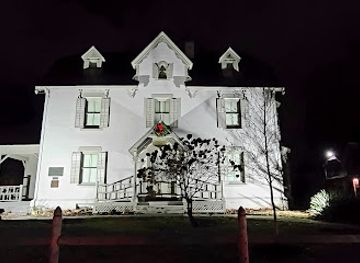
Harriet Beecher Stowe Center
Visit the Harriet Beecher Stowe Center in Hartford, CT, to explore the legacy of the iconic author and her impact on American history and social justice.
-
State park
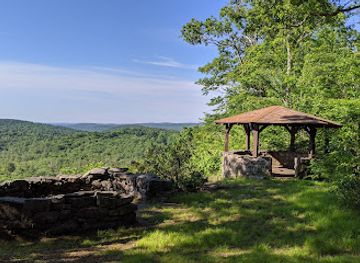
Dennis Hill State Park
Explore the breathtaking landscapes and serene trails of Dennis Hill State Park, a natural gem in Connecticut perfect for outdoor enthusiasts.
Explore Ski Sundown on the map
Plan your trip on one map. See where the top attractions, landmarks, restaurants and hotels are, and book hotels and experiences in a few clicks.
Best hotels in Ski Sundown
Best shops in Ski Sundown
Shopping at Ski Sundown is practical and activity-led rather than extensive. The mountain’s own retail and rental services support skiing and snowboarding, while visitors can find provisions and everyday essentials in New Hartford and neighbouring communities. Specialist outdoor equipment and a larger range of general retail are more likely in Torrington, Waterbury or other regional centres than in the immediate rural surroundings. The Litchfield Hills are also associated with farm shops, seasonal produce, local food products, antiques and independent makers, although businesses and markets vary by location and season. Visitors seeking distinctive purchases should look for Connecticut-made food, small-scale arts and crafts, and goods connected with the area’s rural heritage rather than expecting a dedicated shopping street. Opening arrangements can differ considerably outside urban centres, so shopping is best combined with a planned visit to a nearby town rather than left until after a late ski session.
-
Ski resort
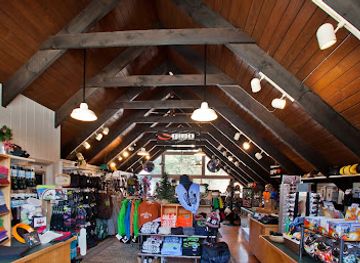
Ski Sundown
Experience the thrill of winter sports at Ski Sundown, Connecticut's top ski resort, offering diverse terrain and breathtaking views for all skill levels.
Get your free copy of our complete guide to Ski Sundown, delivered straight to you.
Everything on this page, from attractions and restaurants to essentials and local phrases, in one PDF you can read offline, print or share.
Already have an account? Sign in
Your Ski Sundown guide is ready.
We'll send it to · Not you? Sign out

Getting your guide ready…
We are putting together a fresh copy of the Ski Sundown guide. This can take up to a minute.
This can take a few moments. If your browser asks, choose Allow so the download can start. You'll find the guide in your Downloads folder.
Nothing happened? Download it again
Sorry, the guide is taking longer than usual. Please try again in a minute, or get it by email instead.
Ski Sundown essentials
Currency and Payment
Safety
Emergency Situations
Do's and Don'ts
Local Tips
From Eve
Local phrases worth knowing
You don't need to get them perfect. A few words go a long way, and locals appreciate the effort.
Basics
| English | Local | Say it |
|---|---|---|
| Hello | Howdy | [haw-dee] |
| Goodbye | See ya | [see yah] |
| Yes | Yup | [yup] |
| No | Nah | [nah] |
| Please/You're welcome | Sure thing | [s-urr th-ih-ng] |
| Thank you | Thanks a bunch | [th-anks ah b-uhnch] |
| Excuse me/Sorry | Pardon me | [p-ahr-dn mee] |
| How are you? | How's it going? | [h-owz ih-t g-oh-ing?] |
| Fine. And you? | Doing good. You? | [d-oh-ing g-uh-d. y-oo?] |
| Do you speak English? | You speak English? | [y-oo sp-ee-k ih-ng-g-lish?] |
| I don't understand | I'm lost | [ah-m l-oh-st] |
Eating & Drinking
| English | Local | Say it |
|---|---|---|
| I'd like to see the menu, please | Can I check out the grub, please? | [k-ahn ah ch-eh-k owt th-uh gr-uh-b, p-leez?] |
| I don't eat meat | No meat for me | [noh meet f-er mee] |
| Cheers! | Cheers! | [chee-rz!] |
| I would like to pay, please | Time to settle up, please | [t-ih-m t-oo s-eh-t-l ah-p, p-leez] |
Emergencies
| English | Local | Say it |
|---|---|---|
| Help! | SOS! | [ess-oh-ess!] |
| Go away! | Beat it! | [bee-t ih-t!] |
| Call the Police! | Get the cops! | [g-eh-t th-uh k-ah-ps!] |
| Call a doctor! | Call the doc! | [k-ahl th-uh d-ah-k!] |
| I'm lost | I'm lost | [ah-m l-oh-st] |
| I'm ill | Feeling rough | [f-ee-l-ih-ng r-uh-f] |
Shopping
| English | Local | Say it |
|---|---|---|
| I'd like to buy... | Gimme... | [g-ih-mm-ee] |
| I'm just looking | Just browsing | [j-uh-st br-ow-zing] |
| How much is it? | What's the damage? | [wh-ah-ts th-uh d-ah-m-ih-dge?] |
| That's too expensive | Pricey! | [pr-ai-s-ee!] |
| Can you lower the price? | Can you cut the cost? | [k-ahn y-oo k-uh-t th-uh k-oh-st?] |
Time & Numbers
| English | Local | Say it |
|---|---|---|
| What time is it? | What's the time? | [wh-ah-ts th-uh t-ih-m?] |
| It's one o'clock | It's one | [ih-ts w-uhn] |
| Half past (10) | Ten thirty | [t-eh-n th-uh-r-tee] |
| Morning | AM | [ey-em] |
| Afternoon | PM | [pee-em] |
| Evening | Evening | [ee-vee-ning] |
| Yesterday | Yesterday | [y-eh-st-er-day] |
| Today | Today | [t-uh-day] |
| Tomorrow | Tomorrow | [t-uh-m-oh-row] |
| 1 | One | [w-uhn] |
| 2 | Two | [t-oo] |
| 3 | Three | [th-ree] |
| 4 | Four | [f-oh-r] |
| 5 | Five | [f-eye-v] |
| 6 | Six | [s-ih-ks] |
| 7 | Seven | [s-eh-v-eh-n] |
| 8 | Eight | [ey-t] |
| 9 | Nine | [n-ai-n] |
| 10 | Ten | [t-eh-n] |
Transport & Directions
| English | Local | Say it |
|---|---|---|
| Where's a/the...? | Where's the... | [wh-ehr-s th-uh] |
| What's the address? | What's the addy? | [wh-ah-ts th-uh a-d-eh] |
| Can you show me (on the map)? | Can you point it out (on the map)? | [k-ahn y-oo po-int ih-t owt (on th-uh map)?] |
| When's the next (bus)? | When's the next ride? | [wh-eh-n-s th-uh n-eh-k-st r-ai-d?] |
| A ticket (to ....) | One ticket (to ....) | [w-uhn t-ih-k-it (t-oo ....)] |
History of Ski Sundown
A Mountain in the Litchfield Hills
Ski Sundown occupies a wooded hillside in New Hartford, part of the upland landscape known as the Litchfield Hills. The area’s underlying terrain belongs to the wider Appalachian highland system of western New England, where ridges, valleys and glacially shaped landforms created suitable settings for small-scale winter recreation. Its identity is therefore tied to the landscape of north-western Connecticut rather than to a resort town built from the beginning around tourism.
Opening as a Local Ski Area
Ski Sundown began operating in 1963, joining the network of community-oriented ski areas that developed across New England during the twentieth-century expansion of recreational skiing. Its location made day trips possible for Connecticut residents while retaining a rural setting among the forests of New Hartford. The mountain’s history has remained centred on skiing, instruction and local participation rather than the large-scale accommodation and lift infrastructure associated with major destination resorts.
Snowmaking and Night Operations
As natural snowfall became less predictable, snowmaking became central to Ski Sundown’s operating model. The mountain also developed a strong identity around illuminated evening skiing, allowing visitors to use the slopes after daylight and extending the practical skiing day for local residents. These features reflect a broader change in New England winter recreation, in which smaller ski areas invested in reliable surface conditions and flexible operating periods to remain useful to nearby communities.
A Contemporary Winter Recreation Base
Today Ski Sundown functions as a specialised winter sports centre within the wider rural setting of the Litchfield Hills. Its programmes include skiing, snowboarding and instruction, while its surrounding community remains shaped by forests, river valleys, farms and historic settlements. The area’s modern significance lies in providing accessible outdoor recreation close to Connecticut’s population centres, while its continued operation depends on careful management of weather, snowmaking, energy use, traffic and the wooded mountain environment.
Ski Sundown in Photos
Browse through our photo collection highlighting the charm and character of the destination.
Neighbouring destination travel guides
The closest destinations to Ski Sundown, if you have time for more than one.
-

-

-

-
-


Swipe for more destinations
Explore more

Explore more of Hartford County
Hartford County combines Connecticut history, major museums, river towns, industrial heritage, outdoor trails and diverse dining across central New England.
Explore Hartford County
Explore more of Connecticut
Discover Connecticut: A blend of charming coastal towns, rich history, and scenic landscapes, perfect for nature lovers, history buffs, and cultural enthusiasts.
Explore Connecticut