

Free Montagnes Travel Guide & Mobile App
Explore Montagnes with free travel guides. Discover regional history, expert tips, proposed trips, and audio guides on web or mobile app.


Explore Montagnes in western Côte d’Ivoire for Man’s peaks, waterfalls, forested valleys, Dan culture and rural highland journeys.
Read more about Montagnes
When is the best time to visit Montagnes?
Best: December–February · 32–33°C| Month | High (°C) | Rainfall (mm) |
|---|---|---|
| January (best) | 32 | 15 |
| February (best) | 33 | 21 |
| March | 34 | 31 |
| April | 35 | 41 |
| May | 35 | 51 |
| June | 33 | 61 |
| July | 33 | 71 |
| August | 32 | 81 |
| September | 32 | 71 |
| October | 33 | 61 |
| November | 33 | 51 |
| December (best) | 32 | 31 |
Getting to and around Montagnes
How to get there
Transportation
Top city travel guides in Montagnes
The cities of Montagnes, and the easiest places to base yourself.

Swipe for more cities
Destinations in Montagnes
Resorts, valleys and scenic spots worth a trip of their own.
-

-

-


Swipe for more destinations
Best attractions in Montagnes
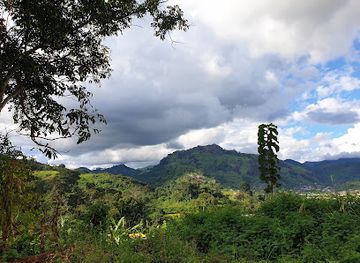
Montagnes’ attractions are concentrated around its highland scenery and living cultural heritage. Man provides access to the Dent de Man, forested slopes, waterfalls and viewpoints across the surrounding Massif des Dans, while the higher Mont Tonkoui area offers a cooler upland landscape and walking opportunities. Conditions on mountain paths vary, so local guides and sensible footwear are important. Biankouma adds historic and cultural interest through its settlement traditions, local museums or cultural presentations where available, and its connection with Dan heritage. Farther south and west, the towns of Duékoué, Guiglo and Danané introduce visitors to different landscapes and communities rather than functioning as conventional resort centres. Rural roads pass cocoa, coffee, cassava, rice and plantain-growing areas, creating opportunities for slower agricultural travel when arranged respectfully. The district’s forests, streams and valleys are appealing to birdwatchers and nature-minded visitors, although facilities and interpretation can be limited. Cultural visits, craft demonstrations and dance presentations should be organised through trusted local contacts, since many traditions have meanings that extend beyond tourism. Montagnes is best suited to travellers who value landscape, local knowledge and flexible itineraries over a densely developed attraction circuit.
-
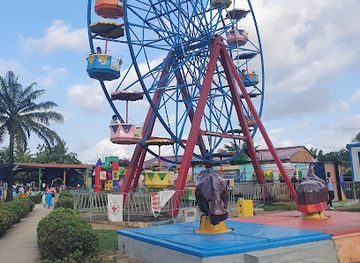
Amusement park
Paradisia Abidjan
Explore the excitement of Paradisia Abidjan, a vibrant amusement park offering thrilling rides and family-friendly attractions in the heart of Ivory Coast.
-
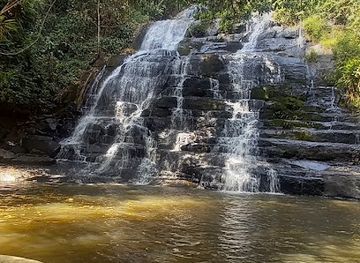
Tourist attraction
Man's Waterfalls
Discover the enchanting beauty of Man's Waterfalls in Côte d'Ivoire, a serene natural escape surrounded by lush landscapes and rich cultural traditions.
-
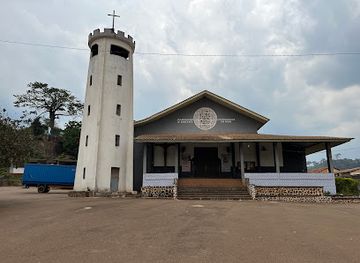
Cathedral
Cathedral of St. Michael
Explore the stunning Cathedral of St. Michael, a masterpiece of Gothic architecture in Man, rich in history and spiritual significance.
-
African
Cascade de Glongouin
Explore the breathtaking Cascade de Glongouin, a stunning waterfall in the heart of Man, Côte d'Ivoire, perfect for nature lovers and adventure seekers alike.

Best landmarks in Montagnes
The most recognisable landmarks of Montagnes are its natural rock and mountain formations. The Dent de Man is the visual emblem of the district, rising above Man as a sharply defined granite outcrop and appearing on viewpoints around the city. Mont Tonkoui, one of the region’s highest upland areas, gives the landscape a more expansive, forested character and is associated with walks and panoramic views when weather and access permit. The waterfalls near Man are also important geographical landmarks, where streams descend through the highland terrain rather than simply serving as bathing or picnic sites. Biankouma’s historic settlement landscape represents the architectural and cultural heritage of Dan communities, while the wider town is significant for its relationship with local traditions and the surrounding mountains. Across the district, red-earth roads, cocoa-growing hills and forested valleys form a changing cultural landscape rather than a single monumental site. The region’s border position near Guinea and Liberia is historically meaningful, but frontier crossings and facilities should not be treated as tourist landmarks without current permission and practical guidance.
-
 Park
ParkParc National du Banco
Escape to Abidjan's Parc National du Banco: A lush rainforest oasis offering hiking, wildlife, and a tranquil natural retreat.
-
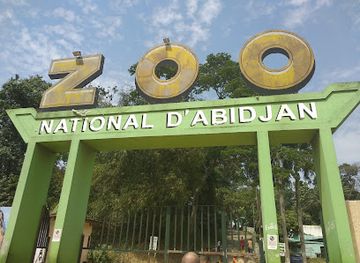
Zoo
Zoo d'Abidjan
Discover West African wildlife in the heart of Abidjan at the Zoo d'Abidjan, a place for education and conservation.
-
Museum
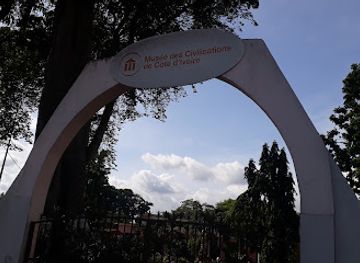
Musée des Civilisations de Côte d'Ivoire
Explore Côte d'Ivoire's cultural heritage through art, artifacts, and traditions at the Musée des Civilisations in Abidjan's Plateau district.
-
Tourist attraction
Man's Waterfalls
Discover the breathtaking beauty of Man's Waterfalls in Côte d'Ivoire, a perfect blend of nature and serenity.
Explore Montagnes on the map
Plan your trip on one map. See where the top cities, national parks and sights are, and book hotels and experiences in a few clicks.
Best hotels in Montagnes
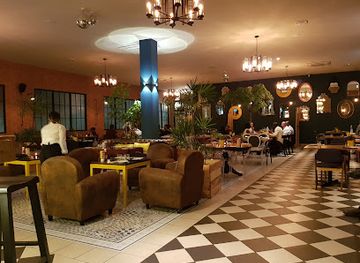
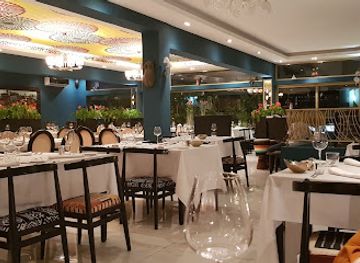
Best restaurants in Montagnes
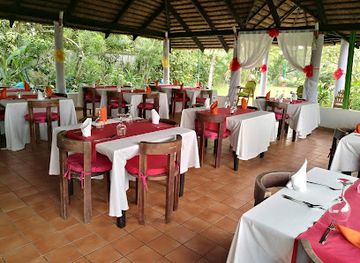
Dining in Montagnes is generally informal and closely connected with markets, family kitchens, small restaurants and hotel dining rooms in Man and the other principal towns. Rice, attiéké, plantain, cassava, yam, grilled meat, chicken and fish are common components of Ivorian meals, accompanied by sauces whose ingredients and preparation vary between households and communities. In the western highlands, fresh produce from farming areas is particularly important, while cocoa and coffee are central agricultural products even when they are not presented as finished desserts or drinks. Roadside grills and local eateries offer practical meals, but menus may be limited outside the larger towns. Visitors can look for braised fish or meat, spicy sauces, omelettes, rice dishes and fruit juices, alongside national favourites such as aloco, fried plantain. French-style bread, coffee and simple breakfasts are available in urban hotels and cafés. Carrying water and planning meals ahead is sensible on excursions, as rural food options and opening times are not always predictable.
-
Restaurant
Bushman Café
Discover authentic Ivorian cuisine at Bushman Café in Abidjan's vibrant Cocody district, where flavor meets culture.
-
Restaurant
Le Débarcadère
Experience authentic Ivorian flavors at Le Débarcadère in Abidjan – where every meal is a celebration of culture.
-
Restaurant
Norima
Experience the vibrant flavors of Côte d'Ivoire at Norima in Abidjan - where culinary excellence meets warm hospitality.
-
Restaurant
Restaurant Saakan
Experience authentic Ivorian flavors at Restaurant Saakan in Abidjan - a culinary gem offering exquisite dishes and warm hospitality.
Best bars in Montagnes
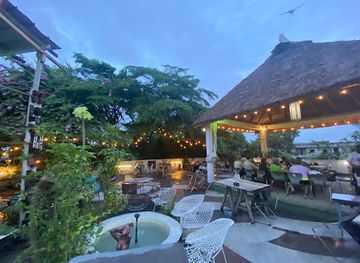
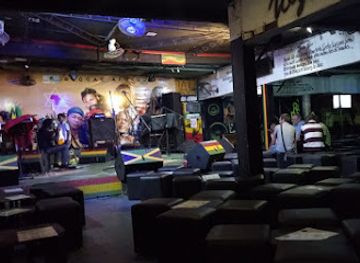
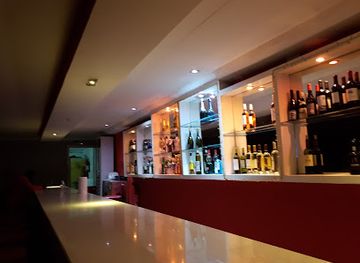
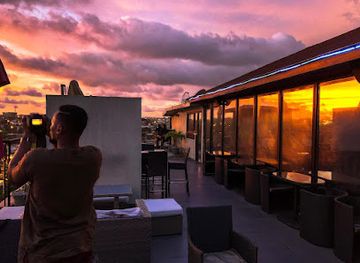
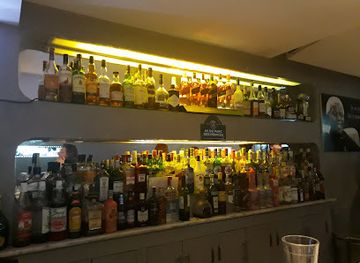
Evening life in Montagnes is concentrated in Man and the larger towns, where hotel lounges, small bars, maquis restaurants and informal music venues provide the main social settings. A maquis is a casual Ivorian eatery that may serve food, drinks and music, and is often more representative of local evening life than a formal nightclub. Danané, Duékoué and Guiglo have their own town-centre establishments, but nightlife is generally smaller and less predictable than in Abidjan. In rural areas, evenings usually centre on family life, local gatherings or occasional music rather than a permanent club scene. Visitors should choose venues with a good local reputation, keep valuables secure and arrange transport before drinking. Live music, recorded zouglou, coupé-décalé and regional performances may be heard, though programming changes frequently. Do not assume that a bar or club operates every night, and check current arrangements with accommodation staff rather than relying on old listings.
-
Lounge
Parker Place
Experience the vibrant nightlife at Parker Place, Abidjan's premier lounge and live music venue, where culture and entertainment come alive.
-
Bar
Pam's Abidjan
Discover the vibrant nightlife of Abidjan at Pam's, a lively bar offering a mix of local and international drinks in a captivating atmosphere.
-
Lounge
Vista Lounge
Discover the vibrant nightlife and exquisite cuisine at Vista Lounge in Abidjan, a perfect blend of local culture and modern elegance.
-
Bar
Le bar blanc
Experience the vibrant nightlife at Le Bar Blanc in Marcory, Abidjan, where great drinks and live music create unforgettable moments.
Best nightclubs in Montagnes
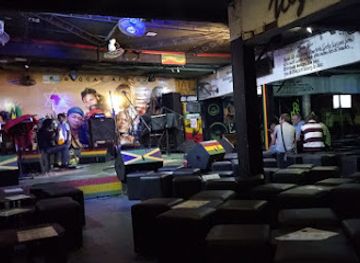
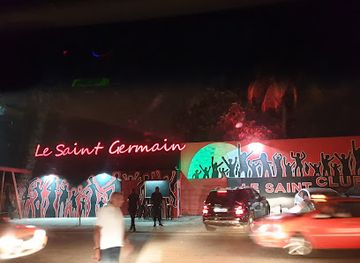
Evening life in Montagnes is concentrated in Man and the larger towns, where hotel lounges, small bars, maquis restaurants and informal music venues provide the main social settings. A maquis is a casual Ivorian eatery that may serve food, drinks and music, and is often more representative of local evening life than a formal nightclub. Danané, Duékoué and Guiglo have their own town-centre establishments, but nightlife is generally smaller and less predictable than in Abidjan. In rural areas, evenings usually centre on family life, local gatherings or occasional music rather than a permanent club scene. Visitors should choose venues with a good local reputation, keep valuables secure and arrange transport before drinking. Live music, recorded zouglou, coupé-décalé and regional performances may be heard, though programming changes frequently. Do not assume that a bar or club operates every night, and check current arrangements with accommodation staff rather than relying on old listings.
-
Lounge
Parker Place
Experience the heartbeat of Abidjan's nightlife at Parker Place, where live reggae music and vibrant atmosphere create unforgettable nights.
-
Disco club
Le Saint Germain Club Abidjan
Unleash your spirit at Le Saint Germain Club Abidjan, where vibrant nightlife meets culinary delights in a lively disco atmosphere.
-
Disco club
Mixx Night Club
Unleash your night at Mixx Night Club, Abidjan's premier disco club, where music, dance, and vibrant energy collide for an unforgettable experience.
-
Lounge
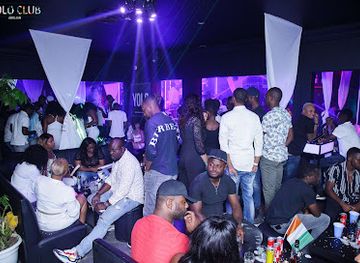
Yolo Club Abidjan
Experience the vibrant nightlife of Abidjan at Yolo Club, a premier lounge offering live music, signature cocktails, and an unforgettable atmosphere.

Best shops in Montagnes
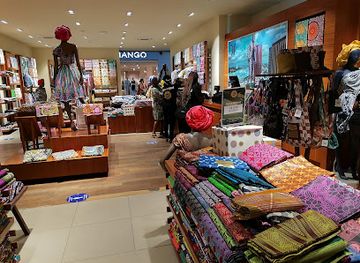
Shopping in Montagnes is centred on town markets, roadside stalls, small independent shops and informal produce trading rather than large retail complexes. Man offers the broadest choice for everyday goods, clothing, household items, mobile services and locally made souvenirs, while markets in Danané, Duékoué, Guiglo and Biankouma reflect the needs of their surrounding communities. Visitors may find carved wooden objects, woven goods, beads, fabrics and masks, but should ask about provenance and avoid buying anything that could be an archaeological or ceremonial object. Cocoa and coffee are important regional products, although quality, packaging and availability vary, so sealed products from reputable sellers are the practical choice for gifts. Dried foods, spices, bananas, plantains and cassava are more useful as market experiences than as easily transported souvenirs. Bargaining can be normal for some market goods, but it should be polite and proportionate. Cash is essential outside established urban businesses, and carrying small notes makes purchases and local transport easier.
-
Shopping mall
Cap Sud
Discover the vibrant shopping, dining, and entertainment experience at Cap Sud in Abidjan, a true gem for tourists seeking local culture.
-
Shopping mall
Sococe Mall
Discover the vibrant Sococe Mall in Abidjan, where shopping, dining, and local culture come together in a captivating atmosphere.
-
Shopping mall
Abidjan Mall
Explore Abidjan Mall: Where Shopping Meets Culture in Côte d'Ivoire's Premier Retail Destination.
-
Hypermarket
Playce Shopping Mall
Discover Playce Shopping Mall in Abidjan - a vibrant shopping hub with diverse stores and delicious dining options in the heart of Côte d'Ivoire.
Get your free copy of our complete guide to Montagnes, delivered straight to you.
Everything on this page, from attractions and restaurants to essentials and local phrases, in one PDF you can read offline, print or share.
Already have an account? Sign in
Your Montagnes guide is ready.
We'll send it to · Not you? Sign out

Getting your guide ready…
We are putting together a fresh copy of the Montagnes guide. This can take up to a minute.
This can take a few moments. If your browser asks, choose Allow so the download can start. You'll find the guide in your Downloads folder.
Nothing happened? Download it again
Sorry, the guide is taking longer than usual. Please try again in a minute, or get it by email instead.
Montagnes essentials
Currency and Payment
Safety
Emergency Situations
Do's and Don'ts
Local Tips
From Eve
Local phrases worth knowing
You don't need to get them perfect. A few words go a long way, and locals appreciate the effort.
Basics
| English | Local | Say it |
|---|---|---|
| Hello | Bonjour | [Bohn-zhoor] |
| Goodbye | Au revoir | [Oh ruh-vwahr] |
| Yes | Oui | [Wee] |
| No | Non | [Nohn] |
| Please/You're welcome | S'il vous plaît | [Seel voo pleh] |
| Thank you | Merci | [Mehr-see] |
| Excuse me/Sorry | Excusez-moi | [Ex-kew-zay mwah] |
| How are you? | Comment ça va? | [Koh-mohn sah vah] |
| Fine. And you? | Bien. Et vous? | [Byan. Eh voo?] |
| Do you speak English? | Parlez-vous anglais? | [Par-lay voo ahn-glay?] |
| I don't understand | Je ne comprends pas | [Zhuh nuh kom-prahn pah] |
Eating & Drinking
| English | Local | Say it |
|---|---|---|
| I'd like to see the menu, please | Je voudrais voir le menu, s'il vous plaît | [Zhuh voo-dray vwah leuh meh-nu, seel voo pleh] |
| I don't eat meat | Je ne mange pas de viande | [Zhuh nuh mahnj pah duh vyahnd] |
| Cheers! | Santé! | [Sahn-tay] |
| I would like to pay, please | Je voudrais payer, s'il vous plaît | [Zhuh voo-dray pay-ay, seel voo pleh] |
Emergencies
| English | Local | Say it |
|---|---|---|
| Help! | Au secours! | [Oh seh-koor] |
| Go away! | Allez-vous-en! | [Ah-lay voo zahn] |
| Call the Police! | Appelez la police! | [Ah-peh-lay lah poh-lees] |
| Call a doctor! | Appelez un médecin! | [Ah-peh-lay uhn meh-dsahn] |
| I'm lost | Je suis perdu | [Zhuh swee pair-doo] |
| I'm ill | Je suis malade | [Zhuh swee mah-lahd] |
Shopping
| English | Local | Say it |
|---|---|---|
| I'd like to buy... | Je voudrais acheter... | [Zhuh voo-dray ah-she-tay] |
| I'm just looking | Je regarde juste | [Zhuh ruh-gahrd zhoost] |
| How much is it? | C'est combien? | [Say kohm-byen?] |
| That's too expensive | C'est trop cher | [Say troh shair] |
| Can you lower the price? | Pouvez-vous baisser le prix? | [Poo-vay voo beh-say leuh pree?] |
Time & Numbers
| English | Local | Say it |
|---|---|---|
| What time is it? | Quelle heure est-il? | [Kel uhr eh-teel?] |
| It's one o'clock | Il est une heure | [Eel eh ewn uhr] |
| Half past (10) | Dix heures et demie | [Dee uhr eh duh-mee] |
| Morning | Matin | [Mah-tan] |
| Afternoon | Après-midi | [Ah-preh mee-dee] |
| Evening | Soir | [Swar] |
| Yesterday | Hier | [Ee-air] |
| Today | Aujourd'hui | [Oh-zhoor dwee] |
| Tomorrow | Demain | [Duh-mahn] |
| 1 | Un | [Uhn] |
| 2 | Deux | [Duh] |
| 3 | Trois | [Twah] |
| 4 | Quatre | [Kah-truh] |
| 5 | Cinq | [Sank] |
| 6 | Six | [Sees] |
| 7 | Sept | [Set] |
| 8 | Huit | [Wheet] |
| 9 | Neuf | [Nuhf] |
| 10 | Dix | [Dee] |
Transport & Directions
| English | Local | Say it |
|---|---|---|
| Where's a/the...? | Où est...? | [Oo eh...?] |
| What's the address? | Quelle est l'adresse? | [Kel eh lah-dress?] |
| Can you show me (on the map)? | Pouvez-vous me montrer (sur la carte)? | [Poo-vay voo muh mohn-tray (sur lah kart)?] |
| When's the next (bus)? | Quand est le prochain (bus)? | [Kahn eh luh proh-shen (boos)?] |
| A ticket (to ....) | Un billet (pour....) | [Uhn bee-yay (poor....)] |
History of Montagnes
Early settlement and the western highlands
The mountains and forests of western Côte d’Ivoire have long been inhabited by communities whose economies combined farming, hunting, trade and local craft production. The region’s varied terrain encouraged settlement in valleys and upland clearings, while routes across the highlands connected communities with neighbouring areas of present-day Guinea and Liberia. Archaeological evidence is less prominent in the tourist landscape than in some parts of West Africa, but oral histories, settlement patterns and inherited cultural institutions remain important to understanding the region. The Dan and Wê peoples, among others, developed distinctive social and artistic traditions that continue to shape Montagnes’ cultural identity.
Dan communities and mask traditions
The area around Man and Biankouma became particularly associated with Dan society, whose artistic heritage includes carved masks, wooden figures, music and dance. Masks traditionally carried roles connected with authority, education, entertainment or spiritual life, rather than serving merely as decorative objects. Their meanings vary according to community and context, and public performances should not be separated from the social institutions that sustain them. Today, museums, cultural presentations and local festivals may introduce visitors to these traditions, but the living heritage of the region is best understood through respectful engagement with knowledgeable local hosts.
French colonial incorporation
French military and administrative expansion reached western Côte d’Ivoire during the late nineteenth and early twentieth centuries, gradually bringing the highland communities into the colonial system. New administrative centres, roads, taxation and Christian missions altered patterns of authority and mobility, while the frontier position gave the area strategic importance. Colonial rule also encouraged the development of export agriculture and linked the region more closely with the wider economy of Côte d’Ivoire. Many present-day roads, town layouts and administrative divisions have roots in this period, although local institutions and cultural practices remained influential.
Coffee, cocoa and agricultural change
After independence in 1960, coffee and cocoa expanded across many parts of western Côte d’Ivoire, joining food crops such as rice, cassava and plantain. These commodities connected rural communities to national and international markets and attracted migration from other parts of Côte d’Ivoire and neighbouring countries. Agricultural growth brought income and new settlements but also placed pressure on forests, particularly where land was cleared for plantations. The history of Montagnes is therefore closely linked to the country’s wider transformation into a major cocoa producer, while local landscapes reveal the environmental costs and social complexity of that success.
War, displacement and the western frontier
Western Côte d’Ivoire was heavily affected by the political and military crises that divided the country from 2002 and intensified during the post-election conflict of 2010–11. Towns and rural communities in the Montagnes area experienced insecurity, displacement, disrupted services and damage to local economies. The region’s proximity to Liberia and Guinea added a cross-border dimension to population movements and security concerns. Since the end of the major conflicts, roads, public services and commerce have improved in many places, but the period remains an important part of local memory and explains why visitors should seek current advice when travelling near border areas.
Post-war reconstruction and regional tourism
In the years after the conflict, Man and the wider district increasingly promoted mountain scenery, waterfalls, cultural heritage and rural tourism as part of western Côte d’Ivoire’s economic renewal. Improvements to roads and visitor facilities have been uneven, and tourism remains more modest than in Abidjan or the country’s coastal resorts. Nevertheless, the region’s attractions support guides, accommodation providers, craft workers and food businesses. Contemporary Montagnes reflects both continuity and change: inherited Dan and Wê cultural practices remain visible, while urban centres adapt to renewed trade, education and domestic travel.
Montagnes in Photos
Browse through our photo collection highlighting the charm and character of the destination.
Neighbouring regions of Montagnes
The closest regions to Montagnes, if you have time for more than one.
-

-
 Bas-Sassandra
Explore Bas-Sassandra for Côte d’Ivoire’s Atlantic beaches, rainforest landscapes, port cities, cocoa country and distinctive coastal food culture.
Bas-Sassandra
Explore Bas-Sassandra for Côte d’Ivoire’s Atlantic beaches, rainforest landscapes, port cities, cocoa country and distinctive coastal food culture.
-

-

-


Swipe for more regions
Explore more

Explore more of Cote d'Ivoire
Discover the vibrant culture, stunning landscapes, and rich heritage of Cote d'Ivoire, the jewel of West Africa.
Explore Cote d'Ivoire