

Free Bas-Sassandra Travel Guide & Mobile App
Explore Bas-Sassandra with free travel guides. Discover regional history, expert tips, proposed trips, and audio guides on web or mobile app.


Explore Bas-Sassandra for Côte d’Ivoire’s Atlantic beaches, rainforest landscapes, port cities, cocoa country and distinctive coastal food culture.
When is the best time to visit Bas-Sassandra?
Best: December–February · 30–31°C| Month | High (°C) | Rainfall (mm) |
|---|---|---|
| January (best) | 30 | 50 |
| February (best) | 31 | 60 |
| March | 31 | 70 |
| April | 30 | 90 |
| May | 30 | 100 |
| June | 29 | 120 |
| July | 28 | 140 |
| August | 28 | 150 |
| September | 29 | 130 |
| October | 30 | 100 |
| November | 30 | 80 |
| December (best) | 30 | 60 |
Getting to and around Bas-Sassandra
How to get there
Transportation
Top city travel guides in Bas-Sassandra
The cities of Bas-Sassandra, and the easiest places to base yourself.
-

-

-


Swipe for more cities
Destinations in Bas-Sassandra
Resorts, valleys and scenic spots worth a trip of their own.

Swipe for more destinations
Best attractions in Bas-Sassandra
Bas-Sassandra’s attractions combine Atlantic coast, forested countryside and working regional towns. San-Pédro offers waterfront activity, markets, port views and access to beaches and coastal excursions, although its harbour is primarily a commercial facility rather than a conventional visitor attraction. Around Sassandra, visitors can explore river scenery, fishing life and beaches including the Monogaga area, while Grand-Béréby provides a quieter base for sandy shores, coastal walks and locally guided outings. The region’s inland appeal lies in the Nawa and Soubré landscapes, where cocoa, rubber and oil-palm cultivation illustrates the economic importance of the forest zone. River viewpoints, village markets and rural roads provide context for understanding the region beyond its beaches. Swimming, boating and beach access depend on weather, surf and local conditions, so advice from residents or accommodation staff is valuable. Cultural visits should be arranged respectfully through local contacts, particularly when they involve communities, ceremonies or agricultural sites. Bas-Sassandra is better suited to travellers who value landscape, food, maritime life and slower exploration than to those seeking a concentrated sequence of formal museums and ticketed monuments.
-
Tourist attraction
Taï National Park
Explore Taï National Park, a UNESCO World Heritage Site rich in biodiversity and adventure in the heart of Côte d'Ivoire's lush rainforests.
-
Tourist attraction
Plage de San pedro
Experience the tranquil beauty of Plage de San Pedro, a coastal gem in Côte d'Ivoire offering stunning beaches, vibrant culture, and delicious cuisine.
-
Tourist attraction
Chutes de la Nawa
Experience the breathtaking beauty of Chutes de la Nawa, a stunning waterfall in Côte d'Ivoire, perfect for nature lovers and adventurers seeking tranquility.
-
 Tourist attraction
Mangrove route sans pedro
Discover the serene beauty of the Mangrove Route in San Pedro, a tranquil escape into nature filled with stunning scenery and rich biodiversity.


Best landmarks in Bas-Sassandra
The most recognisable landmarks of Bas-Sassandra are closely tied to the sea and the region’s economic history. San-Pédro’s commercial port is the defining modern structure of the coast, representing the post-independence development that transformed the city into a major export centre. Its waterfront and harbour approaches contrast with the sandy beaches and wooded headlands nearby. Sassandra’s river mouth and older coastal setting form a landmark landscape shaped by trade, fishing and colonial-era administration, while the town’s position between river and ocean explains its historical importance. The broad beaches and rocky coastal viewpoints around Grand-Béréby provide some of the region’s most memorable natural scenery, although access and swimming conditions vary. Monogaga’s beach landscape, near Sassandra, is another notable coastal reference point, combining sand, palms and Atlantic surf. Inland, the great cocoa-growing plain around Soubré is less visually monumental but is significant as a cultural and economic landmark: it shows how agriculture has reshaped the forest zone. Together, these places represent Bas-Sassandra’s central themes of port development, river trade, coastal settlement and plantation agriculture.
-
Park
Taï National Park
Explore Taï National Park, a UNESCO World Heritage Site and one of West Africa's last primary rainforests, teeming with unique wildlife and plant species.
-
River
Sassandra River
Explore the Sassandra River in Côte d'Ivoire: a vital waterway offering scenic beauty, diverse wildlife, and cultural immersion.
-
Campground
Pauly Rock Sassandra
Experience tranquility at Pauly Rock Sassandra: coastal camping, scenic beauty, and Ivorian charm converge for an unforgettable escape.
-
Historical landmark
Old broken-down colonial buildings
Explore the atmospheric ruins of Sassandra's colonial past, where history whispers through crumbling walls and forgotten spaces on the Ivory Coast.


Explore Bas-Sassandra on the map
Plan your trip on one map. See where the top cities, national parks and sights are, and book hotels and experiences in a few clicks.
Best hotels in Bas-Sassandra
Best restaurants in Bas-Sassandra
Dining in Bas-Sassandra reflects the meeting of Atlantic fishing communities, forest agriculture and Côte d’Ivoire’s wider urban food culture. San-Pédro and the larger coastal towns are the best places to find grilled fish, prawns and other seafood, often served with attiéké, a fermented cassava couscous, along with plantain, rice or spicy sauces. Maquis, informal Ivorian restaurants, are central to everyday eating and may offer chicken, beef, kedjenou or regional fish dishes. In Sassandra and Grand-Béréby, meals connected to the coast are especially prominent, while Soubré and other inland towns reveal the importance of cocoa-growing country, fruit, cassava and plantain. Breakfast cafés, market stalls and small family-run restaurants provide practical options, though menus and availability can be limited outside the main urban centres. Cocoa products and fresh tropical fruit are worth seeking out, but visitors should distinguish locally produced ingredients from dishes that are national rather than specifically regional. In smaller communities, carrying water and allowing extra time for food preparation is sensible.
-
Resort hotel
ENOTEL BEACH San-Pedro
Experience luxury at ENOTEL BEACH San-Pedro – where stunning ocean views meet exceptional hospitality in a tropical paradise.
-
Restaurant
Patiserie Du Lac
Discover the sweetness of life at Patiserie Du Lac, where delectable pastries meet a cozy atmosphere in the heart of San-Pédro.
-
Restaurant
La Cabana
Experience the rich flavors of Côte d'Ivoire at La Cabana, a must-visit restaurant in San-Pédro offering diverse and delectable cuisine.
-
Restaurant
LA ROCHE NOIRE
Discover La Roche Noire in San-Pedro for an exquisite dining experience blending local Ivorian flavors with international cuisine.


Best bars in Bas-Sassandra
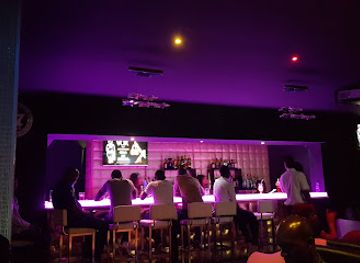
Evening life in Bas-Sassandra is concentrated in San-Pédro and the larger coastal towns, where maquis, beer gardens, hotel lounges and informal bars provide the main social settings. Music may range from coupé-décalé and other Ivorian styles to popular West African tracks, with activity often increasing at weekends. Sassandra and Grand-Béréby offer a more relaxed coastal evening atmosphere, centred on restaurants, beachside settings and small bars rather than a large club circuit. Soubré’s nightlife is primarily local and town-based, with restaurants and bars serving residents, traders and visitors. Opening arrangements and venue status can change, so accommodation staff are usually the best source of current information. In rural areas, evening options are limited after dinner, and quiet beach locations should not be treated as supervised nightlife spaces. Drinking is not necessary to experience the region’s evening culture; food, conversation, music and waterfront settings are equally important.
-
Bar
VOX NIGHT CLUB
Discover the pulse of San-Pédro's nightlife at VOX Night Club, where unforgettable music and vibrant energy come together for an exhilarating night out.
-
Bar
Yorogang Vip
Experience the vibrant nightlife of San-Pédro at Yorogang Vip, where refreshing drinks and local flavors await in a lively bar atmosphere.
-
Bar
OA GROUP INTERNATIONAL
Discover the lively ambiance and local flavors at OA Group International in Soubre, a perfect retreat for travelers seeking relaxation and social vibes.
-
Restaurant
Bar De L'industrie; El Pescador
Experience authentic Ivorian coastal cuisine at Bar De L'industrie; El Pescador, a culinary gem in San-Pédro, where fresh flavors meet local hospitality.


Best nightclubs in Bas-Sassandra
Evening life in Bas-Sassandra is concentrated in San-Pédro and the larger coastal towns, where maquis, beer gardens, hotel lounges and informal bars provide the main social settings. Music may range from coupé-décalé and other Ivorian styles to popular West African tracks, with activity often increasing at weekends. Sassandra and Grand-Béréby offer a more relaxed coastal evening atmosphere, centred on restaurants, beachside settings and small bars rather than a large club circuit. Soubré’s nightlife is primarily local and town-based, with restaurants and bars serving residents, traders and visitors. Opening arrangements and venue status can change, so accommodation staff are usually the best source of current information. In rural areas, evening options are limited after dinner, and quiet beach locations should not be treated as supervised nightlife spaces. Drinking is not necessary to experience the region’s evening culture; food, conversation, music and waterfront settings are equally important.
-
Bar
VOX NIGHT CLUB
Discover the pulsating beats and vibrant atmosphere of VOX Night Club in San-Pédro for an unforgettable nightlife experience.
-
Bar
Feux tricolores de Colas
Discover the lively atmosphere of Feux Tricolores de Colas, a vibrant bar in San-Pedro offering a mix of local and international drinks.
-
Night club
ESPACE PAMS KALY
Discover the vibrant nightlife of Soubre at ESPACE PAMS KALY, where music and dance create unforgettable experiences.
-
Lounge
Klaman beach
Experience the tranquil beauty and vibrant culture of Klaman Beach in San-Pédro, a perfect retreat for food lovers and beach enthusiasts alike.


Best shops in Bas-Sassandra
Shopping in Bas-Sassandra is practical, local and closely connected to food production rather than focused on large-scale retail tourism. San-Pédro has the region’s broadest choice of markets, supermarkets, clothing shops and household goods, while Sassandra, Grand-Béréby and Soubré offer smaller markets used primarily by local residents. Markets are useful for tropical fruit, plantain, cassava products, spices, smoked or dried fish and everyday provisions; ask before photographing stalls or people. Cocoa is the region’s most distinctive commercial product, although packaged quality and traceability vary, so established shops or reputable producers are preferable for gifts. Visitors may also find woven goods, carved objects and locally made items, but these are not uniformly available and should not be assumed to represent a single Bas-Sassandra style. Bargaining can be appropriate in informal markets but should remain courteous. Carry cash in smaller CFA franc notes, as independent traders generally do not accept cards. The larger towns are better for travel supplies, while smaller coastal settlements are more suited to buying fresh produce and simple locally made goods.
-
Shopping mall
Marché De Méagui
Experience the vibrant culture and shopping delights of Marché De Méagui in Côte d'Ivoire, a must-visit destination for tourists.
-
Supermarket
Bon Prix De Meagui
Explore the vibrant flavors and local delights at Bon Prix De Meagui, your go-to supermarket in the heart of the region.
-
Bridge
Pont De Weygand ( Gaoulou /sassandra )
Experience the breathtaking views and vibrant culture at Pont De Weygand, a historic bridge in Sassandra, Côte d'Ivoire.
-
Pharmacy
Pharmacie Moderne De Meagui
Discover the essential health services at Pharmacie Moderne De Meagui, your reliable pharmacy in the heart of Meagui.


Get your free copy of our complete guide to Bas-Sassandra, delivered straight to you.
Everything on this page, from attractions and restaurants to essentials and local phrases, in one PDF you can read offline, print or share.
Already have an account? Sign in
Your Bas-Sassandra guide is ready.
We'll send it to · Not you? Sign out

Getting your guide ready…
We are putting together a fresh copy of the Bas-Sassandra guide. This can take up to a minute.
This can take a few moments. If your browser asks, choose Allow so the download can start. You'll find the guide in your Downloads folder.
Nothing happened? Download it again
Sorry, the guide is taking longer than usual. Please try again in a minute, or get it by email instead.
Bas-Sassandra essentials
Currency and Payment
Safety
Emergency Situations
Do's and Don'ts
Local Tips
From Eve
Local phrases worth knowing
You don't need to get them perfect. A few words go a long way, and locals appreciate the effort.
Basics
| English | Local | Say it |
|---|---|---|
| Hello | Bonjour | [Bohn-zhoor] |
| Goodbye | Au revoir | [Oh ruh-vwahr] |
| Yes | Oui | [Wee] |
| No | Non | [Nohn] |
| Please/You're welcome | S'il vous plaît | [Seel voo pleh] |
| Thank you | Merci | [Mehr-see] |
| Excuse me/Sorry | Excusez-moi | [Ex-kew-zay mwah] |
| How are you? | Comment ça va? | [Koh-mohn sah vah] |
| Fine. And you? | Bien. Et vous? | [Byehn. Eh voo?] |
| Do you speak English? | Parlez-vous anglais? | [Par-lay voo ahn-glay?] |
| I don't understand | Je ne comprends pas | [Zhuh nuh kom-prahn pah] |
Eating & Drinking
| English | Local | Say it |
|---|---|---|
| I'd like to see the menu, please | Je voudrais voir le menu, s'il vous plaît | [Zhuh voo-dray vwar luh meh-nu, seel voo pleh] |
| I don't eat meat | Je ne mange pas de viande | [Zhuh nuh mahnj pah duh vyahnd] |
| Cheers! | Santé! | [Sahn-tay] |
| I would like to pay, please | Je voudrais payer, s'il vous plaît | [Zhuh voo-dray pay-ay, seel voo pleh] |
Emergencies
| English | Local | Say it |
|---|---|---|
| Help! | À l'aide! | [Ah led!] |
| Go away! | Allez-vous-en! | [Ah-lay voo zahn!] |
| Call the Police! | Appelez la police! | [Ah-peh-lay lah poh-lees!] |
| Call a doctor! | Appelez un médecin! | [Ah-peh-lay uhn meh-deh-sin!] |
| I'm lost | Je suis perdu | [Zhuh swee pair-doo] |
| I'm ill | Je suis malade | [Zhuh swee mah-lahd] |
Shopping
| English | Local | Say it |
|---|---|---|
| I'd like to buy... | Je voudrais acheter... | [Zhuh voo-dray ah-sheh-tay] |
| I'm just looking | Je regarde juste | [Zhuh ruh-gard zhoost] |
| How much is it? | C'est combien? | [Say kohm-byen?] |
| That's too expensive | C'est trop cher | [Say troh shair] |
| Can you lower the price? | Pouvez-vous baisser le prix? | [Poo-vay voo beh-say luh pree?] |
Time & Numbers
| English | Local | Say it |
|---|---|---|
| What time is it? | Quelle heure est-il? | [Kel uhr eh-teel?] |
| It's one o'clock | Il est une heure | [Eel eh une uhr] |
| Half past (10) | Dix heures et demie | [Dee uhr eh duh-mee] |
| Morning | Matin | [Mah-tahn] |
| Afternoon | Après-midi | [Ah-pray mee-dee] |
| Evening | Soir | [Swahr] |
| Yesterday | Hier | [Ee-ehr] |
| Today | Aujourd'hui | [Oh-zhoor dwee] |
| Tomorrow | Demain | [Duh-mahn] |
| 1 | Un | [Uhn] |
| 2 | Deux | [Duh] |
| 3 | Trois | [Trwah] |
| 4 | Quatre | [Kah-truh] |
| 5 | Cinq | [Sank] |
| 6 | Six | [Sees] |
| 7 | Sept | [Sept] |
| 8 | Huit | [Weet] |
| 9 | Neuf | [Nuhf] |
| 10 | Dix | [Dee] |
Transport & Directions
| English | Local | Say it |
|---|---|---|
| Where's a/the...? | Où est un/une...? | [Oo eh uhn/oon?] |
| What's the address? | Quelle est l'adresse? | [Kel eh la-dress?] |
| Can you show me (on the map)? | Pouvez-vous me montrer (sur la carte)? | [Poo-vay voo muh mohn-tray (sur lah kart)?] |
| When's the next (bus)? | Quand est le prochain (bus)? | [Kahn eh luh pro-shen (boos)?] |
| A ticket (to ....) | Un ticket (pour ....) | [Uhn tee-kay (poor ....)] |
History of Bas-Sassandra
Pre-colonial coastal and forest societies
Before European colonial rule, the territory now associated with Bas-Sassandra was organised through many local communities and trading networks rather than a single regional state. Kru-related peoples were prominent along parts of the coast, while Bakwé, Godié and Bété communities occupied inland forest and river areas. Political authority, land use and social life were shaped by villages, kinship, farming, fishing and exchange. Oral traditions, languages and customary institutions remain important to regional identity, although modern towns and migration have created highly mixed populations.
European contact and the early coastal trade
European traders reached the south-western coast from the early modern period, exchanging goods with coastal communities and using rivers and anchorages connected to settlements such as Sassandra. Trade brought new commercial pressures and, over time, missionary and colonial interests. The coast was never an empty frontier: local rulers and merchants controlled relationships with outsiders, while the inland forest economy supplied agricultural and forest products. Early European mapping and commerce laid foundations for later colonial administration without erasing existing regional societies.
French colonial administration and plantation expansion
During the late nineteenth and early twentieth centuries, France consolidated colonial control over the wider territory that became Côte d’Ivoire. Roads, administrative posts and commercial networks gradually linked the south-western coast with inland production areas. Colonial agriculture introduced and expanded export-oriented crops, while forced labour and unequal economic systems imposed severe burdens on local communities. The region’s forests were increasingly treated as sources of timber and plantation land, setting patterns of land use that continued into the post-independence period.
Sassandra as an early coastal centre
Sassandra developed as an important colonial-era coastal settlement because of its river access, anchorage and position within the south-western trading network. Its history is visible in the town’s older waterfront areas, river landscapes and memories of the period when coastal transport was more important than modern highways. As larger ports and better road links shifted commercial activity elsewhere, Sassandra became less dominant economically, but its combination of maritime history, fishing and river scenery remains central to its identity.
Independence and the rise of San-Pédro
After Côte d’Ivoire became independent in 1960, the government pursued a major development strategy for the south-west. San-Pédro was selected for port and urban expansion, transforming a relatively small settlement into a significant maritime city. The port improved access for cocoa, coffee, timber and other exports and encouraged migration from across Côte d’Ivoire and neighbouring countries. New roads, industrial activity and public institutions gave San-Pédro a role distinct from older coastal towns such as Sassandra.
Cocoa, rubber and forest transformation
From the later twentieth century, cocoa cultivation expanded strongly across Bas-Sassandra, particularly around Soubré and other parts of the Nawa region. Rubber and oil palm also became important commercial crops. These industries generated livelihoods and connected rural communities to national and international markets, but they also contributed to deforestation, land disputes and pressure on customary land systems. The region today reflects this dual legacy: agricultural prosperity and improved connectivity exist alongside environmental challenges and the need to protect remaining forests.
Contemporary Bas-Sassandra
Bas-Sassandra has become one of Côte d’Ivoire’s major economic and demographic regions, combining the port city of San-Pédro, inland agricultural centres and a growing coastal tourism sector. Reconstruction and infrastructure investment after periods of political instability have supported transport, commerce and urban development. At the same time, fishing communities, rural producers and traditional authorities continue to shape local life. Contemporary travel therefore reveals both an emerging destination and a working region whose economy remains closely tied to agriculture, the sea and international trade.
Neighbouring regions of Bas-Sassandra
The closest regions to Bas-Sassandra, if you have time for more than one.
-

-

-

-

-


Swipe for more regions
Explore more

Explore more of Cote d'Ivoire
Discover the vibrant culture, stunning landscapes, and rich heritage of Cote d'Ivoire, the jewel of West Africa.
Explore Cote d'Ivoire