

Yamoussoukro Autonomous District, Cote d'Ivoire Travel Guide
Discover Yamoussoukro: Côte d'Ivoire's capital of grand architecture, serene landscapes, and rich cultural heritage.
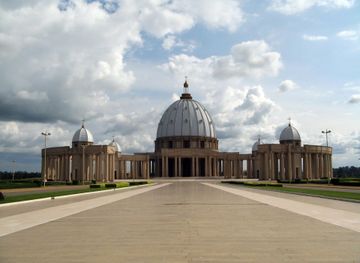
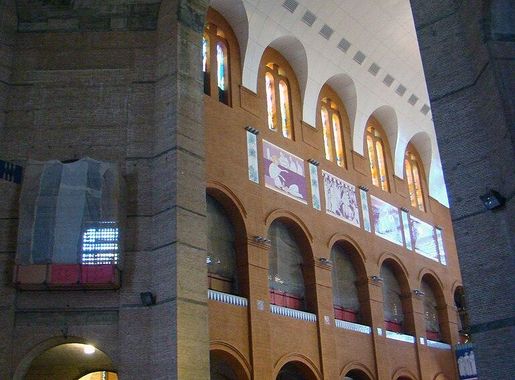
Yamoussoukro, the capital city of Côte d'Ivoire, is a place where history, culture, and modernity blend seamlessly. Known for its serene landscapes and grand architecture, Yamoussoukro offers a unique experience for tourists seeking to explore the rich heritage of West Africa. One of the most striking features of Yamoussoukro is the Basilica of Our Lady of Peace, the largest church in the world. This architectural marvel, inspired by St. Peter's Basilica in Rome, stands as a testament to the city's grandeur and religious significance. Visitors can take guided tours to learn about its construction, history, and the role it plays in local culture. Apart from its religious landmarks, Yamoussoukro boasts beautiful lakes and lush greenery. The Crocodile Lake, situated near the Presidential Palace, is home to sacred crocodiles that are fed by the palace staff. It's a unique sight and offers a glimpse into local customs and beliefs. The city is also dotted with numerous parks and gardens, perfect for leisurely strolls and picnics. For those interested in history, the Félix Houphouët-Boigny Foundation for Peace Research is a must-visit. Named after the country's first president, this institution promotes peace and development. The building itself is an architectural wonder, surrounded by well-maintained gardens and fountains. Yamoussoukro is not just about sightseeing; it also offers a vibrant food scene. Local markets and restaurants serve traditional Ivorian dishes that tantalize the taste buds. From attiéké (cassava couscous) to grilled fish, the culinary delights are endless. Make sure to try some local beverages like ginger juice and palm wine to complete your gastronomic adventure.

Know before you go
Hi, I'm Eve. Here are a few practical things to know before exploring Yamoussoukro Autonomous District.
- Visit the Basilica of Our Lady of Peace early in the morning to avoid crowds and enjoy a peaceful atmosphere.
- Wear comfortable shoes as you may need to walk quite a bit when exploring the city's landmarks.
- Try local dishes at the city's markets to experience authentic Ivorian cuisine.
- Respect local customs, especially when visiting religious sites and interacting with the local community.
- Hire a local guide to get insider knowledge and historical context about the places you visit.
Top City Travel Guides in Yamoussoukro Autonomous District
The cities of Yamoussoukro Autonomous District, and the easiest places to base yourself.

Explore Yamoussoukro Autonomous District: Things to Do, Places to Eat, Hotels & More
Handpicked recommendations for top attractions, local dining, accommodations, and more

Top Attractions & Sightseeing in Yamoussoukro Autonomous District
Top-rated picks
Best Attractions

Lacs au crocodile
Discover the serene beauty and thrilling crocodile encounters at Lacs au Crocodile, a must-visit tourist attraction in Yamoussoukro.

Crocodile mooring
Discover the captivating world of crocodiles at Crocodile Mooring in Yamoussoukro, where nature and wildlife create unforgettable experiences.

Haliat Parc
Explore Haliat Parc in Yamoussoukro - a tranquil tourist attraction with lush landscapes and peaceful ambiance, perfect for relaxation and nature lovers.

Grand mosquée de Yamoussoukro
Discover Yamoussoukro's Grand Mosque: A stunning architectural marvel and a symbol of peace and religious diversity in Côte d'Ivoire.

Best landmarks in Yamoussoukro Autonomous District
Top-rated picks
Best Landmarks

Lac aux Caïmans
Explore the enchanting Lac aux Caïmans in Yamoussoukro, a tranquil paradise teeming with wildlife and stunning natural beauty.

Cathédrale Saint Augustin de Yamoussoukro
Discover the architectural grandeur and spiritual haven of Cathédrale Saint Augustin, a must-see landmark in Yamoussoukro, Côte d'Ivoire.

Grand mosquée de Yamoussoukro
Discover the Grand Mosque of Yamoussoukro, a stunning architectural marvel and symbol of peace in Côte d'Ivoire.

The Basilica of Our Lady of Peace of Yamoussoukro
Discover the world's largest church in Yamoussoukro, a stunning basilica inspired by St. Peter's, offering architectural grandeur and spiritual reflection.

Best restaurants in Yamoussoukro Autonomous District
Top-rated picks
Best Restaurants

Restaurant la Brise
Experience authentic Ivorian cuisine at Restaurant la Brise in Yamoussoukro—where local flavors meet warm hospitality.

Bolikro Chez Wolf
Experience authentic African cuisine at Bolikro Chez Wolf in Yamoussoukro, where every dish is a celebration of local flavors.

RESTAURANT Chez Chef EBY
Experience authentic Ivorian cuisine at Restaurant Chez Chef EBY in Yamoussoukro – where every meal tells a story.

Restaurant Hôtel Hollywood Chez Georges
Experience authentic Ivorian cuisine at Hôtel Hollywood Chez Georges in Yamoussoukro - where tradition meets taste.

Best bars in Yamoussoukro Autonomous District
Top-rated picks
Best Bars

Cyclone Bar
Discover the vibrant nightlife at Cyclone Bar in Yamoussoukro, where cocktails and live music create unforgettable evenings.

Vélodrome VIP
Experience the vibrant nightlife at Vélodrome VIP, Yamoussoukro's go-to bar for great music and refreshing drinks.

Yakro Sur Seine
Discover the charm of Yakro Sur Seine, a vibrant riverside bar in Yamoussoukro, where relaxation meets stunning views and local culture.

Maquis Las Vegas
Explore the vibrant nightlife at Maquis Las Vegas, Yamoussoukro's top bar for local drinks and delicious cuisine in a lively atmosphere.

Best nightclubs in Yamoussoukro Autonomous District
Top-rated picks
Best Nightclubs

Life Box
Dive into the exhilarating nightlife of Yamoussoukro at Life Box, where music, dance, and culture collide for an unforgettable experience.

No Stress
Experience the vibrant nightlife of Yamoussoukro at No Stress, the bar that guarantees fun and relaxation with every visit.

Lion's Discothèque Yakro
Discover the vibrant nightlife at Lion's Discothèque Yakro in Yamoussoukro, where music, dancing, and unforgettable memories await every night.

MULTIPLEX night club
Discover the pulse of Yamoussoukro nightlife at MULTIPLEX Night Club - where every night is a celebration of music and dance.

Best shops in Yamoussoukro Autonomous District
Top-rated picks
Best Shops

SOCOCE
Experience the essence of Yamoussoukro at SOCOCE, a vibrant variety store offering a unique selection of local products and essentials.

L’épi d’or Yamoussoukro
Discover the delightful flavors of L’épi d’or Yamoussoukro, where traditional pastries and local dishes create a memorable dining experience.

Supermarché Cash Ivoire
Explore the heart of Yamoussoukro at Supermarché Cash Ivoire, where local flavors and international goods come together in a vibrant shopping experience.
Boutique Noire
Discover local flavors and fresh products at Boutique Noire, the vibrant supermarket in Yamoussoukro, Ivory Coast.

Explore Yamoussoukro Autonomous District on the Map
A handpicked selection of must-see spots in Yamoussoukro Autonomous District, mapped for you.
Yamoussoukro Autonomous District Essentials
-
Yamoussoukro, the capital city of Côte d'Ivoire, is accessible by several means of transportation. The nearest international airport is Félix Houphouët Boigny International Airport in Abidjan, approximately 240 kilometers away. From Abidjan, you can take a domestic flight to Yamoussoukro Airport. Alternatively, you can travel by road; buses and taxis are available, and the journey takes around 3 to 4 hours depending on traffic conditions.
-
In Yamoussoukro, taxis are the most common form of transportation. They are relatively inexpensive and can be hailed on the street or booked via phone. For more local experiences, you can also use motorcycle taxis ('motos'). Public buses operate within the city, but they might not be as frequent or reliable. Renting a car is another option if you prefer more control over your itinerary.
-
The official currency in Côte d'Ivoire is the West African CFA franc (XOF). Credit cards are accepted in some hotels, restaurants, and larger shops, but it is advisable to carry cash, especially in smaller establishments and markets. ATMs are available in Yamoussoukro, but ensure you have enough cash, particularly if you plan to travel to more rural areas.
-
Yamoussoukro is generally considered safe for tourists, but it's always best to take precautions. Avoid walking alone at night in unfamiliar areas and be wary of petty theft in crowded places. Specific areas with higher crime rates targeting tourists are not prevalent, but staying vigilant and using common sense will help ensure your safety.
-
In case of an emergency, dial 170 for police assistance, 180 for medical emergencies, and 190 for fire services. Yamoussoukro has local police stations and medical facilities, including the Yamoussoukro General Hospital. It is recommended to have travel insurance that covers medical emergencies and to know the contact information of your country's embassy in Côte d'Ivoire.
-
Fashion: Do dress modestly, especially when visiting religious sites. Avoid wearing overly revealing clothing. Religion: Do respect local customs and traditions. Always remove your shoes and cover your head when entering mosques and other religious sites. Public Transport: Do be respectful and give up your seat to elderly passengers. Don’t eat or drink on public transport. Greetings: Do greet people with a handshake and a smile. A slight bow of the head is also a sign of respect. Eating & Drinking: Do try local delicacies and accept food offerings graciously. Don’t refuse hospitality, as it is considered impolite.
-
To experience Yamoussoukro like a local, visit the local markets where you can buy fresh produce and traditional Ivorian goods. Engage with locals, as they are often friendly and willing to share stories about the city’s history and culture. Don’t miss visiting the Basilica of Our Lady of Peace, one of the largest churches in the world. For a unique experience, visit the Presidential Palace and its surrounding crocodile-infested lagoon.
When is the best time to visit Yamoussoukro Autonomous District?
Useful Local Phrases for Yamoussoukro Autonomous District
You don't need to speak the language perfectly. Even learning a few simple words can make conversations warmer—and locals usually appreciate the effort.
— Eve

Here are the phrases I use most often in Yamoussoukro Autonomous District. Try a few—you'll be surprised how far they go! 😊
❤️
-
- HelloBonjour
[Boh-zhoor] - GoodbyeAu revoir
[Oh ruh-vwahr] - YesOui
[Wee] - NoNon
[Nohn] - Please/You're welcomeS'il vous plaît
[Seel voo pleh] - Thank youMerci
[Mehr-see] - Excuse me/SorryExcusez-moi
[Ex-kew-zay mwa] - How are you?Comment ça va?
[Koh-mohn sah vah] - Fine. And you?Bien. Et vous?
[Byehn. Ay voo] - Do you speak English?Parlez-vous anglais?
[Par-lay voo ahn-glay] - I don't understandJe ne comprends pas
[Zhuh nuh kom-prahn pah]
- HelloBonjour
-
- I'd like to see the menu, pleaseJe voudrais voir le menu, s'il vous plaît
[Zhuh voo-dray vwar luh meh-nu, seel voo pleh] - I don't eat meatJe ne mange pas de viande
[Zhuh nuh mahnj pah duh vyahnd] - Cheers!Santé!
[Sahn-tay] - I would like to pay, pleaseJe voudrais payer, s'il vous plaît
[Zhuh voo-dray pay-ay, seel voo pleh]
- I'd like to see the menu, pleaseJe voudrais voir le menu, s'il vous plaît
-
- Help!Au secours!
[Oh seh-koor] - Go away!Allez-vous-en!
[Ah-lay voo zahn] - Call the Police!Appelez la police!
[Ah-peh-lay lah poh-lees] - Call a doctor!Appelez un médecin!
[Ah-peh-lay uhn meh-deh-sin] - I'm lostJe suis perdu
[Zhuh swee pair-due] - I'm illJe suis malade
[Zhuh swee mah-lahd]
- Help!Au secours!
-
- I'd like to buy...Je voudrais acheter...
[Zhuh voo-dray ah-she-tay] - I'm just lookingJe regarde juste
[Zhuh reh-gard zhuhst] - How much is it?C'est combien?
[Say kom-byen] - That's too expensiveC'est trop cher
[Say troh shair] - Can you lower the price?Pouvez-vous baisser le prix?
[Poo-vay voo beh-say luh pree]
- I'd like to buy...Je voudrais acheter...
-
- What time is it?Quelle heure est-il?
[Kell uhr eh teel] - It's one o'clockIl est une heure
[Eel eh ewn uhr] - Half past (10)Dix heures et demie
[Dees uhr eh duh-mee] - MorningMatin
[Mah-tan] - AfternoonAprès-midi
[Ah-pray mee-dee] - EveningSoir
[Swahr] - YesterdayHier
[Ee-air] - TodayAujourd'hui
[Oh-zhoor-dwee] - TomorrowDemain
[Duh-man] - 1Un
[Uhn] - 2Deux
[Duh] - 3Trois
[Trwah] - 4Quatre
[Kah-truh] - 5Cinq
[Sank] - 6Six
[Sees] - 7Sept
[Seht] - 8Huit
[Wheet] - 9Neuf
[Nurf] - 10Dix
[Dees]
- What time is it?Quelle heure est-il?
-
- Where's a/the...?Où est un/le...?
[Oo eh uhn/luh] - What's the address?Quelle est l'adresse?
[Kell eh la-dress] - Can you show me (on the map)?Pouvez-vous me montrer (sur la carte)?
[Poo-vay voo muh mohn-tray (sur lah kart)] - When's the next (bus)?Quand est le prochain (bus)?
[Kahn eh luh proh-shin (boos)] - A ticket (to ....)Un billet (pour....)
[Uhn bee-yay (poor....)]
- Where's a/the...?Où est un/le...?
History of Yamoussoukro Autonomous District
-
Yamoussoukro, originally a small village named N’Gokro, was founded in the 19th century by the Baoulé people. The village was later renamed Yamoussoukro in honor of Queen Yamoussou, the niece of the village chief, Nanan Kouassi N'Go. The Baoulé people, part of the Akan ethnic group, migrated to this region during the 18th century, fleeing conflicts in what is now Ghana.
-
During the colonial era, Côte d'Ivoire was under French control. In 1909, the French established a post in Yamoussoukro, which led to its development as a regional administrative center. The construction of roads and other infrastructure during this period laid the groundwork for the village's future growth. French colonial policies also influenced local governance, education, and economy.
-
Yamoussoukro's modern history is closely linked with Félix Houphouët-Boigny, Côte d'Ivoire's first President. Born in Yamoussoukro in 1905, Houphouët-Boigny played a crucial role in the country's independence from France in 1960. His deep attachment to his birthplace led to significant investments in the town, transforming it from a village into a modern city.
-
In 1983, President Félix Houphouët-Boigny declared Yamoussoukro the political and administrative capital of Côte d'Ivoire, replacing Abidjan. This decision was part of his vision to decentralize the government and stimulate development in the interior regions of the country. Although Abidjan remains the economic capital, many government functions and institutions were relocated to Yamoussoukro.
-
One of Yamoussoukro's most iconic landmarks is the Basilica of Our Lady of Peace, commissioned by President Houphouët-Boigny and completed in 1989. Inspired by St. Peter's Basilica in Vatican City, it is one of the largest churches in the world. The basilica symbolizes Houphouët-Boigny's legacy and his ambition to put Côte d'Ivoire on the global map. It serves as a major tourist attraction and a place of worship.
-
Established in 1964, the Institute Polytechnic Félix Houphouët-Boigny (INP-HB) is one of the premier educational institutions in Côte d'Ivoire. Named after the first President, the institute has played a significant role in the country's educational and technological advancement. It attracts students from across the region and contributes to the intellectual and professional development of the nation.
-
Yamoussoukro is a melting pot of cultures, predominantly influenced by the Baoulé people. Traditional music, dance, and festivals are integral to the local culture. The annual Yam Festival, celebrating the harvest, is a vibrant event showcasing traditional Baoulé customs, cuisine, and dances. The town's cultural richness is also reflected in its artisan crafts, including weaving and pottery.
-
In recent decades, Yamoussoukro has experienced rapid urbanization and development. New infrastructure projects, including roads, schools, and healthcare facilities, have transformed the cityscape. The government continues to invest in the region to fulfill the vision of Yamoussoukro as a thriving political and administrative hub. Despite these modern advancements, the city retains its historical and cultural charm.
Neighbouring Regions of Yamoussoukro Autonomous District
The closest regions to Yamoussoukro Autonomous District, if you have time for more than one.




Your all‑in‑one travel companion app
Explore expert travel guides, compare and book tours, experiences, hotels, and more—all from the palm of your hand. Download now for seamless trip planning wherever your wanderlust takes you.


Explore More of Cote d'Ivoire

Looking beyond Yamoussoukro Autonomous District? Discover Cote d'Ivoire for broader travel guides, local hot-spots, and regional highlights.
Explore Cote d'IvoireYamoussoukro Autonomous District in Photos
Browse through our photo collection highlighting the charm and character of the destination.






Yamoussoukro: The Hidden Gem of Côte d'Ivoire
Yamoussoukro, the capital city of Côte d'Ivoire, is a place where history, culture, and modernity blend seamlessly. Known for its serene landscapes and grand architecture, Yamoussoukro offers a unique experience for tourists seeking to explore the rich heritage of West Africa. One of the most striking features of Yamoussoukro is the Basilica of Our Lady of Peace, the largest church in the world. This architectural marvel, inspired by St. Peter's Basilica in Rome, stands as a testament to the city's grandeur and religious significance. Visitors can take guided tours to learn about its construction, history, and the role it plays in local culture. Apart from its religious landmarks, Yamoussoukro boasts beautiful lakes and lush greenery. The Crocodile Lake, situated near the Presidential Palace, is home to sacred crocodiles that are fed by the palace staff. It's a unique sight and offers a glimpse into local customs and beliefs. The city is also dotted with numerous parks and gardens, perfect for leisurely strolls and picnics. For those interested in history, the Félix Houphouët-Boigny Foundation for Peace Research is a must-visit. Named after the country's first president, this institution promotes peace and development. The building itself is an architectural wonder, surrounded by well-maintained gardens and fountains. Yamoussoukro is not just about sightseeing; it also offers a vibrant food scene. Local markets and restaurants serve traditional Ivorian dishes that tantalize the taste buds. From attiéké (cassava couscous) to grilled fish, the culinary delights are endless. Make sure to try some local beverages like ginger juice and palm wine to complete your gastronomic adventure.