

Free Lika Travel Guide & Mobile App
Explore Lika with free travel guides. Discover regional history, expert tips, proposed trips, and audio guides on web or mobile app.


Explore Lika’s Plitvice Lakes, Velebit trails, karst caves, Gacka River valleys and enduring Croatian mountain heritage.
Read more about Lika
When is the best time to visit Lika?
Best: June–August · 23–25°C| Month | High (°C) | Rainfall (mm) |
|---|---|---|
| January | 3 | 70 |
| February | 5 | 60 |
| March | 9 | 70 |
| April | 14 | 80 |
| May | 19 | 90 |
| June (best) | 23 | 80 |
| July (best) | 25 | 70 |
| August (best) | 25 | 70 |
| September | 21 | 80 |
| October | 16 | 90 |
| November | 9 | 80 |
| December | 4 | 70 |
Getting to and around Lika
How to get there
Transportation
Top city travel guides in Lika
The cities of Lika, and the easiest places to base yourself.

Swipe for more cities
Destinations in Lika
Resorts, valleys and scenic spots worth a trip of their own.
-

-

-

-

-


Swipe for more destinations
Best attractions in Lika
Lika’s attractions are shaped by karst, forest and a long frontier history. Plitvice Lakes National Park is the region’s international draw, with linked lakes, waterfalls and wooded paths formed by travertine deposition. Its popularity makes advance planning and an early start sensible, particularly in summer. Northern Velebit National Park offers a very different experience: high mountain habitats, limestone formations and demanding hiking routes rather than landscaped paths. Around Gospić, the Nikola Tesla Memorial Centre in Smiljan explores the inventor’s origins, while the town and surrounding villages provide a base for exploring central Lika. Perušić is associated with Grabovača Cave Park, where guided cave visits and forest trails reveal the region’s underground geology. The Gacka valley near Otočac combines clear water, rural scenery and opportunities for fishing, walking and cycling. Kuterevo is known for its community bear refuge, which focuses on the care of rescued bears. Around Udbina and Krbava Field, historic and religious sites add political depth to the landscape, while Cerovac Caves near Gračac provide one of the region’s notable subterranean experiences.
-
National park
Paklenica National Park
Explore the breathtaking landscapes and diverse wildlife of Paklenica National Park, a premier destination for outdoor adventures in Croatia.
-
 Tourist attraction
Nikola Tesla Technical Museum
Explore the Nikola Tesla Technical Museum in Zagreb, where innovation meets history in a captivating celebration of technology and science.
-
Beach Sakarun
Discover the breathtaking beauty of Sakarun Beach on Dugi Otok, where soft sands and crystal waters create a perfect getaway for relaxation and adventure.
-
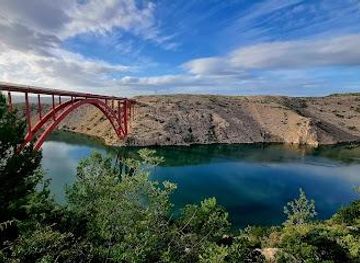
Bridge
Maslenica bridge
Experience the breathtaking views and thrilling adventure of the Maslenica Bridge, the highest bungee jumping spot in Croatia, in Jasenice.


Best landmarks in Lika
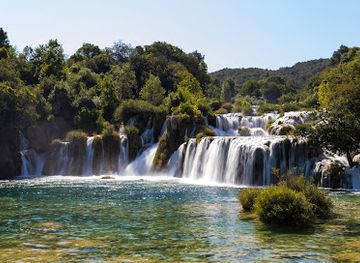
Plitvice Lakes form Lika’s most recognisable natural landmark: a stepped system of lakes and waterfalls created by continuing travertine formation in a densely wooded karst landscape. The Velebit range provides the region’s defining mountain skyline, with Northern Velebit’s limestone ridges and high plateaux expressing the stark geology of the Dinaric Alps. In Smiljan, the Nikola Tesla Memorial Centre marks the birthplace and early environment of one of the modern era’s most influential electrical engineers. Udbina’s Church of the Croatian Martyrs stands above the historic Krbava Field and gives a visible focus to memories of the 1493 medieval battle. Near Perušić, the cave systems of Grabovača represent the subterranean side of Lika’s landscape, while the Gacka River near Otočac is a gentler landmark of clear water, floodplain and traditional rural life. The broad karst fields around Udbina, Lika and Gračac are landmarks in their own right, revealing how settlement and travel have been organised around scarce surface water and mountain passes.
-
National park
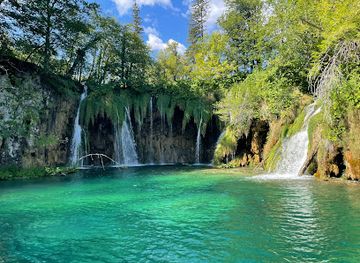
Plitvice Lakes National Park
Discover Plitvice Lakes National Park: A breathtaking Croatian paradise of cascading lakes, stunning waterfalls, and pristine nature.
-
Historical landmark
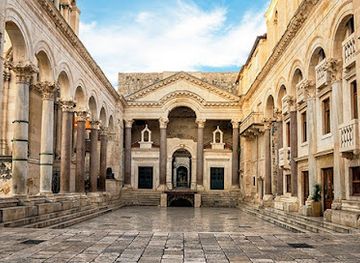
Diocletian's Palace
Explore Diocletian's Palace in Split: a unique blend of ancient Roman architecture and vibrant modern city life, a UNESCO World Heritage Site.
-
Tourist attraction
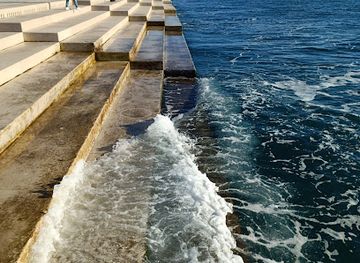
Sea Organ
Experience the unique Sea Organ in Zadar, where the waves of the Adriatic create enchanting melodies, blending nature and art into a captivating audio-visual masterpiece.
-
National park
Krka National Park
Explore the breathtaking beauty of Krka National Park, where stunning waterfalls and rich wildlife come together in a Croatian paradise.
Explore Lika on the map
Plan your trip on one map. See where the top cities, national parks and sights are, and book hotels and experiences in a few clicks.
Best hotels in Lika
Best restaurants in Lika
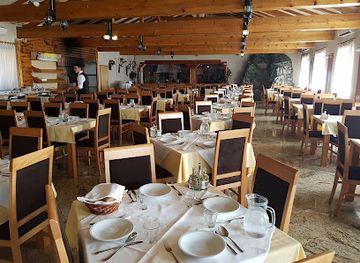
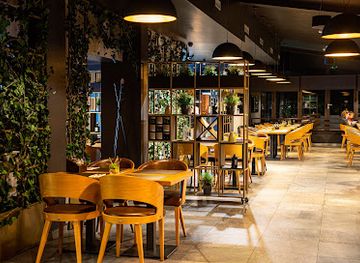
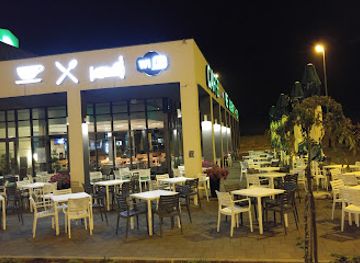
Lika’s food reflects a cool inland climate, pastoral farming and the practical cooking of a mountainous borderland. Lamb, potatoes, cabbage, beans and game appear in hearty dishes, while local cheese, cured meats, honey and fruit preserves are common at farm shops and rural tables. Trout from the Gacka valley is a notable freshwater speciality, usually served simply rather than heavily seasoned. In Gospić, Otočac, Korenica and destinations near Plitvice, visitors will find traditional inns, family restaurants, pizzerias and cafés alongside a growing number of establishments presenting regional ingredients in more contemporary ways. Lika potatoes have a strong local reputation, and lamb from the uplands is particularly associated with the wider mountain cuisine. Menus can be shorter outside the main towns, with seasonal availability influencing what is served. Croatian coffee culture is present in town cafés, while local rakija, beer and regional wines are more likely to accompany an evening meal than dominate it.
-
Restaurant
Restaurant Macola
Experience the best of Croatian cuisine at Restaurant Macola in Gradina Korenička, where every dish tells a story.
-
Restaurant
Degenija
Discover Degenija: An exquisite restaurant offering authentic Croatian cuisine and warm hospitality in scenic Rakovica.
-
Restaurant
Lika sjever
Discover authentic Croatian cuisine at Lika sjever in Brinje – where tradition meets flavor.
-
Restaurant
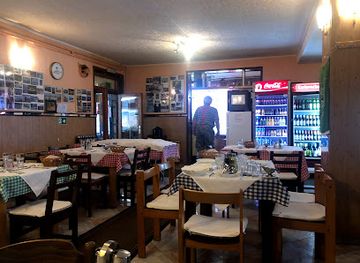
Vila Velebita
Experience authentic Croatian flavors at Vila Velebita in Korenica – a must-visit destination for food lovers.
Best bars in Lika
Lika is not a major clubbing destination, and evening life is generally quieter than in Croatia’s coastal resorts. Gospić and Otočac have the broadest choice of cafés, bars and occasional live-music venues, while Korenica and the Plitvice area cater largely to visitors staying overnight before or after visiting the national park. In smaller settlements, the traditional pub or café remains the main social setting, often closing earlier than venues in Zagreb or on the Adriatic. Some restaurants and accommodation providers offer local beer, Croatian wine and fruit brandies, but nightlife is better understood as an extension of rural hospitality and conversation than as a dedicated entertainment industry. Seasonal visitor numbers can bring more activity near Plitvice, yet travellers should not assume that every village has late-night transport or an extensive choice of venues.
-
Restaurant
Vila Velebita
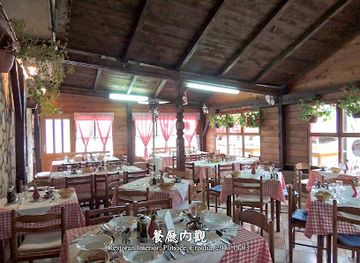
Experience authentic Croatian cuisine at Vila Velebita in Korenica, a delightful restaurant near Plitvice Lakes National Park.
-
Irish pub
The Highlanders pub
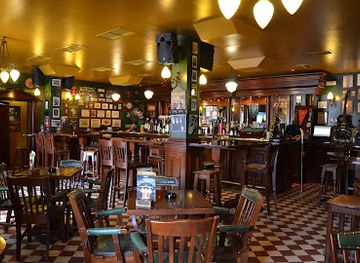
Experience authentic Irish hospitality at The Highlanders Pub in Gospić, featuring delicious food, a wide drink selection, and a vibrant atmosphere.
-
Bar
Beach bar Tatinja
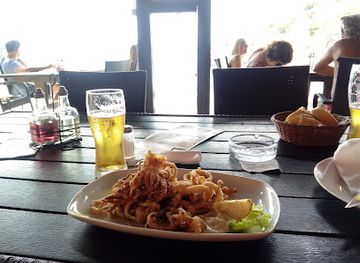
Discover the ultimate relaxation at Beach Bar Tatinja, a hidden coastal paradise in Staništa, Croatia, offering stunning views and delicious cocktails.
-
Bar
Cocktail Bar Roko
Experience the vibrant nightlife at Cocktail Bar Roko in Pag, where expertly crafted cocktails and a lively ambiance await you.
Best nightclubs in Lika
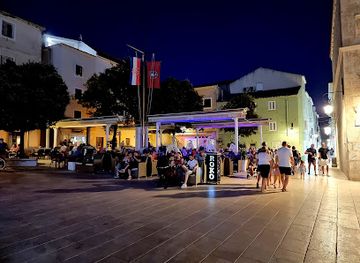
Lika is not a major clubbing destination, and evening life is generally quieter than in Croatia’s coastal resorts. Gospić and Otočac have the broadest choice of cafés, bars and occasional live-music venues, while Korenica and the Plitvice area cater largely to visitors staying overnight before or after visiting the national park. In smaller settlements, the traditional pub or café remains the main social setting, often closing earlier than venues in Zagreb or on the Adriatic. Some restaurants and accommodation providers offer local beer, Croatian wine and fruit brandies, but nightlife is better understood as an extension of rural hospitality and conversation than as a dedicated entertainment industry. Seasonal visitor numbers can bring more activity near Plitvice, yet travellers should not assume that every village has late-night transport or an extensive choice of venues.
-
Night club
Noa Beach Club
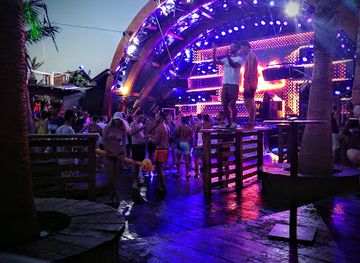
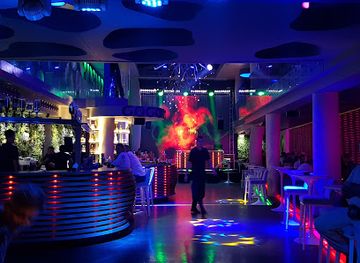
Discover the essence of Croatian nightlife at Noa Beach Club, where stunning views, lively music, and delicious cocktails await.
-
Disco club
Cocomo Club
Experience the vibrant nightlife at Cocomo Club in Novalja, Croatia – a premier disco club blending music, dance, and delicious drinks.
-
Night club
GUMA Night Club
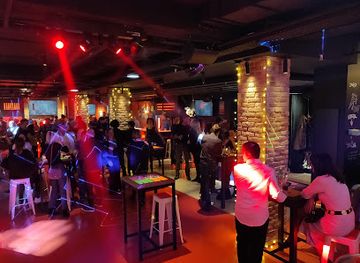
Discover Zadar's nightlife at GUMA Night Club – where music, friends, and unforgettable moments come together!
-
Night club
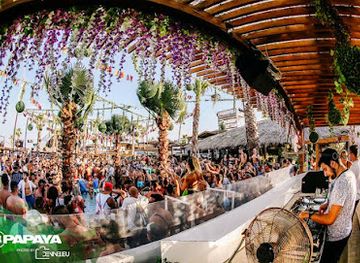
Papaya Club
Discover the electrifying nightlife at Papaya Club on Zrće Beach, a premier destination for unforgettable parties and world-class DJs.
Best shops in Lika
Shopping in Lika is oriented towards local provisions, practical goods and regional produce rather than large retail districts. Gospić and Otočac have the most useful high-street shopping, supermarkets and everyday services, while Korenica serves residents and visitors travelling to Plitvice. Rural households, farm shops and occasional local stalls offer honey, cheese, preserves, dried meats, herbal products and fruit brandy, although availability is seasonal and individual producers vary. Near major visitor sites, small shops sell books, food products and souvenirs connected with Plitvice, Velebit or Nikola Tesla. Craft purchases may include woollens, woodwork and handmade food products, but buyers should distinguish genuinely local goods from generic Croatian souvenirs. Market-style shopping is most rewarding when approached as a way to find regional ingredients for a picnic or gift rather than as a search for designer fashion. Larger shopping centres and a broader range of specialist retail are generally found outside Lika in Zagreb or major coastal cities.
-
Shopping mall
Hey Park Zadar
Explore Hey Park Zadar, a vibrant shopping mall in Croatia offering a mix of local and international brands, dining, and entertainment.
-
Grocery store
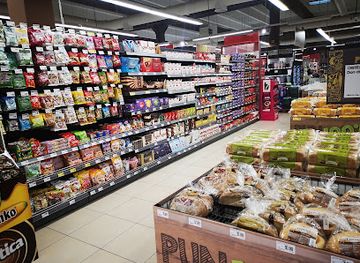
Plodine
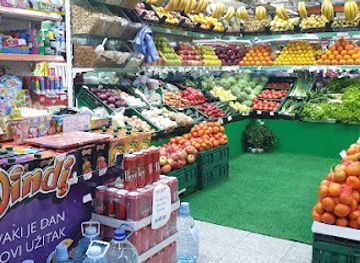
Discover fresh local produce and Croatian delicacies at Plodine, a vibrant grocery store in Otočac, perfect for tourists seeking authentic flavors.
-
Shopping mall
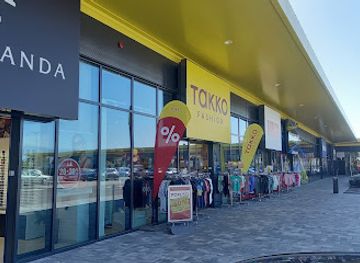
STOP SHOP Gospic
Explore STOP SHOP Gospic, a vibrant shopping mall offering diverse brands, delightful dining, and a welcoming atmosphere in the heart of Gospić.
-
Grocery store
Market "Zagi"
Discover the heart of Gospić at Market 'Zagi', where local flavors and friendly service create an unforgettable shopping experience.
Get your free copy of our complete guide to Lika, delivered straight to you.
Everything on this page, from attractions and restaurants to essentials and local phrases, in one PDF you can read offline, print or share.
Already have an account? Sign in
Your Lika guide is ready.
We'll send it to · Not you? Sign out

Getting your guide ready…
We are putting together a fresh copy of the Lika guide. This can take up to a minute.
This can take a few moments. If your browser asks, choose Allow so the download can start. You'll find the guide in your Downloads folder.
Nothing happened? Download it again
Sorry, the guide is taking longer than usual. Please try again in a minute, or get it by email instead.
Lika essentials
Currency and Payment
Safety
Emergency Situations
Do's and Don'ts
Local Tips
From Eve
Local phrases worth knowing
You don't need to get them perfect. A few words go a long way, and locals appreciate the effort.
Basics
| English | Local | Say it |
|---|---|---|
| Hello | Bok | [Bok] |
| Goodbye | Doviđenja | [Doh-vee-jen-ya] |
| Yes | Da | [Dah] |
| No | Ne | [Neh] |
| Please/You're welcome | Molim | [Moh-leem] |
| Thank you | Hvala | [Hvah-lah] |
| Excuse me/Sorry | Oprostite | [Oh-pro-stee-teh] |
| How are you? | Kako si? | [Kah-koh see?] |
| Fine. And you? | Dobro. A ti? | [Doh-broh. Ah tee?] |
| Do you speak English? | Govoriš li engleski? | [Goh-vo-reesh lee en-gles-kee?] |
| I don't understand | Ne razumijem | [Neh rah-zoo-mee-em] |
Eating & Drinking
| English | Local | Say it |
|---|---|---|
| I'd like to see the menu, please | Mogu li vidjeti meni, molim? | [Moh-goo lee veed-yeh-tee meh-nee, moh-leem?] |
| I don't eat meat | Ne jedem meso | [Neh ye-dem meh-so] |
| Cheers! | Živjeli! | [Zhee-vye-lee!] |
| I would like to pay, please | Želio bih platiti, molim? | [Zhe-lee-oh beeh pla-tee-tee, moh-leem?] |
Emergencies
| English | Local | Say it |
|---|---|---|
| Help! | Upomoć! | [Oo-poh-moch!] |
| Go away! | Ode! | [Oh-deh!] |
| Call the Police! | Zovite policiju! | [Zoh-vee-teh poh-lee-tsee-yoo!] |
| Call a doctor! | Pozovite doktora! | [Poh-zoh-vee-teh dok-toh-rah!] |
| I'm lost | Izgubio sam se | [Eez-goo-bee-oh sahm seh] |
| I'm ill | Bolestan sam | [Boh-le-stan sahm] |
Shopping
| English | Local | Say it |
|---|---|---|
| I'd like to buy... | Želim kupiti... | [Zhe-leem koo-pee-tee...] |
| I'm just looking | Samo gledam | [Sah-mo gled-am] |
| How much is it? | Koliko to košta? | [Koh-lee-koh toh kosh-tah?] |
| That's too expensive | To je preskupo | [Toh yeh preh-skoo-poh] |
| Can you lower the price? | Možeš li spustiti cijenu? | [Moh-zheh-s lee spoo-stee-tee tsee-eh-noo?] |
Time & Numbers
| English | Local | Say it |
|---|---|---|
| What time is it? | Koliko je sati? | [Koh-lee-koh yeh sah-tee?] |
| It's one o'clock | Jedna je sat | [Yed-na yeh saht] |
| Half past (10) | Pola (10) | [Poh-lah (10)] |
| Morning | Jutro | [Yoot-roh] |
| Afternoon | Poslijepodne | [Poh-slee-eh-pohd-neh] |
| Evening | Večer | [Veh-cher] |
| Yesterday | Jučer | [Yoo-cher] |
| Today | Danas | [Dah-nas] |
| Tomorrow | Sutra | [Soo-trah] |
| 1 | Jedan | [Yeh-dahn] |
| 2 | Dva | [Dvah] |
| 3 | Tri | [Tree] |
| 4 | Četiri | [Cheh-tee-ree] |
| 5 | Pet | [Peht] |
| 6 | Šest | [Shest] |
| 7 | Sedam | [Seh-dahm] |
| 8 | Osam | [Oh-sahm] |
| 9 | Devet | [Deh-vet] |
| 10 | Deset | [Deh-set] |
Transport & Directions
| English | Local | Say it |
|---|---|---|
| Where's a/the...? | Gdje je...? | [Gdyeh yeh...?] |
| What's the address? | Koja je adresa? | [Koh-yah yeh ah-dreh-sah?] |
| Can you show me (on the map)? | Možeš li mi pokazati (na karti)? | [Moh-zheh-s lee mee poh-kah-zah-tee (nah kahr-tee)?] |
| When's the next (bus)? | Kada je sljedeći (autobus)? | [Kah-dah yeh sleh-deh-chee (ow-toh-boos)?] |
| A ticket (to ....) | Jedna karta (do ...) | [Yed-na kahr-tah (doh ...)] |
History of Lika
Japodian Communities and Roman Lika
Before Roman rule, much of Lika was inhabited by the Japodes, an Iron Age people whose settlements occupied the valleys and uplands between the Adriatic hinterland and the interior Balkans. Archaeological finds, including hillforts, graves and metalwork, reveal connections with neighbouring communities and the importance of trade across the mountain passes. Rome incorporated the area during its expansion in the first century BC and AD, establishing roads, settlements and administrative control. Roman remains are less visually dominant than at Croatia’s major coastal sites, but the region’s strategic position and transport routes helped link the Adriatic provinces with the continental interior.
Medieval Fortresses and the Krbava Battle
In the medieval period, Lika was divided among Croatian noble families and church institutions, with fortified settlements controlling valleys and routes through the karst landscape. The region became particularly associated with the 1493 Battle of Krbava Field near Udbina, when an Ottoman army defeated a Croatian force led by Ban Emerik Derenčin. The battle became a powerful symbol of the military pressure facing medieval Croatia, even though Ottoman power developed unevenly across the region. Today, the wide Krbava plain and the Church of the Croatian Martyrs at Udbina provide important settings for understanding this era.
The Ottoman Frontier
From the late fifteenth century onwards, Lika was repeatedly affected by Ottoman expansion, frontier warfare and population movement. Settlements were damaged or abandoned in some areas, while new communities formed as military and civilian populations shifted across the borderlands. The frontier was not merely a line of battles: it reshaped agriculture, landholding, religion and local architecture. Fortified sites and the remnants of old routes reflect the need to monitor passes and protect communities. The long period of insecurity also contributed to Lika’s later reputation as a sparsely settled borderland within the Habsburg world.
The Habsburg Military Frontier
Much of Lika came under the Habsburg Military Frontier, a zone organised for defence against the Ottoman Empire. Military administration influenced settlement, land use and the organisation of local communities, while soldiers and their families arrived from several parts of the Habsburg lands. After the frontier was gradually demilitarised and incorporated into civilian administration in the nineteenth century, Lika remained economically rural and relatively isolated. Roads and later railways improved connections, but the region’s elongated valleys, hard limestone terrain and scattered villages continued to shape everyday life.
Nikola Tesla and the Modern Scientific Imagination
Inventor and electrical engineer Nikola Tesla was born in 1856 in Smiljan, near Gospić, when the area formed part of the Habsburg Military Frontier. His birthplace and the nearby Nikola Tesla Memorial Centre interpret his early life, family background and scientific legacy. Tesla left the region as a young man and became an internationally important figure, so his story belongs both to Lika and to the wider history of modern electrical engineering. The memorial landscape also demonstrates how a rural nineteenth-century setting can be connected to a global scientific heritage.
Twentieth-Century Conflict and Reconstruction
Lika experienced severe disruption during the Second World War and again during the Croatian War of Independence in the 1990s. Several towns and villages suffered destruction, displacement and prolonged instability, while the region’s strategic roads and upland positions gave it military importance. Post-war reconstruction and the return of residents have been uneven, and the demographic effects remain part of contemporary Lika’s social landscape. Visitors should approach memorials, damaged or rebuilt buildings and local accounts of the period with care, recognising that this is living history rather than a distant military episode.
National Parks, Conservation and Nature Tourism
Late twentieth- and early twenty-first-century tourism increasingly presented Lika through its protected landscapes rather than its frontier history alone. Plitvice Lakes National Park became an internationally recognised example of freshwater and karst conservation, while Northern Velebit National Park protects high mountain habitats, forests and distinctive limestone formations. Other sites, including Grabovača Cave Park and the Gacka valley, support more localised forms of nature tourism. Conservation has brought visitors and investment, but it also requires careful management of footpaths, water environments, wildlife and the carrying capacity of popular sites.
Lika in Photos
Browse through our photo collection highlighting the charm and character of the destination.
Neighbouring regions of Lika
The closest regions to Lika, if you have time for more than one.
-

-

-

-

-


Swipe for more regions
Explore more

Explore more of Croatia
Discover Croatia: A Mediterranean paradise with stunning coastlines, ancient cities, and rich cultural heritage. Perfect for beach lovers, history buffs, and nature enthusiasts.
Explore Croatia