

Sphinx, Split Travel Guide
Free Guide: A 3,400-year-old Egyptian treasure in the heart of Split's Diocletian's Palace, a silent witness to history and a testament to ancient empires.


A brief summary of Sphinx
A 3,400-year-old Egyptian treasure in the heart of Split's Diocletian's Palace, a silent witness to history and a testament to ancient empires.
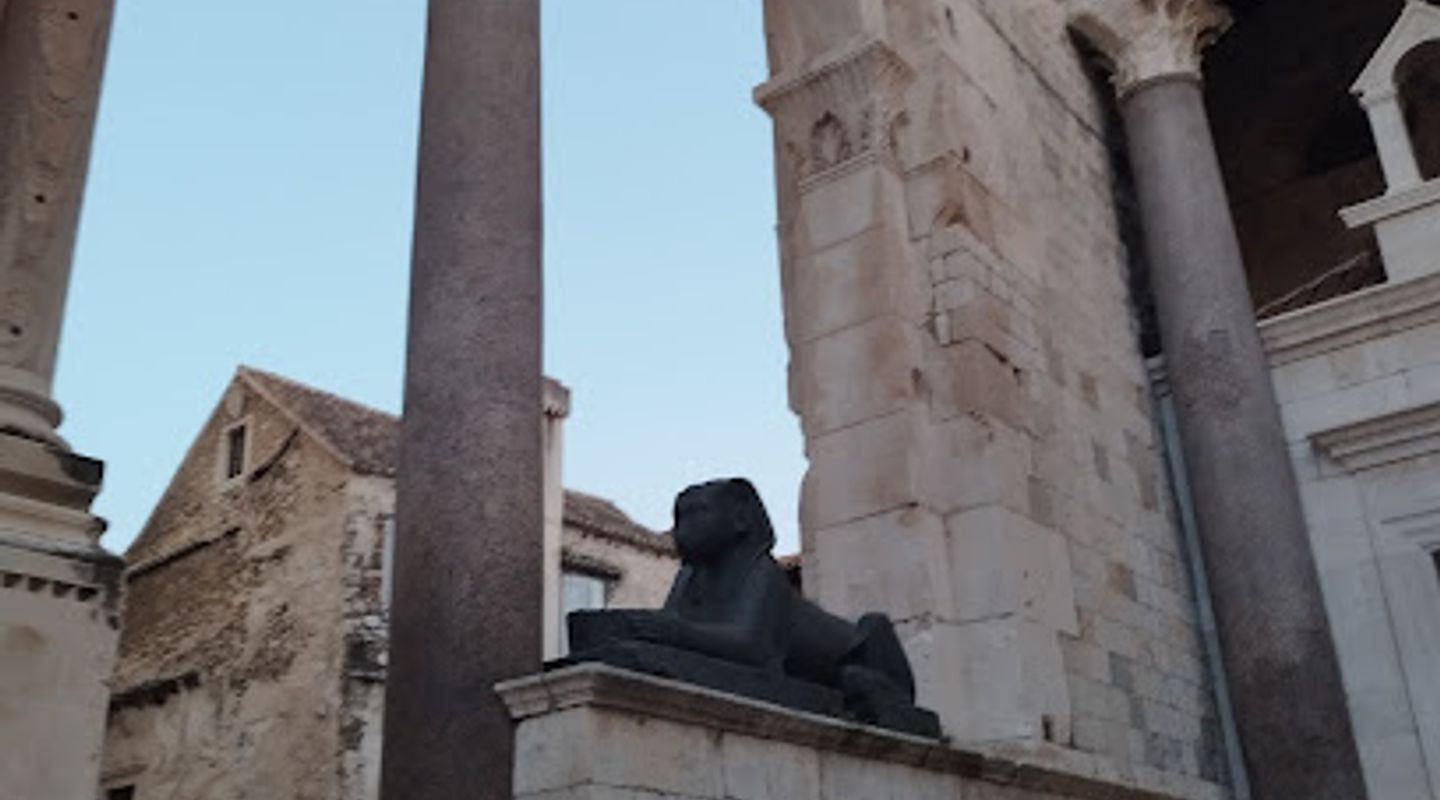
An ancient Egyptian sphinx stands proudly in Split's Diocletian's Palace, a relic of Emperor Diocletian's fascination with Egyptian culture. This well-preserved black granite statue, dating back to Pharaoh Thutmose III (1479-1425 BC), is a unique and often overlooked treasure within the palace complex.
Opening hours
- Every dayOpen 24 hours
Opening hours as listed on the venue’s Google Business Profile. Hours can change for services and special events, so check with the venue before you go.
- Address
- Ul. Kraj Svetog Ivana 1, 21000, Split
- Website
Getting there
Walking
Public Transport
Taxi/Ride-share
Discover more about Sphinx
Overview
Nestled within the heart of Split's Diocletian's Palace, a UNESCO World Heritage site, lies an authentic Egyptian sphinx, a silent sentinel with a rich history. Brought to Split over 1,700 years ago by Emperor Diocletian, this black granite androsphinx—a creature with a lion's body and a human head—dates back to the reign of Pharaoh Thutmose III. It is believed that Diocletian brought as many as twelve sphinxes from Egypt after quelling a rebellion around 297 A.D., placing them strategically within his palace to reflect Egyptian customs and beliefs regarding the afterlife.Of the original twelve, only one has survived the ravages of time relatively intact. This particular sphinx, made of black granite, stands in the Peristyle, the palace's central courtyard. The sphinx holds a vessel for offerings in her hands. Over 3,400 years old, it is one of the oldest objects in Split. The sphinx has witnessed countless generations pass by.Another headless sphinx can be found in front of the Temple of Jupiter. The remaining fragments of the other sphinxes are now housed in museums around the city and within the cellars of Diocletian's Palace. According to local lore, American industrialist Cornelius Vanderbilt once sought to purchase the Peristyle sphinx, but his offer was declined.
Evendo Review Centre
 Google
Guest reviews
Explore Sphinx on the map
A handpicked selection of must-see spots near Sphinx, mapped for you.
Get your free copy of our complete guide to Sphinx, delivered straight to you.
Everything on this page, from opening hours and how to get there to Eve’s tips and the best time to go, in one PDF you can read offline, print or share.
Already have an account? Sign in
Your Sphinx guide is ready.
We'll send it to · Not you? Sign out

Getting your guide ready…
We are putting together a fresh copy of the Sphinx guide. This can take up to a minute.
This can take a few moments. If your browser asks, choose Allow so the download can start. You'll find the guide in your Downloads folder.
Nothing happened? Download it again
Sorry, the guide is taking longer than usual. Please try again in a minute, or get it by email instead.
Other nearby places you may find interesting
The closest places of the same kind, if this one is not quite what you had in mind.
-
-
-
-
-


Swipe for more places
More to explore near Sphinx

 Best experiences near Sphinx
 Best hotels near Sphinx
 Best landmarks near Sphinx
 Best attractions near Sphinx
 Best shops near Sphinx
 Best restaurants near Sphinx
 Best bars near Sphinx
Do you manage this location?
Take control to get all the benefits, like improved information, better appearance, and stronger visibility across AI-powered discovery.
Explore more

Explore more of Split
Explore Split, Croatia's vibrant coastal gem, where ancient history meets modern charm. Discover stunning beaches, rich culture, and a gateway to the beautiful Dalmatian islands.
Explore Split
Explore more of Croatia
Discover Croatia: A Mediterranean paradise with stunning coastlines, ancient cities, and rich cultural heritage. Perfect for beach lovers, history buffs, and nature enthusiasts.
Explore Croatia
