

Free Saliña Travel Guide & Mobile App
Explore Saliña with free travel guides. Discover regional history, expert tips, proposed trips, and audio guides on web or mobile app.


Saliña in Curaçao offers convenient city living, varied dining, shopping and easy access to Willemstad and the island’s eastern coast.
Read more about Saliña
When is the best time to visit Saliña?
Best: January–March · 28–29°C| Month | High (°C) | Rainfall (mm) |
|---|---|---|
| January (best) | 28 | 25 |
| February (best) | 28 | 23 |
| March (best) | 29 | 21 |
| April | 29 | 19 |
| May | 29 | 17 |
| June | 30 | 16 |
| July | 30 | 15 |
| August | 30 | 16 |
| September | 30 | 21 |
| October | 30 | 26 |
| November | 29 | 30 |
| December | 29 | 28 |
Getting to and around Saliña
How to get there
Transportation
Destinations in Saliña
Resorts, valleys and scenic spots worth a trip of their own.

Swipe for more destinations
Best attractions in Saliña
Saliña’s attractions are chiefly urban and practical rather than monumental. The district provides access to shopping, supermarkets, cafés, restaurants and services, making it a useful base for exploring Willemstad and the eastern side of Curaçao. Visitors interested in the island’s history can combine a stay in Saliña with the historic centre and harbour of Willemstad, which lie nearby but outside the district. The area is also well placed for excursions towards Caracasbaai, Jan Thiel and other eastern coastal districts, although those beaches and waterfront attractions should not be described as being in Saliña. Within the neighbourhood itself, the most rewarding experience is observing contemporary Curaçaoan city life: traffic moving between districts, multilingual commerce and the contrast between established residential streets and modern retail development. Nature is represented more by the dry island setting than by formal parks, with thorny scrub, limestone ground and intense sunlight characteristic of the wider Willemstad area. Travellers seeking caves, plantations, secluded coves or larger outdoor experiences will need to travel beyond Saliña, usually by car or organised excursion.
-
Beach
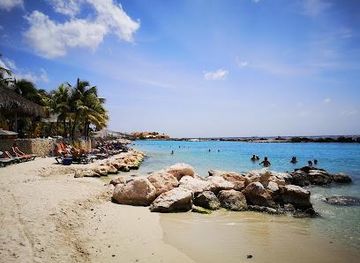
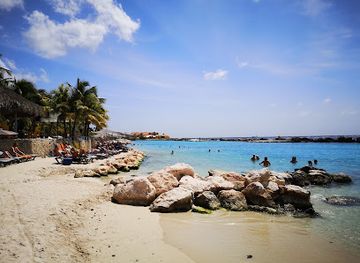
Mambo Beach
Experience the vibrant heart of Curaçao at Mambo Beach: where white sands meet turquoise waters, lively nightlife, and endless entertainment on the iconic Mambo Beach Boulevard.
-
Aquarium
Curaçao Sea Aquarium
Discover the wonders of the Caribbean Sea at Curaçao Sea Aquarium, where you can explore vibrant marine life, participate in interactive encounters, and learn about ocean conservation in a unique open-water setting.
-
Tourist attraction
Landhuis Chobolobo
Discover the birthplace of the world-famous Blue Curaçao liqueur at Landhuis Chobolobo, a historic mansion offering tours, tastings, and a glimpse into Curaçao's vibrant culture.
-
Beach
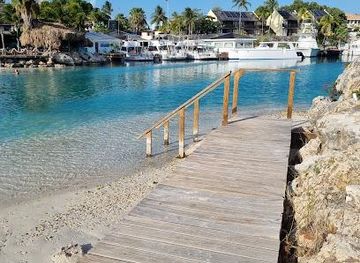
Marie Pampoen Beach
Discover the serene beauty of Marie Pampoen Beach in Curaçao: a tranquil escape with crystal-clear waters, vibrant marine life, and authentic Caribbean charm, perfect for relaxation and exploration.

Best landmarks in Saliña
Saliña has few monumental landmarks of its own; its identity is expressed more through its urban setting and relationship with Willemstad than through a preserved historic core. The district’s roads and commercial corridors form part of the modern eastern approach to the capital, marking the outward growth of Curaçao’s main city. The name Saliña recalls the island’s former saline landscapes, a reminder that today’s built-up neighbourhood developed over terrain once understood through salt pans, plantations and open countryside. Nearby Willemstad contains Curaçao’s best-known architectural landmarks, including the colourful historic waterfront and the harbour fortifications, but these are outside Saliña and should be visited as a separate part of an itinerary. The wider Schottegat harbour, also close to the district, is significant as a natural harbour and as the setting for Curaçao’s maritime and oil-refining history, although its industrial areas are not visitor landmarks in the conventional sense. For a fuller architectural contrast, combine Saliña’s modern streetscape with the older buildings of central Willemstad and the island’s rural landhouses.
-
Bridge
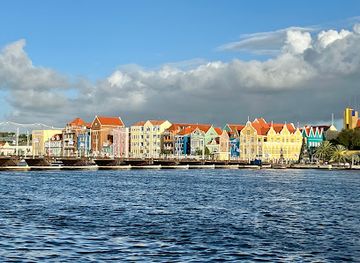
Queen Emma Bridge
Explore the Queen Emma Bridge in Willemstad, Curaçao, a charming pedestrian bridge offering stunning views and a glimpse into the island's vibrant culture.
-
Beach
Mambo Beach
Experience the vibrant culture and stunning natural beauty of Mambo Beach in Curaçao, a perfect destination for relaxation and adventure.
-
Beach pavillion
Cas Abao Beach
Experience the breathtaking beauty and relaxation of Cas Abao Beach, a must-visit destination in Curaçao with stunning waters, soft sands, and vibrant marine life.
-
Hotel
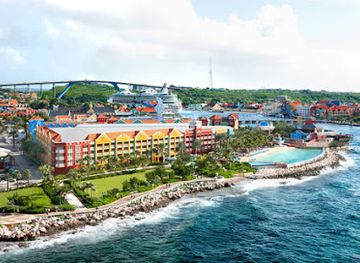
Renaissance Wind Creek Curacao Resort
Experience luxury and local charm at Renaissance Wind Creek Curacao Resort, where relaxation meets adventure in a tropical paradise.
Explore Saliña on the map
Plan your trip on one map. See where the top cities, national parks and sights are, and book hotels and experiences in a few clicks.
Best hotels in Saliña
Best restaurants in Saliña
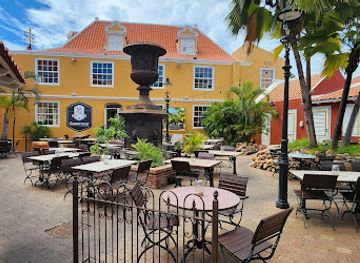
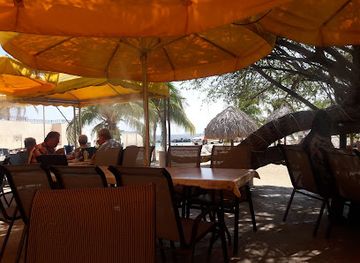
Dining in Saliña reflects Curaçao’s position at the crossroads of the Caribbean, South America and the Dutch world. Restaurants and casual eateries serve a broad mixture of Curaçaoan, Caribbean, Latin American, Dutch and international food, with choices concentrated around commercial roads and shopping areas. Seek out local dishes such as keshi yena, in which seasoned filling is baked inside cheese, as well as stewed goat, fresh fish, fried seafood, funchi and hearty soups. Pastechi, a filled savoury pastry, is useful for a quick breakfast or snack, while drinks and desserts often draw on tropical fruit and Dutch-Caribbean influences. Saliña is also practical for supermarkets and takeaway food, allowing visitors staying in apartments to sample local ingredients. The most traditional food experiences may be found in modest family-run establishments and markets elsewhere in Willemstad, so ask residents or accommodation hosts about current recommendations rather than relying solely on international dining listings.
-
Restaurant
Zanzibar Beach & Restaurant
Experience culinary delights at Zanzibar Beach & Restaurant with breathtaking ocean views in Jan Thiel, Curaçao.
-
Restaurant
Restaurant & Café Gouverneur De Rouville
Savor authentic Caribbean flavors at Restaurant & Café Gouverneur De Rouville in Willemstad, where delightful cuisine meets stunning views.
-
Seafood
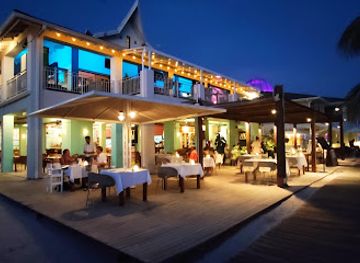
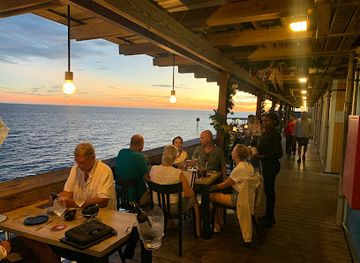
Sea Side Terrace
Discover exquisite seafood dishes with stunning ocean views at Sea Side Terrace in Willemstad, Curaçao – a culinary delight awaits!
-
Seafood
Ceviche 91 gastrobar
Experience the best seafood at Ceviche 91 Gastrobar in Willemstad - where every bite is a taste of paradise!
Best bars in Saliña
Saliña’s evening scene is varied but not defined by a single nightclub district. Restaurants, hotel bars and informal drinking places provide much of the local nightlife, with music and late meals more prominent than a concentrated club circuit. The district’s central location makes it easy to travel towards Willemstad’s historic waterfront for evening drinks, or towards the eastern coastal entertainment areas, which lie outside Saliña. Bars may serve Curaçaoan rum, Dutch-style lagers, cocktails and non-alcoholic drinks, while Papiamentu, Dutch, English and Spanish can all be heard in social settings. Live music and special events can be seasonal or change venues, so check current arrangements locally. A taxi or designated driver is sensible after drinking, as urban roads can be poorly suited to unfamiliar night-time driving and public transport is not always the most convenient late in the evening.
-
Seafood
Sea Side Terrace
Experience the best of Curaçao's seafood at Sea Side Terrace, where fresh flavors meet breathtaking ocean views.
-
Restaurant
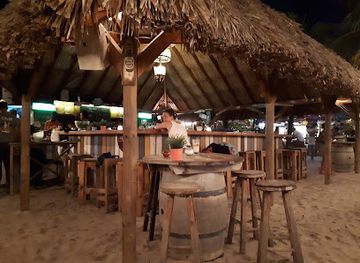
Chill Beach Bar & Grill
Experience the vibrant flavors and stunning ocean views at Chill Beach Bar & Grill in Willemstad, Curaçao - a culinary gem for every traveler.
-
Bar
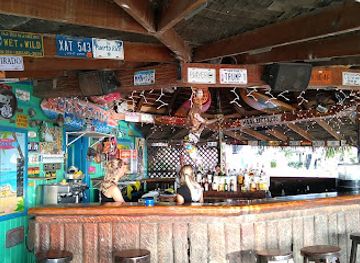
Wet & Wild Beach Club
Discover the perfect blend of relaxation and vibrant entertainment at Wet & Wild Beach Club in Curaçao, where stunning views and delicious cuisine await.
-
Restaurant
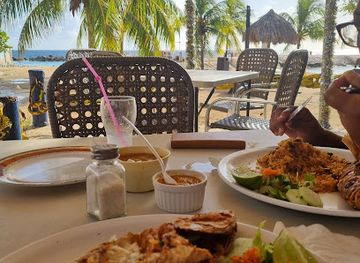
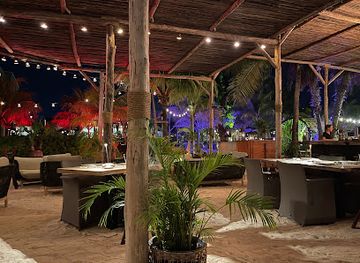
MOOD Beach Curacao
Savor delicious cuisine with stunning ocean views at MOOD Beach Curacao, the perfect blend of relaxation and culinary delight.
Best nightclubs in Saliña
Saliña’s evening scene is varied but not defined by a single nightclub district. Restaurants, hotel bars and informal drinking places provide much of the local nightlife, with music and late meals more prominent than a concentrated club circuit. The district’s central location makes it easy to travel towards Willemstad’s historic waterfront for evening drinks, or towards the eastern coastal entertainment areas, which lie outside Saliña. Bars may serve Curaçaoan rum, Dutch-style lagers, cocktails and non-alcoholic drinks, while Papiamentu, Dutch, English and Spanish can all be heard in social settings. Live music and special events can be seasonal or change venues, so check current arrangements locally. A taxi or designated driver is sensible after drinking, as urban roads can be poorly suited to unfamiliar night-time driving and public transport is not always the most convenient late in the evening.
-
Bar
Wet & Wild Beach Club
Discover the vibrant atmosphere of Wet & Wild Beach Club, a Caribbean paradise with stunning views, delicious food, and lively entertainment in Willemstad, Curaçao.
-
Gay bar
GAZE Bar & Lounge Curaçao
Experience the vibrant nightlife of Curaçao at GAZE Bar & Lounge, a lively destination for cocktails, dancing, and entertainment.
-
Bar
Club LIV Curaçao
Explore the heart of Willemstad's nightlife at Club LIV Curaçao, where electrifying music meets vibrant dance and exquisite cocktails.
-
Bar
La GRUA DISCO CLUB.
Dive into the vibrant nightlife of Curaçao at La GRUA DISCO CLUB, where music, dancing, and excitement await every night.


Best shops in Saliña
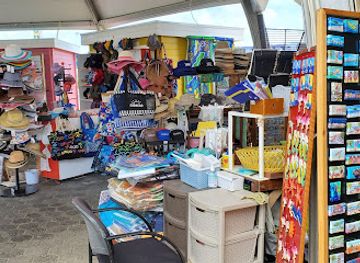
Shopping is one of Saliña’s most useful features, with modern retail, supermarkets, smaller businesses and everyday services serving both residents and visitors. The district is better suited to groceries, clothing, pharmacy items, gifts and practical supplies than to historic-market atmosphere or concentrated luxury shopping. Visitors can look for Curaçaoan food products, locally made craftwork, colourful island-themed textiles, rum-based gifts and artwork, while checking labels when seeking genuinely locally produced goods. For historic streets, waterfront browsing and a wider selection of souvenirs, central Willemstad offers a separate shopping experience outside Saliña. Markets and independent sellers can change location or operating days, so confirm arrangements locally. Because Saliña is a working urban district rather than a dedicated tourist enclave, its shopping landscape gives a useful view of everyday Curaçaoan commerce alongside visitor-oriented retail.
-
Shopping mall
Renaissance Mall & Rif Fort
Experience the vibrant blend of shopping and dining at Renaissance Mall & Rif Fort in Willemstad, Curaçao, where history meets modern luxury.
-
Shopping mall
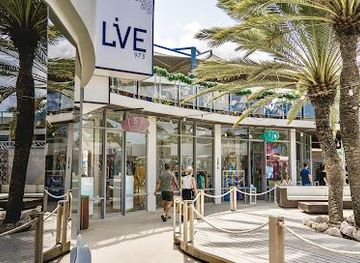
Mambo Beach Boulevard
Explore Mambo Beach Boulevard in Willemstad for shopping, dining, and nightlife amidst stunning Caribbean views.
-
Department store
La Curaçao
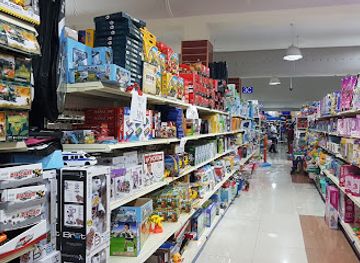
Explore La Curaçao, the top department store in Willemstad, offering a vast selection of electronics and home goods at unbeatable prices.
-
Perfume store
Penha Duty Free Curacao in Punda
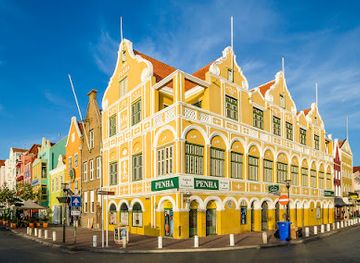
Shop luxury perfumes, cosmetics, and liquors at Penha Duty Free Curacao in Punda, the ultimate destination for discerning travelers seeking quality.
Get your free copy of our complete guide to Saliña, delivered straight to you.
Everything on this page, from attractions and restaurants to essentials and local phrases, in one PDF you can read offline, print or share.
Already have an account? Sign in
Your Saliña guide is ready.
We'll send it to · Not you? Sign out

Getting your guide ready…
We are putting together a fresh copy of the Saliña guide. This can take up to a minute.
This can take a few moments. If your browser asks, choose Allow so the download can start. You'll find the guide in your Downloads folder.
Nothing happened? Download it again
Sorry, the guide is taking longer than usual. Please try again in a minute, or get it by email instead.
Saliña essentials
Currency and Payment
Safety
Emergency Situations
Do's and Don'ts
Local Tips
From Eve
Local phrases worth knowing
You don't need to get them perfect. A few words go a long way, and locals appreciate the effort.
Basics
| English | Local | Say it |
|---|---|---|
| Hello | Halo | [Ha-lo] |
| Goodbye | Ayo | [Ayo] |
| Yes | Si | [Si] |
| No | No | [No] |
| Please/You're welcome | Por fabor | [Por fa-bor] |
| Thank you | Gracias | [Gra-si-as] |
| Excuse me/Sorry | Disculpa | [Dis-cul-pa] |
| How are you? | Kon ta? | [Kon ta?] |
| Fine. And you? | Bien. Y bo? | [Bien. Y bo?] |
| Do you speak English? | Bo ta papia Ingles? | [Bo ta pa-pia In-gles?] |
| I don't understand | Mi no ta komprondé | [Mi no ta kom-pron-dé] |
Eating & Drinking
| English | Local | Say it |
|---|---|---|
| I'd like to see the menu, please | Mi ke bende e menu, por fabor | [Mi ke ben-de e me-nu, por fa-bor] |
| I don't eat meat | Mi no ta komé carne | [Mi no ta ko-mé car-ne] |
| Cheers! | Salud! | [Sa-lud] |
| I would like to pay, please | Mi ke paga, por fabor | [Mi ke pa-ga, por fa-bor] |
Emergencies
| English | Local | Say it |
|---|---|---|
| Help! | Yuda! | [Yu-da] |
| Go away! | Bai for di! | [Bai for di] |
| Call the Police! | Llama e Polisia! | [Ya-ma e Po-li-sia] |
| Call a doctor! | Llama un doktor! | [Ya-ma un dok-tor] |
| I'm lost | Mi ta perdí | [Mi ta per-dí] |
| I'm ill | Mi ta mal | [Mi ta mal] |
Shopping
| English | Local | Say it |
|---|---|---|
| I'd like to buy... | Mi ke compra... | [Mi ke com-pra...] |
| I'm just looking | Mi ta solo mira | [Mi ta so-lo mi-ra] |
| How much is it? | Kanto ta e? | [Kan-to ta e?] |
| That's too expensive | Es ta demas caro | [Es ta de-mas ca-ro] |
| Can you lower the price? | Bo por baja e precio? | [Bo por ba-ja e pre-cio?] |
Time & Numbers
| English | Local | Say it |
|---|---|---|
| What time is it? | Kiko ora ta? | [Ki-ko o-ra ta?] |
| It's one o'clock | Ta un ora | [Ta un o-ra] |
| Half past (10) | Medio pa (10) | [Me-dio pa (10)] |
| Morning | Mañana | [Ma-ña-na] |
| Afternoon | Tarde | [Tar-de] |
| Evening | Kochi | [Ko-chi] |
| Yesterday | Ayo | [Ayo] |
| Today | Awe | [A-we] |
| Tomorrow | Mañana | [Ma-ña-na] |
| 1 | Un | [Un] |
| 2 | Dos | [Dos] |
| 3 | Tres | [Tres] |
| 4 | Kuater | [Kua-ter] |
| 5 | Sinku | [Sin-ku] |
| 6 | Seis | [Seis] |
| 7 | Siete | [Sie-te] |
| 8 | Ocho | [O-cho] |
| 9 | Nueve | [Nue-ve] |
| 10 | Dies | [Dies] |
Transport & Directions
| English | Local | Say it |
|---|---|---|
| Where's a/the...? | Unda ta un/di...? | [Un-da ta un/di...?] |
| What's the address? | Kiko ta e adrès? | [Ki-ko ta e a-drès?] |
| Can you show me (on the map)? | Bo por mustra mi (na e mapa)? | [Bo por mus-tra mi (na e ma-pa)?] |
| When's the next (bus)? | Kando ta e prome (bus)? | [Kan-do ta e pro-me (bus)?] |
| A ticket (to ....) | Un billete (pa....) | [Un bi-lle-te (pa....)] |
History of Saliña
Indigenous Caquetío Heritage
Long before European colonisation, Curaçao was inhabited by Caquetío communities associated with the wider Arawakan cultural world of the southern Caribbean. Archaeological evidence across the island includes habitation remains, pottery and rock art, although Saliña’s densely developed urban environment offers few visible traces of this early period. The district forms part of the landscape around Willemstad, whose later expansion transformed many natural sites and former rural areas. Understanding this earlier history places modern Saliña within a much older human geography than its roads, shops and postwar buildings suggest.
Spanish and Dutch Colonial Rule
Spain claimed Curaçao in the early sixteenth century, but the Dutch West India Company took control in 1634. Under Dutch rule, Willemstad developed as a fortified harbour and trading centre, and Curaçao became an important point in regional maritime commerce. The historic city and harbour were the main colonial focus, while areas now associated with Saliña remained outside the compact urban core and were used in a more rural way. The island’s Dutch political connection, Caribbean location and diverse population established the cultural mixture that remains evident in Curaçao today.
Plantations, Salt Pans and Rural Land Use
During the colonial period, Curaçao’s economy included plantations, livestock keeping, salt extraction and trade. Natural salt pans and brackish areas were economically valuable in the island’s dry climate, and the name Saliña is associated with the Spanish word for a salt pan or saltworks. The precise historic uses of particular tracts changed over time as Willemstad expanded, but the name preserves a link to Curaçao’s former landscape of saline flats and agricultural estates. Much of this rural environment was later absorbed by roads, housing and commercial development.
The Harbour, Oil and Industrial Curaçao
The opening of the oil refinery at Asiento, near Schottegat, in 1918 marked a major economic transformation for Curaçao. Refining Venezuelan crude brought employment, migration and rapid urban growth, while the harbour became central to the island’s modern economy. Industrial installations are not the defining feature of Saliña itself, but the district’s expansion and its connection with the wider Willemstad road network belong to this period of change. The refinery era also contributed to Curaçao’s exceptionally diverse population and multilingual urban culture.
Postwar Urban Expansion
After the Second World War, Willemstad spread beyond its historic centre into new residential and commercial districts. Improved roads, growing car ownership and changing retail habits helped areas such as Saliña develop as urban service and shopping zones rather than as traditional village settlements. This expansion reduced the practical distance between the capital and eastern parts of the island, while also creating traffic pressures and a more dispersed city. Saliña’s present character—busy roads, businesses, restaurants and neighbourhood housing—largely reflects this twentieth-century urbanisation.
Curaçao within the Kingdom of the Netherlands
Curaçao became part of the autonomous country of the Netherlands Antilles in 1954 and, following its dissolution in 2010, became an autonomous country within the Kingdom of the Netherlands. This constitutional history helps explain the island’s Dutch public institutions alongside its Caribbean society, Papiamentu language and strong regional connections. Saliña is part of this contemporary Curaçaoan setting: a Willemstad district shaped by international commerce, local neighbourhood life and the continuing importance of the island’s harbour and tourism economy.
Saliña in Photos
Browse through our photo collection highlighting the charm and character of the destination.
Neighbouring regions of Saliña
The closest regions to Saliña, if you have time for more than one.
-

-
-

-

-


Swipe for more regions
Explore more

Explore more of Curacao
Discover Curacao, where vibrant culture, stunning beaches, and historic charm come together to create a Caribbean paradise like no other.
Explore Curacao