

Free Elbe Sandstone Mountains Travel Guide & Mobile App
Explore Elbe Sandstone Mountains with free travel guides. Discover regional history, expert tips, proposed trips, and audio guides on web or mobile app.


Explore Czechia's Elbe Sandstone Mountains for sandstone arches, forest gorges, river valleys and rewarding walks around Bohemian Switzerland.
Read more about Elbe Sandstone Mountains
When is the best time to visit Elbe Sandstone Mountains?
Best: June–August · 22–24°C| Month | High (°C) | Rainfall (mm) |
|---|---|---|
| January | 2 | 40 |
| February | 4 | 40 |
| March | 8 | 50 |
| April | 13 | 50 |
| May | 18 | 60 |
| June (best) | 22 | 70 |
| July (best) | 24 | 80 |
| August (best) | 23 | 70 |
| September | 19 | 60 |
| October | 13 | 50 |
| November | 7 | 50 |
| December | 2 | 50 |
Getting to and around Elbe Sandstone Mountains
How to get there
Transportation
Best attractions in Elbe Sandstone Mountains
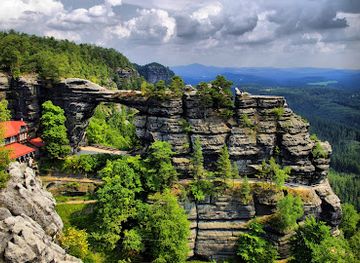
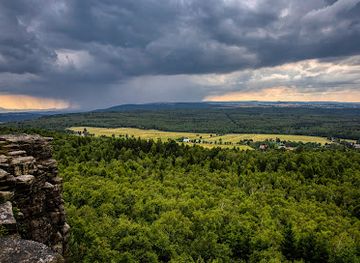
The Czech Elbe Sandstone Mountains are primarily a walking destination, with attractions spread through Bohemian Switzerland National Park, the Labské pískovce Protected Landscape Area and the Elbe valley. Around Hřensko, marked trails lead through wooded ravines and towards Pravčická brána, the celebrated natural arch that has become the area's emblem. Some gorge sections have traditionally involved boat passages, but access and operating arrangements can change, so visitors should check current information before relying on them. Jetřichovice offers a network of steep viewpoint trails across the Děčínské stěny, while Tisá is known for the compact rock labyrinth of Tiské skály. The Elbe corridor provides river scenery, cycling opportunities and a more open contrast to the enclosed forests. Děčín adds an urban dimension through its château, historic river setting and cultural facilities. Outdoor activities include hiking, climbing where permitted, cycling on suitable roads and nature observation, but the region's conservation framework is central to the experience. Fire restrictions, path closures and erosion controls are part of visiting a landscape whose most important attractions are geological formations and fragile woodland habitats rather than built entertainment.
-
Tourist attraction
Bohemian Switzerland National Park
Explore the breathtaking beauty of Bohemian Switzerland National Park, a natural wonder in the Czech Republic, with stunning landscapes and rich wildlife.
-
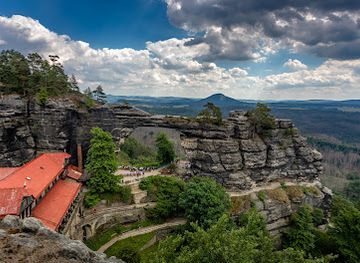
Pravčická Archway
Explore the breathtaking Pravčická Archway, Europe's largest natural sandstone arch, nestled in the stunning landscapes of the Czech Republic.
-
Observation deck
Děčínský Sněžník Lookout Tower
Discover the breathtaking views from Děčínský Sněžník Lookout Tower, a perfect blend of nature and adventure for every tourist.
-
Tourist attraction
Šaunštejn / Schauenstein Castle
Discover the enchanting Šaunštejn Castle, a historical treasure offering breathtaking views in the heart of the Czech Republic's natural beauty.

Best landmarks in Elbe Sandstone Mountains
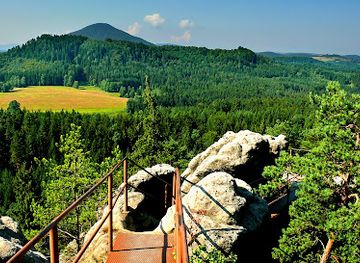
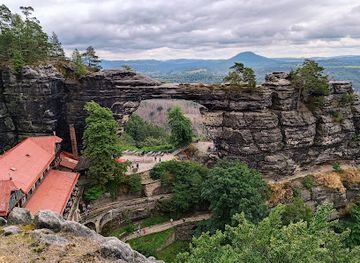
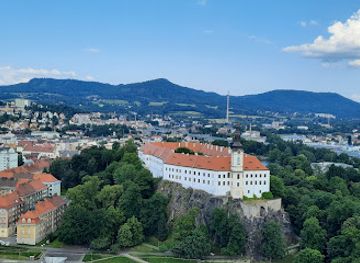
Pravčická brána is the defining natural landmark of the Czech Elbe Sandstone Mountains, a large sandstone arch above the forest near Hřensko whose scale and unusual form made it a focus of nineteenth-century landscape tourism. The Tiské skály near Tisá form another highly recognisable group of weathered walls, pinnacles and narrow passages, presenting the geology in a concentrated walking area. Around Jetřichovice, viewpoints such as Mariina skála and Vilemínina vyhlídka occupy prominent sandstone outcrops above wooded valleys and are closely associated with the region's romantic landscape tradition. The Elbe itself is a major geographical landmark, cutting through the sandstone massif and creating a broad corridor between cliffs, settlements and transport routes. In Děčín, the château stands on a terrace above the river and expresses the area's aristocratic and strategic history. Together these landmarks show the region's principal contrasts: monumental natural forms, elevated forest viewpoints, a navigable river and a town shaped by centuries of movement through the borderland.
-
National park
Bohemian Switzerland National Park
Explore the stunning landscapes and unique rock formations of Bohemian Switzerland National Park, a natural gem in the heart of the Czech Republic.
-
Tourist attraction
Pravčická Archway
Discover the breathtaking Pravčická Archway, a stunning natural rock formation in Czech Republic's Bohemian Switzerland National Park, perfect for nature lovers and adventurers.
-
Tourist attraction
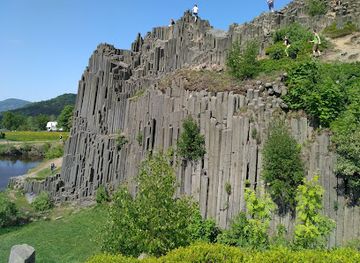
Mansion Rock (basalt columns)
Discover the breathtaking beauty of Mansion Rock, a stunning natural monument featuring unique basalt columns in the heart of the Czech Republic.
-
Tourist attraction
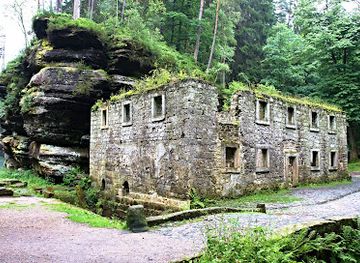
Dolský mlýn
Discover the serene beauty and historical significance of Dolský Mlýn, a hidden gem in the Czech Republic's picturesque countryside.
Explore Elbe Sandstone Mountains on the map
Plan your trip on one map. See where the top cities, national parks and sights are, and book hotels and experiences in a few clicks.
Best hotels in Elbe Sandstone Mountains
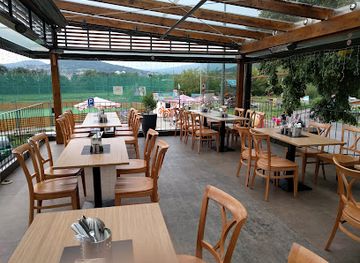
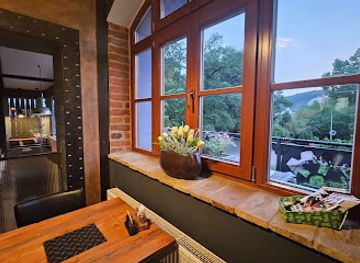
Best restaurants in Elbe Sandstone Mountains
Dining in the Czech Elbe Sandstone Mountains is closely tied to the needs of walkers and the traditions of northern Bohemia. Děčín offers the broadest choice, from cafés and bakeries to Czech restaurants and contemporary kitchens, while Hřensko, Jetřichovice and other villages generally rely on modest restaurants, guesthouse dining rooms, cafés and seasonal refreshments near walking routes. Expect familiar Czech dishes such as soups, goulash, schnitzel-style meals and dumplings, alongside cakes, pastries and simple packed-lunch provisions. Menus may also reflect the borderland's proximity to Saxony without making German food the defining identity of the region. Local beer is widely available, and non-alcoholic drinks are easy to find. Farmers' markets and food shops in larger towns are useful for assembling provisions, particularly when spending a full day on trails. In remote areas, meal times and choice can be limited, so carrying water and a snack is sensible rather than assuming that every trailhead has a café.
-
Restaurant
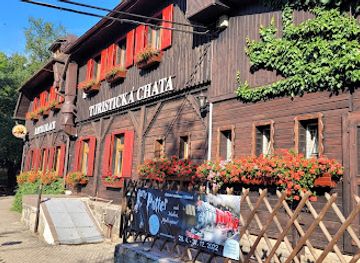
Turistická chata Tisá
Experience authentic Czech cuisine in a serene setting at Turistická chata Tisá - your gateway to adventure in nature's embrace.
-
Restaurant
Restaurace Kocanda Děčín
Experience authentic Czech cuisine and warm hospitality at Restaurace Kocanda Děčín, where every meal is a celebration of local flavors.
-
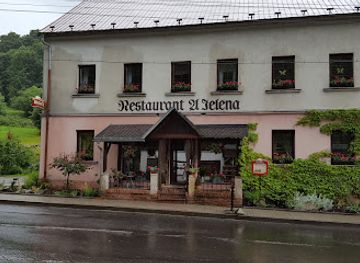
Restaurant
Restaurace U Jelena, Restaurant zum Hirsch
Discover authentic Czech cuisine at Restaurace U Jelena in Petrovice – a cozy dining spot offering delicious local flavors.
-
Restaurant
Fabrika Děčín
Experience modern Czech cuisine at Fabrika Děčín – where delicious flavors meet vibrant atmosphere in the heart of Děčín.
Best bars in Elbe Sandstone Mountains
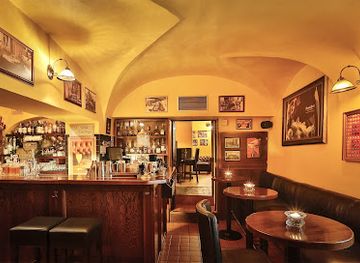
Nightlife is restrained and predominantly local in character. Děčín has the region's widest evening choice, including pubs, bars, cafés and occasional live-music or cultural events, while smaller settlements in the sandstone country tend to close the day with a meal or drink at a guesthouse, village pub or restaurant. Hřensko and Jetřichovice are oriented towards walkers and seasonal visitors rather than a large club scene. Traditional Czech pubs remain useful places to sample local beer and straightforward food, but drinking is not essential to experiencing the region. Evenings in the national park are often quiet, with limited transport after the last regional services and little artificial light outside settlements. Visitors staying in rural accommodation should check arrival arrangements and local dining times in advance, particularly outside the summer season.
-
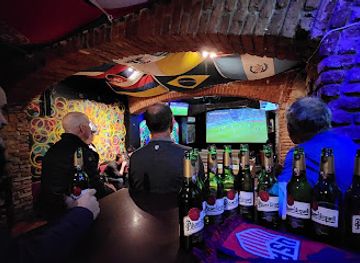
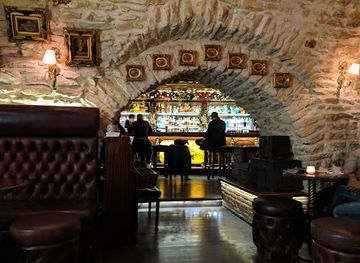
Bar
Hemingway Bar
Experience innovative cocktails and a literary-inspired ambiance at Hemingway Bar, an iconic Old Town destination for unforgettable nights.
-
Tour operator
Drunken Monkey Pub Crawl & Boat Party
Experience the vibrant nightlife of Old Town with the famous Drunken Monkey Pub Crawl & Boat Party, a must for every visiting tourist.
-
Bar
Black Angel's Bar
Experience the magic of Prague at Black Angel's Bar, where classic cocktails meet a unique ambiance in the heart of Old Town.
-
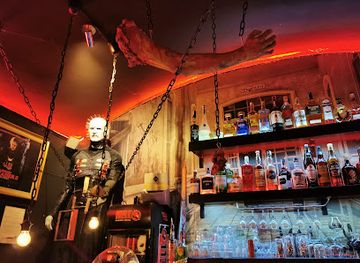
Bar
NIGHTMARE Prague Horror Bar
Discover the spine-chilling atmosphere and creative cocktails at the NIGHTMARE Prague Horror Bar, a must-visit for thrill-seeking tourists.
Best nightclubs in Elbe Sandstone Mountains
Nightlife is restrained and predominantly local in character. Děčín has the region's widest evening choice, including pubs, bars, cafés and occasional live-music or cultural events, while smaller settlements in the sandstone country tend to close the day with a meal or drink at a guesthouse, village pub or restaurant. Hřensko and Jetřichovice are oriented towards walkers and seasonal visitors rather than a large club scene. Traditional Czech pubs remain useful places to sample local beer and straightforward food, but drinking is not essential to experiencing the region. Evenings in the national park are often quiet, with limited transport after the last regional services and little artificial light outside settlements. Visitors staying in rural accommodation should check arrival arrangements and local dining times in advance, particularly outside the summer season.
-
Night club
Night Club
Experience the vibrant nightlife of Děčín at the city's top night club, where music, dance, and unforgettable memories await.
-
Night club
Club Max Děčín
Discover the vibrant nightlife of Děčín at Club Max, where music, dance, and a lively atmosphere come together for an unforgettable evening.
Best shops in Elbe Sandstone Mountains
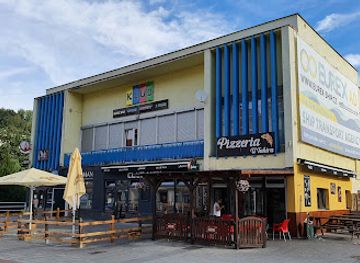
Shopping is practical and small-scale rather than centred on major retail districts. Děčín has the broadest selection of supermarkets, everyday shops, cafés and independent businesses, making it the most convenient place to buy food and outdoor supplies. In Hřensko, Jetřichovice, Tisá and other visitor settlements, small shops and seasonal stalls may offer drinks, snacks, postcards and basic souvenirs, though selection and opening arrangements vary. Look for regional food products, Czech confectionery, beer, honey, preserves and locally themed craft goods rather than expecting a specialised luxury-shopping scene. Books, maps and walking guides are particularly useful purchases for understanding the sandstone landscape. Visitors interested in traditional northern Bohemian glass should investigate established galleries or craft outlets in the wider region and confirm current locations before making a detour, as not every shop in the Elbe Sandstone Mountains produces locally made glass. Markets and independent shops are generally more rewarding in Děčín and larger nearby towns than beside the most popular trailheads.
-
Shopping mall
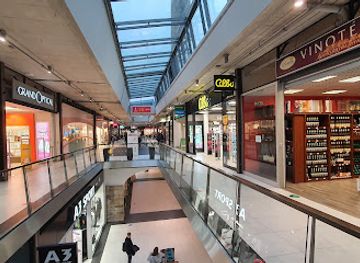
Centrum Pivovar
Discover Centrum Pivovar in Děčín: A Shopping Mall with a Unique Blend of Retail, Dining, and Family Fun.
-
Supermarket
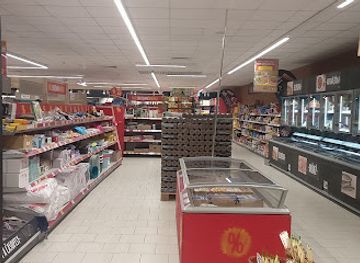
Penny Market
Discover Děčín’s Penny Market: A budget-friendly supermarket offering fresh groceries and local products for your travel needs.
-
Home improvement store
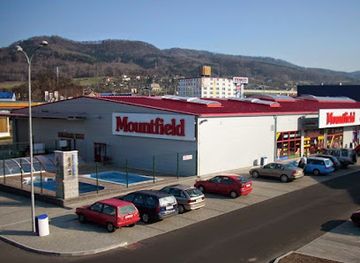
Mountfield
Experience the finest selection in home improvement at Mountfield, your go-to destination for outdoor living, pet supplies, and more.
-
Supermarket
Supermarket BILLA
Experience the best of local and international products at BILLA Supermarket in Děčín, where quality meets convenience for every traveler.
Get your free copy of our complete guide to Elbe Sandstone Mountains, delivered straight to you.
Everything on this page, from attractions and restaurants to essentials and local phrases, in one PDF you can read offline, print or share.
Already have an account? Sign in
Your Elbe Sandstone Mountains guide is ready.
We'll send it to · Not you? Sign out

Getting your guide ready…
We are putting together a fresh copy of the Elbe Sandstone Mountains guide. This can take up to a minute.
This can take a few moments. If your browser asks, choose Allow so the download can start. You'll find the guide in your Downloads folder.
Nothing happened? Download it again
Sorry, the guide is taking longer than usual. Please try again in a minute, or get it by email instead.
Elbe Sandstone Mountains essentials
Currency and Payment
Safety
Emergency Situations
Do's and Don'ts
Local Tips
From Eve
Local phrases worth knowing
You don't need to get them perfect. A few words go a long way, and locals appreciate the effort.
Basics
| English | Local | Say it |
|---|---|---|
| Hello | Ahoj | [ahoy] |
| Goodbye | Sbohem | [sbohem] |
| Yes | Ano | [ah-no] |
| No | Ne | [neh] |
| Please/You're welcome | Prosím | [pro-seem] |
| Thank you | Děkuji | [dyeh-koo-yi] |
| Excuse me/Sorry | Omlouvám se | [om-loo-vahm seh] |
| How are you? | Jak se máš? | [yak seh mosh] |
| Fine. And you? | Dobře. A ty? | [doh-bzheh. ah tee] |
| Do you speak English? | Mluvíš anglicky? | [mloo-veesh ang-lits-kee] |
| I don't understand | Nerozumím | [neh-roh-zoo-meem] |
Eating & Drinking
| English | Local | Say it |
|---|---|---|
| I'd like to see the menu, please | Chtěl bych vidět menu, prosím | [kht-yel beekh vee-dyet meh-noo, pro-seem] |
| I don't eat meat | Nejím maso | [nay-eem mah-so] |
| Cheers! | Na zdraví! | [nah zdrah-vee] |
| I would like to pay, please | Chtěl bych zaplatit, prosím | [kht-yel beekh zah-pla-teet, pro-seem] |
Emergencies
| English | Local | Say it |
|---|---|---|
| Help! | Pomoc! | [poh-mots] |
| Go away! | Jdi pryč! | [yee preech] |
| Call the Police! | Zavolejte policii! | [zah-voh-leh-teh poh-lee-tsi-ee] |
| Call a doctor! | Zavolejte doktora! | [zah-voh-leh-teh dok-to-rah] |
| I'm lost | Ztratil jsem se | [ztra-teel ysem seh] |
| I'm ill | Jsem nemocný | [ysem neh-mots-nee] |
Shopping
| English | Local | Say it |
|---|---|---|
| I'd like to buy... | Chtěl bych koupit... | [kht-yel beekh koh-pee-t...] |
| I'm just looking | Jen se dívám | [yen seh dee-vahm] |
| How much is it? | Kolik to stojí? | [koh-leek toh stoh-yee] |
| That's too expensive | To je příliš drahé | [toh yeh pree-leesh dra-heh] |
| Can you lower the price? | Můžete snížit cenu? | [moo-zheh-teh sneez-it tsen-oo] |
Time & Numbers
| English | Local | Say it |
|---|---|---|
| What time is it? | Kolik je hodin? | [koh-leek yeh ho-deen] |
| It's one o'clock | Je jedna hodina | [yeh yed-nah ho-dee-nah] |
| Half past (10) | Půl jedenácté | [pool yeh-dee-nah-steh] |
| Morning | Ráno | [rah-no] |
| Afternoon | Odpoledne | [od-po-leh-dneh] |
| Evening | Večer | [veh-cher] |
| Yesterday | Včera | [v-cheh-rah] |
| Today | Dnes | [dnes] |
| Tomorrow | Zítra | [zee-trah] |
| 1 | 1 | [1] |
| 2 | 2 | [2] |
| 3 | 3 | [3] |
| 4 | 4 | [4] |
| 5 | 5 | [5] |
| 6 | 6 | [6] |
| 7 | 7 | [7] |
| 8 | 8 | [8] |
| 9 | 9 | [9] |
| 10 | 10 | [10] |
Transport & Directions
| English | Local | Say it |
|---|---|---|
| Where's a/the...? | Kde je ...? | [kdeh yeh ...?] |
| What's the address? | Jaká je adresa? | [ya-kah yeh ah-dreh-sah] |
| Can you show me (on the map)? | Můžete mi ukázat (na mapě)? | [moo-zheh-teh mee oo-kah-zat (nah mah-peh)?] |
| When's the next (bus)? | Kdy jede další (autobus)? | [kdee yeh-deh dal-shee (au-to-boos)?] |
| A ticket (to ....) | Jeden lístek (do ...) | [yeh-den lees-tek (doh ...)] |
History of Elbe Sandstone Mountains
Cretaceous Sea and Sandstone Formation
The Elbe Sandstone Mountains began as thick layers of sand deposited in a shallow Cretaceous sea roughly 90 million years ago. Later uplift and erosion exposed these sediments, while the Elbe and its tributaries cut valleys and gorges through the relatively soft rock. Freeze-thaw weathering, rain and wind produced the region's towers, arches, ledges and narrow ravines. This geological inheritance explains why places around Tisá, Jetřichovice and Hřensko share a recognisable landscape with Saxon Switzerland across the modern Czech-German frontier.
Medieval Trade and the Elbe Corridor
The Elbe valley formed a significant route between inland Bohemia and Saxony long before modern tourism. Děčín developed at an important crossing and strategic point, while castles and fortified positions in the wider area guarded movement through the river corridor and adjoining uplands. The difficult sandstone interior was less densely settled than the valley, but woodland resources, small-scale farming and local routes connected its villages. The region's borderland character has therefore been shaped by commerce and political connections as much as by its dramatic terrain.
Děčín and the House of Thun
Děčín's château became closely associated with the Thun family, an influential noble dynasty that held the estate from the seventeenth century until the twentieth century. The château was remodelled in a form reflecting changing aristocratic tastes, and its long terrace above the Elbe remains one of the region's most prominent architectural settings. The estate also illustrates how noble landownership influenced forestry, administration and the organisation of settlements around the Elbe valley and the sandstone uplands.
Romantic Landscape Discovery
During the eighteenth and nineteenth centuries, artists, writers and educated travellers increasingly valued the sandstone landscape for its perceived wildness and unusual forms. Improved roads, inns and river travel made the gorges and viewpoints more accessible, while names such as Bohemian Switzerland expressed the period's habit of comparing European landscapes with celebrated Alpine scenery. Romantic interest helped establish the region's visitor economy, but it also encouraged early appreciation of its geological formations, forests and viewpoints as landscapes worthy of protection.
Industry, Forestry and Glassmaking
The region's economy was never based solely on scenery. Timber from the sandstone uplands supported construction and fuel, while settlements in the wider north Bohemian borderland participated in forestry, crafts, transport and glassmaking. The Elbe provided a route for moving goods, and roads and railways later strengthened links between Děčín, the upland villages and Saxony. Industrial activity was generally concentrated in valleys and towns, leaving many of the most rugged rock areas comparatively forested and helping preserve the landscape now valued by visitors.
Protected Landscapes and Bohemian Switzerland National Park
Modern conservation built on the region's geological and ecological importance. The Labské pískovce Protected Landscape Area was established in 1972 to safeguard the sandstone formations, forests and river landscapes around the Elbe. Bohemian Switzerland National Park followed in 2000, protecting the area's most distinctive rock scenery and habitats around Hřensko and Jetřichovice. Management now balances public access, forest recovery, fire prevention and the protection of fragile sandstone environments, so routes and facilities can change in response to natural events and conservation needs.
Elbe Sandstone Mountains in Photos
Browse through our photo collection highlighting the charm and character of the destination.
Neighbouring regions of Elbe Sandstone Mountains
The closest regions to Elbe Sandstone Mountains, if you have time for more than one.
-

-

-
-

-


Swipe for more regions
Explore more

Explore more of Czechia
Discover Czechia: A European gem with historic towns, stunning landscapes, and cultural delights. Perfect for travelers seeking charm, history, and adventure.
Explore Czechia