

Free Krkonoše Travel Guide & Mobile App
Explore Krkonoše with free travel guides. Discover regional history, expert tips, proposed trips, and audio guides on web or mobile app.


Explore Krkonoše in Czechia for Sněžka, high mountain trails, spa towns, winter sports and distinctive Bohemian mountain culture.
Read more about Krkonoše
When is the best time to visit Krkonoše?
Best: June–August · 18–20°C| Month | High (°C) | Rainfall (mm) |
|---|---|---|
| January | 0 | 50 |
| February | 1 | 40 |
| March | 5 | 50 |
| April | 9 | 50 |
| May | 15 | 70 |
| June (best) | 18 | 80 |
| July (best) | 20 | 90 |
| August (best) | 19 | 90 |
| September | 16 | 70 |
| October | 11 | 60 |
| November | 5 | 50 |
| December | 1 | 50 |
Getting to and around Krkonoše
How to get there
Transportation
Destinations in Krkonoše
Resorts, valleys and scenic spots worth a trip of their own.
-

-


Swipe for more destinations
Best attractions in Krkonoše
Krkonoše’s attractions combine protected mountain scenery with the heritage of long-settled valleys. Krkonoše National Park provides the central experience: marked trails lead towards Sněžka, the source area of the Elbe, the Labský důl valley, Obří důl and high meadows shaped by glacial and subalpine conditions. Waterfalls include Pančavský waterfall in the high mountains and Mumlava waterfall near Harrachov. Ski areas around Špindlerův Mlýn, Pec pod Sněžkou, Janské Lázně and Rokytnice nad Jizerou become hiking and cycling bases in warmer months. Harrachov’s glassmaking heritage, Vrchlabí’s regional museums and historic buildings, and Janské Lázně’s spa facilities add cultural and indoor alternatives. Mountain huts, traditional settlements and viewpoints provide insight into life at altitude, while cross-country skiing, snowshoeing and guided nature walks extend the seasonal range. The most rewarding itineraries balance a major summit or valley walk with time in the lower communities, where the region’s craft, folklore and architectural history are easier to appreciate.
-
Tourist attraction
Kamieńczyk Waterfall
Experience the beauty of Kamieńczyk Waterfall, the highest waterfall in the Polish Sudetes, surrounded by breathtaking nature and scenic trails.
-
National park
Karkonosze National Park
Explore the breathtaking beauty of Karkonosze National Park, where majestic mountains and rich biodiversity await every nature lover.
-
National park
Krkonoše National Park
Explore the breathtaking beauty of Krkonoše National Park, a paradise of diverse landscapes, rich ecosystems, and thrilling outdoor adventures.
-
Tourist attraction
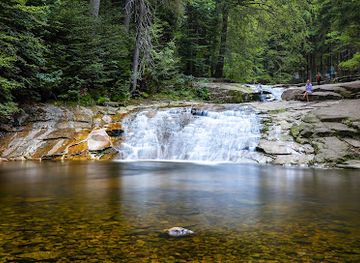
Mumlava Falls
Experience the enchanting beauty of Mumlava Falls in the Krkonoš mountains, a captivating destination for nature lovers and outdoor adventurers alike.


Best landmarks in Krkonoše
Sněžka is Krkonoše’s defining natural landmark and the highest mountain in Czechia, rising above the eastern range with broad views when weather permits. Its exposed summit and distinctive summit buildings make it instantly recognisable, although wind, cloud and winter conditions can be severe. The high valleys provide other important landscape landmarks: Obří důl is a dramatic glacial valley below Sněžka, while Labský důl cuts through the central mountains towards the headwaters of the Elbe. Near Harrachov, the Mumlava waterfall is a notable granite-river feature reached by a well-known valley route. Human landmarks include the historic mountain huts scattered along the ridges, the spa architecture of Janské Lázně and Harrachov’s glassmaking complex. Vrchlabí’s historic centre and former Augustinian monastery reflect the region’s role as a southern administrative gateway. Together these places show that Krkonoše is defined not only by summits, but also by valleys, working settlements and the infrastructure created for forestry, pilgrimage, health travel and mountain tourism.
-
Castle
Prague Castle
Explore the grandeur and history of Prague Castle, a UNESCO World Heritage site, and the heart of Czech culture, offering breathtaking views and rich heritage.
-
Scenic spot
Petrin Tower
Discover stunning views and historical charm at Petrin Tower, a must-visit landmark in Prague's beautiful landscape.
-
National park
Karkonosze National Park
Discover the breathtaking beauty of Karkonosze National Park, a haven for outdoor enthusiasts and nature lovers in Poland's stunning mountains.
-
Amusement center
The Timber Trail, Krkonoše
Discover the breathtaking Timber Trail in Krkonoš, a hiking paradise offering stunning views, diverse wildlife, and a perfect escape into nature.


Explore Krkonoše on the map
Plan your trip on one map. See where the top cities, national parks and sights are, and book hotels and experiences in a few clicks.
Best hotels in Krkonoše
Best restaurants in Krkonoše
Dining in Krkonoše is shaped by hearty mountain cooking and the practical traditions of Bohemia’s northern borderlands. Look for Krkonošské kyselo, a sourdough soup often made with mushrooms and potatoes, as well as potato dishes, dumplings, soups, game and meals using local dairy or forest produce. Blueberry pastries and other fruit desserts are particularly associated with mountain refreshment stops. Resorts offer a broad range of Czech and international food, while village restaurants, traditional inns and mountain huts tend to focus on filling dishes suited to walkers and skiers. Janské Lázně retains a spa-town café culture, and larger resorts have contemporary restaurants alongside dependable Czech cooking. Regional beer is widely available, and non-alcoholic fruit drinks or herbal teas are common after outdoor activities. At high-altitude huts, menus and supplies are necessarily simpler, so visitors should not expect the same choice found in the main towns.
-
Restaurant
Hostinec Na Kopečku
Experience authentic Czech cuisine with breathtaking views at Hostinec Na Kopečku in Horní Maršov.
-
Restaurant
Mountain Shed Růžohorky
Experience authentic Czech cuisine amidst breathtaking mountain views at Mountain Shed Růžohorky in Krkonoš National Park.
-
Restaurant
Trautenberk Brewery
Discover Trautenberk Brewery: A delightful blend of traditional Czech cuisine and exquisite craft beers in scenic Malá Úpa.
-
Restaurant
Botta Caffé
Discover Botta Caffé in Vrchlabí: A cozy restaurant offering authentic Czech cuisine and delightful ambiance for every traveler.


Best bars in Krkonoše
Evening life in Krkonoše is centred on traditional pubs, hotel bars, cafés and après-ski venues rather than a continuous nightclub scene. Špindlerův Mlýn and Pec pod Sněžkou have the widest choice, with bars and restaurants serving visitors after skiing or hiking, while Harrachov combines resort nightlife with long-established pubs and places associated with its glassmaking and sporting culture. Janské Lázně is generally quieter and more spa-oriented. In smaller villages, evenings tend to revolve around local pubs, dining rooms and occasional live music rather than late-night entertainment. Seasonal demand is strongest during winter and summer holidays, so the atmosphere can change substantially outside those periods. Visitors can also find Czech beer, regional spirits, hot drinks and non-alcoholic options without treating drinking as the defining feature of mountain culture.
-
Bar
Hemingway Bar
Discover the literary charm of Hemingway Bar in Prague's Old Town, where exquisite cocktails meet a cozy, artistic atmosphere.
-
Restaurant
Hostinec Na Kopečku
Discover the essence of Czech cuisine at Hostinec Na Kopečku, a culinary gem in Horní Maršov, offering authentic flavors and a warm atmosphere.
-
Restaurant
Trautenberk Brewery
Experience the best of Czech brewing tradition at Trautenberk Brewery, where great food and craft beer meet breathtaking mountain views.
-
Restaurant
Botta Caffé
Savor the flavors of Vrchlabí at Botta Caffé, where delightful cuisine meets cozy ambiance.


Best nightclubs in Krkonoše
Evening life in Krkonoše is centred on traditional pubs, hotel bars, cafés and après-ski venues rather than a continuous nightclub scene. Špindlerův Mlýn and Pec pod Sněžkou have the widest choice, with bars and restaurants serving visitors after skiing or hiking, while Harrachov combines resort nightlife with long-established pubs and places associated with its glassmaking and sporting culture. Janské Lázně is generally quieter and more spa-oriented. In smaller villages, evenings tend to revolve around local pubs, dining rooms and occasional live music rather than late-night entertainment. Seasonal demand is strongest during winter and summer holidays, so the atmosphere can change substantially outside those periods. Visitors can also find Czech beer, regional spirits, hot drinks and non-alcoholic options without treating drinking as the defining feature of mountain culture.
-
Night club
Duplex
Unleash your night at Duplex, the premier nightclub in New Town, where music, dance, and vibrant energy collide for an unforgettable experience.
-
Night club
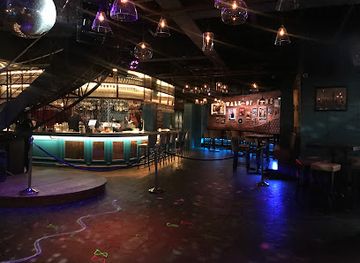
Karlovy Lazne - Nightclub
Dive into the exhilarating nightlife of Prague at Karlovy Lazne, a multi-level nightclub offering diverse music and vibrant energy.
-
Night club
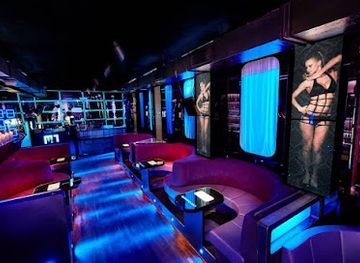
M1 Lounge Bar & Club - RnB & Hip Hop
Discover the vibrant nightlife at M1 Lounge Bar & Club, Prague's hotspot for RnB and Hip Hop lovers, where every night is a memorable party.
-
Night club
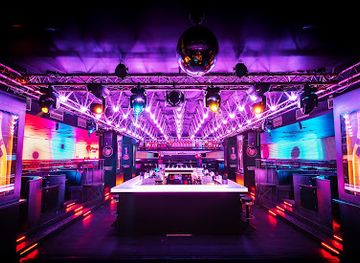
One Club
Experience the vibrant nightlife of Prague at One Club, where music, drinks, and dancing create unforgettable memories.

Best shops in Krkonoše
Shopping in Krkonoše is concentrated in resort high streets, gateway towns and traditional market communities rather than large urban retail centres. Harrachov is the strongest place to look for locally associated glass, including decorative pieces and practical tableware from its long-established glassmaking tradition. Across the region, independent shops sell wooden goods, woollen items, mountain-themed crafts, postcards and outdoor equipment. Food products make useful souvenirs: regional honey, jams, herbal preparations, biscuits, blueberry products and Czech beer or spirits are widely available, although labelling and provenance vary by shop. Farmers’ markets and seasonal stalls appear in some towns and resorts, particularly during busier months. Vrchlabí offers the broadest everyday shopping among the mountain gateways, while smaller settlements are better for specialist outdoor supplies and locally themed gifts. Visitors should distinguish genuine regional craft from mass-produced souvenirs, especially in the busiest resort centres.
-
Shopping mall
Westfield Chodov
Experience the ultimate shopping adventure at Westfield Chodov in Prague, where luxury meets variety in a vibrant atmosphere.
-
Shopping mall
Nový Smíchov Shopping Centre
Experience the best of shopping, dining, and entertainment at Nový Smíchov Shopping Centre in the heart of Prague.
-
Amusement center
The Timber Trail, Krkonoše
Discover the Timber Trail in Krkonoše, where breathtaking hiking paths meet stunning natural landscapes and rich wildlife - a must-visit for all nature enthusiasts.
-
Outlet mall
Fashion Arena Prague Outlet
Explore the Fashion Arena Prague Outlet, a unique shopping experience featuring top global brands at unbeatable prices in a vibrant atmosphere.


Get your free copy of our complete guide to Krkonoše, delivered straight to you.
Everything on this page, from attractions and restaurants to essentials and local phrases, in one PDF you can read offline, print or share.
Already have an account? Sign in
Your Krkonoše guide is ready.
We'll send it to · Not you? Sign out

Getting your guide ready…
We are putting together a fresh copy of the Krkonoše guide. This can take up to a minute.
This can take a few moments. If your browser asks, choose Allow so the download can start. You'll find the guide in your Downloads folder.
Nothing happened? Download it again
Sorry, the guide is taking longer than usual. Please try again in a minute, or get it by email instead.
Krkonoše essentials
Currency and Payment
Safety
Emergency Situations
Do's and Don'ts
Local Tips
From Eve
Local phrases worth knowing
You don't need to get them perfect. A few words go a long way, and locals appreciate the effort.
Basics
| English | Local | Say it |
|---|---|---|
| Hello | Ahoj | [ahoy] |
| Goodbye | Sbohem | [sbohem] |
| Yes | Ano | [ah-no] |
| No | Ne | [neh] |
| Please/You're welcome | Prosím | [pro-seem] |
| Thank you | Děkuji | [dyeh-koo-yee] |
| Excuse me/Sorry | Omlouvám se | [om-loo-vam seh] |
| How are you? | Jak se máš? | [yak seh maash] |
| Fine. And you? | Dobře. A ty? | [dob-zheh. ah tee] |
| Do you speak English? | Mluvíš anglicky? | [mloo-veesh ang-lits-kee] |
| I don't understand | Nerozumím | [neh-roh-zoo-meem] |
Eating & Drinking
| English | Local | Say it |
|---|---|---|
| I'd like to see the menu, please | Chtěl bych vidět menu, prosím | [kht-yel bikh vid-yet meh-noo, pro-seem] |
| I don't eat meat | Nejím maso | [ney-eem mah-so] |
| Cheers! | Na zdraví! | [nah zdrah-vee] |
| I would like to pay, please | Chtěl bych zaplatit, prosím | [kht-yel bikh zah-plah-teet, pro-seem] |
Emergencies
| English | Local | Say it |
|---|---|---|
| Help! | Pomoc! | [poh-mots] |
| Go away! | Jdi pryč! | [yee preech] |
| Call the Police! | Zavolejte policii! | [zah-vo-lay-teh poh-li-tsi-ee] |
| Call a doctor! | Zavolejte doktora! | [zah-vo-lay-teh dok-toh-rah] |
| I'm lost | Ztratil jsem se | [ztra-til ysem seh] |
| I'm ill | Jsem nemocný | [ysem neh-mots-nee] |
Shopping
| English | Local | Say it |
|---|---|---|
| I'd like to buy... | Chtěl bych koupit... | [kht-yel bikh koh-pit...] |
| I'm just looking | Jen se dívám | [yen seh dee-vahm] |
| How much is it? | Kolik to stojí? | [koh-lik toh stoh-yee] |
| That's too expensive | To je příliš drahé | [toh yeh pree-leesh drah-heh] |
| Can you lower the price? | Můžeš snížit cenu? | [moo-zheesh snee-zit tseh-noo] |
Time & Numbers
| English | Local | Say it |
|---|---|---|
| What time is it? | Kolik je hodin? | [koh-lik yeh ho-deen] |
| It's one o'clock | Je jedna hodina | [ye yed-na ho-dee-na] |
| Half past (10) | Půl (10) | [pool (10)] |
| Morning | Ráno | [rah-no] |
| Afternoon | Odpoledne | [od-po-led-neh] |
| Evening | Večer | [veh-cher] |
| Yesterday | Včera | [v-cheh-rah] |
| Today | Dnes | [dnes] |
| Tomorrow | Zítra | [zee-trah] |
| 1 | 1 | [one] |
| 2 | 2 | [two] |
| 3 | 3 | [three] |
| 4 | 4 | [four] |
| 5 | 5 | [five] |
| 6 | 6 | [six] |
| 7 | 7 | [seven] |
| 8 | 8 | [eight] |
| 9 | 9 | [nine] |
| 10 | 10 | [ten] |
Transport & Directions
| English | Local | Say it |
|---|---|---|
| Where's a/the...? | Kde je...? | [kde yeh...?] |
| What's the address? | Jaká je adresa? | [ya-kah yeh ah-dreh-sah] |
| Can you show me (on the map)? | Můžeš mi ukázat (na mapě)? | [moo-zheesh mee oo-kah-zat (nah mah-peh)?] |
| When's the next (bus)? | Kdy pojede další (autobus)? | [kdee poh-yeh-deh dal-shi (ow-to-boos)?] |
| A ticket (to ....) | Jeden lístek (do ...) | [yeh-den lees-tek (doh ...)] |
History of Krkonoše
Medieval Settlement and Mountain Colonisation
The lower valleys of Krkonoše were settled gradually during the medieval period, while more intensive colonisation expanded from the late Middle Ages into the early modern era. Lords, monasteries and estate owners encouraged forestry, farming and the development of routes across the mountains. Settlements such as Vrchlabí, originally known as Hohenelbe, became administrative and trading centres at the southern foot of the range. Above the villages, seasonal mountain farming created meadows and pasture clearings whose patterns remain visible in parts of the landscape.
Mining, Forestry and Glassmaking
From the early modern period, the mountains supported a varied extractive economy. Mining for ores and other materials took place in several valleys, while extensive forests supplied timber and fuel. Glassmaking became especially important in the western Krkonoše, where Harrachov developed a long-standing glass tradition. These industries connected remote communities to wider markets but also altered forests and river valleys. Former workshops, industrial collections and mountain settlements preserve evidence of an economy that preceded modern tourism.
Krakonoš and Mountain Folklore
The figure of Krakonoš, known in German as Rübezahl, emerged from the cultural world of the Bohemian and Silesian mountains. Stories portray him as a powerful and unpredictable spirit associated with the weather, forests and moral justice. The legend crossed linguistic and political boundaries and became part of the region’s shared folklore. Today Krakonoš appears in local museums, festivals, signs and family attractions, although the tradition reflects the mixed Czech- and German-speaking history of the historical borderlands rather than a single modern identity.
The Rise of Mountain Tourism
Tourism expanded during the nineteenth century as improved roads, railways and growing interest in mountain scenery brought visitors to settlements such as Špindlerův Mlýn, Harrachov and Janské Lázně. Hotels, mountain huts and marked walking routes developed alongside spa facilities. Winter recreation gained importance in the early twentieth century, establishing the foundations of the ski economy visible today. The region’s tourism heritage is therefore older than modern resort development and includes both health travel and organised walking in addition to skiing.
War, Borders and Post-war Transformation
Krkonoše lay in a politically sensitive borderland during the twentieth century. The Second World War and its aftermath brought major demographic change, including the departure of much of the German-speaking population from the Czechoslovak borderlands and the resettlement of villages. The post-war Czech-Polish border also shaped movement through the mountains. Many communities subsequently adapted from forestry, farming and small industry towards recreation, while historic buildings and settlement patterns continued to reflect the region’s earlier multilingual past.
National Park Protection and Modern Recreation
Krkonoše National Park was established on the Czech side in 1963 to protect the range’s distinctive high-altitude habitats, forests, peat bogs, streams and rare plants. The park forms part of a wider protected mountain landscape with Poland’s Karkonosze National Park across the frontier, and Krkonoše is recognised as a UNESCO biosphere reserve. Modern tourism now operates within this conservation framework. Trail management, visitor restrictions and seasonal measures seek to reconcile skiing, hiking and local livelihoods with the protection of sensitive mountain environments.
Krkonoše in Photos
Browse through our photo collection highlighting the charm and character of the destination.
Neighbouring regions of Krkonoše
The closest regions to Krkonoše, if you have time for more than one.
-

-

-

-

-


Swipe for more regions
Explore more

Explore more of Czechia
Discover Czechia: A European gem with historic towns, stunning landscapes, and cultural delights. Perfect for travelers seeking charm, history, and adventure.
Explore Czechia