

Aarhus Theatre, Aarhus Travel Guide
Free Guide: Art Nouveau splendour meets contemporary performance at Aarhus Theatre, a golden, story-filled playhouse anchoring the cultural heart of Denmark’s second city.


A brief summary of Aarhus Theatre
Art Nouveau splendour meets contemporary performance at Aarhus Theatre, a golden, story-filled playhouse anchoring the cultural heart of Denmark’s second city.
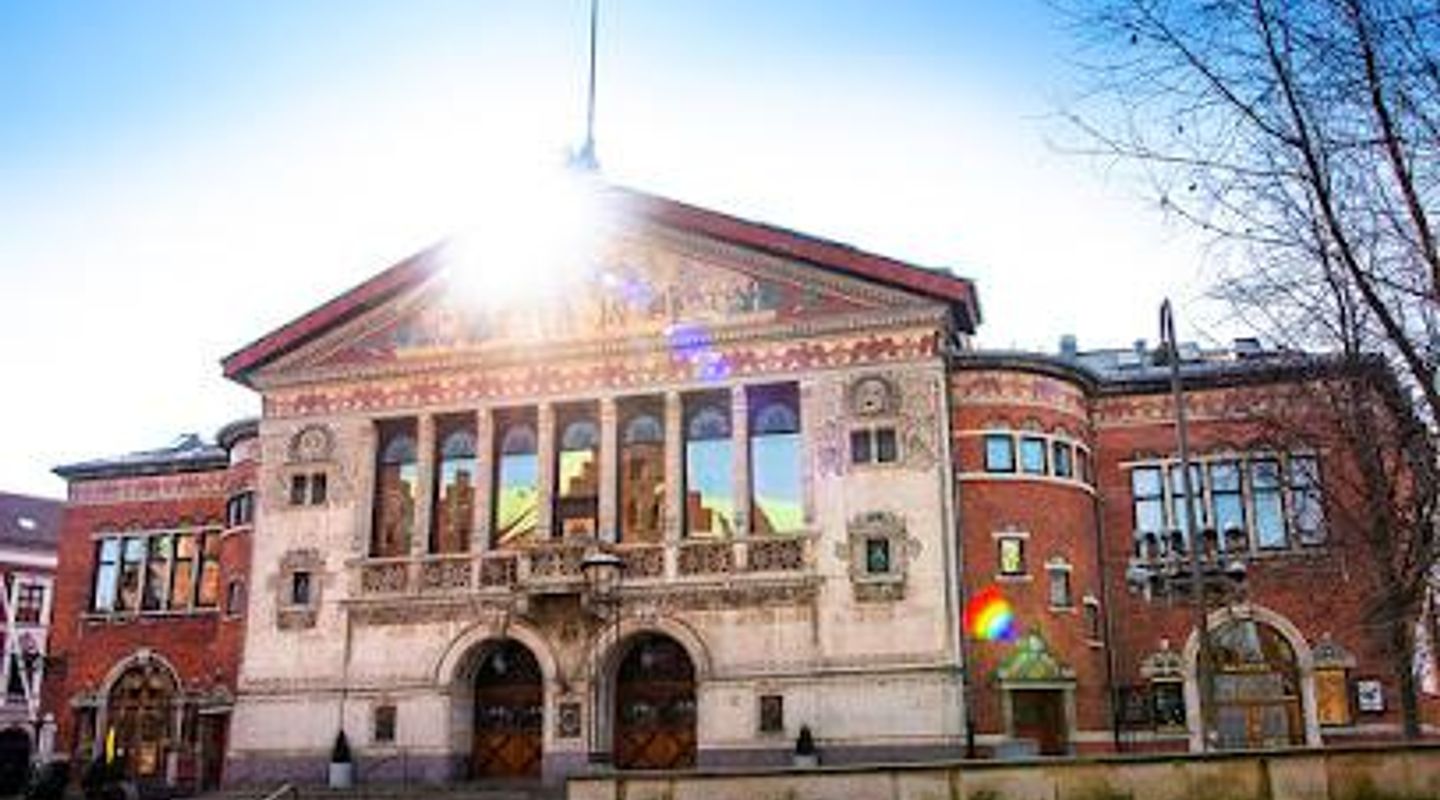
Aarhus Theatre is a lavish Art Nouveau playhouse at Teatergaden 1 in the very heart of Aarhus, just off Bispetorv and opposite the cathedral. Opened in 1900 and designed by architect Hack Kampmann, it is Denmark’s largest provincial theatre, with four stages and around 1,200 seats. Visitors are drawn by both its richly ornamented façade of mosaics, owls and swans and its golden, chandelier-lit interiors, where an ambitious programme ranges from classic drama and musicals to contemporary Danish productions and guided tours.
On-site amenities
 Restrooms
 Drink options
 Food options
 Seating areas
 Sheltered areas
 Trash bins
 Information boards
- Address
- Teatergaden 1, 8000 Aarhus
- Phone
- Website
Getting there
Train and walk from Aarhus H
Light rail or bus to central Aarhus
Car or taxi within Aarhus
Discover more about Aarhus Theatre
A jewel of performance in the heart of Aarhus
Aarhus Theatre anchors the cultural life of Denmark’s second city from its prime position on Teatergaden, facing the cathedral and the lively Bispetorv square. Completed in 1900, it was conceived as a grand new stage for a growing bourgeois city that had outgrown its cramped, smoky predecessor, known locally as “Svedekassen” – the Sweat-box. Today, with four stages and about 1,200 seats, it remains the country’s largest provincial theatre and a defining landmark in central Aarhus.Stepping into the forecourt you feel the building’s theatrical intent before a curtain has even risen. The main entrance is set slightly back, creating a sense of arrival as you move from the cobbled square into a self-contained world of stories, light and sound. Whether you hold a ticket for a premiere or simply pause outside, the theatre asserts itself as both a working stage and a piece of urban sculpture.
Art Nouveau drama written in stone and glass
The building is one of Denmark’s most striking examples of Art Nouveau, shaped by architect Hack Kampmann with a strong national romantic streak. Its façade is richly layered: carved figures climb the stonework, floral motifs coil around windows and cornices, and coloured glass mosaics shimmer across the upper walls. High above, a stained-glass owl and a small copper creature perch on the gable, as if watching the square below.Central to the front is a painted scene from Ludvig Holberg’s comedy “Masquerade,” by artist Hans Tegner, turning the gable itself into a permanent stage picture. This theatrical tableau is echoed in the many decorative details realised by ceramicist and artist Karl Hansen-Reistrup, who wove Danish flora, fauna and myth into the ornament. Even from the street, the building feels alive with characters and symbols drawn from the repertoire.
Golden interiors and four distinct stages
Inside, the atmosphere shifts to plush warmth and ceremony. Glittering chandeliers, deep colours and gold-decorated ceilings create the classic image of a European playhouse, yet the layout is carefully tailored to modern use. The main auditorium, Store Scene, seats around 700 and rises in tiers under a richly decorated ceiling, giving most seats a clear, intimate view of the stage despite the volume.Over time, the complex has expanded to include additional stages. Scala, an Art Nouveau–era extension now carefully refurbished, offers a slightly smaller but still grand room with its own foyer and character. Two more spaces, often referred to as studio stages, host experimental work, new writing and smaller-scale productions. This variety allows the theatre to present an impressively broad repertoire in a single season, from large-scale musicals to close-up drama and children’s theatre.
From “Sweat-box” to listed cultural monument
The story of Aarhus Theatre is also a story of civic ambition. In the late 19th century, as Aarhus transformed into a modern port and commercial centre, local citizens raised funds through share sales to build a new theatre worthy of the city’s status. Construction began in 1898, and just two years later the new house opened with great ceremony, signalling an end to improvised backyard stages and the beginning of a more polished cultural era.The building was later listed as a protected monument, recognising both its historical importance and its architectural rarity. Careful restorations, including major refurbishments in the 1950s and again in the late 20th and early 21st centuries, have updated technical equipment and seating while preserving original fixtures such as custom-designed lamps and decorative surfaces. The result is a theatre that feels historic yet fully functional for contemporary performance.
Living stage, contemporary programme
Aarhus Theatre is not a museum piece; it is a working institution with a demanding schedule. Across its four stages it produces around 15 of its own shows each season, supplemented by guest performances, festivals and special events. The programme typically spans classic drama, contemporary Danish plays, musical theatre, family shows and occasional opera or dance collaborations, ensuring that the building is often buzzing with rehearsals and audiences six nights a week.For international visitors, selected performances offer English surtitles, making it easier to follow Danish-language productions. The theatre also runs its own theatre school, training actors and playwrights, and occasionally offers guided tours that reveal backstage workshops, costume departments and the hidden engineering that supports the magic on stage.
Planning your visit inside a working theatre
Because Aarhus Theatre is so closely woven into everyday city life, it rewards both casual and planned visits. You can admire the exterior decorations at any time of day, watching how the reliefs and mosaics change with the light, or choose an evening performance and experience the building at its most atmospheric, with foyers buzzing and chandeliers lit.Seats and stages allow for a range of experiences, from dress-circle elegance to up-close experimental work in the smaller rooms. There are usually refreshments available before the show and during intervals, and the central location makes it easy to combine a visit with nearby cafés, restaurants and other historic sites. Booking ahead is strongly recommended for popular productions, while occasional tours provide a deeper look at more than a century of theatre-making within these walls.
Evendo Review Centre
 Google
Guest reviews
Best time to go
Quietest: Jan, Feb & Mar · before 9am
Busy times are Evendo estimates for a typical year, to help you plan. Actual crowds vary with events, school holidays and the weather.
Explore Aarhus Theatre on the map
A handpicked selection of must-see spots near Aarhus Theatre, mapped for you.
Get your free copy of our complete guide to Aarhus Theatre, delivered straight to you.
Everything on this page, from opening hours and how to get there to Eve’s tips and the best time to go, in one PDF you can read offline, print or share.
Already have an account? Sign in
Your Aarhus Theatre guide is ready.
We'll send it to · Not you? Sign out

Getting your guide ready…
We are putting together a fresh copy of the Aarhus Theatre guide. This can take up to a minute.
This can take a few moments. If your browser asks, choose Allow so the download can start. You'll find the guide in your Downloads folder.
Nothing happened? Download it again
Sorry, the guide is taking longer than usual. Please try again in a minute, or get it by email instead.
Unlock the best of Aarhus Theatre
Skip-the-line tickets, guided tours with entry, and walking tours of the area, booked in a few clicks.


Other nearby places you may find interesting
The closest places of the same kind, if this one is not quite what you had in mind.
-
-
-
-
-


Swipe for more places
More to explore near Aarhus Theatre

 Best experiences near Aarhus Theatre
 Best hotels near Aarhus Theatre
 Best landmarks near Aarhus Theatre
 Best attractions near Aarhus Theatre
 Best shops near Aarhus Theatre
 Best restaurants near Aarhus Theatre
 Best bars near Aarhus Theatre
Do you manage this location?
Take control to get all the benefits, like improved information, better appearance, and stronger visibility across AI-powered discovery.
Explore more

Explore more of Aarhus
Discover Aarhus, Denmark's second-largest city, where ancient history meets modern culture. Explore historical sites, vibrant arts, and a thriving food scene in the City of Smiles.
Explore Aarhus
Explore more of Denmark
Discover Denmark: A perfect blend of history, modern design, and the cozy concept of hygge. Explore vibrant cities, serene landscapes, and world-class cuisine.
Explore Denmark
