

Bovbjerg Lighthouse Travel Guide
Free Guide: A deep-red 19th‑century lighthouse perched on Bovbjerg’s high cliff, combining raw North Sea scenery, maritime history, and a cozy cultural hub in West Jutland.


A brief summary of Bovbjerg Lighthouse
A deep-red 19th‑century lighthouse perched on Bovbjerg’s high cliff, combining raw North Sea scenery, maritime history, and a cozy cultural hub in West Jutland.
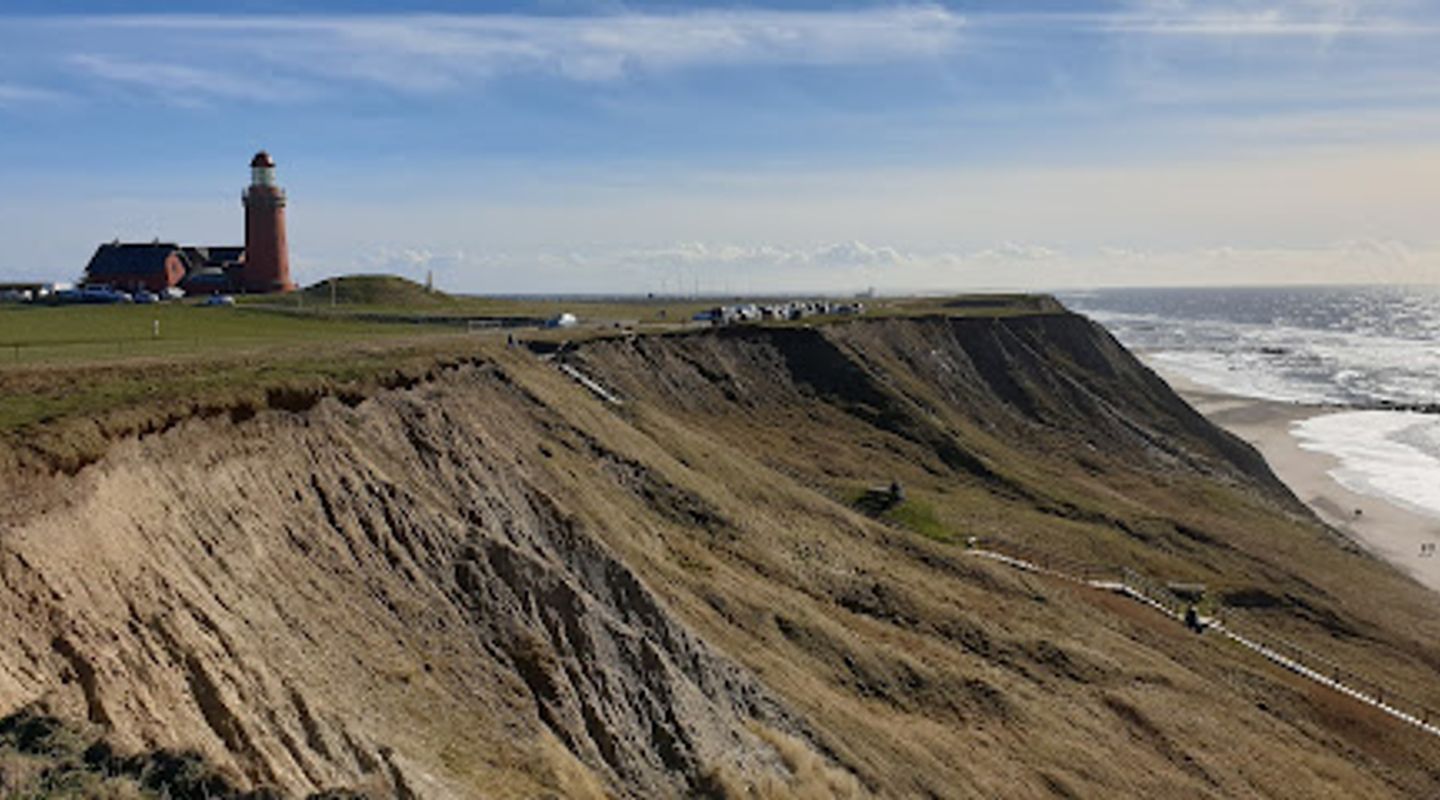
Perched on the dramatic 41 m Bovbjerg Cliff on Denmark’s wild North Sea coast, Bovbjerg Lighthouse is a distinctive red, 26 m tower that doubles as a working beacon and vibrant cultural center. Built in 1877 to guide ships along this notoriously rough stretch of coastline, it now hosts changing art and history exhibitions, a cozy café and garden, and access to sweeping cliff-top walks with far-reaching sea views. It’s an atmospheric stop in West Jutland, mixing coastal scenery, maritime heritage, and local culture in one compact site.
On-site amenities
 Restrooms
 Drink options
 Drinking water
 Food options
 Seating areas
 Sheltered areas
 Picnic areas
 Trash bins
 Information boards
 Visitor centre
Opening hours
- Every day11 am–5 pm
Opening hours as listed on the venue’s Google Business Profile. Hours can change for services and special events, so check with the venue before you go.
- Address
- Fyrvej 27, 7620 Lemvig
- Phone
- Website
Getting there
Car from Lemvig
Bicycle from the local area
Regional car journey from Aarhus or Aalborg
Discover more about Bovbjerg Lighthouse
Red Tower Above the North Sea
Bovbjerg Lighthouse rises from the edge of the 41‑metre Bovbjerg Cliff, a windswept headland south of Ferring on Denmark’s west coast. The squat, 26‑metre tower is painted a deep red that stands out against sand-coloured slopes, green fields, and the restless grey-blue of the North Sea. Its position on the high coastal hill was chosen to make the light visible far out to sea, and the views from the top span dunes, beaches, farmland, and the endless horizon.Climbing the internal staircase, you feel the structure subtly change from thick brick walls at the base to narrower steps and tighter turns near the lantern. At the gallery, the wind is often brisk, the air salty, and gulls wheel below rather than above you. On clear days, the coastline stretches in both directions, and the patterns of waves and sandbars give a sense of why this shoreline demanded a reliable navigational aid.
From Maritime Safety to Cultural Beacon
Completed in 1877, the lighthouse was one of the early purpose-built coastal beacons along this hazardous section of the Jutland coast. Before modern navigation, sailors used Bovbjerg’s steep hills as a landmark when crossing the shallow, shifting waters off western Denmark. The automated lantern still operates as part of the maritime safety network, but the buildings around it have been given a second life.A foundation now manages the complex with a mission to keep it open to the public and to support local cultural life. Outbuildings that once housed equipment and staff have been adapted into exhibition spaces, meeting rooms, and a café. This blend of working lighthouse and community hub gives the site a lived-in feel: it is not a frozen museum piece, but a place where history, everyday life, and contemporary culture overlap.
Exhibitions, Art, and Coastal Stories
Inside the base of the tower you find a compact but focused exhibition on more than a century of coastal protection in Denmark. Panels, models, and photographs explain how authorities tried to tame erosion and protect shipping along the North Sea, from early lifeboat stations to modern coastal engineering. It is a technical story, but it is also about communities that depended on the sea yet lived with its dangers.In adjacent rooms, changing art and craft shows bring in another layer of interpretation. Local and regional artists respond to themes such as weather, sea light, fishing culture, and the colours of the cliffs. The result is a dialogue between the hard facts of maritime history and more poetic reflections on life by the water. Repeat visits can feel different because the exhibitions rotate regularly.
Café Garden and Windy Outdoors
The café at Bovbjerg Lighthouse is a natural pause point, especially on blustery days. Simple, hearty offerings such as coffee, tea, cake, light lunches, beer, soft drinks, and ice cream suit walkers and families arriving from cliff-top trails. A small shop sells souvenirs that echo the area’s maritime character and artistic activity.Outside, a sheltered garden forms a contrast to the exposed cliff edge. Children can play on the grass while adults rest on benches, listening to the wind without having to brace against its full force. From the garden gate you can step straight onto paths that trace the rim of the cliff or drop toward the beach, passing remnants such as World War II bunkers and erosion scars that show how the coastline is still changing.
Cliffs, Coast Walks, and West Jutland Atmosphere
Beyond the buildings, the wider Bovbjerg landscape is part of the experience. The cliff face reveals layers of coloured sediments, and the plateau above feels remote even though farms and villages lie only a short distance inland. Walks along the edge offer constantly shifting angles on the lighthouse itself, sometimes silhouetted alone against the sky, sometimes framed by fields or sea.Weather plays a big role here. On bright, calm days the area invites leisurely picnics and long photo stops; in strong winds or low clouds the same spot feels raw and elemental, with spindrift blowing off the waves and the tower standing as a reassuring marker. That mix of culture, exposure, and quiet rural setting makes Bovbjerg Lighthouse an evocative stop on a broader journey through West Jutland.
Evendo Review Centre
 Google
Guest reviews
Best time to go
Quietest: Jan, Feb & Mar · before 8am or at 8pm
Busy times are Evendo estimates for a typical year, to help you plan. Actual crowds vary with events, school holidays and the weather.
Explore Bovbjerg Lighthouse on the map
A handpicked selection of must-see spots near Bovbjerg Lighthouse, mapped for you.
Get your free copy of our complete guide to Bovbjerg Lighthouse, delivered straight to you.
Everything on this page, from opening hours and how to get there to Eve’s tips and the best time to go, in one PDF you can read offline, print or share.
Already have an account? Sign in
Your Bovbjerg Lighthouse guide is ready.
We'll send it to · Not you? Sign out

Getting your guide ready…
We are putting together a fresh copy of the Bovbjerg Lighthouse guide. This can take up to a minute.
This can take a few moments. If your browser asks, choose Allow so the download can start. You'll find the guide in your Downloads folder.
Nothing happened? Download it again
Sorry, the guide is taking longer than usual. Please try again in a minute, or get it by email instead.
Other nearby places you may find interesting
The closest places of the same kind, if this one is not quite what you had in mind.
-
-
-
-
-


Swipe for more places
More to explore near Bovbjerg Lighthouse

 Best experiences near Bovbjerg Lighthouse
 Best hotels near Bovbjerg Lighthouse
 Best landmarks near Bovbjerg Lighthouse
 Best attractions near Bovbjerg Lighthouse
 Best shops near Bovbjerg Lighthouse
 Best restaurants near Bovbjerg Lighthouse
 Best bars near Bovbjerg Lighthouse
Do you manage this location?
Take control to get all the benefits, like improved information, better appearance, and stronger visibility across AI-powered discovery.
Explore more

Explore more of Central Jutland
Explore Central Jutland in Denmark: A perfect blend of natural beauty, cultural heritage, and family-friendly attractions.
Explore Central Jutland
Explore more of Denmark
Discover Denmark: A perfect blend of history, modern design, and the cozy concept of hygge. Explore vibrant cities, serene landscapes, and world-class cuisine.
Explore Denmark
