

Hjerl Hede Open Air Museum Travel Guide
Free Guide: Step into a living Jutland village where farms, mills, gardens, animals and a steam train bring 150 years of Danish rural life to life on the heath.


A brief summary of Hjerl Hede Open Air Museum
Step into a living Jutland village where farms, mills, gardens, animals and a steam train bring 150 years of Danish rural life to life on the heath.
Set amid the heathland near Vinderup in West Jutland, Hjerl Hede is one of Denmark’s most atmospheric open‑air museums. Spread across 20 hectares, this living village stitches together historic farms, mills, workshops, gardens and Jutland’s oldest farmstead, Vinkelgården from 1546. On selected summer weeks and pre‑Christmas weekends, volunteers in costume, working animals and even a vintage steam train bring 150 years of rural life vividly back to life, making it an engaging day out for families, couples and culture‑seekers alike.
On-site amenities
 Restrooms
 Drink options
 Drinking water
 Food options
 Seating areas
 Sheltered areas
 Picnic areas
 Trash bins
 Information boards
 Visitor centre
- Address
- Hjerlhedevej 14, 7830 Vinderup
- Phone
- Website
Getting there
Car from Holstebro
Car from Viborg
Regional bus and short walk from Vinderup
Discover more about Hjerl Hede Open Air Museum
A village from another century on the Jutland heath
Hjerl Hede unfolds across a wide sweep of heathland and forest just outside Vinderup, where sandy paths wind between thatched farmsteads, smoky kitchens and creaking barns. The museum recreates a rural Danish village as it might have appeared over several centuries, with buildings carefully relocated here from across the country. Sheep graze in paddocks, geese patrol the lanes and the scent of timber, tar and heather hangs in the air, giving the whole site a distinctly West Jutland character.Rather than a single grand building, this is a patchwork of over 30 historic houses, stables and workshops, grouped into intimate clusters that feel like real neighbourhoods. You move from low half‑timbered cottages to more substantial farm complexes, noticing how architecture, materials and layout evolved as Denmark shifted from subsistence farming to a more market‑oriented countryside.
Historic homes, Vinkelgården and everyday craftsmanship
Among the most compelling corners of Hjerl Hede is Vinkelgården, regarded as Jutland’s oldest farm, dating back to 1546. Its heavy beams, soot‑blackened interiors and cobbled yards give a rare glimpse of late medieval rural life. Elsewhere, the pastor’s residence, village school and a traditional inn from around 1750 trace the social hierarchy and institutions that knit a small community together.Workshops and small industries are scattered between the homes: a cooper’s shed, blacksmith’s forge, carpentry shop and bakery all show how much skill was needed to keep a village running. Tools and interiors have been arranged to appear ready for use, with benches, bellows and looms hinting at the rhythms of tasks that once filled the working day.
Living history, seasonal revivals and a steam train
On selected weeks in summer and over the three weekends before Christmas, Hjerl Hede transforms into a fully animated village. Volunteers in period dress carry water, light fires, bake, sew and tend animals, following routines based on historical sources. Children sit at wooden desks in the schoolroom, the innkeeper moves between tables and the sound of hand tools, clogs and laughter spills into the lanes.During these revivals, a more than century‑old steam locomotive runs along the museum’s short line, chugging past fields and forest edge. Its carriages and whistle add another layer of atmosphere, evoking an era when railways started to connect remote communities to the wider world, yet life in the village still turned on the seasons and the soil.
Mills, gardens and the surrounding landscape
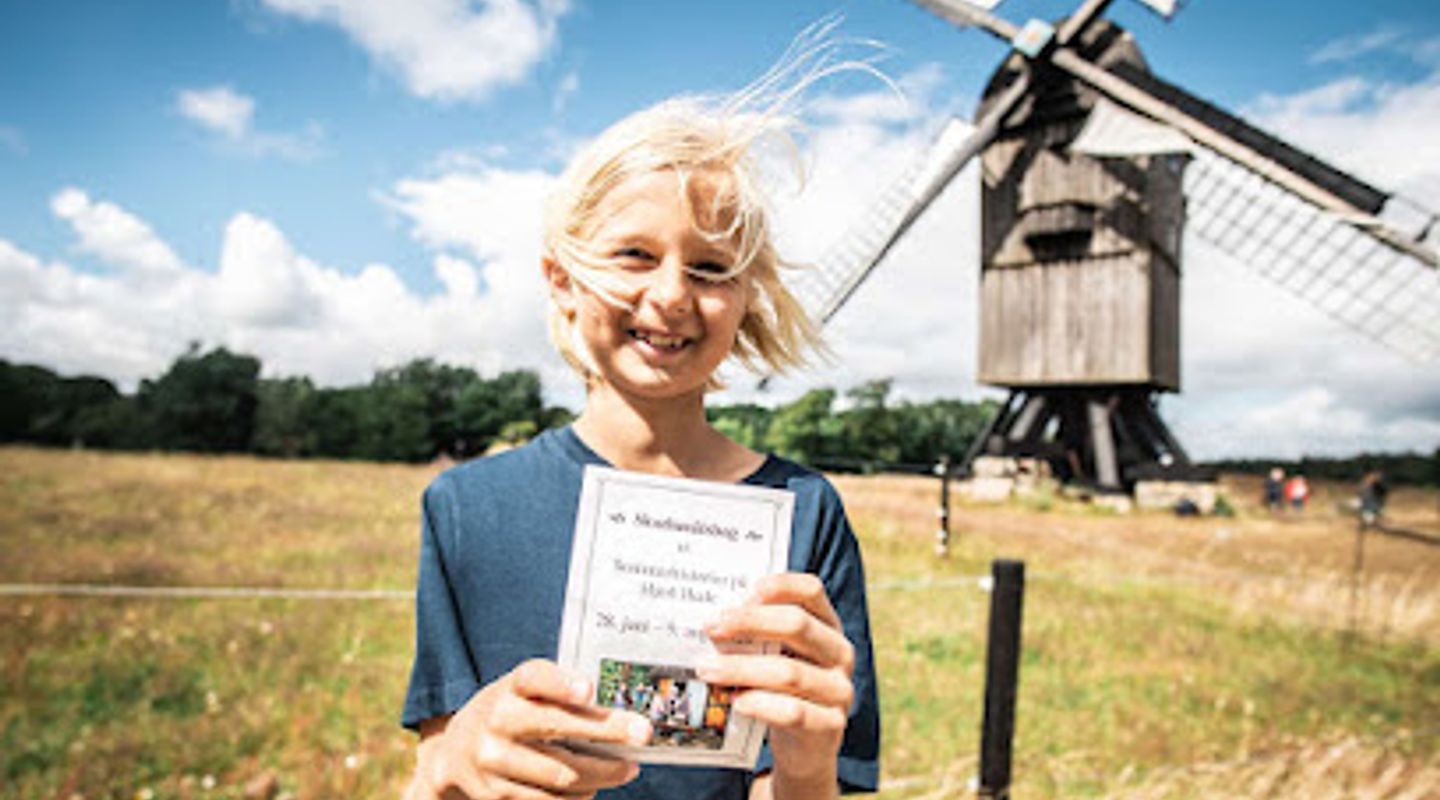
Two mills anchor the museum’s skyline: the red watermill by the stream and the distinctive stub mill on higher ground. Both are classic half‑timbered structures that once powered local production. On special days, the watermill is put into operation to grind flour, demonstrating how harnessing energy from wind and water transformed rural work and diet.Around many of the houses, historical gardens have been recreated using period‑appropriate plants. Ornamental beds near the pastor’s house contrast with strictly practical kitchen plots at the farmsteads, where cabbages, herbs and berries grow in neat rows. Beyond the built village, paths lead towards heath and Denmark’s largest heath lake, Flyndersø, where birch, pine and open moorland frame wide Jutland skies.
Animals, film locations and a day in the open air
Domestic animals are an integral part of Hjerl Hede. Heritage breeds of horses, cows, pigs, goats, sheep and poultry live across the 20‑hectare site, reinforcing how closely human lives were once tied to livestock. Their presence, along with wagons and simple machinery, helps make sense of barn layouts, fodder storage and the constant labour behind each harvest.The museum has also lent its authentic setting to film productions, including scenes for the historical drama "The Bastard", shot in and around Hedegården from 1818. For today’s visitors, the same courtyards, fields and interiors offer an atmospheric backdrop for unhurried wandering, picnics by the village pond and slow exploration of Denmark’s rural past in the fresh West Jutland air.
Evendo Review Centre
 Google
Guest reviews
Best time to go
Quietest: Feb, Mar & Oct · before 7am or from 8pm
Busy times are Evendo estimates for a typical year, to help you plan. Actual crowds vary with events, school holidays and the weather.
Explore Hjerl Hede Open Air Museum on the map
A handpicked selection of must-see spots near Hjerl Hede Open Air Museum, mapped for you.
Get your free copy of our complete guide to Hjerl Hede Open Air Museum, delivered straight to you.
Everything on this page, from opening hours and how to get there to Eve’s tips and the best time to go, in one PDF you can read offline, print or share.
Already have an account? Sign in
Your Hjerl Hede Open Air Museum guide is ready.
We'll send it to · Not you? Sign out

Getting your guide ready…
We are putting together a fresh copy of the Hjerl Hede Open Air Museum guide. This can take up to a minute.
This can take a few moments. If your browser asks, choose Allow so the download can start. You'll find the guide in your Downloads folder.
Nothing happened? Download it again
Sorry, the guide is taking longer than usual. Please try again in a minute, or get it by email instead.
Other nearby places you may find interesting
The closest places of the same kind, if this one is not quite what you had in mind.
-
-
-
-
-


Swipe for more places
More to explore near Hjerl Hede Open Air Museum
-
 Best experiences near Hjerl Hede Open Air Museum
-
 Best hotels near Hjerl Hede Open Air Museum
-
 Best landmarks near Hjerl Hede Open Air Museum
-
 Best attractions near Hjerl Hede Open Air Museum
-
 Best shops near Hjerl Hede Open Air Museum
-
 Best restaurants near Hjerl Hede Open Air Museum
-
 Best bars near Hjerl Hede Open Air Museum


Do you manage this location?
Take control to get all the benefits, like improved information, better appearance, and stronger visibility across AI-powered discovery.
Explore more

Explore more of Central Jutland
Explore Central Jutland in Denmark: A perfect blend of natural beauty, cultural heritage, and family-friendly attractions.
Explore Central Jutland
Explore more of Denmark
Discover Denmark: A perfect blend of history, modern design, and the cozy concept of hygge. Explore vibrant cities, serene landscapes, and world-class cuisine.
Explore Denmark
