

Vild Emil af Thomas Dambo Travel Guide
Free Guide: A giant wooden troll napping in a forest nest, Vild Emil turns orderly Tinkerdal Skov into a playful treasure hunt of art, nature and imagination near Holstebro.


A brief summary of Vild Emil af Thomas Dambo
A giant wooden troll napping in a forest nest, Vild Emil turns orderly Tinkerdal Skov into a playful treasure hunt of art, nature and imagination near Holstebro.
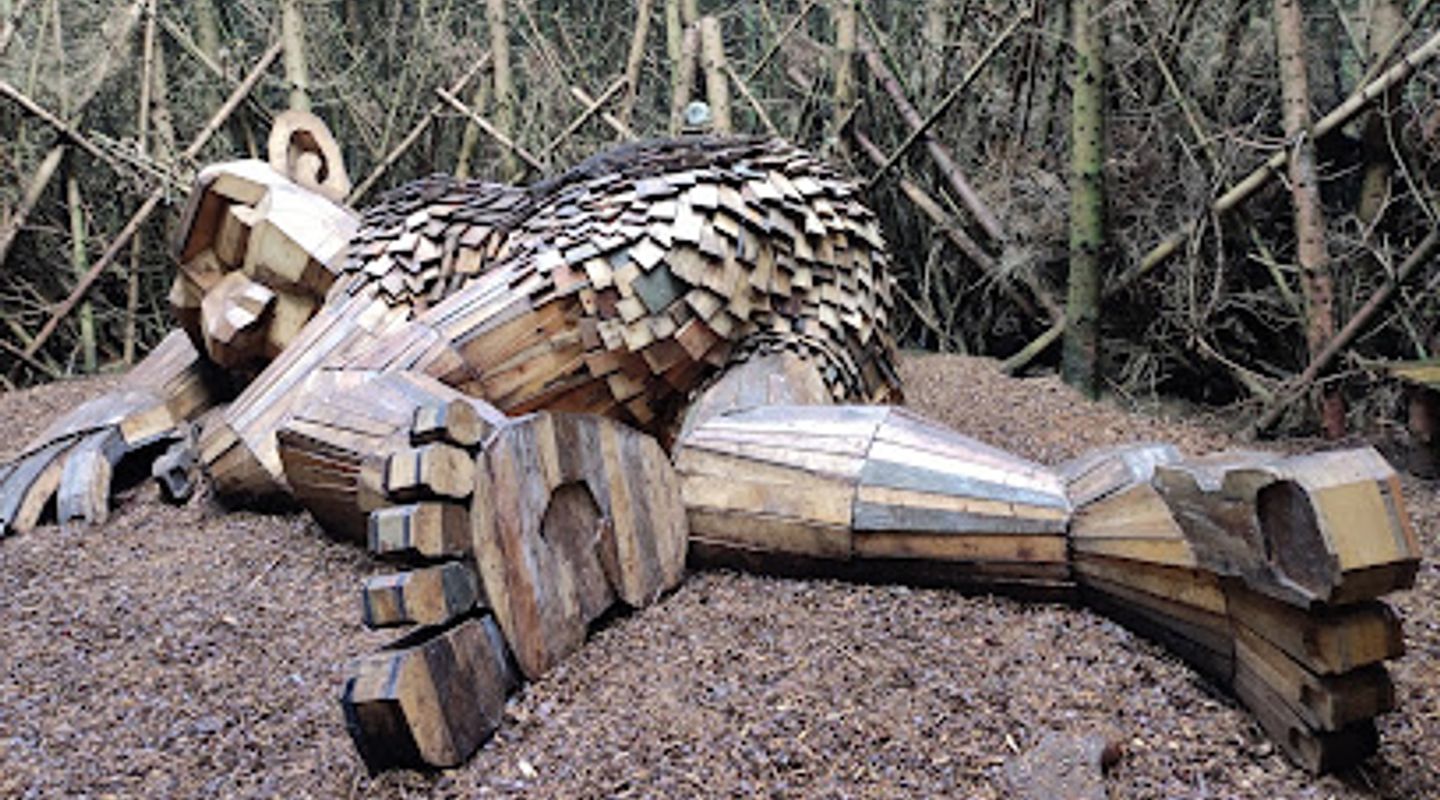
Hidden among the straight-planted spruce of Tinkerdal Skov near Holstebro, **Vild Emil** is one of Danish artist Thomas Dambo’s giant recycled-wood trolls. Half-napping in a nest of branches, the 2-by-7-metre figure invites a playful forest quest for families, walkers and photographers. Blending fairy-tale fantasy with environmental art, this free outdoor installation turns a quiet plantation into a whimsical treasure hunt and a gentle reminder about reusing materials.
On-site amenities
 Seating areas
 Trash bins
 Information boards
Opening hours
- Every dayOpen 24 hours
Opening hours as listed on the venue’s Google Business Profile. Hours can change for services and special events, so check with the venue before you go.
- Address
- Viborgvej 290, 7500 Holstebro
- Website
Getting there
Car from central Holstebro
Local bus plus short walk
Cycling from Holstebro area
Discover more about Vild Emil af Thomas Dambo
A sleeping giant in a regimented forest
Vild Emil lies dozing in the middle of Tinkerdal Skov, a commercial-style forest where the trees stand in neat, almost military rows. The contrast is deliberate: this wild-looking troll, with his long limbs and tousled features, interrupts the order of the plantation like a playful secret. Measuring roughly two metres high and seven metres long, he feels impressively large when you finally step into his clearing.Created from reclaimed wood and branches, Emil curls up in a nest of spruce trunks and twigs. From some angles you only glimpse a hand, a foot or part of his face through the trees, which makes finding him feel like stumbling upon a creature from a Nordic folktale. Children scramble onto his arms and adults circle slowly, taking in the textures of weathered planks and twisted roots.
Thomas Dambo’s world of trolls and trash
Vild Emil is part of artist Thomas Dambo’s ever-growing family of giant trolls scattered across Denmark and around the world. Built mainly from recycled pallets, scrap wood and storm-felled branches, they are designed as both sculptures and storytelling tools, encouraging visitors to see discarded materials as something with new life. In Tinkerdal, Emil’s body is a collage of uneven boards, visible screws and patchwork patterns that celebrate imperfection.Local volunteers helped assemble the troll on site, turning the project into a community effort rather than a simple art commission. Municipal support and local foundations backed the build, underscoring how strongly this kind of accessible, free culture is woven into the region’s identity. Each troll has its own story, and here the tale plays with the idea of wilderness in a forest that is anything but wild on paper.
The tale of a troll and a tamed landscape
In the story behind Vild Emil, the forest is carefully planted in straight lines, with little room for chaos or surprise. For a free-spirited troll, that kind of order feels unnatural. Emil’s response is to carve out a nest of branches where he can rest, dream and reclaim a corner of the forest for wildness. The sculpture becomes a gentle, humorous critique of how landscapes are managed and shaped.As you walk between the trunks, the narrative starts to feel tangible. The ground is soft with needles, light filters through the spruce canopy in narrow beams, and then the troll suddenly appears—big, barefoot and blissfully asleep. It is easy to imagine him waking after dark, stretching his wooden limbs and padding quietly between the rows of trees.
A forest adventure for all ages
Reaching Vild Emil involves a short walk on forest tracks, which is part of the fun. Families turn it into a treasure hunt, following paths and peering between tree lines until the troll reveals himself. The approach is generally gentle, making it suitable for most visitors with basic mobility, though roots, mud and uneven surfaces are part of the experience after rain.Once at the sculpture, people linger. Some sit on the edge of Emil’s nest, others pose for imaginative photos, framing the troll’s expressive face or his enormous hands. The atmosphere is relaxed and unhurried; there is no ticket booth or fence, just the sense of being a guest in a shared woodland playground.
Light, seasons and the changing mood of the woods
The character of Vild Emil shifts subtly with the seasons. In summer, the forest feels lush and green, with birdsong and the resin scent of spruce hanging in the warm air. In autumn, fallen needles and mist give the scene a more mysterious, almost cinematic tone. Winter’s low light throws strong shadows across the troll’s body, highlighting the geometry of his wooden panels.Early in the day or towards evening, when the forest is quiet, the sculpture can feel surprisingly intimate despite its size. You become aware of small details: the grain of different boards, the way branches weave into the nest, the playful tilt of Emil’s head. Tinkerdal Skov is not a dramatic wilderness, but this single artwork transforms it into a place where imagination and nature meet in a simple, memorable way.
Evendo Review Centre
 Google
Guest reviews
Best time to go
Quietest: Jan, Feb & Mar · before 7am or at 9pm or at 10pm
Busy times are Evendo estimates for a typical year, to help you plan. Actual crowds vary with events, school holidays and the weather.
Explore Vild Emil af Thomas Dambo on the map
A handpicked selection of must-see spots near Vild Emil af Thomas Dambo, mapped for you.
Get your free copy of our complete guide to Vild Emil af Thomas Dambo, delivered straight to you.
Everything on this page, from opening hours and how to get there to Eve’s tips and the best time to go, in one PDF you can read offline, print or share.
Already have an account? Sign in
Your Vild Emil af Thomas Dambo guide is ready.
We'll send it to · Not you? Sign out

Getting your guide ready…
We are putting together a fresh copy of the Vild Emil af Thomas Dambo guide. This can take up to a minute.
This can take a few moments. If your browser asks, choose Allow so the download can start. You'll find the guide in your Downloads folder.
Nothing happened? Download it again
Sorry, the guide is taking longer than usual. Please try again in a minute, or get it by email instead.
Other nearby places you may find interesting
The closest places of the same kind, if this one is not quite what you had in mind.
-
-
-
-
-


Swipe for more places
More to explore near Vild Emil af Thomas Dambo
-
 Best experiences near Vild Emil af Thomas Dambo
-
 Best hotels near Vild Emil af Thomas Dambo
-
 Best landmarks near Vild Emil af Thomas Dambo
-
 Best attractions near Vild Emil af Thomas Dambo
-
 Best shops near Vild Emil af Thomas Dambo
-
 Best restaurants near Vild Emil af Thomas Dambo
-
 Best bars near Vild Emil af Thomas Dambo


Do you manage this location?
Take control to get all the benefits, like improved information, better appearance, and stronger visibility across AI-powered discovery.
Explore more

Explore more of Central Jutland
Explore Central Jutland in Denmark: A perfect blend of natural beauty, cultural heritage, and family-friendly attractions.
Explore Central Jutland
Explore more of Denmark
Discover Denmark: A perfect blend of history, modern design, and the cozy concept of hygge. Explore vibrant cities, serene landscapes, and world-class cuisine.
Explore Denmark
