Kings Hill | Megalithic tomb, Central Jutland Travel Guide
A remarkably well‑preserved Stone Age passage grave where you can crawl into a Neolithic burial chamber and step back 5,000 years in the fields near Mariager.
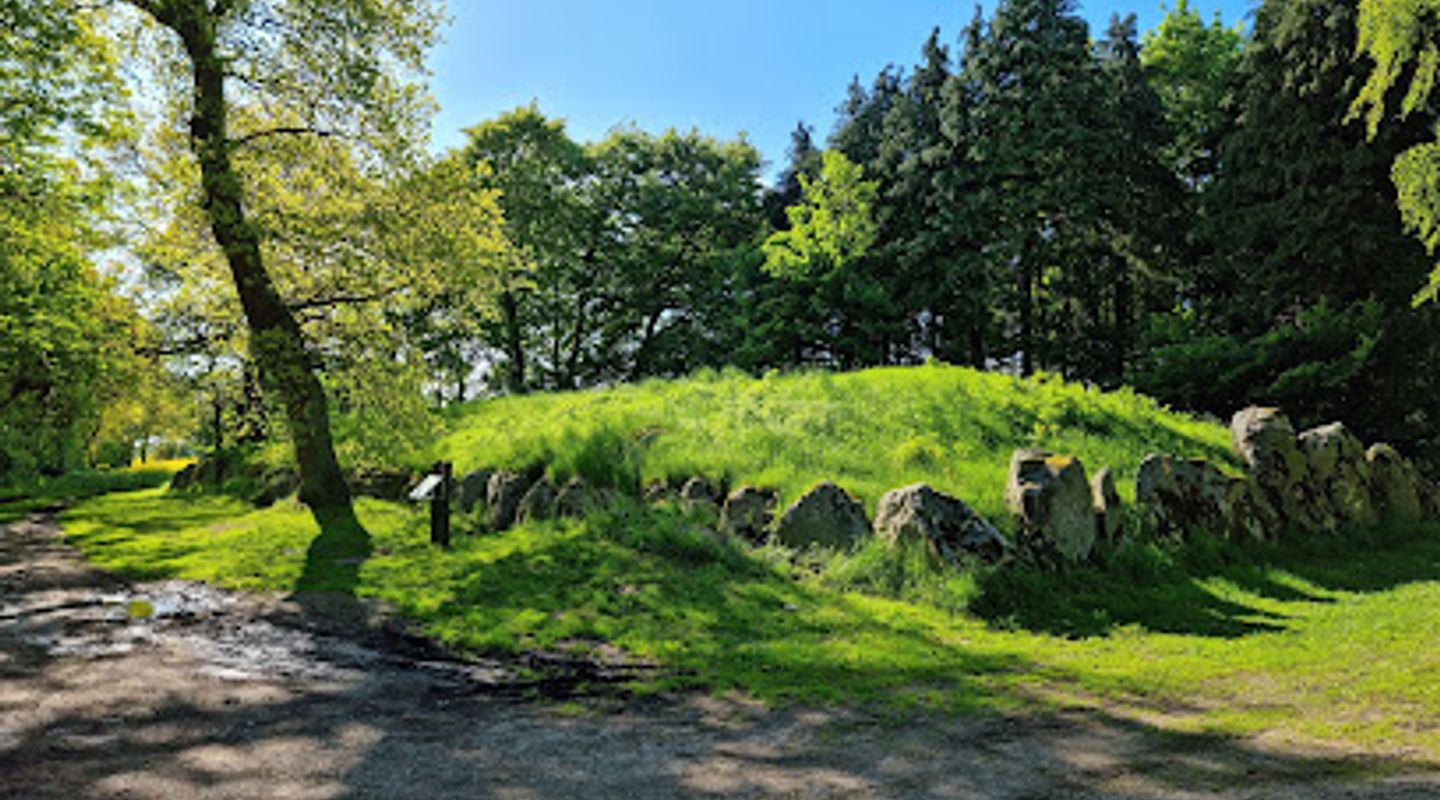
Set on a low rise in the countryside near Mariager, Kings Hill (Kongehøjen) is one of Denmark’s best‑preserved Stone Age passage graves. Built around 3200 BC by the Funnel Beaker culture, the long mound is ringed by an almost intact chain of kerbstones and hides two remarkably well‑kept burial chambers inside. You can stoop or crawl through the narrow entrance and step into the cool, silent darkness where Neolithic farmers once buried their dead, then emerge to open views over the surrounding fields.
A brief summary to Kings Hill | Megalithic tomb
- Hobrovej 12C, Mariager, 9550, DK
- Duration: 0.5 to 1.5 hours
- Free
-
 Outdoor
- Mobile reception: 4 out of 5

Know before you go
Hi, I'm Eve. Here are a few practical things to know before exploring Kings Hill | Megalithic tomb.
- Bring a reliable flashlight or headlamp; the interior is pitch‑dark and natural light barely reaches the burial chamber.
- Wear clothes you do not mind getting dusty and shoes with good grip, as you need to crouch or crawl through a low, sometimes damp passage.
- Combine your stop with nearby Hohøj burial mound and a walk in Alstrup Krat to get a fuller sense of the area’s prehistoric landscape.
Do you manage this location?
Take control to get all the benefits, like improved information, better appearance, and stronger visibility across AI-powered discovery. Learn more about listing your business on Evendo
Activate your presenceOther nearby places you may find interesting
The closest places of the same kind, if this one is not quite what you had in mind.
Explore Kings Hill | Megalithic tomb on the Map
A handpicked selection of must-see spots near Kings Hill | Megalithic tomb, mapped for you.
Getting There
-
Car from Mariager town center
From central Mariager, reaching Kings Hill by car typically takes about 10–15 minutes, following regional roads through gently rolling farmland. The route is straightforward but includes narrow country stretches where agricultural vehicles are common. Parking is usually informal along the verge near the mound rather than in a marked lot, so allow extra time to find a safe spot and avoid blocking field entrances. The visit itself is free of charge; fuel costs are minimal given the short distance.
-
Bicycle from Mariager
Cycling from Mariager to Kings Hill usually takes around 25–35 minutes each way, depending on fitness and wind. The ride follows minor roads with light traffic but some gentle hills, making it best for confident cyclists and older children rather than very young riders. Surfaces are paved but can be exposed in bad weather, so bring layers and rain protection. There is no dedicated bike parking at the mound, but you can safely lean or lock a bicycle to a fence nearby at no extra cost.
-
Regional bus plus short walk from Hobrovej stop
Regional buses running between Hobro and Mariager often stop along Hobrovej within walking distance of Kings Hill; the trip from either town typically takes 15–25 minutes. A one‑way adult ticket on these local routes usually costs in the range of 20–35 DKK, paid by card, app or cash depending on the operator. Service is less frequent in the evenings and on weekends, so check current timetables and plan for waiting times. From the nearest stop you should expect a short walk on roadside verges and farm tracks over uneven ground, which may be muddy in wet weather and is not ideal for wheelchairs or prams.
For the on-the-go comforts that matter to you
-
 Information Boards
Discover more about Kings Hill | Megalithic tomb
A Stone Age monument in the fields of Himmerland
Kings Hill, known locally as Kongehøjen, rises gently from the farmland between Hobro and Mariager, a long green mound that looks deceptively modest from a distance. As you approach, the structure resolves into an elongated barrow surrounded by a ring of large stones, each one carefully placed more than five millennia ago. Despite its age, the tomb is considered one of Denmark’s most beautiful and best‑preserved Stone Age burial monuments, a quiet reminder that this landscape has been settled since long before there was a Danish kingdom.At roughly 5,000 years old, the mound belongs to the Neolithic Funnel Beaker culture, early farmers who cleared the surrounding hillsides and invested enormous labour in building communal tombs. Kongehøjen’s name, “King’s Hill,” reflects its imposing form and the aura of importance that still clings to it, even though it predates historic Danish royalty by thousands of years.Ancient craftsmanship in stone and earth
What sets Kings Hill apart is the remarkable completeness of its construction. Along the foot of the mound runs an almost unbroken chain of kerbstones, some massive, some smaller, carefully fitted to hold the earth in place. Above them rises the long, grass‑covered barrow, its gentle profile shaped by human hands in the Stone Age and preserved with minimal alteration since.Inside, two stone‑built burial chambers lie hidden within the mound. Excavations and later restoration work revealed that the tomb’s core is built of immense glacial boulders, set upright to form walls and roofed with capstones. Smaller stone tiles fill the gaps, creating a kind of prehistoric dry masonry that has kept the structure stable and largely watertight through thousands of winters.Stepping into the Neolithic darkness
From the outside, the entrance looks like a low, narrow opening in the side of the mound. To reach the interior you need to crouch or crawl along a short, confined passage, feeling the cool stone close to your shoulders. It is very dark inside, and a flashlight transforms the experience, suddenly revealing the textures of rock, the curvature of the roof slabs and the quiet geometry of the chamber.Once your eyes adjust, you can stand or half‑stand within the central space, imagining it lit by flickering firelight and filled with the sounds of ritual thousands of years ago. Archaeological finds from similar graves include human bones, flint tools, pottery and amber, suggesting complex burial practices and a deep spiritual world tied to the land.Legends, protection and quiet endurance
Kongehøjen has been formally protected since the late 19th century, a relatively early recognition of its importance. Local folklore also helped safeguard it: for generations people told that anyone who disturbed the stone circle might suffer misfortune. Whether taken literally or not, such stories discouraged the removal of stones for building and left the monument unusually intact compared with many other mounds.Today the tomb sits in peaceful countryside, with only the rustle of wind in the grass and distant farm sounds breaking the silence. There are no intrusive structures around it, so the setting still feels close to the open cultural landscape of the Neolithic, with gentle slopes and big skies stretching away from the mound.Experiencing Kings Hill among Mariager’s ancient sites
A visit to Kings Hill is short but atmospheric. Most travellers spend time walking slowly around the kerbstone ring, tracing its curve and studying the size and shape of individual boulders before venturing inside. Climbing onto the top of the mound gives you a low but wide view over fields and hedgerows, linking this grave visually to other prehistoric sites scattered around the region.Combined with nearby monuments such as the towering Hohøj burial mound and the forested traces of Alstrup Krat, Kings Hill forms part of a wider tapestry of ancient sites along Mariager Fjord. It is a compact, easily accessible place where you can step briefly out of the present and sense how strongly people here once connected death, ritual and the surrounding land.More to explore near Kings Hill | Megalithic tomb













Your all‑in‑one travel companion app
Explore expert travel guides, compare and book tours, experiences, hotels, and more—all from the palm of your hand. Download now for seamless trip planning wherever your wanderlust takes you.


Explore More of Central Jutland
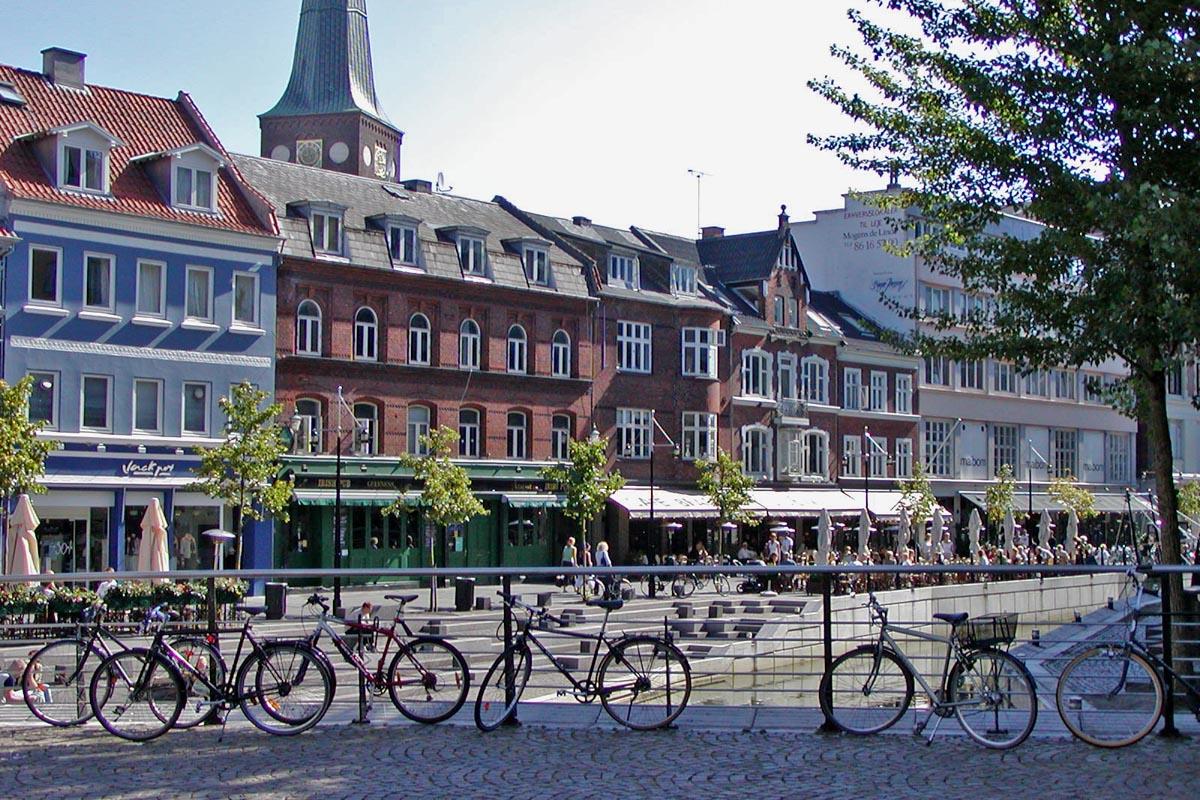
Looking beyond Kings Hill | Megalithic tomb? Discover Central Jutland for broader travel guides, local hot-spots, and regional highlights.
Explore Central Jutland