Viking Museum Travel Guide
Free Guide: Small, subterranean and set on the exact site of Viking Aros, this intimate museum reveals how Aarhus grew from fortified riverside settlement to enduring town.


A brief summary of Viking Museum
Small, subterranean and set on the exact site of Viking Aros, this intimate museum reveals how Aarhus grew from fortified riverside settlement to enduring town.
Tucked beneath a bank on Skt. Clemens Torv in central Aarhus, the small Viking Museum (Vikingemuseet) sits exactly where the Viking town of Aros once stood. This compact underground museum showcases original excavations, finds and reconstructions that reveal how Aarhus grew from a fortified Viking settlement into a bustling medieval town. With a mix of artefacts, models and multimedia, it offers an atmospheric, easy-to-digest glimpse into 1,200 years of urban history.
On-site amenities
 Restrooms
 Seating areas
 Information boards
Opening hours
- Mon10:15 am–6 pm
- Tue10:15 am–6 pm
- Wed10:15 am–6 pm
- Thu10:15 am–6 pm
- Fri10:15 am–6 pm
- Sat10:15 am–5 pm
- Sun10:15 am–5 pm
Opening hours as listed on the venue’s Google Business Profile. Hours can change for services and special events, so check with the venue before you go.
- Address
- Sankt Clemens Torv 6, 8000 Aarhus Centrum
- Phone
- Website
Getting there
On foot from central Aarhus
Train to Aarhus H and walk
City bus or light rail within Aarhus
Taxi from outer districts or cruise pier
Discover more about Viking Museum
An underground window into Viking Aros
Hidden beneath the modern Nordea Bank on Skt. Clemens Torv, the Viking Museum occupies the very layers of soil where the Viking town of Aros once clung to the mouth of the river. Here, a few metres below the lively pedestrian streets, you stand at the level where houses, workshops and fortifications rose more than 1,200 years ago. The compact museum is run as a satellite of Moesgaard Museum and focuses tightly on Aarhus’ earliest urban story.Stepping inside feels almost like entering an archaeological trench. Low ceilings, exposed sections of earth and carefully lit finds immediately shift the mood from city bustle to quiet time capsule. Unlike broad national museums, this collection is anchored entirely in this exact spot, making the link between past and present unusually tangible.
From fortified harbour to growing town
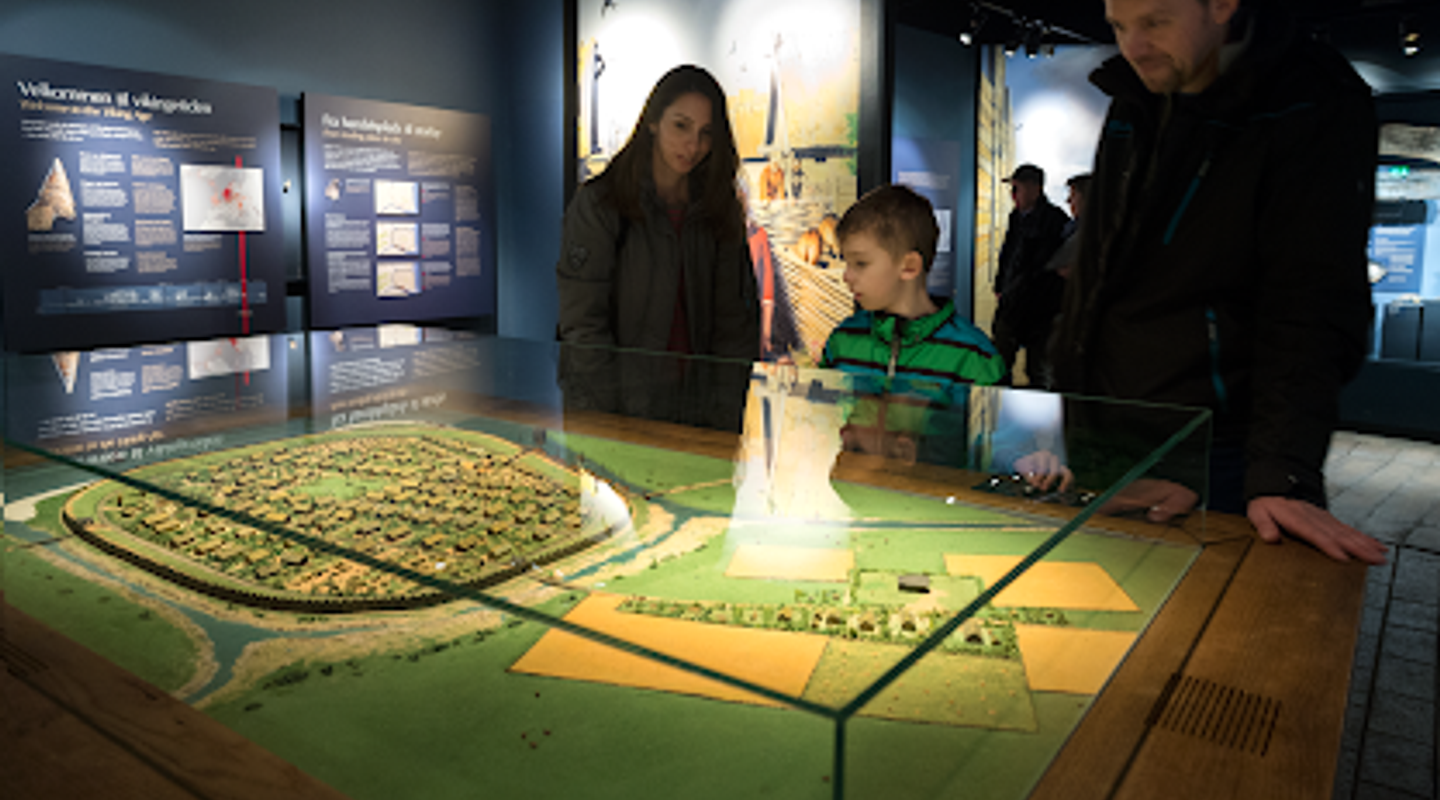
A key theme in the exhibition is how Aros evolved from a modest riverside settlement into one of Denmark’s earliest towns. Display panels and models explain that Aarhus likely dates back to the late 8th century, placing it among the country’s oldest urban centres, only slightly younger than places such as Ribe and Hedeby.You can trace how the settlement was fortified, how trade routes stitched it into the wider Viking world, and how the harbour, river and shoreline shaped daily life. A detailed model of the town around the time of King Harald Bluetooth shows dense rows of houses, palisades and jetties, helping you visualise a bustling landscape that modern Aarhus still mirrors in its street plan.
Artefacts pulled from the Aarhus subsoil
Much of the museum’s appeal lies in its objects, many of which were recovered during excavations on this exact site and in nearby streets. Everyday items – tools, fragments of buildings, domestic utensils and personal belongings – sit alongside more eye-catching discoveries. A well-preserved timber well frame from the Viking Age, for instance, gives a rare sense of construction techniques and water management in a wooden town.Most of the pieces are original, though a few sensitive items are represented by replicas for security reasons. Together they build a picture of work, trade, craftsmanship and belief systems, all filtered through finds that have spent centuries in the ground beneath modern shoes and bicycles.
Modern storytelling in a compact space
Despite its modest footprint, the museum uses contemporary exhibition design to keep the story vivid. Updated in the 2000s, the displays feature fresh graphics, improved lighting and thoughtfully arranged cases that guide you chronologically rather than overwhelming you with volume. Short texts keep explanations accessible, while still giving enough context for historically minded visitors.Soundscapes and a short animated film of a Viking attack on Aarhus add drama without dominating the room. These touches, combined with the close proximity to original archaeological layers, create an immersive atmosphere that works well for both adults and older children interested in early Scandinavian history.
Experiencing Aarhus above and below ground
One of the museum’s quiet revelations is how little Aarhus has shifted in over a millennium. Maps and comparisons highlight that the original town centre lies exactly where the present one does, a continuity unusual even in a Scandinavian context. When you emerge back onto Skt. Clemens Torv, trams, buses and cafés occupy essentially the same footprint as Viking workshops and houses.A visit here rarely takes more than an hour, making it an easy addition to a day focused on the city centre. It pairs naturally with walks along the river or visits to larger institutions such as Moesgaard Museum or ARoS, helping you stitch together the long arc from fortified Aros to contemporary Aarhus.
Practical details and accessibility notes
The Viking Museum is located in a basement beneath a working bank, and access is via stairs, which means it is not suitable for wheelchair users or those with significant mobility difficulties. Inside, the layout is compact but straightforward to navigate, with a single main exhibition area rather than multiple floors.Opening hours typically run from late morning to early evening on weekdays, with slightly shorter hours at weekends; the museum closes on Danish bank holidays. Entry is inexpensive by local standards, and children and teenagers under 18 can enter free of charge. Payment is by card only. Given its central location and short recommended visit time, the museum fits easily between other city-centre sights or as a historical counterpoint to the modern architecture and culture of present-day Aarhus.
Evendo Review Centre
 Google
Guest reviews
Best time to go
Quietest: Jan, Feb & Nov · before 9am or from 7pm
Busy times are Evendo estimates for a typical year, to help you plan. Actual crowds vary with events, school holidays and the weather.
Explore Viking Museum on the map
A handpicked selection of must-see spots near Viking Museum, mapped for you.
Get your free copy of our complete guide to Viking Museum, delivered straight to you.
Everything on this page, from opening hours and how to get there to Eve’s tips and the best time to go, in one PDF you can read offline, print or share.
Already have an account? Sign in
Your Viking Museum guide is ready.
We'll send it to · Not you? Sign out

Getting your guide ready…
We are putting together a fresh copy of the Viking Museum guide. This can take up to a minute.
This can take a few moments. If your browser asks, choose Allow so the download can start. You'll find the guide in your Downloads folder.
Nothing happened? Download it again
Sorry, the guide is taking longer than usual. Please try again in a minute, or get it by email instead.
Unlock the best of Viking Museum
Skip-the-line tickets, guided tours with entry, and walking tours of the area, booked in a few clicks.


Other nearby places you may find interesting
The closest places of the same kind, if this one is not quite what you had in mind.
-
-
-
-
-


Swipe for more places
More to explore near Viking Museum

 Best experiences near Viking Museum
 Best hotels near Viking Museum
 Best landmarks near Viking Museum
 Best attractions near Viking Museum
 Best shops near Viking Museum
 Best restaurants near Viking Museum
 Best bars near Viking Museum
Do you manage this location?
Take control to get all the benefits, like improved information, better appearance, and stronger visibility across AI-powered discovery.
Explore more

Explore more of Central Jutland
Explore Central Jutland in Denmark: A perfect blend of natural beauty, cultural heritage, and family-friendly attractions.
Explore Central Jutland
Explore more of Denmark
Discover Denmark: A perfect blend of history, modern design, and the cozy concept of hygge. Explore vibrant cities, serene landscapes, and world-class cuisine.
Explore Denmark