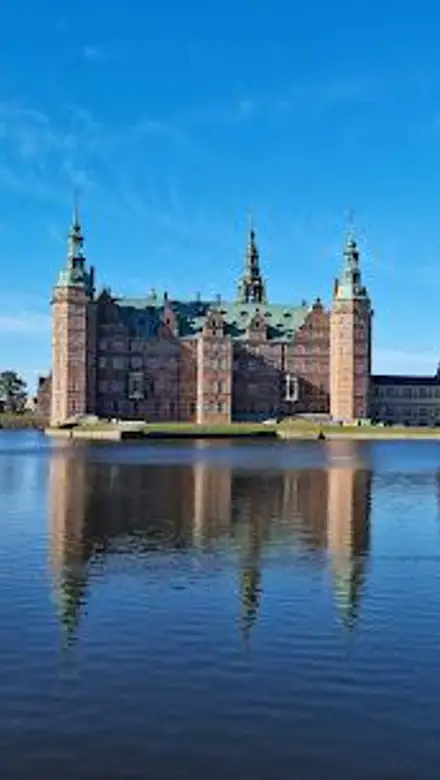
Frederiksborg Castle Travel Guide
Free Guide: Scandinavia's largest Renaissance palace, where Danish royal history unfolds across ornate halls and a pristine chapel.


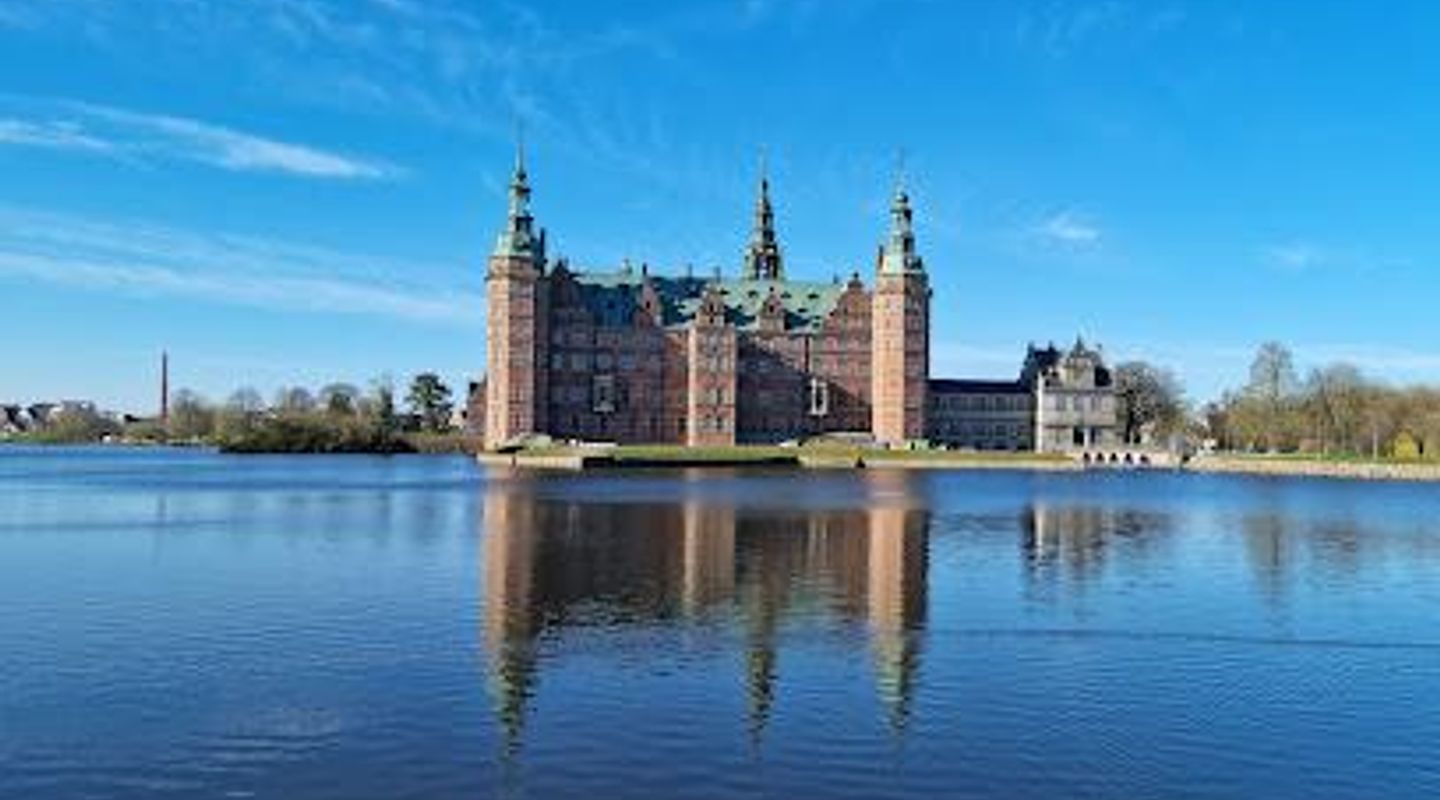
A brief summary of Frederiksborg Castle
Scandinavia's largest Renaissance palace, where Danish royal history unfolds across ornate halls and a pristine chapel.
Frederiksborg Castle is a magnificent Renaissance palatial complex built by King Christian IV in the early 17th century, situated on three islets in Castle Lake in Hillerød, Denmark. Now home to the Museum of National History, it stands as the largest Renaissance residence in Scandinavia, featuring ornate red-brick architecture, a preserved chapel with original furnishings, and a symmetrical Baroque garden. Located just 40 minutes north of Copenhagen, it offers visitors a complete immersion into Danish royal history and Renaissance craftsmanship.
On-site amenities
 Restrooms
 Drink options
 Food options
 Seating areas
 Sheltered areas
 Picnic areas
 Trash bins
 Information boards
 Visitor centre
Opening hours
- Mon10 am–3 pm
- Tue10 am–3 pm
- Wed10 am–3 pm
- Thu10 am–3 pm
- Fri10 am–3 pm
- Sat10 am–5 pm
- Sun10 am–5 pm
Opening hours as listed on the venue’s Google Business Profile. Hours can change for services and special events, so check with the venue before you go.
- Address
- Frederiksborg Slot 10, 3400 Hillerød
- Phone
- Website
Getting there
S-train from Copenhagen
Car from Copenhagen
Bus from Copenhagen
Guided tour from Copenhagen
Discover more about Frederiksborg Castle
A Renaissance Masterpiece Built for Majesty
Frederiksborg Castle stands as the largest Renaissance residence in Scandinavia, a testament to the ambition and power of King Christian IV of Denmark-Norway. Built between 1560 and 1630, the castle replaced an earlier hunting lodge and became the principal royal residence of the Danish crown. The main four-storey building with its three wings was completed around 1610, with work continuing on the chapel until 1618. This extraordinary accomplishment—constructing such a vast complex in under a decade—showcased the architectural prowess and resources of the Danish monarchy during the height of the Renaissance period.The castle's distinctive red-brick facades, finely sculpted sandstone details, slender towers, and jagged gables reflect a uniquely Nordic interpretation of French Renaissance design. Its location on three small islets in the Slotssøen (Castle Lake) was revolutionary for Danish castle-building: Frederiksborg was the first Danish castle constructed inland rather than on the coast, and the first built purely for recreational purposes rather than defence. This inland location spurred the development of vastly improved roads, initially reserved exclusively for the king.
The Chapel: A Survivor of Fire and Time
While a devastating fire in 1859 destroyed much of the castle's interior, the Chapel emerged largely unscathed, preserving its original decoration from Christian IV's era. This sacred space remains the best-preserved Renaissance room in the complex and houses treasures of extraordinary significance. The Chapel's most remarkable artifact is the Compenius organ, built in 1610 by Esajas Compenius and installed shortly before his death in Hillerød in 1617. With 1,001 wooden pipes and richly decorated with ebony, ivory, and silver, it remains the oldest organ in Denmark, its original manually-driven bellows still preserved.The Chapel's altarpiece, crafted in 1606 by Hamburg goldsmith Jacob Mores, features gold, silver, and ebony work of exceptional artistry. From 1660 to 1848, Danish kings were anointed within these walls, and to this day, the Chapel serves as the ceremonial chapel for the Order of the Elephant and the Order of the Dannebrog. It has also been the site of significant historical events, including the signing of the Treaty of Frederiksborg. The Chapel's galleries, decorated during the reign of Frederick III (1648–1670), display grisaille frescoes of Biblical figures painted in the 1690s, creating an atmosphere of profound historical reverence.
The Museum of National History and Artistic Treasures
Since 1878, Frederiksborg Castle has housed the Museum of National History, established by J. C. Jacobsen, the founder of Carlsberg Breweries. The museum presents 500 years of Danish history through an exceptional collection of portraits, history paintings, furniture, and applied art. The castle contains the largest and most significant collection of Danish royal portraits anywhere, with new works continually added to the collection. Visitors encounter the Marble Gallery of the King's Wing, the grand Audience Hall—the oldest preserved Baroque room in Denmark, completed in 1689—and numerous chambers filled with paintings depicting pivotal moments in Danish history, including works from the Three Years War period (1848–1850).The castle's interior spaces showcase the opulence and symbolism of royal power. The impressive Neptune Fountain and elaborate decorative elements throughout the complex were designed to demonstrate Christian IV's status as a powerful European monarch. The King's Oratory contains artwork dating to around 1870, while portrait galleries adorn walls throughout the castle, creating a visual narrative of Danish royal lineage and political history.
The Baroque Garden: Symmetry and Landscape Beauty
The castle's picturesque Baroque garden, designed by architect J. C. Krieger in 1725, represents one of Denmark's finest formal garden achievements. Created to follow the main axis of the castle with a long perspective extending into the landscape, the garden features four terraces on a hillside, symmetrical parterres with royal monograms executed in boxwood, and festive cascades. Though altered over subsequent centuries, the garden was meticulously restored to its original 1725 design in 1996, allowing visitors to experience the formal elegance as envisioned during the reign of Frederik IV.The garden contrasts beautifully with the romantic landscape garden on the opposite side of Castle Lake, which features wild forest, winding streams, and Frederik II's Bath House Castle from 1580. Walking through these gardens offers peaceful respite and exceptional views of the castle's red-brick silhouette reflected in the water—a vista particularly stunning when viewed from across the lake in Hillerød.
Restoration and Contemporary Significance
Following the catastrophic 1859 fire, J. C. Jacobsen undertook the monumental task of restoring Frederiksborg Castle to its original appearance. This restoration transformed the castle into a cultural institution rather than a royal residence, preserving it as a museum for future generations. Today, the castle remains open year-round, welcoming visitors to explore its magnificent staterooms, halls, and the Danish National Portrait Gallery. The castle continues to serve ceremonial functions, with Danish kings and queens still anointed in the Chapel during coronation ceremonies, maintaining an unbroken connection to centuries of royal tradition.
Evendo Review Centre
 Google
Guest reviews
Best time to go
Quietest: Jan, Feb & Nov · before 7am or from 6pm
Busy times are Evendo estimates for a typical year, to help you plan. Actual crowds vary with events, school holidays and the weather.
Explore Frederiksborg Castle on the map
A handpicked selection of must-see spots near Frederiksborg Castle, mapped for you.
Get your free copy of our complete guide to Frederiksborg Castle, delivered straight to you.
Everything on this page, from opening hours and how to get there to Eve’s tips and the best time to go, in one PDF you can read offline, print or share.
Already have an account? Sign in
Your Frederiksborg Castle guide is ready.
We'll send it to · Not you? Sign out

Getting your guide ready…
We are putting together a fresh copy of the Frederiksborg Castle guide. This can take up to a minute.
This can take a few moments. If your browser asks, choose Allow so the download can start. You'll find the guide in your Downloads folder.
Nothing happened? Download it again
Sorry, the guide is taking longer than usual. Please try again in a minute, or get it by email instead.
Unlock the best of Frederiksborg Castle
Skip-the-line tickets, guided tours with entry, and walking tours of the area, booked in a few clicks.



Other nearby places you may find interesting
The closest places of the same kind, if this one is not quite what you had in mind.
-
Amalienborg Palace Home of the Danish royal family, Amalienborg Palace pairs working monarchy with rococo elegance, daily guard ceremonies and intimate museum interiors.
-
The King's Garden Copenhagen’s oldest royal garden, where Rosenborg Castle’s turrets rise above lawns, avenues and playgrounds in a relaxed blend of history and everyday city life.
-
Nyhavn Copenhagen’s classic harbour postcard: colourful 17th‑century houses, wooden ships and waterside cafés where maritime history meets modern hygge.
-
Christiania A lakeside freetown of DIY houses, murals and counterculture, Christiania is Copenhagen’s most curious blend of commune, neighbourhood and living social experiment.
-
Christiansborg Palace Where medieval fortress, royal grandeur and modern democracy meet under one copper-clad tower in the very heart of Copenhagen.
Swipe for more places
More to explore near Frederiksborg Castle

 Best experiences near Frederiksborg Castle
 Best hotels near Frederiksborg Castle
 Best landmarks near Frederiksborg Castle
 Best attractions near Frederiksborg Castle
 Best shops near Frederiksborg Castle
 Best restaurants near Frederiksborg Castle
 Best bars near Frederiksborg Castle
Do you manage this location?
Take control to get all the benefits, like improved information, better appearance, and stronger visibility across AI-powered discovery.
Explore more
Explore more of Copenhagen Region
Discover the Copenhagen Region: A perfect mix of historic charm and modern vibrancy, offering scenic beauty, cultural landmarks, and a high quality of life.
Explore Copenhagen Region
Explore more of Denmark
Discover Denmark: A perfect blend of history, modern design, and the cozy concept of hygge. Explore vibrant cities, serene landscapes, and world-class cuisine.
Explore Denmark