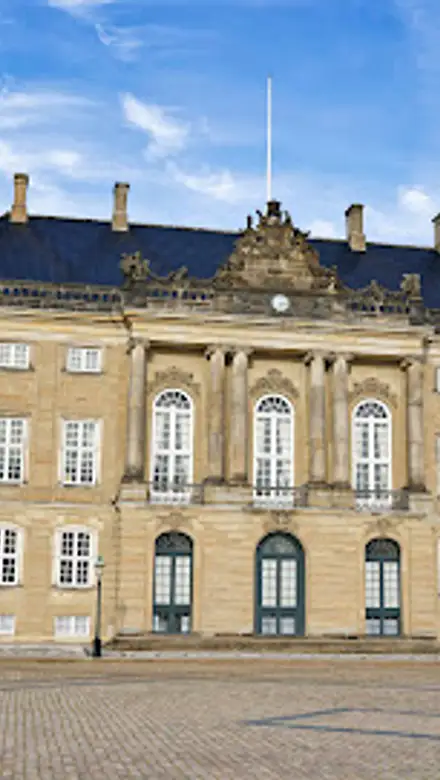
Amalienborg Palace Travel Guide
Free Guide: Home of the Danish royal family, Amalienborg Palace pairs working monarchy with rococo elegance, daily guard ceremonies and intimate museum interiors.


A brief summary of Amalienborg Palace
Home of the Danish royal family, Amalienborg Palace pairs working monarchy with rococo elegance, daily guard ceremonies and intimate museum interiors.
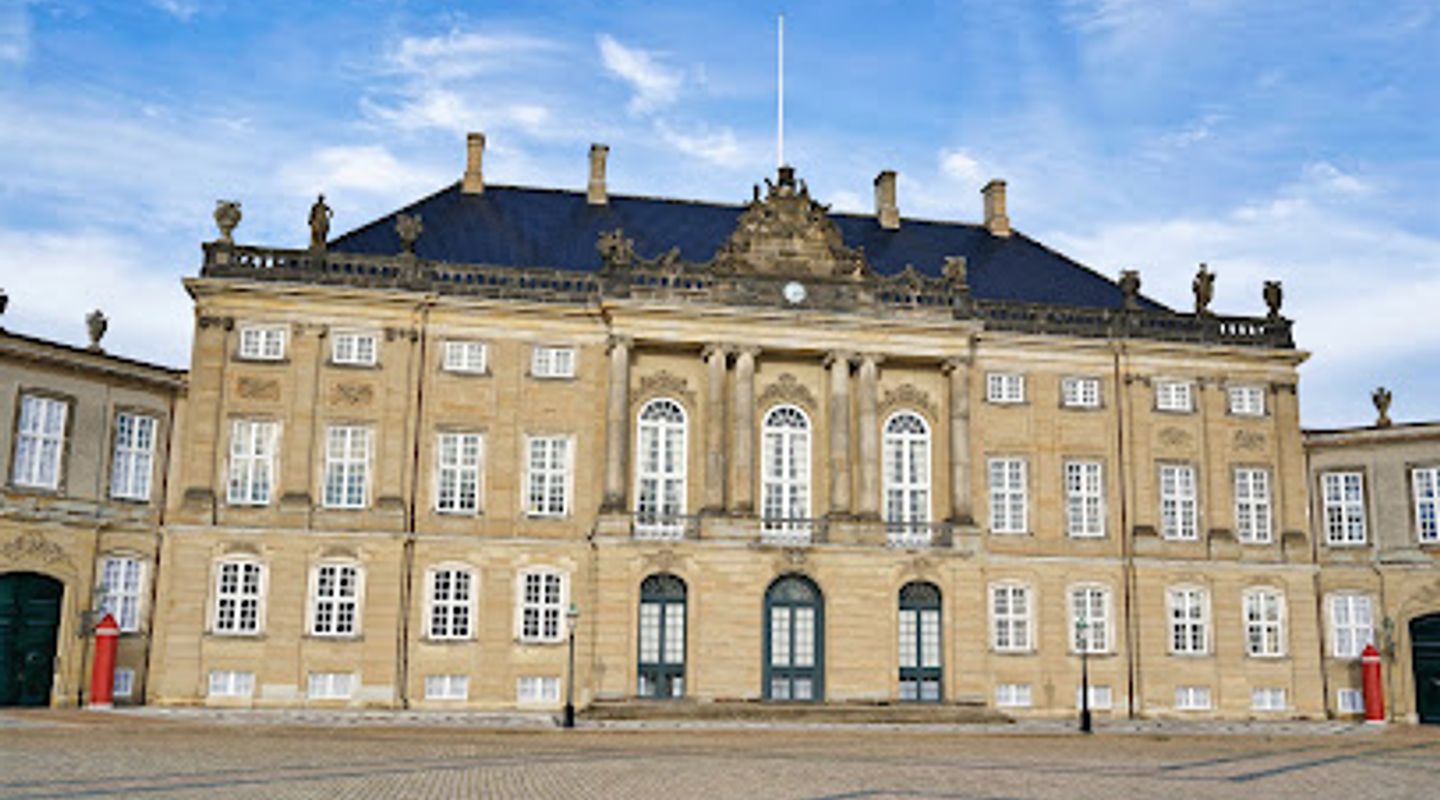
Amalienborg Palace is the working home of the Danish royal family and the ceremonial heart of Copenhagen’s monarchy. Around an octagonal cobbled square stand four near-identical rococo palaces, watched over by the Royal Life Guard and an equestrian statue of King Frederik V. One palace houses the Amalienborg Museum, where preserved royal apartments, glittering jewellery and the famed Fabergé chamber offer a rare, intimate look at royal life over the last 150 years, especially around the daily noon Changing of the Guard.
On-site amenities
 Restrooms
 Drink options
 Drinking water
 Food options
 Seating areas
 Sheltered areas
 Trash bins
 Information boards
 Visitor centre
- Address
- Amalienborg Slotsplads, 1257 København K
- Phone
- Website
Getting there
Metro
City Bus
Walking
Bicycle
Discover more about Amalienborg Palace
Royal heart of Copenhagen
Amalienborg Palace forms the living core of Denmark’s monarchy, set in the elegant Frederiksstaden district between the Marble Church and the waterfront. The complex is arranged around a spacious octagonal square where an equestrian statue of King Frederik V anchors the view and underscores the palace’s 18th‑century origins. This is not a museum frozen in time but an active royal residence, where state limousines pull up to doors that guards have watched over for centuries.From the cobbles you look onto four almost identical rococo palaces, their honey‑coloured façades softened by ocean light and often framed by fluttering Dannebrog flags. The setting feels grand yet surprisingly intimate, with the sound of boots on stone, flagpoles creaking in the wind and the distant hum of the harbour mixing into the atmosphere.
Four palaces, one royal square
Each of the four palaces carries both an original aristocratic name and the name of a king. Christian VII’s Palace, originally Moltke’s, now hosts official guests and grand festivities. Christian VIII’s Palace, once Levetzau’s, contains the Amalienborg Museum and provides a carefully curated window into royal interiors. Frederik VIII’s Palace, formerly Brockdorff’s, is the private home of the current king and queen and their family, while Christian IX’s Palace, once Schack’s, is closely associated with Queen Margrethe II.The architectural language is pure rococo: restrained ornamentation, mansard roofs, pilasters and elegant window rhythms rather than overwhelming mass. Seen from the centre of the square, the symmetry is striking, yet small differences in detailing and rooflines reveal that these were once separate noble residences, united into a single royal ensemble after a fire at the previous Christiansborg palace.
Inside the Amalienborg Museum
The Amalienborg Museum, housed in Christian VIII’s Palace, traces about 150 years of royal history from Christian IX and Queen Louise to the present day. Rooms are preserved much as their royal occupants left them, from intimate studies and nurseries to formal salons lined with portraits and orders. Each suite reflects the fashions and personalities of its time, shifting from Victorian heaviness to lighter 20th‑century tastes.Among the highlights is the Fabergé chamber, where intricate Russian jewellery and objects recall dynastic ties that once linked Copenhagen with St Petersburg and other European courts. Display cases mix personal gifts, official regalia and everyday items, making the monarchy feel both distant and unexpectedly human. On many days visitors can also step into the Gala Hall and other piano nobile rooms still used for receptions, standing in spaces that regularly feature in state photographs.
Changing of the Royal Guard
Every day at noon the Royal Life Guard stages the Changing of the Guard in the palace square, a ceremony that has become one of Copenhagen’s defining spectacles. Guards in dark blue uniforms and tall bearskin hats march in precise formations, often accompanied by a brass band whose music echoes between the façades. The ritual links back to the 17th century and visually underlines the continuity of the Danish state.Arriving a little before midday allows time to find a good spot along the barriers or near the statue. The mood is a mix of formality and curiosity: cameras click, children count the guards, and for a few minutes the square is given over entirely to polished military choreography before everyday city life resumes around the edges.
Neighbouring cityscape and atmosphere
Beyond the palaces themselves, Amalienborg is woven into one of Copenhagen’s most atmospheric urban vistas. Standing in the square you can look along the axis that connects the domed Marble Church on one side with the waterfront and modern opera house on the other, a straight line of stone, water and copper roofs. Just behind the palaces, Amaliehaven garden offers fountains, clipped hedges and views across the harbour.The experience here is as much about lingering as ticking off sights: watching light shift on sandstone walls, listening to the echo of footsteps on cobbles, or imagining royal processions crossing the square. Whether you step inside the museum or simply wander the exterior, Amalienborg captures the blend of ceremony, design and lived‑in history that defines Denmark’s constitutional monarchy.
Evendo Review Centre
 Google
Guest reviews
Best time to go
Quietest: Jan, Feb & Nov · before 7am or from 10pm
Busy times are Evendo estimates for a typical year, to help you plan. Actual crowds vary with events, school holidays and the weather.
Explore Amalienborg Palace on the map
A handpicked selection of must-see spots near Amalienborg Palace, mapped for you.
Get your free copy of our complete guide to Amalienborg Palace, delivered straight to you.
Everything on this page, from opening hours and how to get there to Eve’s tips and the best time to go, in one PDF you can read offline, print or share.
Already have an account? Sign in
Your Amalienborg Palace guide is ready.
We'll send it to · Not you? Sign out

Getting your guide ready…
We are putting together a fresh copy of the Amalienborg Palace guide. This can take up to a minute.
This can take a few moments. If your browser asks, choose Allow so the download can start. You'll find the guide in your Downloads folder.
Nothing happened? Download it again
Sorry, the guide is taking longer than usual. Please try again in a minute, or get it by email instead.
Unlock the best of Amalienborg Palace
Skip-the-line tickets, guided tours with entry, and walking tours of the area, booked in a few clicks.


Other nearby places you may find interesting
The closest places of the same kind, if this one is not quite what you had in mind.
-
-
-
-
-


Swipe for more places
More to explore near Amalienborg Palace

 Best experiences near Amalienborg Palace
 Best hotels near Amalienborg Palace
 Best landmarks near Amalienborg Palace
 Best attractions near Amalienborg Palace
 Best shops near Amalienborg Palace
 Best restaurants near Amalienborg Palace
 Best bars near Amalienborg Palace
Do you manage this location?
Take control to get all the benefits, like improved information, better appearance, and stronger visibility across AI-powered discovery.
Explore more
Explore more of Copenhagen Region
Discover the Copenhagen Region: A perfect mix of historic charm and modern vibrancy, offering scenic beauty, cultural landmarks, and a high quality of life.
Explore Copenhagen Region
Explore more of Denmark
Discover Denmark: A perfect blend of history, modern design, and the cozy concept of hygge. Explore vibrant cities, serene landscapes, and world-class cuisine.
Explore Denmark