Lille Langebro, Copenhagen Region Travel Guide
An elegantly curved steel bridge that swings open for ships, connecting Copenhagen's historic neighborhoods with sculptural grace.
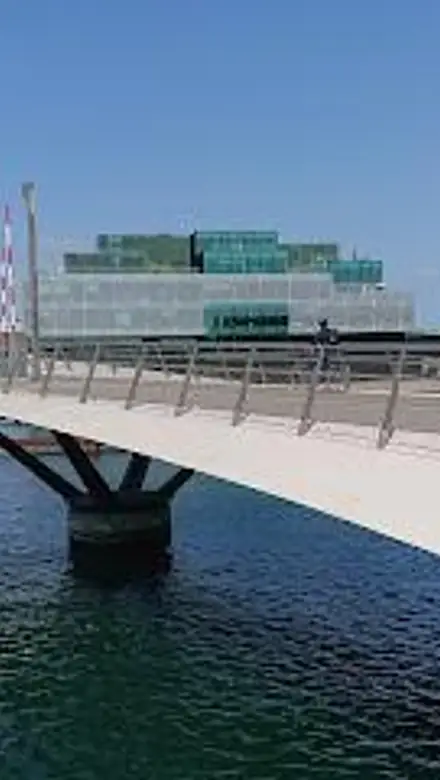
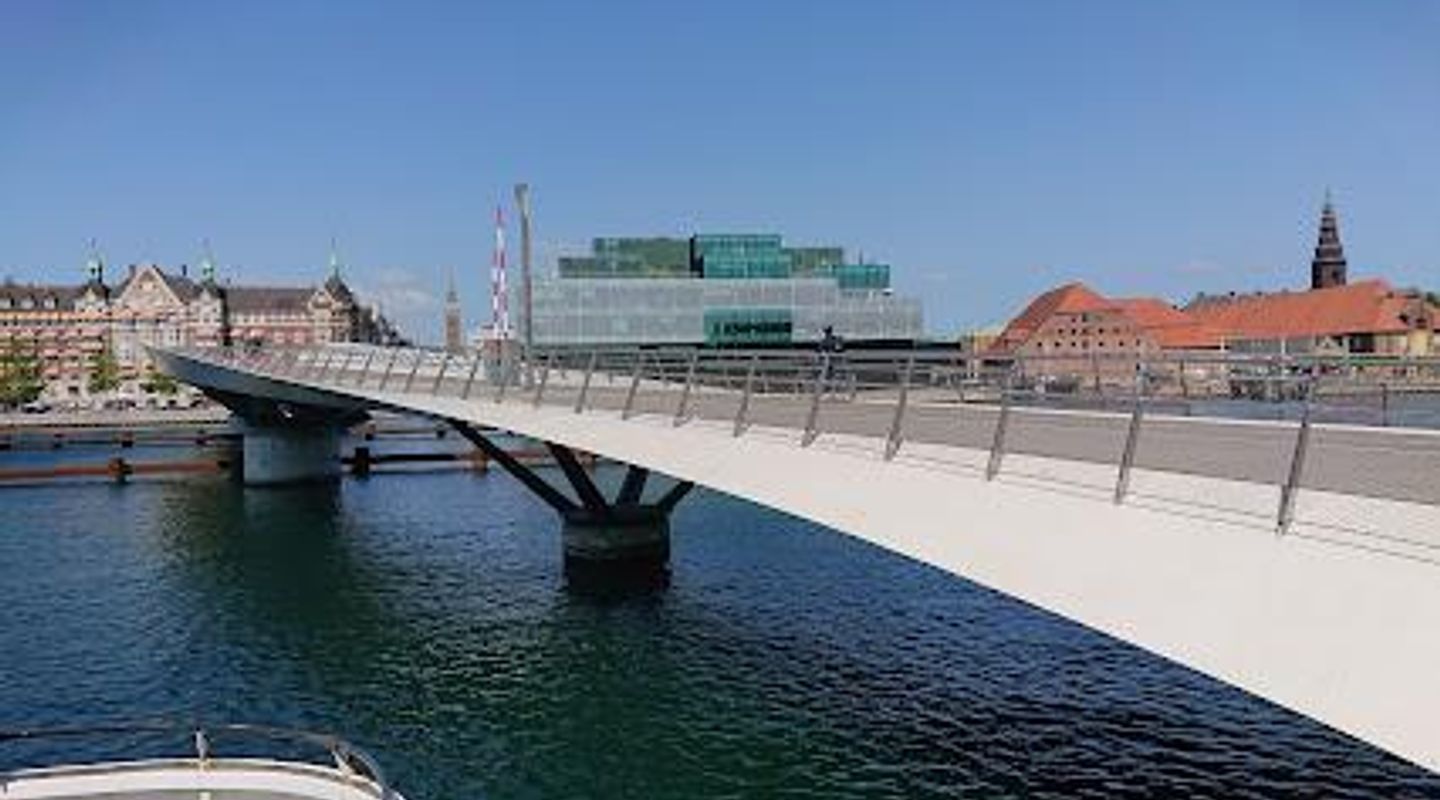
Lille Langebro is a striking 160-meter pedestrian and cycling bridge spanning Copenhagen's Inner Harbour, designed by the London-based architecture studio WilkinsonEyre. Completed in 2019, this elegant steel structure features a graceful curved form with distinctive raised 'wings' at its midspan and the remarkable ability to swing open for maritime traffic. The bridge connects historic Copenhagen neighborhoods while serving as a sculptural landmark that transforms into a ribbon of light after dark.
A brief summary to Lille Langebro
- Lille Langebro, Copenhagen, Indre By, DK
- Click to display
- Duration: 0.5 to 2 hours
- Free
-
 Outdoor
- Mobile reception: 5 out of 5

Know before you go
Hi, I'm Eve. Here are a few practical things to know before exploring Lille Langebro.
- Visit at dusk to experience the bridge's transformation as concealed lighting in the handrails illuminates the structure, creating a striking ribbon-of-light effect across the water.
- The bridge's raised central section provides a gradual reveal of the surrounding harbor and cityscape as you cross, so pace yourself to enjoy the unfolding views.
- Combine your visit with the adjacent BLOX building, which houses the Danish Architecture Centre, cafés, and public spaces, creating a full cultural experience.
- If possible, time your visit to witness the bridge's opening mechanism in action when maritime traffic requires passage—a rare spectacle that reveals the engineering ingenuity beneath the elegant design.
- The bridge is equally rewarding for photography from multiple angles; capture it from the harbor level, from the bridge itself, and from the surrounding quaysides for different perspectives on its curved form.
Do you manage this location?
Take control to get all the benefits, like improved information, better appearance, and stronger visibility across AI-powered discovery. Learn more about listing your business on Evendo
Activate your presenceOther nearby places you may find interesting
The closest places of the same kind, if this one is not quite what you had in mind.


Explore Lille Langebro on the Map
A handpicked selection of must-see spots near Lille Langebro, mapped for you.
Unlock the Best of Lille Langebro
Buy tickets
-
No tickets available
Book tours with entry


Getting There
-
Metro + Walking
Take the Copenhagen Metro (lines M1 or M2) to Christianshavn Station, approximately 8 minutes from the city center. Exit and walk toward the harbor—Lille Langebro is approximately 400 meters from the station, a 5-minute walk through the Christianshavn neighborhood. The bridge is clearly signposted and accessible from both the Christianshavn side and the Indre By (city center) side. No cost beyond standard metro fare (approximately 24–36 DKK for a single journey within zones 1–2).
-
Bicycle
Copenhagen's extensive cycle network makes cycling to Lille Langebro straightforward. From the city center, follow dedicated cycle lanes toward the harbor via Vester Voldgade or Nyhavn. The bridge itself is designed primarily for cyclists and pedestrians, with a dedicated 4-meter cycle lane subdivided into two directions. Bike parking is available at both ends of the bridge. Journey time from central Copenhagen is typically 10–15 minutes depending on your starting point. No cost.
-
Walking
The bridge is accessible on foot from both the Indre By district and Christianshavn. From Nyhavn or the city center, walk toward the harbor following signs to BLOX or the Inner Harbour. The walk takes approximately 15–20 minutes from central Copenhagen. The bridge's pedestrian path is 3 meters wide and clearly separated from the cycle lane, providing safe passage. No cost.
-
Bus
Several bus routes serve the area surrounding Lille Langebro, including routes 2A, 9A, and 40. Buses stop near the BLOX building and the bridge approaches. Journey time from the city center is typically 10–15 minutes depending on traffic and your starting point. Standard bus fare applies (approximately 24–36 DKK for a single journey within zones 1–2).
For the on-the-go comforts that matter to you
-
 Seating Areas
-
 Information Boards
-
 Visitor Center
Discover more about Lille Langebro
A Modern Marvel of Curved Design
Lille Langebro is a 160-meter pedestrian and cycling bridge that spans Copenhagen's Inner Harbour with exceptional elegance. Designed by the international architecture practice WilkinsonEyre and Urban Agency, the bridge was completed in August 2019 after winning an international design competition in 2015. The structure represents a seamless fusion of functional engineering and artistic vision, creating a landmark that has become integral to Copenhagen's contemporary urban landscape.The bridge's most distinctive visual feature is its gracefully curved form, which operates on multiple levels simultaneously. In plan view, the bridge follows an elegant arc that aligns with and evokes the historic ramparts and moat of Christianshavn, a visual connection that would otherwise remain invisible from street level. The structure's profile rises and falls with deliberate intention: it dips below the deck at both abutments before soaring upward into two dramatic triangular 'wings' at midspan. These wings create a striking silhouette that divides light from shade, giving the bridge a sculptural quality that changes throughout the day.Engineering Innovation and Maritime Function
Beyond its aesthetic achievements, Lille Langebro incorporates sophisticated engineering that allows it to serve as a double-swing bridge. Two rotating sections at the center of the structure can swing open together to permit the passage of large sailing vessels requiring the 5.4-meter navigation clearance. This opening mechanism represents a remarkable feat of engineering collaboration between WilkinsonEyre and the structural engineers at Buro Happold. Rather than using traditional pin locks, the engineers developed an innovative system of mechanical and hydraulic components that lock the two moving spans together when closed, creating a continuous structural moment connection at midspan. The opening mechanism operates using gravity, and the entire system has been discretely concealed within the bridge's piers to preserve its uninterrupted flowing lines.The bridge's five steel spans were entirely prefabricated off-site and delivered by sea in completed form, a logistical approach that minimized on-site construction and reduced disruption to the historic harbor environment. The primary steelwork is painted a uniform off-white that highlights the curved form and catches the changing light reflected from the water, while the piers are painted dark grey to minimize their visual impact.A Bridge for Active Urban Life
Designed exclusively for pedestrians and cyclists, Lille Langebro reflects Copenhagen's commitment to sustainable urban mobility. The bridge's 7-meter width is divided into a 3-meter pedestrian path and a 4-meter cycle way subdivided into two lanes, providing generous space for both user groups. The structure was estimated to serve between 6,000 and 10,500 daily users, relieving pressure on the heavily trafficked Langebro bridge and establishing a vital connection between historic neighborhoods on opposite sides of the Inner Harbour. The bridge's positioning immediately adjacent to the BLOX building—a contemporary cultural and educational hub designed by OMA—has revitalized what was previously an abandoned section of the harbor, creating a destination that attracts residents and visitors alike.Nocturnal Transformation and Lighting Design
After dark, Lille Langebro undergoes a remarkable transformation through carefully conceived lighting design by Speirs + Major. Concealed lighting integrated into the handrails illuminates both the deck and the distinctive wing structures, creating the effect of a twisting ribbon of light suspended across the water. This subtle but functional lighting accentuates the bridge's precisely engineered curvature and enhances its sculptural presence while maintaining safety for nighttime users. The lighting design represents an integral part of the architectural concept rather than an afterthought, demonstrating how technical systems can enhance rather than diminish aesthetic vision.Recognition and Urban Integration
Lille Langebro has received international recognition for its design excellence, winning the RIBA International Award for Excellence in 2021, the Civic Trust International Award, and the International Architecture Award. The bridge was commissioned by the Danish developer Realdania By & Byg and subsequently gifted to the municipality of Copenhagen, ensuring its long-term public benefit. Its elegant curve continues a visual axis that extends from Copenhagen's City Hall down Vester Voldgade to the harbor and across the water to Christianshavn, integrating the bridge into the city's historic urban geometry. The structure successfully demonstrates how contemporary design can honor historical context while creating a distinctly modern landmark.












Your all‑in‑one travel companion app
Explore expert travel guides, compare and book tours, experiences, hotels, and more—all from the palm of your hand. Download now for seamless trip planning wherever your wanderlust takes you.


Explore More of Copenhagen Region
Looking beyond Lille Langebro? Discover Copenhagen Region for broader travel guides, local hot-spots, and regional highlights.
Explore Copenhagen Region
Historic waterway where Danish grandeur meets serene Nordic charm, lined with palaces and museums.

A modest former service house on Frederiksholms Kanal, quietly recalling the working lives behind Copenhagen’s royal stables and the grandeur of nearby Christiansborg.