

The Round Tower Travel Guide
Free Guide: Climb Denmark's most iconic spiral ramp for 360-degree views and four centuries of astronomical heritage.


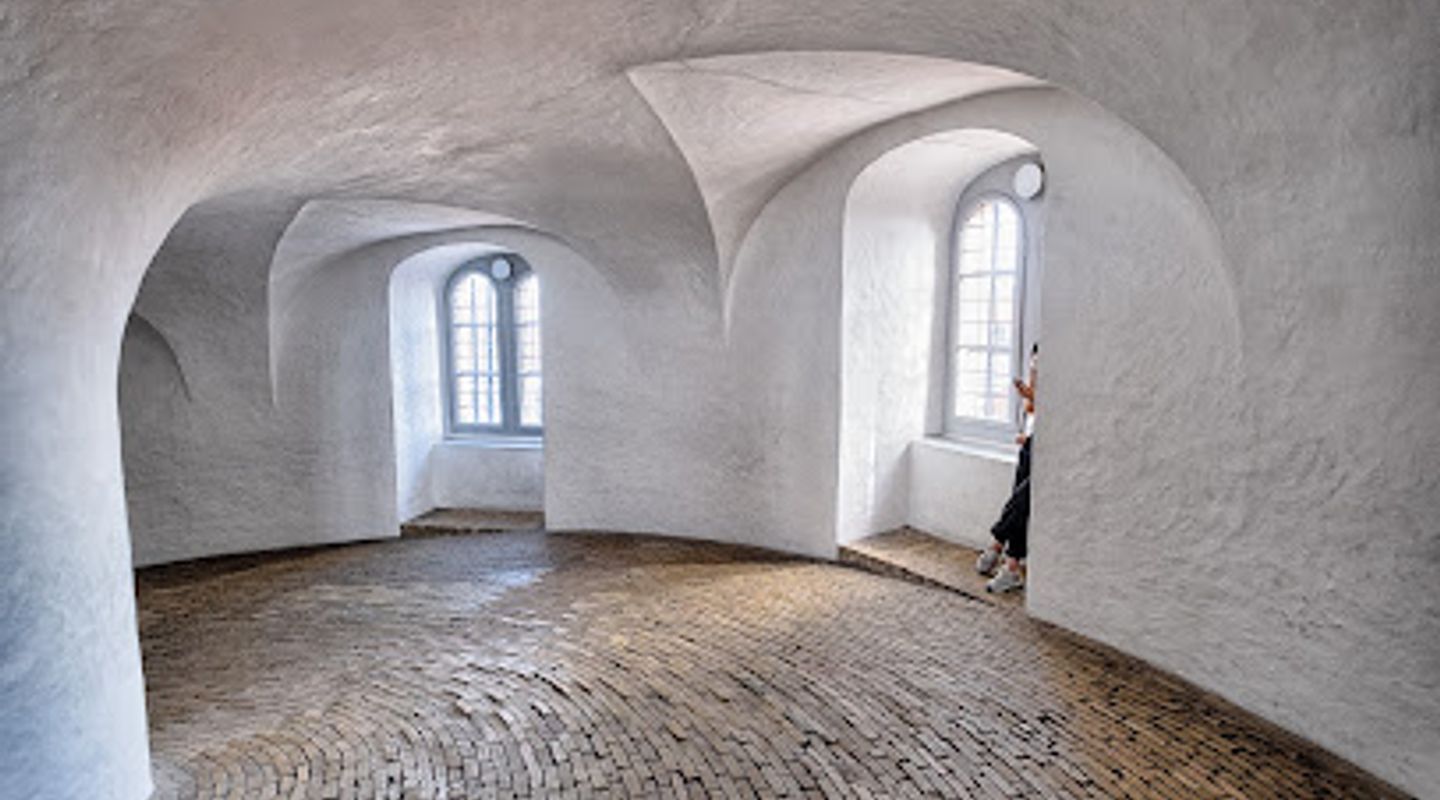
A brief summary of The Round Tower
Climb Denmark's most iconic spiral ramp for 360-degree views and four centuries of astronomical heritage.
A 17th-century astronomical observatory and cultural landmark in Copenhagen's Latin Quarter, featuring a unique 200-meter spiral ramp, panoramic city views, and a historic library hall hosting rotating exhibitions and events. Built by King Christian IV in 1642, the tower remains an active observatory and one of Copenhagen's most recognizable monuments.
On-site amenities
 Restrooms
 Drink options
 Food options
 Seating areas
 Information boards
Opening hours
- Every day10 am–8 pm
Opening hours as listed on the venue’s Google Business Profile. Hours can change for services and special events, so check with the venue before you go.
- Address
- Købmagergade 52A, 1150 København
- Phone
- Website
Getting there
Metro and Walking
Bus
Bicycle
Taxi or Rideshare
Discover more about The Round Tower
A Monument to Royal Vision and Scientific Curiosity
The Round Tower stands as one of Copenhagen's most distinctive landmarks, erected in 1642 by King Christian IV as part of the Trinitatis Complex. This architectural marvel was conceived as a triple-purpose structure: an astronomical observatory at its summit, a university library on the floor above Trinity Church, and the church itself at its base. The tower's construction began with the laying of the cornerstone on July 7, 1637, and was completed five years later, representing a significant investment in both scientific advancement and royal prestige during Denmark's Golden Age.
The Iconic Spiral Ramp and Ascent Experience
The tower's most distinctive feature is its famous spiral ramp—the only one of its kind in Denmark—which winds 7½ times around the tower's hollow core. This 200-meter continuous ramp eliminates the need for stairs during most of the ascent, making the climb accessible to visitors of varying fitness levels. The ramp features small niches that serve as pleasant resting spots for adults and popular hiding places for children. Approximately two-thirds of the way up, visitors encounter a glass-bottomed viewing platform suspended above the hollow core—a striking and slightly nerve-racking photo opportunity. The final ascent involves two sets of stairs: a wide wooden staircase and a smaller winding stone staircase leading to the open-air viewing deck at the summit.
Panoramic Views and the Observatory
From the top of the tower, visitors enjoy one of Copenhagen's finest panoramic vistas, stretching from the spires of the old town to the Øresund coast. On clear days, the view extends across the water to Sweden. The open-air platform offers sightlines to Copenhagen Cathedral, St. Nicolas Church, Rosenborg Palace, and the Marble Church. The Observatory at the summit remains an active astronomical facility. During the winter season from October to March, astronomers staff the observatory on Tuesday and Wednesday evenings from 6 to 9 PM, allowing visitors to observe planets and celestial objects through the tower's large telescope. During select summer Sundays, the sun and sunspots can be observed through a protective filter.
The Library Hall: From Scholarship to Contemporary Culture
Halfway up the spiral ramp lies the Library Hall, a bright and beautiful space that once housed the entire University of Copenhagen book collection—over 10,000 volumes. The hall served as the university library until 1861 and was restored in 1987 as a contemporary exhibition and event space. Today, it hosts rotating exhibitions spanning art, science, and history, alongside concerts, lectures, talks, and cultural events. The Library Hall also contains the Round Tower's shop and café, where visitors can purchase books, posters, and souvenirs while enjoying refreshments. The hall's transformation from a scholarly repository to a vibrant cultural venue reflects the tower's evolution as a living landmark.
Modern Role and Visitor Experience
The Round Tower attracts over 650,000 visitors annually, making it one of Copenhagen's most popular attractions. The tower operates 362 days a year, with extended hours during summer months. Admission is straightforward: adults pay 60 DKK, students 40 DKK, and children under 17 enter free (children under 11 must be accompanied by an adult). Tickets are purchased directly at the tower's ticket office with no advance booking available. The tower has a maximum capacity managed by staff, and during peak hours, queuing may occur, though waits typically do not exceed 20 minutes. Traffic to and from the viewing platform is regulated by a traffic light to manage flow safely.
Restoration and Future Vision
In 2026, the nearly 100-year-old copper dome of the observatory undergoes restoration to preserve this cultural heritage for future generations. The dome, which has developed leaks, receives new copper cladding, and the observatory interior is refurbished, including renewal of the floor and restoration of the historic refractor telescope by specialist craftspeople. Throughout 2026, the Round Tower hosts four special exhibitions and a rich program of music and events exploring the theme of light, demonstrating the tower's continued vitality as a cultural institution.
Evendo Review Centre
 Google
Guest reviews
Best time to go
Quietest: Jan, Feb & Dec · before 9am or from 9pm
Busy times are Evendo estimates for a typical year, to help you plan. Actual crowds vary with events, school holidays and the weather.
Explore The Round Tower on the map
A handpicked selection of must-see spots near The Round Tower, mapped for you.
Get your free copy of our complete guide to The Round Tower, delivered straight to you.
Everything on this page, from opening hours and how to get there to Eve’s tips and the best time to go, in one PDF you can read offline, print or share.
Already have an account? Sign in
Your The Round Tower guide is ready.
We'll send it to · Not you? Sign out

Getting your guide ready…
We are putting together a fresh copy of the The Round Tower guide. This can take up to a minute.
This can take a few moments. If your browser asks, choose Allow so the download can start. You'll find the guide in your Downloads folder.
Nothing happened? Download it again
Sorry, the guide is taking longer than usual. Please try again in a minute, or get it by email instead.
Unlock the best of The Round Tower
Skip-the-line tickets, guided tours with entry, and walking tours of the area, booked in a few clicks.
 Tour with entry
Self-Guided Tour In Copenhagen with 100 Captivating Audio Stories
from $3.19 Tour with entry
Copenhagen Exploration Game and City Tour on your Phone
from $8.53 Tour with entry
Half Day Self-Guided Audio Walking Private Tour in Copenhagen
from $14.07 Tour with entry
Life of H.C. Andersen - Half Day Self-Guided Audio Walking Tour
from $14.10
 Tour
TourA Self-Guided Nordic Exploration in Copenhagen's Hidden Hygge
from $1.06 Tour
TourCopenhagen Audio Guided Walking Tour 3h30 and 29 reviews
from $6.43 Tour
TourThe Philosopher's Last Walk: An audio tour on the life of Søren Kierkegaard
from $9.49 Tour
TourTOP Copenhagen : Private Guided Tour with your mobile
from $10.68
Other nearby places you may find interesting
The closest places of the same kind, if this one is not quite what you had in mind.
-

-
-
-
-


Swipe for more places
More to explore near The Round Tower

 Best experiences near The Round Tower
 Best hotels near The Round Tower
 Best landmarks near The Round Tower
 Best attractions near The Round Tower
 Best shops near The Round Tower
 Best restaurants near The Round Tower
 Best bars near The Round Tower
Do you manage this location?
Take control to get all the benefits, like improved information, better appearance, and stronger visibility across AI-powered discovery.
Explore more
Explore more of Copenhagen Region
Discover the Copenhagen Region: A perfect mix of historic charm and modern vibrancy, offering scenic beauty, cultural landmarks, and a high quality of life.
Explore Copenhagen Region
Explore more of Denmark
Discover Denmark: A perfect blend of history, modern design, and the cozy concept of hygge. Explore vibrant cities, serene landscapes, and world-class cuisine.
Explore Denmark
