

Esbjerg Havn, Esbjerg Travel Guide
Free Guide: A vast working harbour and marina where offshore wind giants, fishing boats and yachts share the docks on Denmark’s windswept North Sea coast.


A brief summary of Esbjerg Havn
A vast working harbour and marina where offshore wind giants, fishing boats and yachts share the docks on Denmark’s windswept North Sea coast.
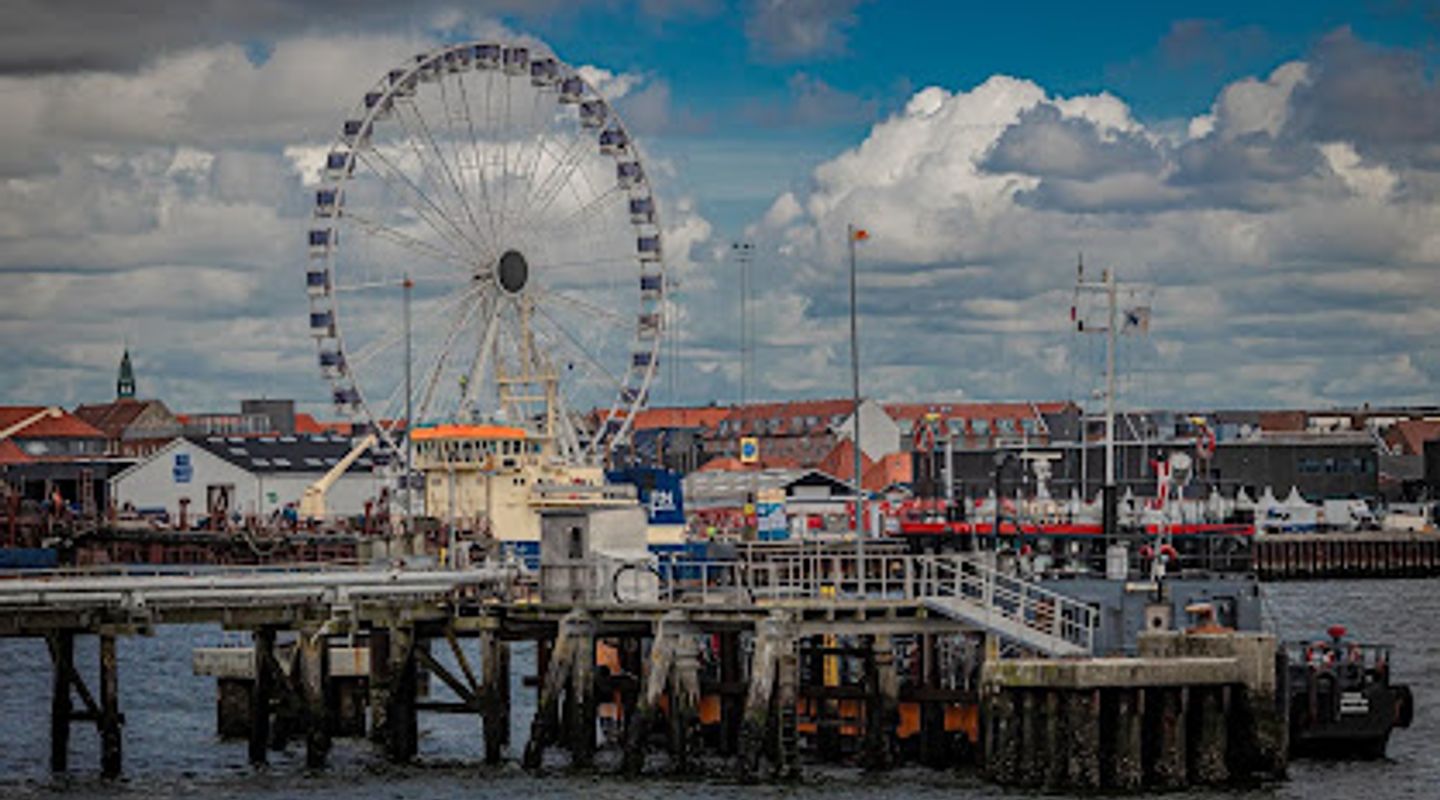
Esbjerg Havn is the working heart of Denmark’s North Sea gateway, a vast commercial port and marina on the west coast of Jutland. Here offshore wind vessels, fishing boats and ferries share the docks with pleasure craft, set against views across Fanø Bay and the UNESCO-listed Wadden Sea. Stroll the quays to watch heavy-lift cranes, supply ships and sleek yachts, trace Esbjerg’s transformation from 19th‑century fishing harbour to offshore energy hub, and explore small maritime curiosities, lightship exhibits and waterside artworks scattered around the harbourfront.
On-site amenities
 Restrooms
 Drink options
 Drinking water
 Food options
 Seating areas
 Trash bins
 Information boards
- Address
- Doggerkaj, 6700 Esbjerg
Getting there
Train + walk from Esbjerg Station
City bus to the harbourfront
Car or taxi within Esbjerg
Discover more about Esbjerg Havn
From Empty Shoreline to Denmark’s West Coast Gateway
Esbjerg Havn tells the story of a city that rose almost from scratch in the late 19th century. When Denmark lost its key North Sea port after the Second Schleswig War, a new harbour was laid out on this stretch of Jutland coast and officially opened in 1874. Within a few decades the quays teemed with fishing boats, cargo steamers and rail wagons connecting Esbjerg with the rest of the country. The town grid above the docks still echoes that planned beginning, laid out like a chessboard to serve the busy waters below.Today the port stretches for kilometres along the waterfront, with basins, piers and breakwaters enclosing a patchwork of terminals. Standing on Doggerkaj or Nordsøkaj, it is easy to imagine the early days of steam and sail, yet the scale feels thoroughly contemporary: wide working quays, vast storage yards and the constant movement of cranes and trucks frame your view of the North Sea horizon.
Working Waterfront of Offshore Wind and North Sea Trade
Esbjerg Havn has evolved from a fishing stronghold into a leading North Sea logistics hub. Large sections of the harbour are dedicated to offshore energy, especially wind turbines destined for wind farms scattered across the horizon. You may spot blades and tower sections lined up on the quays, ready to be loaded onto heavy‑lift vessels, or service ships heading out to maintain the offshore platforms.Container traffic, bulk cargo and supply vessels still flow through the docks, keeping the port among Denmark’s busiest. The mix of industries is part of the experience: one moment you may watch a modest fishing boat unloading boxes of catch, the next you see a powerful offshore support ship edging into position with the aid of tugs. This is not a staged attraction but a working harbour that happens to be remarkably accessible to the curious observer.
Marina Corners, Lightships and Harbourfront Details
Tucked among the commercial basins you will find Esbjerg’s marina areas, where smaller sailing boats, motor cruisers and visiting yachts tie up. Here the atmosphere softens: masts clink, seabirds circle lazily and the smell of tar and salt hangs in the air. From these quieter corners you can look back at the skyline of cranes and warehouses, a reminder of how closely leisure and industry coexist.Near the harbour lie small maritime sights that reward a gentle wander. A preserved lightship now serves as a compact museum, recalling the days when such vessels marked dangerous sandbanks off the Danish coast. Historic pilot buildings and harbour offices add character to the quayside, while newer artworks and interpretive panels highlight the Wadden Sea’s shifting sands and rich birdlife. Together they turn a stroll into an informal open‑air gallery of local seafaring heritage.
Views Across Fanø Bay and the Wadden Sea Landscape
Esbjerg Havn sits on the edge of the Wadden Sea, a tidal landscape recognised as a UNESCO World Heritage site. From the harbourfront you look across the shallow waters of Fanø Bay to the island of Fanø, with ferries shuttling back and forth as the tide ebbs and flows. At low water, sandbanks and channels emerge, subtly reshaping the seascape throughout the day.Wind, weather and light are constant companions here. On clear days the sky feels enormous and the sea a flat sheet of silver or deep blue, while stormy conditions whip up whitecaps and send spray over the outer breakwaters. Sunsets can be spectacular, turning cranes and masts into dark silhouettes. Even in harsh weather the harbour has its appeal, offering a raw, elemental take on Denmark’s west coast.
Experiencing the Harbour on Foot and at a Slow Pace
Exploring Esbjerg Havn is about taking your time. Paths and broad quays allow you to wander along sections of the waterfront, pausing to watch a ship manoeuvre into its berth or crews securing enormous cargo. Benches and simple seating spots offer places to sit and absorb the rhythm of the port, from the beep of reversing trucks to the call of gulls overhead.It is worth returning at different hours: mornings bring departure preparations and crane activity, while evenings can feel quieter, with harbour lights reflected in the water. The setting invites casual photography, sketching or simply mindful observation. Although industrial at its core, the harbour has a subtle charm that comes from authenticity – a place where Esbjerg’s maritime past and its offshore future meet at the water’s edge.
Evendo Review Centre
 Google
Guest reviews
Best time to go
Quietest: Jan, Feb & Mar · before 6am
Busy times are Evendo estimates for a typical year, to help you plan. Actual crowds vary with events, school holidays and the weather.
Explore Esbjerg Havn on the map
A handpicked selection of must-see spots near Esbjerg Havn, mapped for you.
Get your free copy of our complete guide to Esbjerg Havn, delivered straight to you.
Everything on this page, from opening hours and how to get there to Eve’s tips and the best time to go, in one PDF you can read offline, print or share.
Already have an account? Sign in
Your Esbjerg Havn guide is ready.
We'll send it to · Not you? Sign out

Getting your guide ready…
We are putting together a fresh copy of the Esbjerg Havn guide. This can take up to a minute.
This can take a few moments. If your browser asks, choose Allow so the download can start. You'll find the guide in your Downloads folder.
Nothing happened? Download it again
Sorry, the guide is taking longer than usual. Please try again in a minute, or get it by email instead.
Other nearby places you may find interesting
The closest places of the same kind, if this one is not quite what you had in mind.
-
-
-
-
-


Swipe for more places
More to explore near Esbjerg Havn

 Best experiences near Esbjerg Havn
 Best hotels near Esbjerg Havn
 Best landmarks near Esbjerg Havn
 Best attractions near Esbjerg Havn
 Best shops near Esbjerg Havn
 Best restaurants near Esbjerg Havn
 Best bars near Esbjerg Havn
Do you manage this location?
Take control to get all the benefits, like improved information, better appearance, and stronger visibility across AI-powered discovery.
Explore more

Explore more of Esbjerg
Discover Esbjerg: A coastal city in Denmark known for its maritime heritage, stunning sculptures, and vibrant downtown, offering something for every traveler.
Explore Esbjerg
Explore more of Denmark
Discover Denmark: A perfect blend of history, modern design, and the cozy concept of hygge. Explore vibrant cities, serene landscapes, and world-class cuisine.
Explore Denmark
