Queen Dagmar of Bohemia, Ribe Travel Guide
Free Guide: A contemplative statue on Ribe’s former castle hill, honouring the gentle 13th‑century Queen Dagmar where her life and legend became entwined with Denmark’s history.


A brief summary of Queen Dagmar of Bohemia
A contemplative statue on Ribe’s former castle hill, honouring the gentle 13th‑century Queen Dagmar where her life and legend became entwined with Denmark’s history.
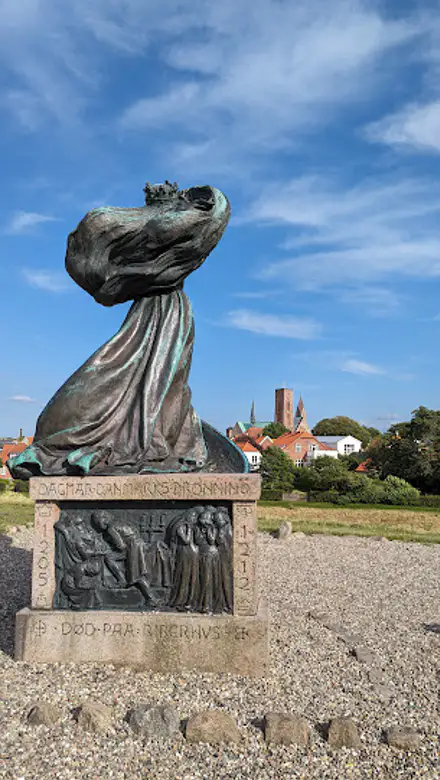
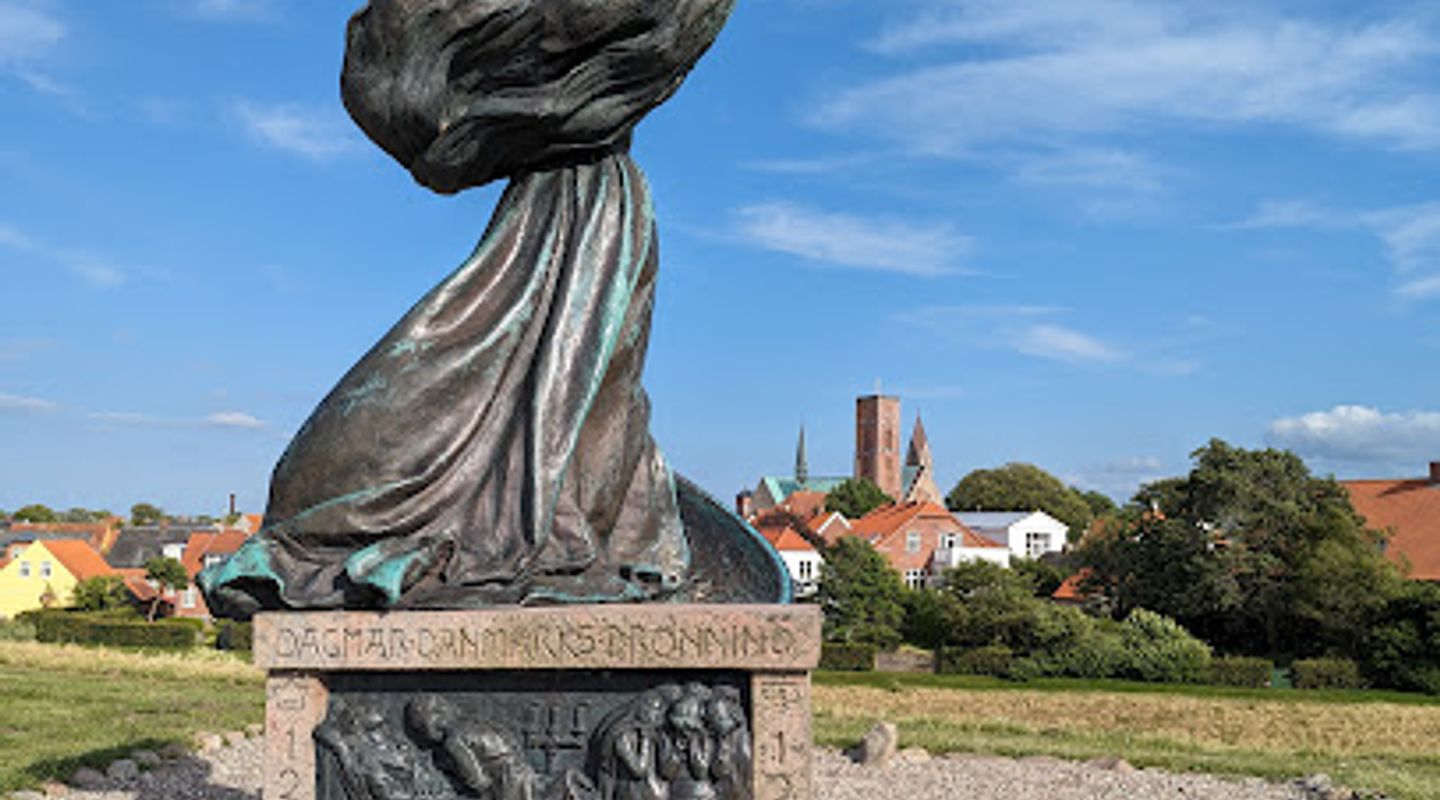
Set on the grassy mound of Riberhus Slotsbanke in Ribe, the **Queen Dagmar of Bohemia** statue honours the beloved 13th-century queen consort of King Valdemar II. Here, where Dagmar is said to have fallen ill and died in 1212, a contemplative bronze figure looks out across the former castle site and surrounding marshland. The monument links Ribe’s medieval royal past with the enduring legend of a gentle, merciful queen celebrated in Danish ballads and folklore.
On-site amenities
 Seating areas
 Trash bins
 Information boards
- Address
- 6760 Ribe
Getting there
On foot from central Ribe
Local bus within Ribe area
Car or bicycle from nearby West Jutland
Discover more about Queen Dagmar of Bohemia
A quiet monument on Ribe’s former castle hill
Standing on the low, windswept mound of Riberhus Slotsbanke, the Queen Dagmar of Bohemia statue marks the site where Ribe’s royal castle once rose above the tidal marshes. Today the fortifications have long vanished, leaving a grassy hill, fragments of earthworks and broad views over the flat landscape. Against this open backdrop, the solitary figure of Dagmar feels both intimate and monumental, an anchor point in an otherwise spacious, almost empty setting.The statue is easy to spot as you wander the paths over the castle hill. Positioned slightly apart from other memorials, it invites you to step closer, walk around the plinth and take in Ribe’s skyline with its cathedral towers behind you. The setting encourages unhurried pauses rather than a quick photo stop.
The Bohemian princess who won Danish hearts
Queen Dagmar was born as Margaret of Bohemia around 1186, daughter of King Přemysl Ottokar I and Adelheid of Meissen. She married the Danish king Valdemar II in 1205 and, on arriving in Denmark, was given the name Dagmar, often interpreted as “day maiden” – a bright, friendly woman. Chroniclers and later traditions describe her as mild, patient and devoted to easing hardship, winning the affection of people far beyond the royal court.Stories tell how she persuaded Valdemar to remit harsh taxes and plead for clemency for prisoners and political enemies. Her brief life and concern for justice turned her into a symbol of compassionate rulership, and centuries of ballads and legends transformed the historical queen into an almost saint-like figure in Danish memory.
Ribe, royal power and a tragic final chapter
Ribe in the early 13th century was a major trading town and a key royal stronghold on the kingdom’s western frontier. Riberhus Castle served as one of Valdemar II’s preferred residences, tying the monarch closely to this port on the North Sea. It was here in Ribe that Dagmar fell gravely ill in 1212, and here she died, still in her twenties, after complications in childbirth. Her body was carried east to Ringsted, where she was buried in St Bendt’s Church among Danish kings.The statue on the castle bank evokes this final chapter of her life. Placed at the edge of the vanished fortress, it stands where royal processions once moved between timber halls and the busy harbour below. The quietness of the spot contrasts with its former strategic importance, adding a reflective undertone to the memorial.
Legends, ballads and the Dagmar Cross
Much of Dagmar’s later fame comes from medieval ballads, especially the song describing her lying ill in Ribe and the king’s desperate ride from distant Skanderborg to reach her bedside. In these verses she uses her last moments to ask for mercy for captives and to warn Valdemar against a future marriage that would divide the realm. The tale is more legend than verified history, yet it powerfully shaped how generations imagined her character.When Dagmar’s tomb was opened in the 17th century, a Byzantine-style enamel cross was found on her chest. This “Dagmar Cross” inspired countless reproductions and became a cherished Danish gift, especially for confirmations. Though the original is now kept elsewhere, the story of the cross adds another layer to the Ribe statue, linking the physical memorial with the wider cultural afterlife of the queen’s image.
Experiencing the statue and its surrounding landscape
Visiting the Queen Dagmar statue is as much about the setting as the sculpture itself. From the plinth you look over grazing fields, drainage channels and the line of the old town, sensing how close Ribe has always been to both land and water. The open sky and often brisk wind give the site a slightly austere beauty, particularly atmospheric in the soft light of morning or late afternoon.There are no grand interpretive installations here; instead, a simple monument and low-key paths encourage you to imagine the vanished castle, the royal couple and the young queen whose story still echoes in Danish culture. Combined with a stroll through Ribe’s medieval streets or a visit to the cathedral, this small landmark completes a vivid picture of the town’s royal and religious past.
Evendo Review Centre
 Google
Guest reviews
Best time to go
Quietest: Jan, Feb & Mar · before 7am or from 9pm
Busy times are Evendo estimates for a typical year, to help you plan. Actual crowds vary with events, school holidays and the weather.
Explore Queen Dagmar of Bohemia on the map
A handpicked selection of must-see spots near Queen Dagmar of Bohemia, mapped for you.
Get your free copy of our complete guide to Queen Dagmar of Bohemia, delivered straight to you.
Everything on this page, from opening hours and how to get there to Eve’s tips and the best time to go, in one PDF you can read offline, print or share.
Already have an account? Sign in
Your Queen Dagmar of Bohemia guide is ready.
We'll send it to · Not you? Sign out

Getting your guide ready…
We are putting together a fresh copy of the Queen Dagmar of Bohemia guide. This can take up to a minute.
This can take a few moments. If your browser asks, choose Allow so the download can start. You'll find the guide in your Downloads folder.
Nothing happened? Download it again
Sorry, the guide is taking longer than usual. Please try again in a minute, or get it by email instead.
Other nearby places you may find interesting
The closest places of the same kind, if this one is not quite what you had in mind.
-
-
-
-
-


Swipe for more places
More to explore near Queen Dagmar of Bohemia
-
 Best experiences near Queen Dagmar of Bohemia
-
 Best hotels near Queen Dagmar of Bohemia
-
 Best landmarks near Queen Dagmar of Bohemia
-
 Best attractions near Queen Dagmar of Bohemia
-
 Best shops near Queen Dagmar of Bohemia
-
 Best restaurants near Queen Dagmar of Bohemia
-
 Best bars near Queen Dagmar of Bohemia


Do you manage this location?
Take control to get all the benefits, like improved information, better appearance, and stronger visibility across AI-powered discovery.
Explore more
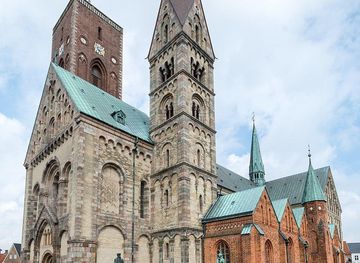
Explore more of Ribe
Discover Ribe, Denmark's oldest town, where medieval charm meets modern allure. Experience Viking history, stunning architecture, and breathtaking natural wonders.
Explore Ribe
Explore more of Denmark
Discover Denmark: A perfect blend of history, modern design, and the cozy concept of hygge. Explore vibrant cities, serene landscapes, and world-class cuisine.
Explore Denmark