

Nördlich Odden (Let flakbatteri) Travel Guide
Free Guide: Evocative WWII bunkers and flak remains hidden in Fanø’s dunes, where Atlantic Wall history meets the wide skies and shifting sands of the Wadden Sea.


A brief summary of Nördlich Odden (Let flakbatteri)
Evocative WWII bunkers and flak remains hidden in Fanø’s dunes, where Atlantic Wall history meets the wide skies and shifting sands of the Wadden Sea.
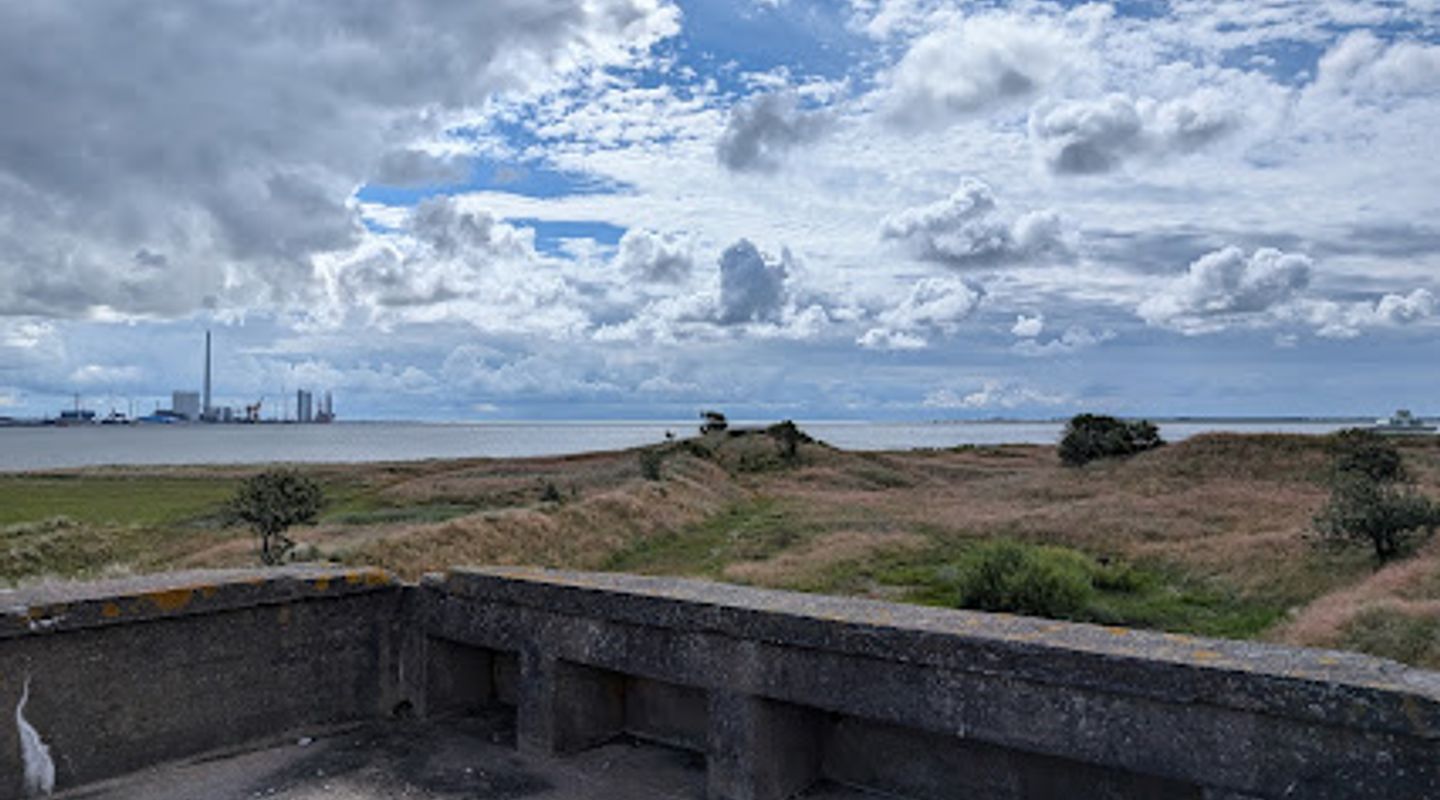
Hidden in the dunes north of Nordby on Fanø, Nördlich Odden (Let flakbatteri) is a small but atmospheric former German WWII artillery and anti‑aircraft position. Concrete foundations, low bunkers and sand‑softened embankments hint at radar, guns and observation posts that once guarded the Wadden Sea. Today the site is silent, surrounded by heather, grasses and coastal winds, inviting slow exploration and quiet reflection on the island’s wartime role within the wider Atlantic Wall.
On-site amenities
 Information boards
Opening hours
- Every dayOpen 24 hours
Opening hours as listed on the venue’s Google Business Profile. Hours can change for services and special events, so check with the venue before you go.
- Address
- Vesternasen 17, 6720 Fanø
Getting there
Ferry and bicycle from Esbjerg
Car ferry and short walk from Nordby
Local bus within Fanø and approach on foot
Discover more about Nördlich Odden (Let flakbatteri)
Wartime strongpoint in the dunes of Fanø
Nördlich Odden, also known as a light flak battery, lies tucked into the sandy landscape north of Nordby on the island of Fanø. During the German occupation in the Second World War this modest-looking position formed part of the extensive Atlantic Wall defences that stretched along the North Sea coast. Here, anti‑aircraft guns, artillery observers and communication posts watched over the shipping lanes of Grådyb and the entrance towards Esbjerg.The original layout included several bunkers of different functions: command, medical, shelters for personnel and storage connected by trenches and sandy paths. Today the guns are long gone, but the concrete shells and earthworks remain, softened by decades of windblown sand and dune grass.
Concrete relics and subtle details on site
Walking around the position you notice low, squat bunker mouths emerging from the dunes, some partly buried, others clearly visible. Narrow entrances lead into cool, echoing interiors where thick walls once protected crews from shrapnel and blast. Outside, circular or angular foundations mark former gun emplacements, while shallow depressions show where access trenches once zigzagged across the sand.Small ventilation shafts, rusting metal fixings and remnants of cable channels give a sense of the technical installation that operated here. It is an unfenced, open landscape, so the transition from natural dune to military structure is gradual; concrete edges blur into tufts of marram grass and patches of heather typical of Fanø’s open coastal heath.
Fanø’s strategic position in the Wadden Sea
Fanø sits in the heart of the Wadden Sea, facing the busy approaches to Esbjerg. That combination of shallow tidal flats and a well‑defined shipping channel made the island strategically important during the war. Together with minefields, other coastal batteries and signal stations, Nördlich Odden helped monitor vessels entering the Grådyb fairway and contributed to air defence over the northern part of the island.The wider setting is now part of a national park and UNESCO‑listed tidal landscape, where tides sculpt mudflats, salt meadows and shifting sands. From the battery area, low horizons, big skies and the distant line of dunes underline how exposed both landscape and wartime installations are to the elements.
A quiet place for reflection and exploration
Today Nördlich Odden is a low‑key, free‑to‑access site without formal facilities, which adds to its contemplative atmosphere. The constant sound is the wind moving through dune grass, sometimes joined by the calls of shorebirds or the distant hum of traffic from Nordby. Visitors meander along sandy tracks, stepping carefully over broken concrete and exploring interiors with the aid of a torch.Because the structures are not restored into a museum setting, you are left to imagine daily life for the soldiers posted here: long watches from observation points, drills around the flak positions, and the contrast between tense alerts and the apparent emptiness of the surrounding beaches.
Respecting both heritage and fragile nature
Although the military function has disappeared, the site now forms part of a sensitive dune ecosystem. Lichens spread across exposed concrete, while low shrubs stabilise the sand around embankments. Staying on existing paths, avoiding climbing on fragile edges and leaving any artefacts in place helps preserve both the heritage value and the surrounding nature.Combined with walks along nearby beaches, salt meadows and other remnants of the Atlantic Wall on Fanø, a visit here offers a compact yet evocative insight into how this small island once played a role in global conflict, set against the ever‑changing backdrop of the Wadden Sea landscape.
Evendo Review Centre
 Google
Guest reviews
Best time to go
Quietest: Jan, Feb & Dec · before 6am or from 9pm
Busy times are Evendo estimates for a typical year, to help you plan. Actual crowds vary with events, school holidays and the weather.
Explore Nördlich Odden (Let flakbatteri) on the map
A handpicked selection of must-see spots near Nördlich Odden (Let flakbatteri), mapped for you.
Get your free copy of our complete guide to Nördlich Odden (Let flakbatteri), delivered straight to you.
Everything on this page, from opening hours and how to get there to Eve’s tips and the best time to go, in one PDF you can read offline, print or share.
Already have an account? Sign in
Your Nördlich Odden (Let flakbatteri) guide is ready.
We'll send it to · Not you? Sign out

Getting your guide ready…
We are putting together a fresh copy of the Nördlich Odden (Let flakbatteri) guide. This can take up to a minute.
This can take a few moments. If your browser asks, choose Allow so the download can start. You'll find the guide in your Downloads folder.
Nothing happened? Download it again
Sorry, the guide is taking longer than usual. Please try again in a minute, or get it by email instead.
Other nearby places you may find interesting
The closest places of the same kind, if this one is not quite what you had in mind.
-
-
-

-
-


Swipe for more places
More to explore near Nördlich Odden (Let flakbatteri)
-
 Best experiences near Nördlich Odden (Let flakbatteri)
-
 Best hotels near Nördlich Odden (Let flakbatteri)
-
 Best landmarks near Nördlich Odden (Let flakbatteri)
-
 Best attractions near Nördlich Odden (Let flakbatteri)
-
 Best shops near Nördlich Odden (Let flakbatteri)
-
 Best restaurants near Nördlich Odden (Let flakbatteri)
-
 Best bars near Nördlich Odden (Let flakbatteri)


Do you manage this location?
Take control to get all the benefits, like improved information, better appearance, and stronger visibility across AI-powered discovery.
Explore more

Explore more of Fanø
Discover Fanø, Denmark's hidden coastal gem, offering stunning beaches, charming villages, and rich wildlife, perfect for a tranquil getaway and nature adventures.
Explore Fanø
Explore more of Denmark
Discover Denmark: A perfect blend of history, modern design, and the cozy concept of hygge. Explore vibrant cities, serene landscapes, and world-class cuisine.
Explore Denmark
