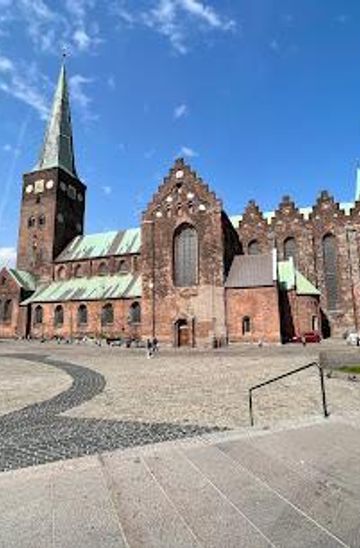
Aarhus Cathedral (Aarhus Domkirke)
Denmark’s longest and tallest church, Aarhus Cathedral weaves Romanesque roots, soaring Gothic brickwork and luminous medieval art into the spiritual heart of the city.
Aarhus Cathedral rises above Store Torv as the longest and tallest church in Denmark, a red-brick landmark that threads together 800 years of Danish history. Begun in the late 12th century and rebuilt in soaring Gothic style around 1450–1500, it is dedicated to St Clement, patron saint of sailors, reflecting Aarhus’ maritime past. Inside, you find luminous frescoes, a magnificent late‑Gothic altarpiece by Bernt Notke, fine wrought‑iron portals and atmospheric chapels that make the cathedral both a spiritual centre and a living museum of Danish church art.
A brief summary to Aarhus Cathedral
- Store Torv, Aarhus, Aarhus C, 8000, DK
- Click to display
- Click to display
- Duration: 0.5 to 2 hours
- Free
-
 Indoor
- Mobile reception: 5 out of 5
- Monday 10 am-3 pm
- Tuesday 10:30 am-3 pm
- Wednesday 10 am-3 pm
- Thursday 10 am-3 pm
- Friday 10 am-3 pm
- Saturday 10 am-3 pm

Know before you go
Hi, I'm Eve. Here are a few practical things to know before exploring Aarhus Cathedral.
- Visit on a weekday late morning for quieter interiors and a better chance to absorb the frescoes and altarpiece without large groups around you.
- Check current opening hours and service times in advance; sightseeing pauses during services, especially on Sundays and church holidays.
- Bring a small pair of binoculars or use your camera zoom to study high vault paintings, stained glass details and the sculpted figures on the altarpiece.
- If available during your visit, consider paying the small fee to climb the tower for close‑up views of the bells and glimpses over historic Aarhus.
Do you manage this location?
Take control to get all the benefits, like improved information, better appearance, and stronger visibility across AI-powered discovery. Learn more
Activate your presenceOther nearby places you may find interesting
Getting There
-
Tram and walk from central Aarhus
From most central Aarhus addresses, take the light rail (Letbanen) to Skolebakken station, which typically takes 5–10 minutes from outlying stops in the inner city. Trams run every few minutes during the day and tickets cost roughly 20–30 DKK for a short journey within the zone. From Skolebakken it is an easy, mostly level walk through the historic centre to the cathedral in about 5–10 minutes, suitable for most visitors though cobblestones can be challenging for some wheelchairs.
-
City bus and short walk
Numerous city bus lines run to stops around the central bus hub and the pedestrian streets near Store Torv, with journey times of about 10–20 minutes from residential districts. A standard single ticket within Aarhus costs in the region of 20–30 DKK and can usually be bought via ticket machines, apps or on board depending on the line. From central stops it is a 5–10 minute walk on busy but generally flat streets to reach the cathedral.
-
Bicycle within the city
Aarhus is cycle‑friendly, and many visitors choose to rent a bike from central rental outlets for around 100–150 DKK per day. Cycling from inner neighbourhoods such as Frederiksbjerg or Trøjborg to the cathedral area normally takes 10–15 minutes on marked lanes. Be aware that the streets immediately around Store Torv can be crowded and partly pedestrianised, so you may need to dismount and walk the final stretch.
-
Car or taxi to the city centre
By car or taxi, reaching the historic centre from outer districts or Aarhus’ outskirts usually takes 15–25 minutes, depending on traffic. Taxis from central hotels commonly cost in the range of 120–200 DKK. Parking near the cathedral is limited to public garages and paid street spaces with time restrictions, so allow extra time to find a spot and walk several minutes through the compact centre to the church.
For the on-the-go comforts that matter to you
-
 Restrooms
-
 Seating Areas
-
 Information Boards
-
 Visitor Center
-
 Trash Bins
Discover more about Aarhus Cathedral
A brick giant at the heart of Aarhus
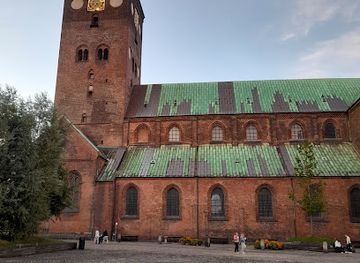
Aarhus Cathedral dominates the central squares of Store Torv and Bispetorv, its long red‑brick body anchoring the historic core of the city. At 93 metres from west door to high altar, it is the longest church in Denmark, and its tower rises more than 90 metres, a vertical marker you can spot from the harbour and surrounding streets. The cathedral still serves as the main church of the diocese, so its daily rhythm blends quiet sightseeing with regular worship, bell peals and organ rehearsals.The building’s dedication to St Clement, patron saint of sailors, hints at Aarhus’ life as a port. A small wooden church once stood here beside the early harbour; when Bishop Peder Vognsen began work on a grander cathedral in the late 12th century, he chose to retain the seafaring connection. Even today, maritime motifs appear in details inside, from anchors painted in the frescoes to model ships suspended from the vaults.From Romanesque roots to Gothic light
The earliest stone cathedral was a vast Romanesque basilica completed around the mid‑14th century, built in brick at a time when this material was still relatively new in Denmark. It had thick walls, round arches and a timber ceiling. Parts of that church survive in the outer walls and the chapels along the eastern transept, where lower proportions and simpler openings reveal the older style beneath later changes.A devastating fire and long period of neglect set the stage for a radical rebuilding from 1449 to about 1500. The medieval masons transformed the heavy Romanesque interior into a tall, bright Gothic space inspired by Hanseatic churches around the Baltic. They heightened the nave, added cross and star vaults and enlarged the windows, so daylight now spills along the brick piers and painted walls. The choir was extended into a three‑aisled Gothic chancel with an ambulatory and rows of pointed windows, turning the eastern end into a luminous stage for altar, organ and choir.Frescoes and stories painted on the walls
One of the cathedral’s treasures is its ensemble of late‑medieval frescoes, among the richest in Denmark. Painted chiefly between about 1470 and 1530, they once lay hidden beneath later whitewash and were gradually uncovered and conserved in modern times. As you move through the nave and side chapels, you encounter saints, biblical scenes, allegorical figures and small everyday details that bring late‑medieval piety to life.Look closer and you may spot references to the sea, including anchors linked to St Clement, which quietly explain the church’s dedication. In some chapels the frescoes frame memorials and epitaphs from the 16th and 17th centuries, layers of stone and paint that show how the building continued to gather new meanings long after the Gothic rebuilding ended.The golden splendour of the high altar
At the far east end, the eye is drawn to the towering gilded altarpiece, created in the late 15th century in the workshop of the Lübeck master Bernt Notke. This late‑Gothic masterpiece unfolds in carved wood and gold leaf, with crowded scenes from the life of Christ and the Virgin, flanked by apostles and angels. In the centre, Mary, the Christ Child and St Anne share a tender, almost domestic intimacy, while Saint Clement and John the Baptist stand nearby, rooting the imagery both locally and in wider Christian tradition.When the wings are open on feast days, further narrative scenes appear; when closed, more austere painted figures take over. Nearby stand other important furnishings: a substantial baptismal font, an ornate pulpit and finely worked choir stalls, each reflecting shifts in taste from late‑Gothic carving to later Renaissance and Baroque decoration.Ironwork, organs and the sound of the building
Moving through the interior, you pass a series of elaborate wrought‑iron latticework portals made in the 17th century by German master smith Caspar Fincke. Their curling tendrils, circles and squares are rich in symbolism, with the circle often read as a sign of heaven and the square as the human realm. The most striking is the so‑called Golden Portal leading into the chancel, where black iron and gilded elements catch and reflect the changing light.Sound is as important here as sight. High on the west end sits a large Baroque organ, once the biggest in Denmark, its pipes and carvings projecting into the lofty nave. In the 20th century a second organ was added in the chancel to support services and concerts there, a neo‑Baroque instrument carefully voiced for the cathedral’s long reverberation. The result is a space where choral music and organ works seem to hang in the air, filling the length of the building.A living monument in the modern city
Despite centuries of fires, restorations and stylistic updates, Aarhus Cathedral still reads as a coherent whole: a long, brick‑built Gothic hall church with Romanesque traces at its core. It seats around 1,200 people and remains a focal point for major civic ceremonies, religious festivals and musical events. Its tower clock still marks the passing hours for the old town, while the nave offers a quiet pause from the surrounding shopping streets.For travellers, the cathedral is both a key orientation point and an intense encounter with Danish church art across eight centuries. Stepping back outside onto Store Torv, you can see how the red brick, stepped gables and tall spire knit into the skyline, a reminder that Aarhus grew up around this spot where faith, commerce and the sea have long met.Explore the best of what Aarhus Cathedral has to offer













More about East Jutland
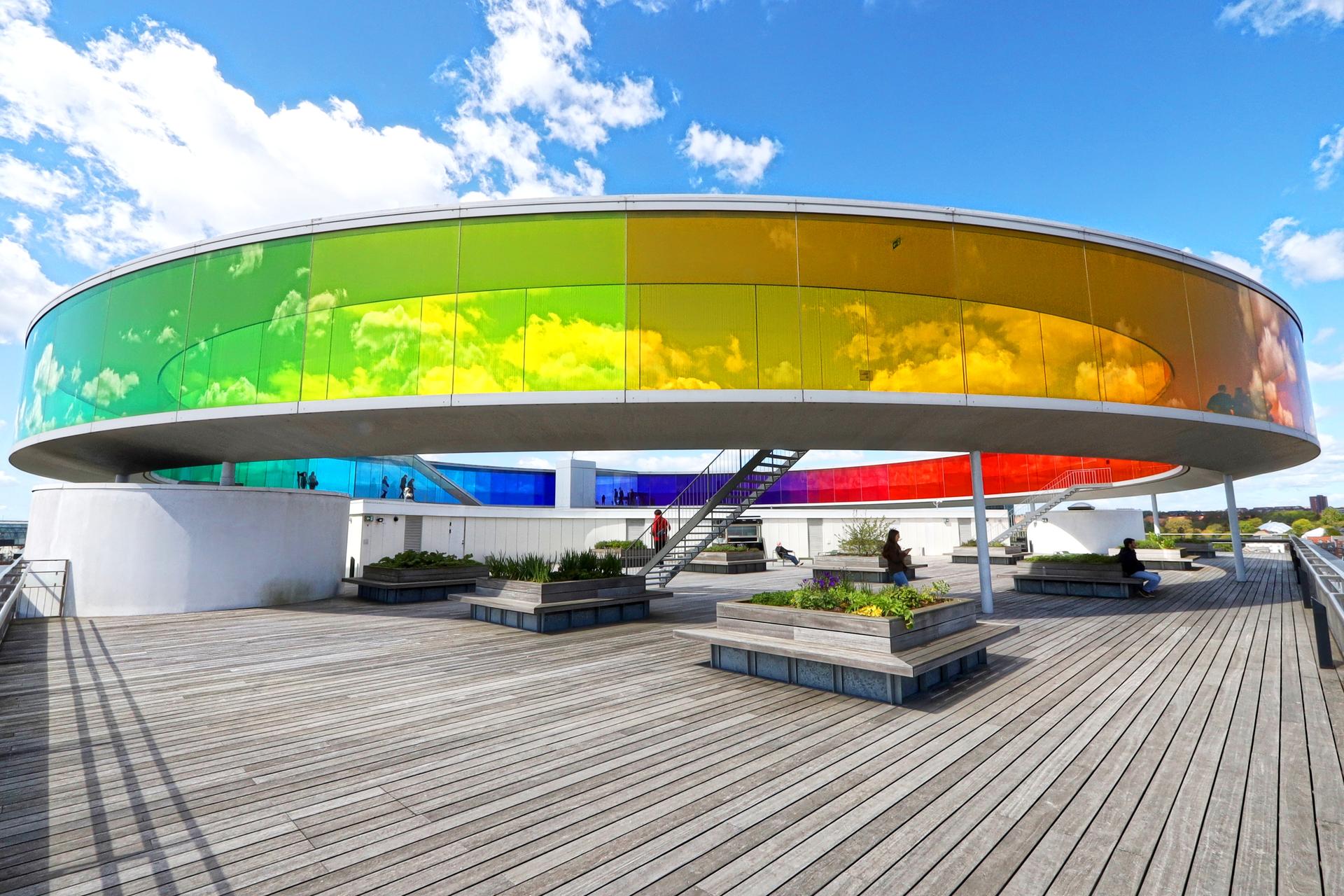
Discover East Jutland, Denmark's enchanting region blending vibrant cities, rich history, and stunning natural landscapes, perfect for every type of traveler.
Tell me more about East Jutland
Panoramic rooftop park and café above central Aarhus, blending sky-high gardens, a glass-floored skywalk, artful lounge zones and casual Nordic dining with sweeping city views.
One of the world's few museums exploring gender, equality, and sexuality through history and contemporary dialogue.