Background

Viking Museum (Vikingemuseet) Aarhus

Descend beneath a modern bank into the original Viking town of Aros, where excavated houses, wells and artefacts reveal Aarhus’ 1,200‑year‑old origins.

3.9

Hidden beneath a bank on busy Sankt Clemens Torv, the Viking Museum in Aarhus drops you straight down to the level of the original Viking settlement of Aros. This compact, atmospheric museum sits exactly where 9th‑century houses, streets and wells once stood, and displays excavated artefacts, skeletal remains, models and multimedia that bring early Aarhus to life. It is a focused, archaeology‑rich stop ideal for history lovers and curious visitors with an hour to spare.

A brief summary to Viking Museum

  • Sankt Clemens Torv 6, Aarhus C, Aarhus C, 8000, DK
  • +4587394000
  • Visit website
  • Duration: 1 to 1.5 hours
  • Budget
  • Environment icon Indoor
  • Mobile reception: 4 out of 5
  • Monday 10:15 am-6 pm
  • Tuesday 10:15 am-6 pm
  • Wednesday 10:15 am-6 pm
  • Thursday 10:15 am-6 pm
  • Friday 10:15 am-6 pm
  • Saturday 10:15 am-5 pm
  • Sunday 10:15 am-5 pm

Local tips

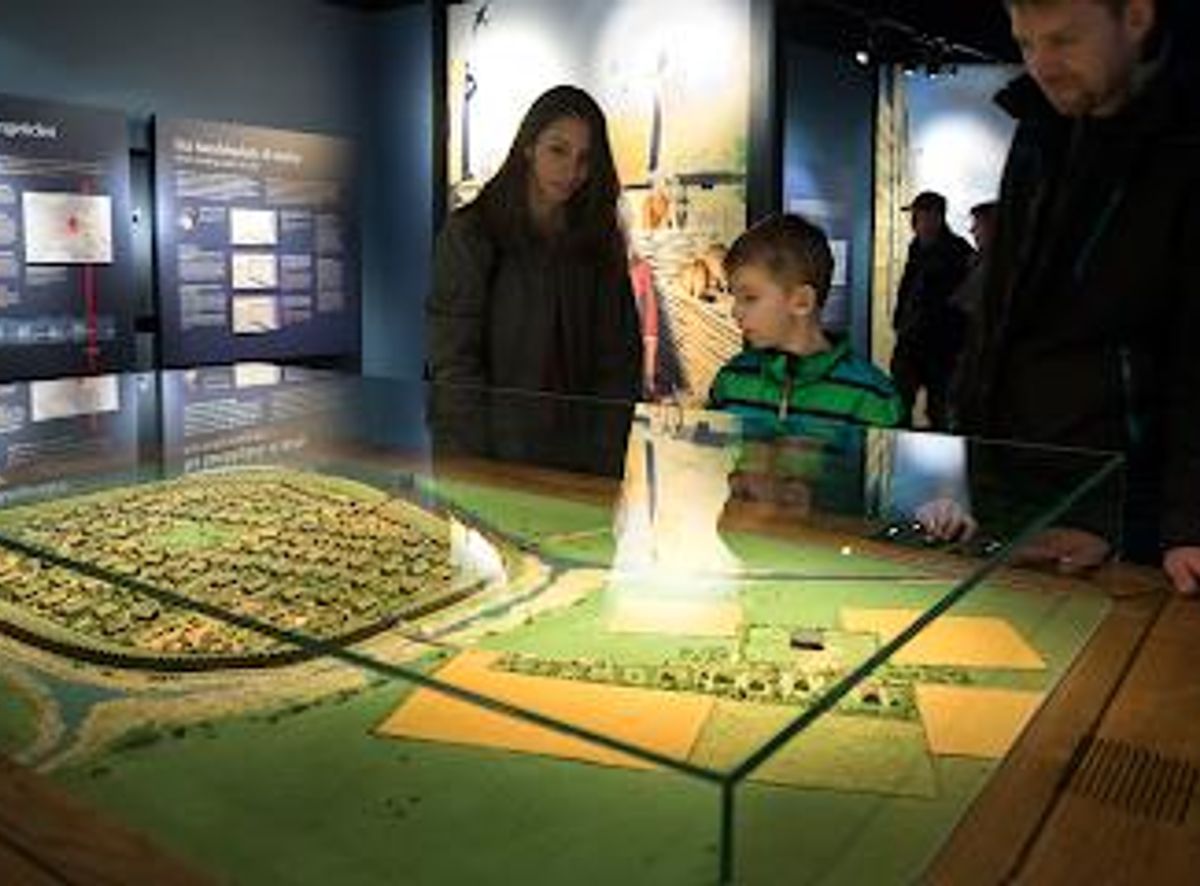
  • Plan around 1–1.5 hours here; the museum is small but text‑rich, and the model of Aarhus around 980 and the animation are worth unhurried time.
  • Carry a payment card, as admission is card‑only and cash is not accepted; children under 18 usually enter free, making it good value for families.
  • Be aware that access is via stairs into a basement under the bank, and the museum is not suitable for wheelchairs or visitors with serious mobility issues.
  • Check opening hours in advance, especially around Danish bank holidays, when the museum may be closed despite central city location.
  • Combine your visit with Moesgaard Museum on another day to see how these in‑situ finds connect to the wider archaeology of Aarhus and Jutland.
widget icon

Getting There

  • On foot from central Aarhus

    From most central Aarhus locations such as the main pedestrian shopping streets or the Latin Quarter, walking to the Viking Museum typically takes 5–15 minutes. The route is flat and fully paved, making it suitable for most visitors, though the final access into the museum is via stairs into a basement space. Walking is often the fastest option within the compact city centre and avoids any concerns about parking.

  • By city bus within Aarhus

    Several local bus lines run through the inner city and stop within a few minutes’ walk of Sankt Clemens Torv, where the museum is located. Typical travel times from residential districts or the university area range from 10 to 25 minutes, depending on distance and traffic. A standard adult single ticket on city buses usually costs around 24–30 DKK, with payment possible via travel card or mobile ticket. Services are frequent during the day but may be reduced in the late evening and on holidays.

  • From Aarhus Hovedbanegård by train and walk

    If you arrive in Aarhus by regional or intercity train, the main station is roughly a 10‑minute walk from the Viking Museum through the central shopping district. This makes it easy to combine a rail journey with a quick visit underground to the Viking town before heading elsewhere in the city or region. The walk is step‑free at street level, but remember that the museum entrance itself is stair‑only.

  • By car or taxi within Aarhus

    Driving to the museum from elsewhere in Aarhus typically takes 10–20 minutes, depending on traffic. Several public car parks and street parking options exist within walking distance of Sankt Clemens Torv, but spaces can be limited at busy times and parking fees in the city centre are common, often around 20–30 DKK per hour. Taxis can drop passengers close to the square and usually charge 80–160 DKK for short city journeys, with higher fares at night and on weekends.

Viking Museum location weather suitability

  • Weather icon Any Weather
  • Weather icon Cold Weather
  • Weather icon Hot Weather
  • Weather icon Mild Temperatures
  • Weather icon Rain / Wet Weather

Unlock the Best of Viking Museum

Buy tickets

    No tickets available

Book tours with entry

    No tours available

Book tours without entry

    No tours available

Discover more about Viking Museum

Buried traces of Aros beneath the modern city

The Viking Museum in Aarhus occupies a uniquely evocative spot: the basement under a busy bank on Sankt Clemens Torv, at precisely the same ground level where the Viking town of Aros once stood. As you descend the stairs, traffic noise fades and you step into the archaeological layers of a settlement founded more than 1,200 years ago. Low ceilings, exposed sections of soil and carefully lit displays make it clear that this is not a replica environment but the actual site where the past was uncovered. The museum is an outpost of the larger Moesgaard Museum, created to keep key finds in situ rather than moving everything to a distant gallery. Here you see where Viking‑Age plots were laid out along the river, and how the town grew into the nucleus of what would become Denmark’s second‑largest city. The original town centre has remained in essentially the same place since the late 8th century, a rare continuity in Scandinavia that gives this small space outsized historical importance.

Archaeological finds that tell personal stories

The heart of the museum is a collection of artefacts excavated on this very spot and around central Aarhus. Display cases hold everyday objects such as tools, iron fittings, pottery, spindle whorls and gaming pieces, revealing the routines of craftspeople, merchants and families who lived here a millennium ago. Nearby, more precious items hint at long‑distance trade and shifting power structures in the Viking world. A particularly striking feature is the presence of skeletal remains and traces of wooden constructions, including a well‑preserved framed well of the type used in the Viking Age. Seeing these in their original location rather than behind glass in a distant hall makes the period feel immediate and tangible. Replicas are used only where necessary for security reasons, allowing the focus to stay on authentic material that has not seen the light of day for centuries.

Models, soundscapes and a city under siege

Although compact, the museum uses simple but effective media to bring its material to life. A detailed scale model shows Aarhus around the time of Harald Bluetooth, around the year 980, with ramparts, buildings and shoreline carefully reconstructed. Standing over this miniature town, you can trace streets that still exist today and see how the settlement related to the bay and surrounding landscape. Sound installations and a short animated film depicting a Viking attack on Århus add drama and context. Rather than overwhelming the exhibits, these elements help you imagine the clatter of shields on timber walls or the bustle of a trading day on the riverfront. Information panels explain how recent excavations have reshaped understanding of Aarhus’s origins, pushing its foundation further back into the late 8th century and aligning it with early urban centres such as Ribe and Hedeby.

A focused visit in an intimate setting

The museum consists essentially of a single main room and adjoining areas, so visits tend to be concise and concentrated. Many people spend about an hour exploring the displays, reading the bilingual texts and watching the animation, though those with a deep interest in archaeology may linger longer over individual finds. The atmosphere is calm and studious, with the low‑slung basement space sharpening the sense that you are standing in a carefully preserved excavation trench. Because the museum is located beneath a bank, access involves stairs and the space is not suitable for wheelchair users or those with significant mobility difficulties. Payment for admission is by card only, reflecting Denmark’s increasingly cashless culture. Children and younger visitors often engage easily with the model city and visual media, making this a practical stop for families as well as solo explorers.

Practical details and how it fits into an Aarhus day

The Viking Museum usually opens daily from mid‑morning, with extended early evening hours on weekdays and slightly later closing at weekends; it is closed on bank holidays. Admission for adults is modest by museum standards, and children under 18 enter free, making it an affordable historical highlight in the very centre of town. Precise times can vary, so it is wise to confirm current opening hours before planning a tight schedule. Given its central location on Sankt Clemens Torv, the museum slots easily into a broader day of exploring Aarhus. It pairs naturally with a walk along the river, visits to nearby churches and cultural venues, or an excursion out to Moesgaard Museum to see the wider archaeological and ethnographic collections. For anyone curious about how a modern Scandinavian city grew from a fortified Viking settlement, this modest underground museum offers one of the clearest and most atmospheric introductions available.

Busiest months of the year

Busiest hours of the day

Popular Experiences near Viking Museum

Popular Hotels near Viking Museum

Select Currency