
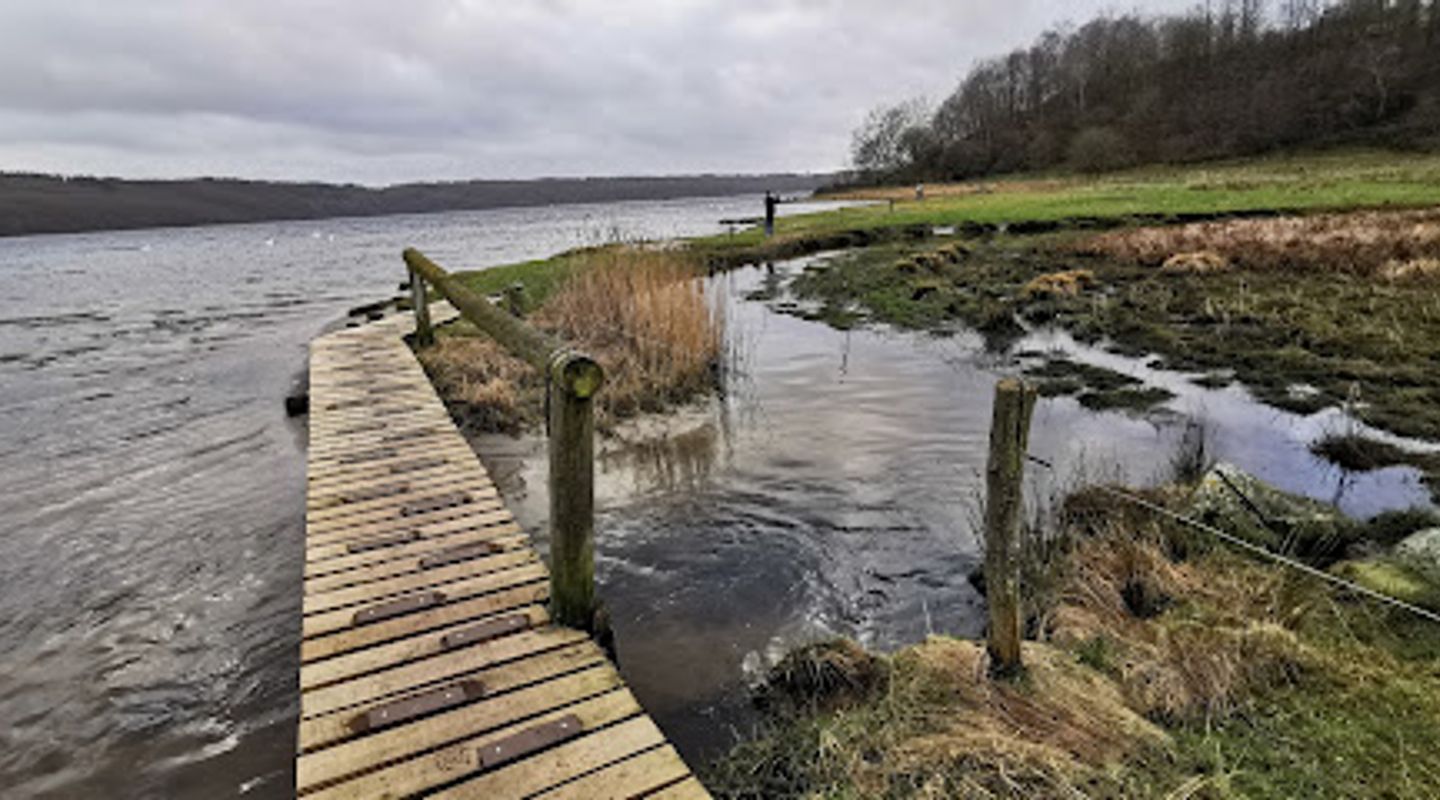
Hjerritsdal Mølle, Central Jutland Travel Guide
Historic watermill farmstead in a green tunnel valley, where running water, old buildings and quiet paths reveal centuries of rural life near Mariager Fjord.
Tucked into a green tunnel valley north of Mariager Fjord, Hjerritsdal Mølle is a historic watermill and farmstead with roots back to the 1400s. Once tied to nearby estates, the mill harnessed the flow of Valsgård Bæk to grind grain for the surrounding countryside. Today the half-timbered buildings, millrace and rural setting offer a quiet glimpse into traditional Danish agricultural life, combined with scenic walking routes along the stream and through steep, wooded slopes.
A brief summary to Hjerritsdal Mølle
- Hjerritsdalvej 3, Hobro, 9500, DK
- Duration: 0.5 to 2 hours
- Free
-
 Outdoor
- Mobile reception: 3 out of 5

Know before you go
Hi, I'm Eve. Here are a few practical things to know before exploring Hjerritsdal Mølle.
- Wear sturdy, waterproof footwear if you plan to follow the paths along Valsgård Bæk, as the old mill tracks can be steep, muddy and slippery after rain.
- Combine a stop at Hjerritsdal Mølle with nearby viewpoints in Bramslev Bakker or a walk along Mariager Fjord for a fuller picture of the local landscape.
- Bring water and snacks with you, as there are no guaranteed food outlets at the mill itself and facilities in the surrounding countryside are limited.
Do you manage this location?
Take control to get all the benefits, like improved information, better appearance, and stronger visibility across AI-powered discovery. Learn more about listing your business on Evendo
Activate your presenceOther nearby places you may find interesting
The closest places of the same kind, if this one is not quite what you had in mind.
Explore Hjerritsdal Mølle on the Map
A handpicked selection of must-see spots near Hjerritsdal Mølle, mapped for you.
Getting There
-
Car from central Hobro
From central Hobro, driving to Hjerritsdal Mølle typically takes about 10–15 minutes through local roads in gently hilly countryside. Traffic is usually light, but narrow stretches and farm traffic can slow you down. There is informal roadside or farmyard parking near the mill; spaces are limited and surfaces may be gravel or grass. Fuel and shops are available back in Hobro. The drive itself is free, but factor in typical Danish fuel prices of roughly 12–18 DKK per litre, depending on your vehicle’s consumption.
-
Bicycle from Hobro area
Cycling from Hobro to Hjerritsdal Mølle takes around 25–40 minutes each way, depending on your route and pace. Expect small hills, mixed surfaces and occasional faster car traffic on rural roads, so lights and reflective gear are recommended outside daylight hours. The approach into the valley can be steep. You can usually leave bikes close to the farm buildings, though there may not be formal racks. Renting a bicycle in Hobro, where available, often costs in the region of 100–200 DKK per day.
-
Walking via local trails
If you are already near Bramslev Bakker or the marked routes along Valsgård Bæk, you can reach Hjerritsdal Mølle on foot in about 30–60 minutes. Paths use old mill tracks through erosion gullies, with some steep, rooty and potentially muddy sections, so they are best suited to reasonably fit walkers with good footwear. These routes are free to use but may be slippery after rain and less suitable for wheelchairs or prams.
For the on-the-go comforts that matter to you
-
 Trash Bins
-
 Information Boards
-
 Seating Areas
Discover more about Hjerritsdal Mølle
A mill in a hidden valley
Hjerritsdal Mølle hides at the bottom of a narrow tunnel valley, carved by ancient meltwater and now shaded by trees and sloping fields. Valsgård Bæk threads past the buildings, its water once dammed and directed through the millrace to power wheels and grindstones. A few kilometres from Mariager Fjord and the town of Hobro, the farm feels surprisingly secluded, wrapped in greenery and birdsong.The ensemble of farmhouse, outbuildings and mill structures forms a compact courtyard, with red-tiled roofs and whitewashed or timbered walls typical of traditional Danish rural architecture. From here, paths follow the brook through erosion gullies, linking the mill to surrounding hills such as Bramslev Bakker and opening into views over the fjord landscape.Centuries of grain and water power
The watermill was established around the mid‑15th century, making it one of the older rural mills in the region. It originally belonged to the nearby manor Bramslevgård and later to a larger estate, reflecting how mills were once tightly controlled economic engines in the countryside. For generations, local farmers brought their grain here, exchanging crops and news while the wheel turned steadily in the background.Over time the technology inside the mill changed, but its basic purpose remained the same: to convert the constant flow of water into reliable mechanical power. Timber beams, sluice gates and gearwork told a story of ingenuity long before steam and electricity reached the area. Even when industrial milling began to dominate, the site retained its character as a working farmstead anchored to the stream.Architecture shaped by work and weather
Hjerritsdal Mølle’s buildings are arranged for practicality rather than show, yet the result is quietly picturesque. Low ranges shelter the courtyard from wind, and their proportions follow the rhythm of livestock stalls, grain storage and workshops. The mill building itself, with its openings towards the water, hints at the machinery that once filled its interior.Details reveal the lives lived here: worn thresholds, heavy doors, and small-paned windows that kept out winter drafts while letting light fall on everyday tasks. The surrounding banks hold traces of old millponds and channels, subtle earthworks that controlled water levels and safeguarded the property from floods.Walking the old mill paths
Today the area around Hjerritsdal Mølle is woven into a network of signposted hiking routes, including paths that follow Valsgård Bæk through deep ravines. These trails reuse historic mill tracks that once carried carts and foot traffic between farms, fields and the fjord. The ground can be uneven and sometimes muddy, but the reward is a sequence of intimate landscapes: steep slopes cloaked in forest, sudden openings with meadows, and glimpses of the mill buildings framed by trees.Birdlife is rich along the stream, and the constant sound of running water accompanies much of the walk. In spring and early summer, wildflowers brighten the banks, while autumn brings a tapestry of colours to the valley sides. The mill itself becomes a natural pause point, a place to rest and imagine the days when wagons queued here with grain.A peaceful counterpoint to Hobro’s attractions
While Hobro is better known for Viking history, fjord views and museums, Hjerritsdal Mølle adds a quieter chapter to the area’s story. It connects the maritime world of Mariager Fjord with the inland agricultural landscape that depended on mills like this for flour and fodder. The setting encourages unhurried exploration rather than a checklist visit.For travellers, the mill works well as a short rural escape, perhaps combined with nearby viewpoints or cultural sites in town. It suits those interested in traditional architecture, historical land use and modest but beautiful landscapes. Whether you linger in the courtyard, follow the brook or simply enjoy the sense of seclusion, the experience is one of gentle immersion in the North Jutland countryside.Seasons, light and atmosphere
Hjerritsdal Mølle changes character with the seasons. On bright days the tiled roofs glow against the green valley, and reflections flicker on the water. In overcast or misty weather, the place feels more introspective, with muted colours and the sound of the stream in the foreground. Frost or a dusting of snow can turn the farmstead into a monochrome study of lines and shapes.Because the valley shields the site from wind, it often feels calm even when conditions are livelier on the nearby fjord. The low light of early morning and late afternoon tends to be particularly atmospheric, highlighting textures in brick, timber and water. It is not a dramatic destination, but a subtle one, inviting attention to small details and the slow passage of time.












Your all‑in‑one travel companion app
Explore expert travel guides, compare and book tours, experiences, hotels, and more—all from the palm of your hand. Download now for seamless trip planning wherever your wanderlust takes you.


Explore More of Central Jutland
Looking beyond Hjerritsdal Mølle? Discover Central Jutland for broader travel guides, local hot-spots, and regional highlights.
Explore Central Jutland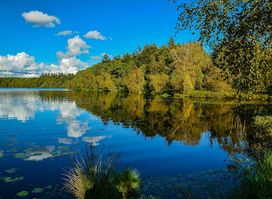
A calm, tea-brown forest lake in Rold Skov, ringed by woodland and bog, inviting slow walks, easy fishing and quiet nature moments in every season.

Steep green hills tumbling to Mariager Fjord, Bramslev Bakker blends premium hiking, shoreline calm and big-sky views in one of Denmark’s most scenic corners.
