

Fyrkat Viking Museum Travel Guide
Free Guide: Step into a perfectly circular Viking fortress, walk a full-scale longhouse, and explore a reconstructed chieftain’s farm at this evocative UNESCO-listed site near Hobro.


A brief summary of Fyrkat Viking Museum
Step into a perfectly circular Viking fortress, walk a full-scale longhouse, and explore a reconstructed chieftain’s farm at this evocative UNESCO-listed site near Hobro.
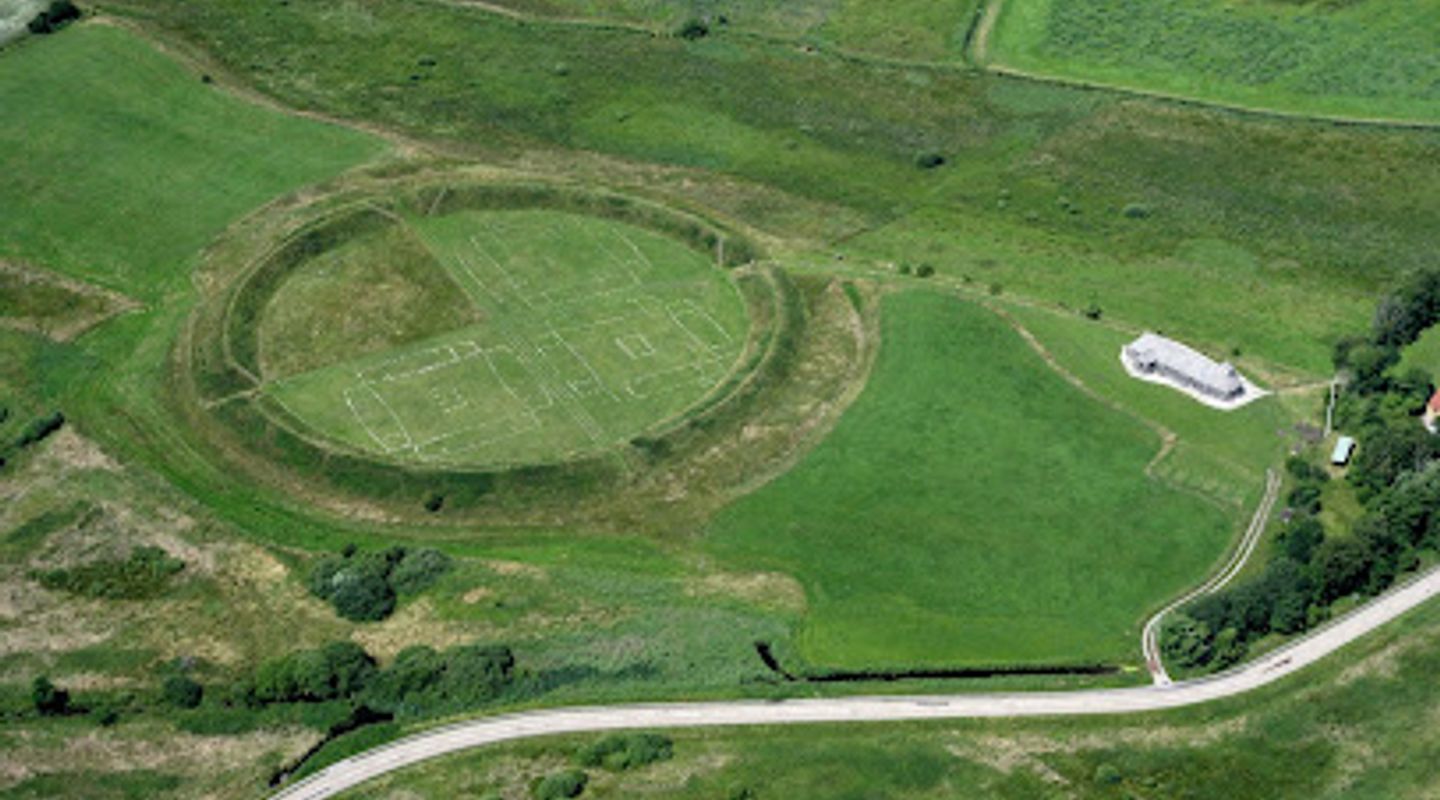
Set in rolling North Jutland fields just outside Hobro, Fyrkat Viking Museum brings the Viking Age vividly to life at one of Denmark’s five ring fortresses. An earthen rampart traces the 120 m circular fortress built around 980 under King Harald Bluetooth, while a full-scale longhouse reconstruction shows how warriors and families once lived. Nearby, a chieftain’s farmstead of nine timber houses, immersive exhibitions, costumed interpreters, and hands‑on crafts turn this UNESCO World Heritage site into a compelling journey back more than a thousand years.
On-site amenities
 Restrooms
 Seating areas
 Picnic areas
 Trash bins
 Information boards
 Visitor centre
 Drinking water
Opening hours
- Every day10 am–6 pm
Opening hours as listed on the venue’s Google Business Profile. Hours can change for services and special events, so check with the venue before you go.
- Address
- Fyrkatvej 37B, 9500 Hobro
- Phone
- Website
Getting there
Train and local bus from Aalborg
Regional train and taxi from Aarhus
Car from Hobro and wider Himmerland
Discover more about Fyrkat Viking Museum
Fortress on the edge of Harald Bluetooth’s kingdom
Around the year 980, Denmark’s king Harald Bluetooth ordered a series of perfectly engineered ring fortresses – Fyrkat is one of the best known of these, set in gentle countryside just west of Hobro. Here the Viking Age reveals itself not through towering stone, but through earth and geometry: a great circular rampart, 120 metres across, still rises from the fields, outlining the exact footprint of the vanished stronghold.Inside the circle, white marker stones trace where 16 identical longhouses once stood, arranged in four quadrants around a central square. This precise planning speaks of royal power and military control at a time when Denmark was being consolidated into a unified kingdom and Christianity was gaining a firmer foothold.
Walking the ring rampart and longhouse interior
A path leads you up onto the grassy rampart, where you can walk along the curve and look down into the former interior of the fortress. From here you see the symmetry of the layout clearly, and on a clear day the views stretch over surrounding meadows and the Mariager Fjord landscape. Information panels explain how timber palisades and gates once crowned the earthworks.Just outside the ring, a full-scale reconstruction of one of the original longhouses stands in weathered oak. Step inside and the dim light, smoke-blackened timbers and central hearth evoke a communal hall where warriors slept, worked and feasted. Simple furnishings, hanging shields and tools are based on archaeological evidence from Fyrkat and other Viking sites, giving a tangible sense of scale and everyday life.
The chieftain’s farm and living history
About a kilometre from the ring fortress you encounter the reconstructed chieftain’s farmstead. Nine wooden buildings form a compact village of dwellings and workshops, their clay-daubed walls and thatched roofs clustered around open yards. Here you can wander between the blacksmith’s forge, weaving and cooking areas, and see how a powerful local leader’s household may have functioned.In the main season, staff in Viking dress demonstrate traditional crafts such as metalworking, textile production and woodcarving. The smell of tar and woodsmoke, the ring of hammer on iron and the sight of herbs hanging to dry all add layers of sensory detail. A mythologically themed playground beside the farmstead lets younger visitors clamber and play among carvings inspired by Norse stories.
Voices from the grave at Fyrkat Møllegård
A short walk away at Fyrkat Møllegård, a modern exhibition space delves into some of the most intriguing finds from the area, including the rich grave of a völva – a female ritual specialist or seer. Here, lighting, sound and scenography are used to frame original objects, from finely worked jewellery to tools and ritual items.Displays explore themes of power, belief and contact with the wider Viking world, placing Fyrkat within networks that stretched along coasts and rivers to the North Atlantic, the British Isles and beyond. Texts and models explain how the ring fortresses may have worked together as a system of royal strongholds and symbolic statements of authority.
UNESCO recognition and practical comforts
Fyrkat is part of the UNESCO World Heritage listing of Denmark’s Viking Age ring fortresses, recognised for their exceptional testimony to early medieval state formation. Despite this historic weight, the site retains a relaxed, rural character. Picnic tables invite you to linger with your own food, and open grass areas allow space for children to run while adults soak up the scenery.Facilities are thoughtfully arranged: restrooms are available both near the ring fortress and at the farm, with accessible toilets at the visitor centre. Paths between key points are generally level and suitable for wheelchairs and strollers, though surfaces can be grassy or gravel. Dogs on leads are welcome in outdoor areas, with a few restrictions near food preparation spaces.
Planning your time among the longhouses
A visit typically combines three elements: the outdoor ring fortress, the reconstructed longhouse, and the chieftain’s farm with its exhibition and playground. Many visitors spend two to three hours wandering between them at an easy pace, pausing to read panels or join a scheduled guided tour during the season.Weather shapes the experience: on bright days the fortress seems to float above a patchwork of green fields, while overcast skies lend a brooding atmosphere that suits tales of warriors and kings. Whatever the conditions, Fyrkat offers a rare chance to place your feet where an entire circular fortress once rose, and to picture the lives lived here more than a millennium ago.
Evendo Review Centre
 Google
Guest reviews
Best time to go
Quietest: Jan, Feb & Dec · before 8am or from 8pm
Busy times are Evendo estimates for a typical year, to help you plan. Actual crowds vary with events, school holidays and the weather.
Explore Fyrkat Viking Museum on the map
A handpicked selection of must-see spots near Fyrkat Viking Museum, mapped for you.
Get your free copy of our complete guide to Fyrkat Viking Museum, delivered straight to you.
Everything on this page, from opening hours and how to get there to Eve’s tips and the best time to go, in one PDF you can read offline, print or share.
Already have an account? Sign in
Your Fyrkat Viking Museum guide is ready.
We'll send it to · Not you? Sign out

Getting your guide ready…
We are putting together a fresh copy of the Fyrkat Viking Museum guide. This can take up to a minute.
This can take a few moments. If your browser asks, choose Allow so the download can start. You'll find the guide in your Downloads folder.
Nothing happened? Download it again
Sorry, the guide is taking longer than usual. Please try again in a minute, or get it by email instead.
Other nearby places you may find interesting
The closest places of the same kind, if this one is not quite what you had in mind.
-
-
-
-
-


Swipe for more places
More to explore near Fyrkat Viking Museum

 Best experiences near Fyrkat Viking Museum
 Best hotels near Fyrkat Viking Museum
 Best landmarks near Fyrkat Viking Museum
 Best attractions near Fyrkat Viking Museum
 Best shops near Fyrkat Viking Museum
 Best restaurants near Fyrkat Viking Museum
 Best bars near Fyrkat Viking Museum
Do you manage this location?
Take control to get all the benefits, like improved information, better appearance, and stronger visibility across AI-powered discovery.
Explore more

Explore more of Central Jutland
Explore Central Jutland in Denmark: A perfect blend of natural beauty, cultural heritage, and family-friendly attractions.
Explore Central Jutland
Explore more of Denmark
Discover Denmark: A perfect blend of history, modern design, and the cozy concept of hygge. Explore vibrant cities, serene landscapes, and world-class cuisine.
Explore Denmark
