

Fredensborg Palace Travel Guide
Free Guide: A living royal residence above Esrum Lake, where baroque architecture, grand avenues and sculpted Norsemen meet the quiet routines of modern Danish court life.


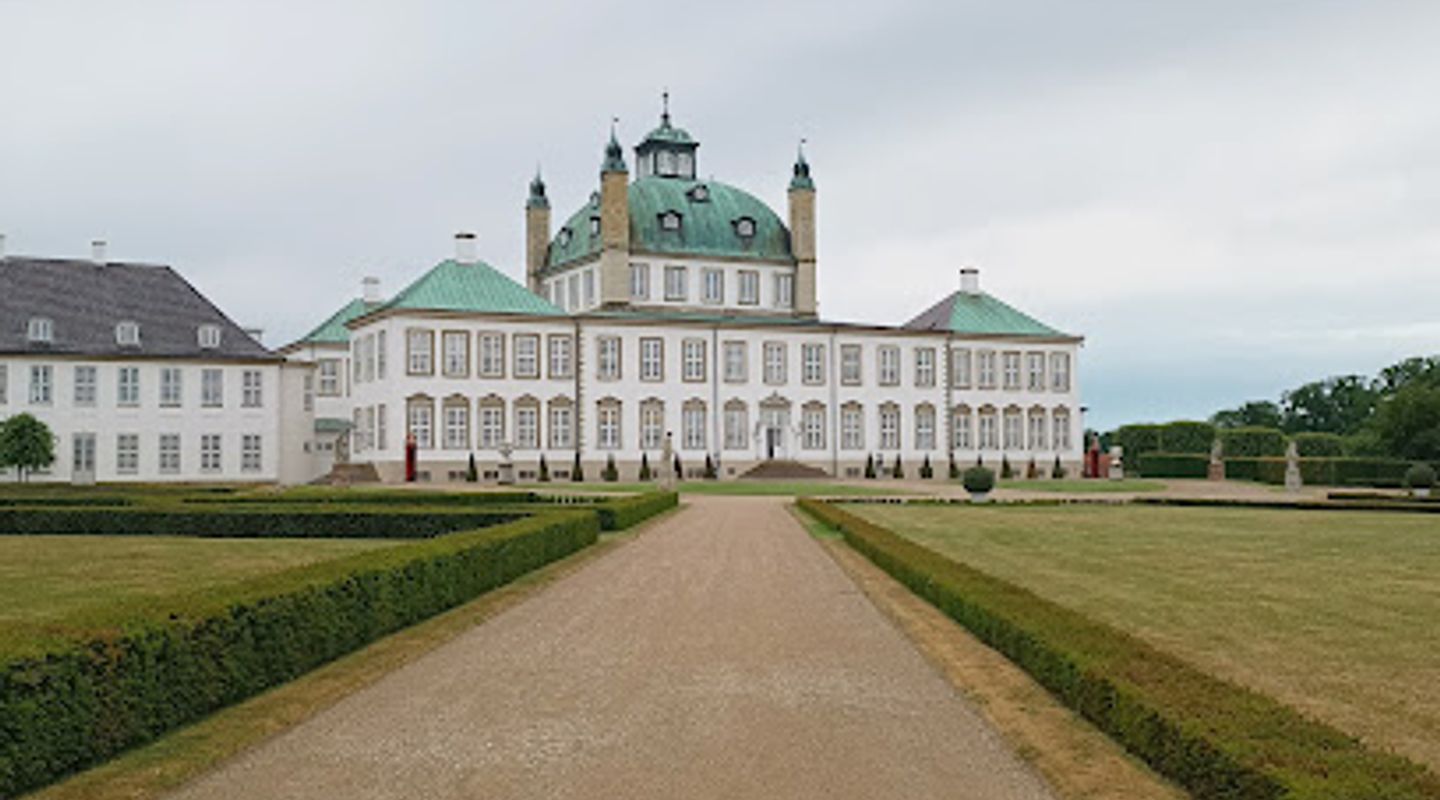
A brief summary of Fredensborg Palace
A living royal residence above Esrum Lake, where baroque architecture, grand avenues and sculpted Norsemen meet the quiet routines of modern Danish court life.
Fredensborg Palace is one of Denmark’s most important royal residences, a serene Baroque palace set above Esrum Lake in North Zealand. Built in the early 18th century for King Frederik IV, it is still used as a spring and autumn residence and for state visits. While the palace interior opens only on guided tours in July, the majestic baroque palace garden with its radiating avenues, romantic woodland and the sculptural Valley of the Norsemen is accessible year-round, making this an atmospheric day trip from Copenhagen.
On-site amenities
 Restrooms
 Seating areas
 Picnic areas
 Trash bins
 Information boards
- Address
- Slottet 1B, 3480 Fredensborg
- Phone
- Website
Getting there
Regional train and local walk from Copenhagen
Car from Copenhagen and North Zealand
Bus connection within North Zealand
Discover more about Fredensborg Palace
A royal retreat built in the spirit of peace
Fredensborg Palace was inaugurated in the early 1720s as a country seat for King Frederik IV, its very name commemorating peace after the Great Northern War. Conceived as a retreat from the capital, it was laid out on a gentle rise above Esrum Lake, giving the royal family a tranquil vantage point over water, woodland and manicured avenues. The central dome hall, inspired by Italian baroque architecture, forms the heart of the palace, with wings radiating out in a formal, balanced composition.Over the centuries, the palace has evolved into one of the Danish monarchy’s most cherished residences outside Copenhagen. It serves as the royal family’s spring and autumn home, and its rooms have witnessed treaties, jubilees, birthdays and family milestones. Heads of state are often received here, and an enduring tradition has visiting dignitaries engraving their signatures into selected windowpanes – an intimate, almost hidden record of international encounters.
Architecture framed by baroque geometry
The palace is a textbook example of Danish baroque design, created by leading architects of the early 18th century. The low, pale façades and copper roofs are restrained rather than ostentatious, allowing the central dome to stand out over the complex. Symmetry governs everything: courtyards, outbuildings and the alignment of the palace with the garden axes all reinforce a sense of order and ceremony.Seen from the garden side, the palace becomes a theatrical backdrop. The main terrace steps down towards the baroque avenues, and long sightlines pull the eye far into the landscape. Yet, despite the grandeur, the overall scale feels intimate compared with some European royal residences. This human proportion, combined with the surrounding greenery, gives Fredensborg a lived‑in, almost domestic quality, fitting its role as a frequently used royal home.
Gardens where baroque meets romantic landscape
Fredensborg’s palace garden is celebrated as one of Denmark’s most impressive historic gardens, often compared to a smaller, northern echo of Versailles. From the palace, seven avenues fan out in a semicircle, each a ruler‑straight corridor of trees drawing you into the landscape. Between them lie parterres, lawns and carefully composed vistas that highlight sculptures and distant focal points.Venture further and the strict geometry softens into more romantic woodland. Winding paths lead through forested sections where the planting becomes looser, reflecting 18th‑ and 19th‑century shifts in garden taste. This contrast between baroque formality and naturalistic scenery makes a simple stroll feel like a journey through design history as well as a walk in the park.
The Valley of the Norsemen and hidden corners
One of the garden’s most distinctive features is the Valley of the Norsemen, a shallow, green valley populated by dozens of sculptures depicting Norwegian and Faroese farmers and fishermen. These figures were created when Norway and the Faroe Islands were still part of the Danish realm, and they stand as stone ambassadors of a broader Nordic kingdom. Their slightly weathered faces and traditional clothing lend the valley a quietly evocative atmosphere.Elsewhere in the grounds you encounter ornamental lakes, smaller pavilions and long perspectives that frame the palace or the surrounding countryside. The Reserved Garden, immediately behind the main building, remains the royal family’s private oasis, but in high summer special guided tours open this area and selected palace interiors to the public. Here the planting becomes more intimate, with herb beds, flower borders and a modern orangery that supports life at the court.
Experiencing Fredensborg today
For most of the year, visitors experience Fredensborg from the outside: walking the baroque avenues, picnicking on the lawns and studying the palace from across ornamental water or from the lakefront. The open gardens invite slow exploration, whether you are interested in garden design, photography or simply a peaceful green escape within reach of Copenhagen.In July, guided tours in English and Danish typically offer a rare look behind the palace façade. Over roughly an hour and a half, these tours lead through selected state rooms and into otherwise private parts of the gardens, while guides explain the building’s role in modern royal life. Even without stepping inside, however, Fredensborg Palace combines architecture, landscape and living monarchy in a way that makes it feel both historically significant and very much part of present‑day Denmark.
Evendo Review Centre
 Google
Guest reviews
Best time to go
Quietest: Jan, Feb & Mar · before 8am or at 8pm
Busy times are Evendo estimates for a typical year, to help you plan. Actual crowds vary with events, school holidays and the weather.
Explore Fredensborg Palace on the map
A handpicked selection of must-see spots near Fredensborg Palace, mapped for you.
Get your free copy of our complete guide to Fredensborg Palace, delivered straight to you.
Everything on this page, from opening hours and how to get there to Eve’s tips and the best time to go, in one PDF you can read offline, print or share.
Already have an account? Sign in
Your Fredensborg Palace guide is ready.
We'll send it to · Not you? Sign out

Getting your guide ready…
We are putting together a fresh copy of the Fredensborg Palace guide. This can take up to a minute.
This can take a few moments. If your browser asks, choose Allow so the download can start. You'll find the guide in your Downloads folder.
Nothing happened? Download it again
Sorry, the guide is taking longer than usual. Please try again in a minute, or get it by email instead.
Unlock the best of Fredensborg Palace
Skip-the-line tickets, guided tours with entry, and walking tours of the area, booked in a few clicks.


Other nearby places you may find interesting
The closest places of the same kind, if this one is not quite what you had in mind.
-
-
-
-
-


Swipe for more places
More to explore near Fredensborg Palace

 Best experiences near Fredensborg Palace
 Best hotels near Fredensborg Palace
 Best landmarks near Fredensborg Palace
 Best attractions near Fredensborg Palace
 Best shops near Fredensborg Palace
 Best restaurants near Fredensborg Palace
 Best bars near Fredensborg Palace
Do you manage this location?
Take control to get all the benefits, like improved information, better appearance, and stronger visibility across AI-powered discovery.
Explore more

Explore more of North Zealand
Explore North Zealand, Denmark's enchanting region of castles, beaches, and royal estates, perfect for history buffs, nature enthusiasts, and seaside lovers.
Explore North Zealand
Explore more of Denmark
Discover Denmark: A perfect blend of history, modern design, and the cozy concept of hygge. Explore vibrant cities, serene landscapes, and world-class cuisine.
Explore Denmark
