Inderhavnsbroen Travel Guide
Free Guide: Copenhagen's iconic curved 'kissing bridge' where innovation meets the Inner Harbour.


A brief summary of Inderhavnsbroen
Copenhagen's iconic curved 'kissing bridge' where innovation meets the Inner Harbour.
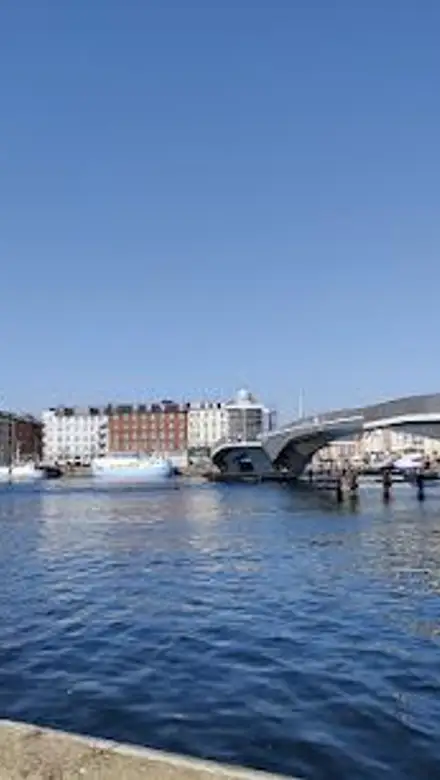
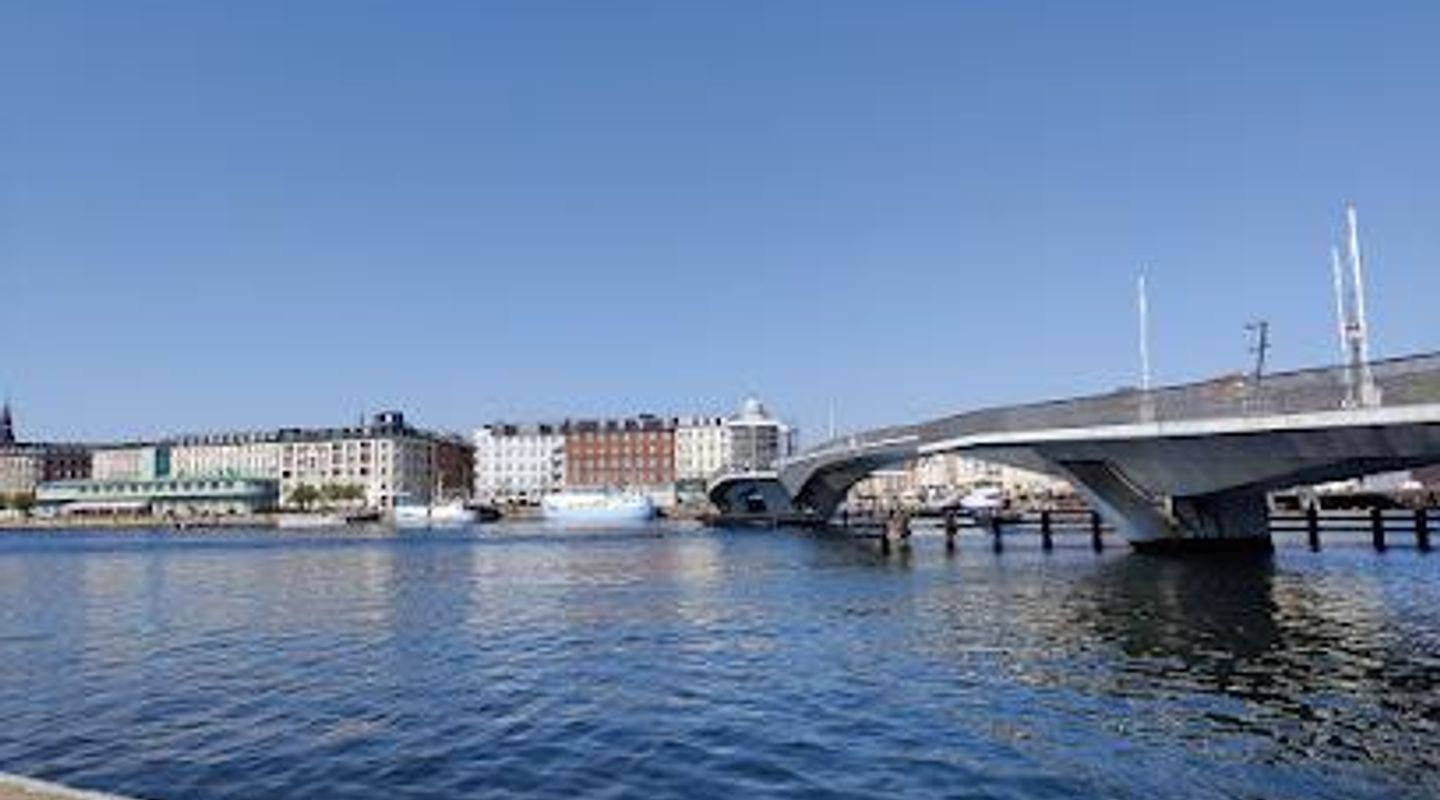
Inderhavnsbroen, Copenhagen's iconic 'kissing bridge,' is a 180-meter pedestrian and bicycle crossing spanning the Inner Harbour between Nyhavn and Christianshavn. Designed by Flint & Neill with Studio Bednarski, this innovative opening bridge features distinctive curved steel spans that meet in the middle, creating a unique silhouette. Opened in July 2016 after a challenging construction period, it has become a vital link in Copenhagen's world-renowned cycling infrastructure and a striking architectural landmark that welcomes visitors entering the harbour from the sea.
On-site amenities
 Information boards
 Seating areas
Opening hours
- Every day2 pm–9 am
Opening hours as listed on the venue’s Google Business Profile. Hours can change for services and special events, so check with the venue before you go.
- Address
- Inderhavnsbroen, 1401 København
Getting there
Bicycle or on foot from Nyhavn
Bicycle or on foot from Christianshavn
Public transport to nearby stations
Harbour tour boats
Discover more about Inderhavnsbroen
A Bridge Born from Ambition and Innovation
Inderhavnsbroen, meaning 'The Inner Harbour Bridge,' is Copenhagen's most talked-about pedestrian and bicycle crossing. Spanning 180 metres across the Inner Harbour, this bridge connects the historic Nyhavn district with the rapidly developing Christianshavn neighbourhood, home to the striking Copenhagen Opera House. The bridge was conceived through an international design competition in 2009, which attracted ten competing teams tasked with creating a crossing that would serve as the first architectural impression for anyone entering Copenhagen harbour from the sea. The winning design, led by engineering consultancy Flint & Neill (now part of COWI) in collaboration with Studio Bednarski and Hardesty & Hanover, proposed something radically different from conventional bridge typologies.
The Distinctive 'Kissing' Design and Its Engineering Complexity
The bridge's most striking feature is its curved, sinusoidal plan with two steel spans that meet in the middle—a design that earned it the affectionate nickname 'the kissing bridge.' This innovative approach was chosen deliberately to avoid the limitations of traditional opening bridges. Bascule spans would have blocked river views for waiting pedestrians and cyclists, while swing bridges would have compromised navigation in adjacent canals. Instead, the Inderhavnsbroen withdraws its opening sections in a sliding manner, allowing the side spans to function as viewing balconies where users can observe both the bridge's movement and passing vessels. The curved alignment, however, introduced significant engineering challenges. The sinusoidal geometry meant that no two cross-sections of the steel spans were identical, and each of the four winch drums required slightly different diameters to navigate the curves. The varying structural depths in elevation, combined with the horizontal curvature, created a structure of extraordinary geometric complexity.
A Troubled Path to Completion
The bridge's construction history proved as dramatic as its design. The original contractor, Pihl and Søn, was appointed in 2011 but encountered multiple critical problems: steelwork failed to meet specifications, cracks and defects appeared in concrete supports, and design errors were discovered showing supports 0.6 metres higher than intended. The contractor collapsed in August 2013, forcing the scrapping of fabricated steelwork and necessitating a complete restart. Storm flooding damaged already-installed electrical motors during the transition period. When a new contractor, Valmont SM, was appointed in 2014, independent engineers identified inadequate reinforcement in several supports, requiring extensive remedial work. As completion approached, the wire rope opening system proved faulty, and the two bridge arms were found to meet improperly in the middle, with locking bolts misaligned—a problem attributed to differential temperature effects across the deck width that design standards had not anticipated. By the time the bridge finally opened to the public on 7 July 2016, it had taken twice as long as originally planned and cost approximately 50 percent more than the initial budget. The project was ultimately funded by the A.P. Møller Foundation to the tune of 241 million Danish Krone, rather than by the City of Copenhagen.
Navigating the Curve: Design Intent Versus Practical Reality
The bridge's curved geometry serves a functional purpose—it provides additional length and thus slightly higher navigation clearance in the middle—but it also creates a distinctive visual and experiential challenge. The curve is so pronounced that cyclists and pedestrians often fail to anticipate the sharp turn required at the central meeting point, where the two spans 'kiss.' This has led to collisions with the glass barriers that separate the two directions of travel. The City of Copenhagen has installed prominent warning signs to alert users to the dead-end effect created by the curve, a design feature that has drawn criticism from urban design experts who argue that good design should not require warning signage to function safely. The barrier system itself reflects the bridge's complexity: rather than the simple boom barriers used on other Copenhagen harbour crossings, Inderhavnsbroen employs large, mechanically elaborate barriers that rise dramatically when the bridge opens.
Opening Frequency and Operational Demands
To accommodate the sailing community, the City of Copenhagen agreed to allow the bridge to open 30 times per month—significantly more than the six times monthly that other major harbour crossings such as Knippelsbro and Langebro operate. This frequent opening schedule has raised concerns about the bridge's reliability as a consistent transport link during sailing season, potentially disrupting the commute patterns of cyclists and pedestrians who depend on uninterrupted passage. The opening mechanism itself represents a departure from the elegant simplicity that characterizes much of Danish design philosophy.
A Landmark in Copenhagen's Cycling Culture
Despite its design controversies, Inderhavnsbroen has become an integral part of Copenhagen's world-famous cycling and pedestrian infrastructure. The bridge carries far more daily users than originally projected, testament to the genuine need for this crossing and the city's commitment to sustainable transport. Its distinctive silhouette, with the curved steel spans meeting in the middle, has made it instantly recognizable and iconic. The bridge represents both the ambitions and the complexities of contemporary urban design—a structure that pushes technical and aesthetic boundaries while simultaneously revealing the challenges of translating innovative concepts into functional, user-friendly infrastructure.
Evendo Review Centre
 Google
Guest reviews
Best time to go
Quietest: Jan, Feb & Dec · before 6am or from 11pm
Busy times are Evendo estimates for a typical year, to help you plan. Actual crowds vary with events, school holidays and the weather.
Explore Inderhavnsbroen on the map
A handpicked selection of must-see spots near Inderhavnsbroen, mapped for you.
Get your free copy of our complete guide to Inderhavnsbroen, delivered straight to you.
Everything on this page, from opening hours and how to get there to Eve’s tips and the best time to go, in one PDF you can read offline, print or share.
Already have an account? Sign in
Your Inderhavnsbroen guide is ready.
We'll send it to · Not you? Sign out

Getting your guide ready…
We are putting together a fresh copy of the Inderhavnsbroen guide. This can take up to a minute.
This can take a few moments. If your browser asks, choose Allow so the download can start. You'll find the guide in your Downloads folder.
Nothing happened? Download it again
Sorry, the guide is taking longer than usual. Please try again in a minute, or get it by email instead.
Unlock the best of Inderhavnsbroen
Skip-the-line tickets, guided tours with entry, and walking tours of the area, booked in a few clicks.
 Tour with entry
Hippies & Christianshavn Tip-Based Walking Tour
from $5.27 Tour with entry
Copenhagen & Christiania: Cycling Tour in French
from $52.02 Tour with entry
3 Hour Copenhagen Architecture Masterclass Bike Tour
from $63.22 Tour with entry
Copenhagen Private Full Day Tour with Lunch Option
from $355.40



Other nearby places you may find interesting
The closest places of the same kind, if this one is not quite what you had in mind.
-
The Hermitage Hunting Lodge Royal hunting lodge with panoramic views, accessible only by guided tour through a UNESCO heritage landscape.
-
Fredensborg Palace Denmark's most magnificent Baroque palace and gardens, where royal history meets landscape artistry on the shores of Lake Esrum.
-
Søborg Slotsruin Medieval fortress ruins reflected in a restored lake, where Danish history meets nature restoration.
-
Jægerspris Castle Royal hunting lodge turned democratic-era residence, Jægerspris Castle weaves Frederik VII, Countess Danner, sculpture-filled parkland and deep forests into one evocative estate.
-
The Round Tower A 17th‑century spiral observatory where royal science, city views and contemporary culture coil together above Copenhagen’s old Latin Quarter.
Swipe for more places
More to explore near Inderhavnsbroen

 Best experiences near Inderhavnsbroen
 Best hotels near Inderhavnsbroen
 Best landmarks near Inderhavnsbroen
 Best attractions near Inderhavnsbroen
 Best shops near Inderhavnsbroen
 Best restaurants near Inderhavnsbroen
 Best bars near Inderhavnsbroen
Do you manage this location?
Take control to get all the benefits, like improved information, better appearance, and stronger visibility across AI-powered discovery.
Explore more

Explore more of North Zealand
Explore North Zealand, Denmark's enchanting region of castles, beaches, and royal estates, perfect for history buffs, nature enthusiasts, and seaside lovers.
Explore North Zealand
Explore more of Denmark
Discover Denmark: A perfect blend of history, modern design, and the cozy concept of hygge. Explore vibrant cities, serene landscapes, and world-class cuisine.
Explore Denmark