The Round Tower Travel Guide
Free Guide: A 17th‑century spiral observatory where royal science, city views and contemporary culture coil together above Copenhagen’s old Latin Quarter.


A brief summary of The Round Tower
A 17th‑century spiral observatory where royal science, city views and contemporary culture coil together above Copenhagen’s old Latin Quarter.
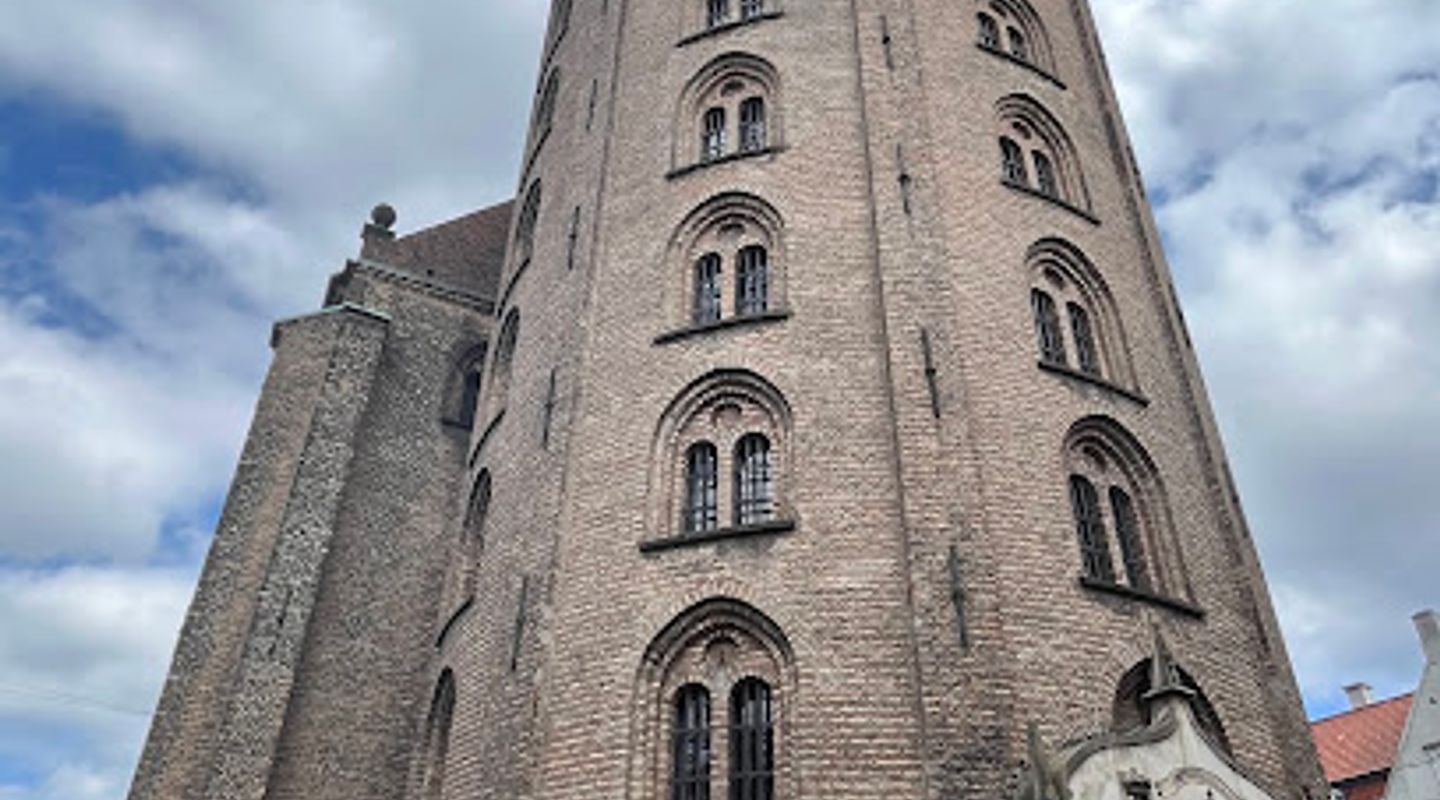
Rising above Copenhagen’s old Latin Quarter, the Round Tower is a 17th‑century astronomical observatory turned cultural landmark. Built in 1642 by King Christian IV, it is famed for its wide spiral ramp that coils gently to a rooftop viewing platform with sweeping city panoramas. Along the way, the former university Library Hall hosts changing art, culture and science exhibitions, concerts and events, making this brick tower a rare blend of history, architecture and contemporary creativity in the very heart of the city.
On-site amenities
 Restrooms
 Drink options
 Food options
 Seating areas
 Sheltered areas
 Trash bins
 Information boards
 Visitor centre
Opening hours
- Every day10 am–8 pm
Opening hours as listed on the venue’s Google Business Profile. Hours can change for services and special events, so check with the venue before you go.
- Address
- Købmagergade 52A, 1150 København
- Phone
- Website
Getting there
Metro from central Copenhagen hubs
City bus through the historic centre
Bicycle within central Copenhagen
On foot from the old town and waterfront
Discover more about The Round Tower
A royal tower with its eyes on the stars
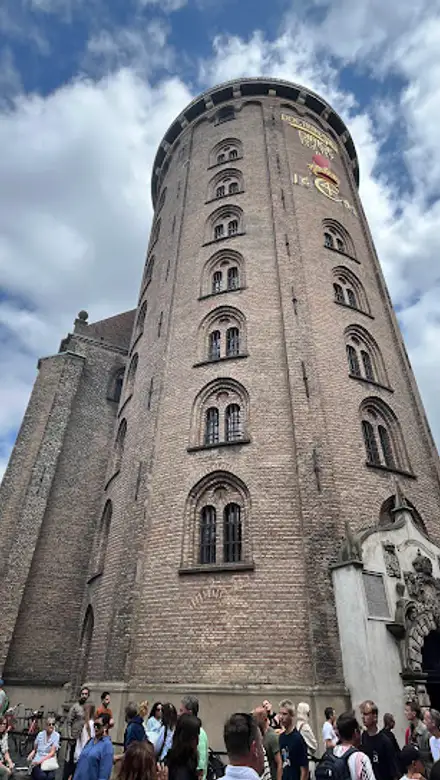
The Round Tower, or Rundetaarn, was completed in 1642 as part of King Christian IV’s ambitious Trinitatis Complex, combining an observatory, university library and church in one integrated ensemble. Conceived as a “castle of the stars” for scholars in Copenhagen, the tower quickly became a symbol of Denmark’s scientific curiosity and royal power. Its sturdy brick cylinder still anchors Købmagergade, a busy pedestrian street, but step inside and you are entering a purpose‑built scientific instrument as much as a monument.High above the tower sits one of Europe’s oldest functioning observatories. For centuries, astronomers climbed up here to chart the heavens, making measurements that would help place Denmark on the scientific map. Today, the observatory retains its historic telescope and timbered interior, and in the darker months it again opens for stargazing evenings, connecting modern visitors with the same night sky that early scientists once studied.
The spiral ramp that winds through history
Instead of a staircase, the Round Tower is famous for its wide, whitewashed spiral ramp that coils 7½ times around the hollow core. This ingenious design allowed horses and carts to climb up with delicate instruments and books when the tower served the university. Now the gently sloping, cobbled ramp leads visitors upwards in a slow reveal: narrow windows, thick brick walls and occasional alcoves mark your progress as daylight shifts with every turn.Along the way, you pass small landings and niches, once used as resting spots and storage corners, now favourite hideaways for children or quiet places to pause. About two‑thirds of the way up, a glass floor spans the central shaft, letting you peer down into the tower’s hollow interior. It’s a brief thrill that also reminds you how unusual this structure is, designed from the start as a vertical corridor of knowledge.
The Library Hall: from dusty volumes to vibrant culture
Roughly halfway up the tower, on the level above Trinitatis Church, you step into the long, vaulted Library Hall. In the 17th century this timber‑roofed space held the entire book collection of the University of Copenhagen, lining the walls from floor to ceiling. Scholars studied under the beams here until the mid‑19th century, when the library moved to new premises and the hall gradually found a new purpose.Today the Library Hall is the tower’s cultural heart. Rotating exhibitions span contemporary art, photography, design, science themes and historical displays, often with a Nordic twist. Concerts, talks, festivals and family workshops bring the old room to life in the evenings. At one end you find a small shop and café counter, where books, prints and Danish design objects echo the tower’s blend of learning and creativity.
Skyline views and Copenhagen’s changing face
At the top, a short wooden staircase and a tighter stone stair bring you out onto the open viewing platform wrapped around the observatory dome. From here, the city unfurls in every direction: copper spires, terracotta roofs and church towers punctuate the skyline, while new harbour developments and bridges glint further away. On clear days you can trace the line of the Øresund and even glimpse Sweden across the water.The platform’s low railings and compass points invite you to match landmarks with names: the towers of Copenhagen Cathedral and the old stock exchange, Rosenborg’s turrets set in its gardens, and the distant dome of the Marble Church. In the wind you can almost hear the layers of the city’s past, from medieval merchants to modern cyclists below. During restoration periods the observatory dome itself may be closed, but the tower strives to keep this outdoor panorama accessible whenever possible.
Practical character and the rhythm of a visit
Despite its historic pedigree, the Round Tower is a straightforward, urban experience. Entry is via a small ticket hall on Købmagergade, and visits follow a simple flow up the ramp, through the Library Hall, then onward to the viewing platform before descending the same way. There is no lift, and the last part involves stairs, so the very top is not accessible to all, though the ramp and Library Hall can be reached with care.Inside, the atmosphere shifts with the time of day and season. Mornings outside school holidays can feel almost contemplative, with soft light in the ramp and space to absorb details in the brickwork and timber. Afternoons and early evenings are livelier, especially when exhibitions or events are taking place. Because the tower stands in the compact historic centre, it fits easily into a day of museum‑hopping, shopping streets and nearby royal sites.
Stories, details and small discoveries
The Round Tower rewards slow looking. Inscriptions and royal monograms on the exterior recall Christian IV’s hand in its creation. Inside, worn cobbles on the ramp record centuries of footsteps, hooves and cart wheels. The proximity to Trinitatis Church below adds a subtle sacred layer: at certain points you can sense, just beneath your feet, the volume of the church nave.Scattered details bring the tower’s human stories to the surface: an old astronomer’s toilet tucked into the wall, the hollow shaft spanned by that daring glass floor, and the way light slices through the small windows at different times of day. Seasonal exhibitions and special programmes themed around light, astronomy or Danish culture ensure that no two visits are exactly the same. Yet the core experience remains constant: a gradual ascent from bustling street to quiet sky, within a cylinder of brick that has watched Copenhagen change for nearly four centuries.
Evendo Review Centre
 Google
Guest reviews
Best time to go
Quietest: Jan, Feb & Mar · before 8am or from 9pm
Busy times are Evendo estimates for a typical year, to help you plan. Actual crowds vary with events, school holidays and the weather.
Explore The Round Tower on the map
A handpicked selection of must-see spots near The Round Tower, mapped for you.
Get your free copy of our complete guide to The Round Tower, delivered straight to you.
Everything on this page, from opening hours and how to get there to Eve’s tips and the best time to go, in one PDF you can read offline, print or share.
Already have an account? Sign in
Your The Round Tower guide is ready.
We'll send it to · Not you? Sign out

Getting your guide ready…
We are putting together a fresh copy of the The Round Tower guide. This can take up to a minute.
This can take a few moments. If your browser asks, choose Allow so the download can start. You'll find the guide in your Downloads folder.
Nothing happened? Download it again
Sorry, the guide is taking longer than usual. Please try again in a minute, or get it by email instead.
Unlock the best of The Round Tower
Skip-the-line tickets, guided tours with entry, and walking tours of the area, booked in a few clicks.
 Tour with entry
Self-Guided Tour In Copenhagen with 100 Captivating Audio Stories
from $3.19 Tour with entry
Copenhagen Exploration Game and City Tour on your Phone
from $8.53 Tour with entry
Half Day Self-Guided Audio Walking Private Tour in Copenhagen
from $14.10 Tour with entry
Life of H.C. Andersen - Half Day Self-Guided Audio Walking Tour
from $14.15
 Tour
TourA Self-Guided Nordic Exploration in Copenhagen's Hidden Hygge
from $1.06 Tour
TourCopenhagen Audio Guided Walking Tour 3h30 and 29 reviews
from $6.43 Tour
TourThe Philosopher's Last Walk: An audio tour on the life of Søren Kierkegaard
from $9.49 Tour
TourTOP Copenhagen : Private Guided Tour with your mobile
from $10.67
Other nearby places you may find interesting
The closest places of the same kind, if this one is not quite what you had in mind.
-
-
-
-
-


Swipe for more places
More to explore near The Round Tower

 Best experiences near The Round Tower
 Best hotels near The Round Tower
 Best landmarks near The Round Tower
 Best attractions near The Round Tower
 Best shops near The Round Tower
 Best restaurants near The Round Tower
 Best bars near The Round Tower
Do you manage this location?
Take control to get all the benefits, like improved information, better appearance, and stronger visibility across AI-powered discovery.
Explore more

Explore more of North Zealand
Explore North Zealand, Denmark's enchanting region of castles, beaches, and royal estates, perfect for history buffs, nature enthusiasts, and seaside lovers.
Explore North Zealand
Explore more of Denmark
Discover Denmark: A perfect blend of history, modern design, and the cozy concept of hygge. Explore vibrant cities, serene landscapes, and world-class cuisine.
Explore Denmark