Aarhus Theatre
Art Nouveau splendour, four busy stages and more than a century of theatre-making in the cultural heart of Aarhus, just across the square from the cathedral.
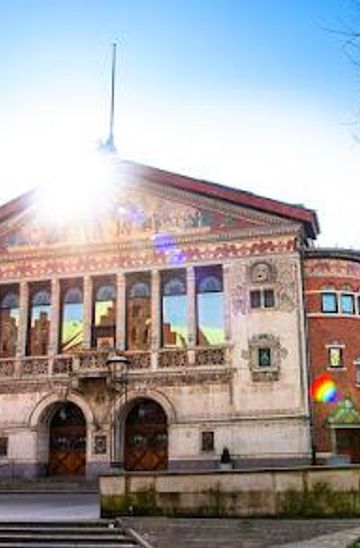
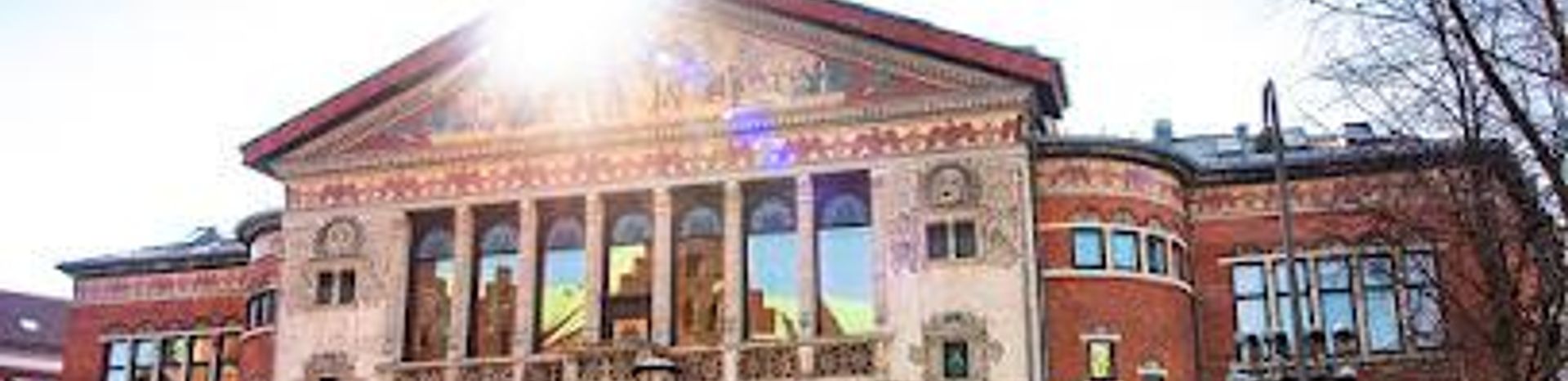
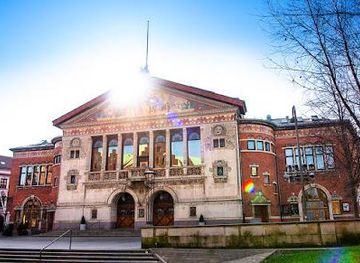
Aarhus Theatre is a jewel of Art Nouveau architecture and the largest regional stage in Denmark, set just off Bispetorv opposite Aarhus Cathedral. Inaugurated in 1900 and designed by Hack Kampmann, its richly decorated façade, mosaics and carvings hint at the opulent interiors of chandeliers, gilded ceilings and plush auditoriums. Today the theatre runs a varied program on four stages, from classic drama to contemporary productions, often with English subtitles and guided tours that reveal more of its history and craft.
A brief summary to Aarhus Theatre
- Teatergaden 1, Aarhus, Aarhus C, 8000, DK
- Click to display
- Click to display
- Duration: 1.5 to 3 hours
- Mid ranged
-
 Indoor
- Mobile reception: 5 out of 5

Know before you go
Hi, I'm Eve. Here are a few practical things to know before exploring Aarhus Theatre.
- Arrive at least 20–30 minutes before curtain to admire the façade details and the gilded foyers before the audience fills the building.
- Look for performances with English surtitles if you do not speak Danish; these are offered on selected dates and clearly marked in the program.
- Consider a guided theatre tour when available to see backstage areas, workshops and the smaller stages that are not visible during a regular performance.
- Dress is generally smart-casual, but layers are useful as the old building can feel warm in the auditorium and cooler in entrance spaces.
- Combine an evening show with dinner or drinks in the streets around Bispetorv, where several cafés and restaurants cater to pre-theatre guests.
Do you manage this location?
Take control to get all the benefits, like improved information, better appearance, and stronger visibility across AI-powered discovery. Learn more
Activate your presenceOther nearby places you may find interesting
Getting There
-
From Aarhus H main railway station by walking
From Aarhus H, the central railway station, expect a walk of about 10–15 minutes to Aarhus Theatre through level, paved city streets that are suitable for most mobility levels. The route passes through the compact city centre with pedestrian crossings and some cobblestones near the cathedral. This option is free and works in all seasons, though winter conditions can be slippery in snow or ice.
-
From Aarhus H by city bus
Several city bus lines run between Aarhus H and stops close to Bispetorv and the cathedral, a short walk from the theatre. Travel time is typically 5–10 minutes depending on traffic, with buses running every few minutes during the day and less frequently in the late evening. A single adult ticket within the city zone usually costs around 20–30 DKK and can be bought via ticket machines or mobile apps. Buses are generally low-floor and accessible, but check timetable information for late-night services after evening performances.
-
By bicycle within central Aarhus
Cycling is a convenient way to reach the theatre from most central neighbourhoods in about 5–15 minutes. The city has dedicated cycle lanes on major streets, and bicycle parking stands can be found in the streets around the cathedral and Bispetorv. This option is free if you have your own bike or use local bike-share schemes, though wet or icy weather can make conditions less comfortable, especially in winter.
-
By taxi from inner-city hotels
From hotels in the inner city, a taxi ride to Aarhus Theatre usually takes 5–10 minutes, longer at peak traffic times. Daytime fares for short central journeys commonly range from about 80–140 DKK depending on distance, time and any waiting charges. Taxis can drop passengers close to the theatre entrances but may not always stop directly in front on busy evenings. This option is comfortable in bad weather and suitable for guests with limited mobility.
For the on-the-go comforts that matter to you
-
 Restrooms
-
 Drink Options
-
 Food Options
-
 Seating Areas
-
 Sheltered Areas
-
 Trash Bins
-
 Information Boards
Discover more about Aarhus Theatre
A turn-of-the-century theatre with grand ambitions
Aarhus Theatre stands where the city’s growing bourgeoisie once dreamed of a stage worthy of Denmark’s rising second city. By the end of the 19th century the old local playhouse, nicknamed “Svedekassen” – the Sweat-box – was hopelessly cramped. A civic initiative raised funds through shares, a site was chosen by the cathedral and architect Hack Kampmann was commissioned to create a modern, prestigious theatre building. Construction began in 1898 and, remarkably, just two years later the theatre opened its doors in 1900 with a gala performance that signalled a new cultural era for Aarhus.From the start the theatre was conceived as a full-scale institution, not just a single stage. Today it operates as Denmark’s largest provincial theatre, with four stages and around 1,200 seats spread across the house. The main auditorium is the ceremonial heart, framed by tiers of balconies, heavy curtains and rich detailing. Smaller stages allow for experimental work, intimate drama and guest performances, giving the building a constant sense of activity and artistic exploration from early autumn through to late spring.Art Nouveau flourishes and storytelling in stone
What makes Aarhus Theatre immediately memorable is its façade, one of the finest examples of Art Nouveau in Denmark. Instead of strict symmetry and plain stone, you find curved lines, floral motifs and a composition that mixes architecture with decorative art. Above the entrance a large gable panel shows a scene from Ludvig Holberg’s comedy “Masquerade,” painted by Hans Tegner, turning the exterior into a stage in its own right. Eagles, swans and other creatures appear in friezes and reliefs, some inspired by Viking-age finds unearthed during construction.Look more closely and a host of details emerge: glass mosaics with stylised Danish flora, a stained-glass owl that seems to watch over the square, and a small dragon-like figure perched high on the roofline. Inside, the Art Nouveau spirit continues in sweeping staircases, carved balustrades and ceilings that layer gold, colour and pattern. Much of the decorative program was realised together with artists such as Karl Hansen Reistrup, blending architecture, ceramics and painting into a unified experience.Behind the curtain: life inside a working playhouse
Despite its historic shell, Aarhus Theatre functions as a contemporary production house. Craftspeople, technicians and artists work behind the scenes to build sets, tailor costumes and prepare lighting and sound designs for a busy repertoire. Over the decades the building has been updated with backstage extensions and technical renovations, ensuring modern acoustics and stage machinery while preserving the listed historic interiors. The result is a theatre that feels both atmospheric and operational, equally suited to classic drama and innovative staging.The repertoire typically spans well-known plays, new Danish writing, musicals and collaborations with visiting companies. Many performances run several nights a week, and on select dates surtitles in English make productions accessible to non-Danish speakers. Guided tours are occasionally offered, taking visitors into rehearsal spaces, side stages and perhaps even onto the main stage, where the scale of the auditorium and the complex rigging overhead come sharply into focus.A cultural anchor in the heart of Aarhus
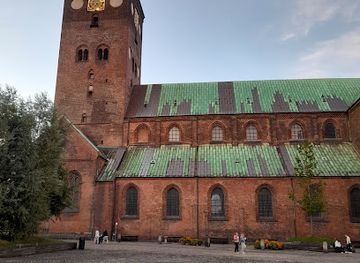
The theatre’s location amplifies its role in city life. Facing the cathedral across Bispetorv, it forms one side of a lively urban square where church towers, historic townhouses and the theatre’s decorated façade create a compact cultural ensemble. Before evening performances, the forecourt fills with theatre-goers heading for drinks or dinner nearby, while the illuminated façade becomes a backdrop for the bustle of the city centre. In daytime, the building reads more like an architectural monument, inviting close inspection from passers-by.Over more than a century, Aarhus Theatre has weathered changing styles and tastes, from early 20th-century realism to experimental contemporary theatre. Careful restorations and protective listing have kept its character intact. For visitors, it offers multiple layers of interest: you can attend a show, join a tour, or simply appreciate the craftsmanship and symbolism built into its stone and glass. However you experience it, the theatre remains a key reference point in understanding Aarhus as a confident, culturally driven city.Planning your visit inside this historic stage
A typical visit focuses either on an evening performance or a daytime exploration of the architecture. Performance nights stretch to two or three hours including intervals, giving time to absorb the atmosphere of the foyers and bars as well as the show itself. Daytime tours, when available, are shorter but reveal aspects of the building audiences rarely see, from costume corridors to the warren of backstage passageways. Even without a ticket, a brief stop to view the façade from the square rewards a careful look at the carvings, mosaics and playful figures high above street level.Seats and ticket categories vary between the main stage and smaller spaces, making it possible to choose between grand, red-velvet surroundings or a more intimate, close-to-the-actors experience. Some performances are suitable for a broad age range, while others delve into more complex themes. Checking the current program helps match your interests, whether you are drawn by a well-known classic, a musical with live orchestra or a contemporary piece that uses the historic stage in unexpected ways.Explore the best of what Aarhus Theatre has to offer













More about East Jutland
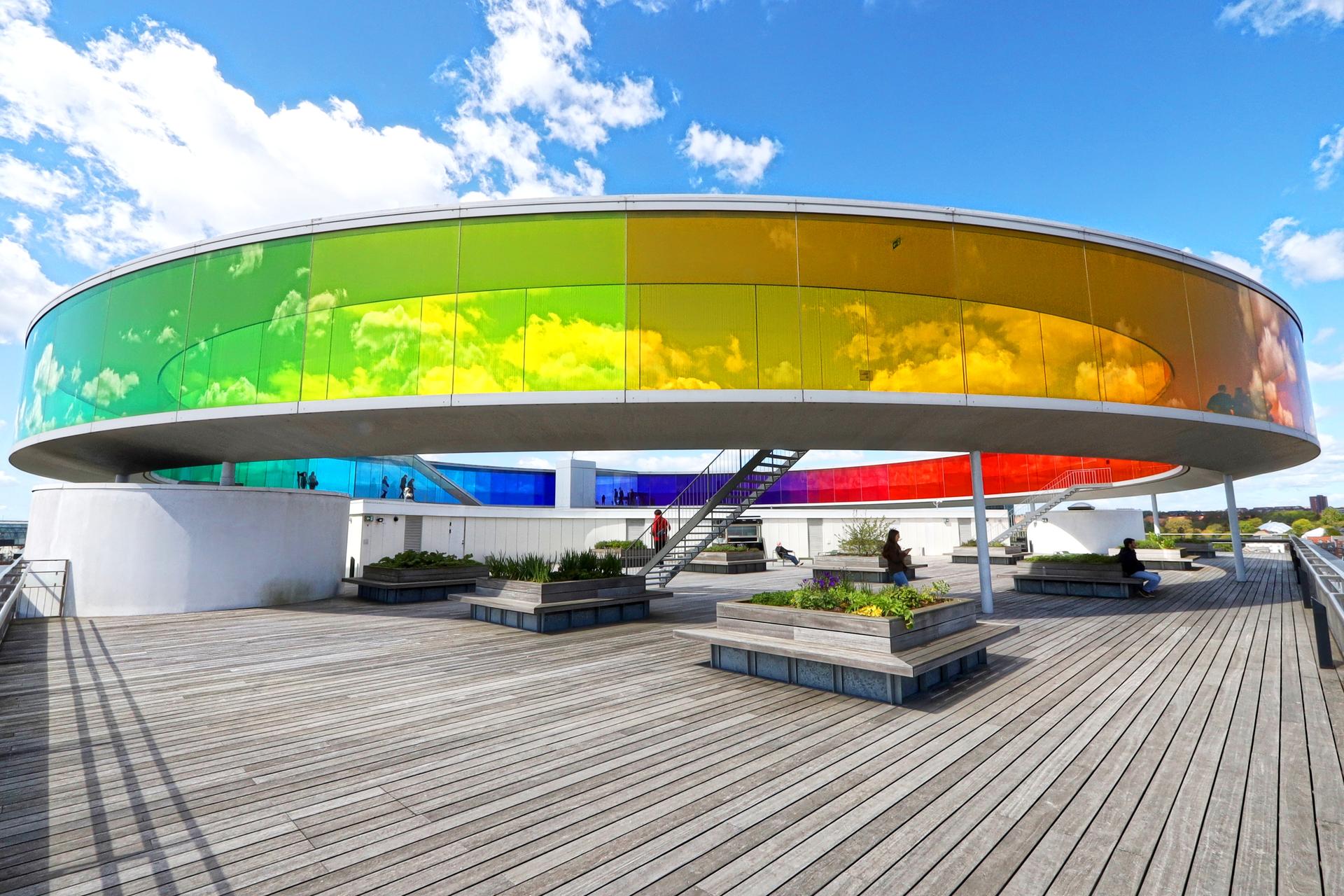
Discover East Jutland, Denmark's enchanting region blending vibrant cities, rich history, and stunning natural landscapes, perfect for every type of traveler.
Tell me more about East Jutland
Historic art hall turned contemporary laboratory, with light-filled galleries, a small sculpture park and ever-changing cutting-edge exhibitions in central Aarhus.
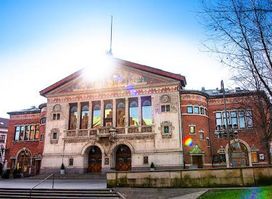
Art Nouveau splendour meets contemporary performance at Aarhus Theatre, a golden, story-filled playhouse anchoring the cultural heart of Denmark’s second city.