Hvolris Jernalderlandsby, Viborg Travel Guide
Free Guide: Step into another tempo in a working Iron Age village where archaeology, reconstructed longhouses and a sculpture-studded valley bring 6,000 years of history to life.


A brief summary of Hvolris Jernalderlandsby
Step into another tempo in a working Iron Age village where archaeology, reconstructed longhouses and a sculpture-studded valley bring 6,000 years of history to life.
Set in the rolling Skals River Valley north of Viborg, Hvolris Jernalderlandsby is an open‑air Iron Age village and archaeological site where 6,000 years of settlement are layered into the landscape. On this 18‑hectare hillside you move between excavated remains, reconstructed longhouses, a working smithy and craft workshops, sculpture-dotted woodland and an indoor exhibition with finds from the area. Families can meet farm animals, follow forest trails and, in season, join hands‑on activities from archery to weaving that bring everyday life around year 0 vividly to life.
On-site amenities
 Restrooms
 Drink options
 Drinking water
 Food options
 Seating areas
 Sheltered areas
 Picnic areas
 Trash bins
 Information boards
 Visitor centre
Opening hours
- Mon10 am–3 pm
- Tue10 am–3 pm
- Wed10 am–3 pm
- Thu10 am–3 pm
- Fri10 am–3 pm
- SatClosed
- SunClosed
Opening hours as listed on the venue’s Google Business Profile. Hours can change for services and special events, so check with the venue before you go.
- Address
- Herredsvejen 135, 9632 Møldrup
- Phone
Getting there
Car from Viborg
Bus from Viborg towards Møldrup/Bjerregrav
Cycling from Viborg region
Discover more about Hvolris Jernalderlandsby
Ancient lives in a quiet Danish valley
North of Viborg, the slopes of the Skals River Valley hold traces of human life stretching back to the Stone Age, with Hvolris Jernalderlandsby focusing on the world of the Iron Age around year 0. Here, archaeologists have been excavating since the 1960s, gradually uncovering house sites, pits and artefacts that map out centuries of farming and craft. The open‑air museum sits directly in this cultural landscape, so you see not only replicas but the ground where real families once built their homes.The feeling is peaceful rather than monumental. Fields, hedges and forest fold around the site, and the village occupies a natural terrace above the valley. It is easy to imagine smoke rising from hearths and the sound of livestock drifting across the slopes much as it did two millennia ago.
Recreated longhouses and working crafts
The heart of Hvolris is the reconstructed Iron Age village, with three timber longhouses, a smithy and small workshops clustered along a beaten earth path. Stepping through a low doorway, you enter dim, smoky interiors where benches, loom weights and simple tools hint at the routines of daily life. Thick walls of wattle and daub shut out the wind, while the central hearth would once have been the household’s focus.On many days in the summer season the village is animated by costumed interpreters demonstrating skills that defined the era. Ironwork rings from the forge, pots take shape from wet clay, and wool is spun and woven into cloth on upright looms. Visitors are often invited to try simple tasks such as archery, grinding grain or shaping a small piece of wood, discovering how much time and teamwork even basic chores required.
Archaeology side by side with reconstruction
One of Hvolris’ distinctive features is the close dialogue between excavation and reconstruction. Just beyond the longhouses lie fenced areas where archaeologists continue to investigate postholes, fire pits and rubbish layers, carefully recording the clues that underpin each building experiment. Information boards explain what was found here and how those finds influenced the layout, materials and dimensions of the houses you have just walked through.Inside the small museum building, finds from the valley are displayed in context: iron tools, ceramics, bone objects and personal items that survived in the soil. Rather than overwhelming with quantity, the exhibition highlights how each fragment connects to real people, from a child’s lost bead to the heavy knife of a farmer or smith. Together, the open air and indoor displays show how evidence becomes interpretation.
Walks, sculptures and family‑friendly corners
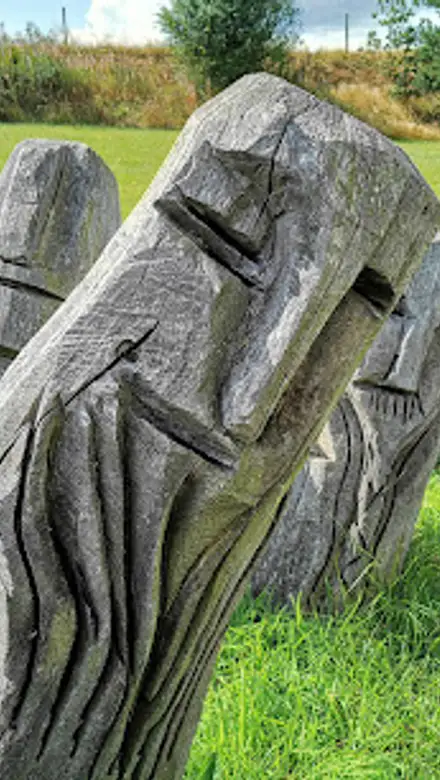
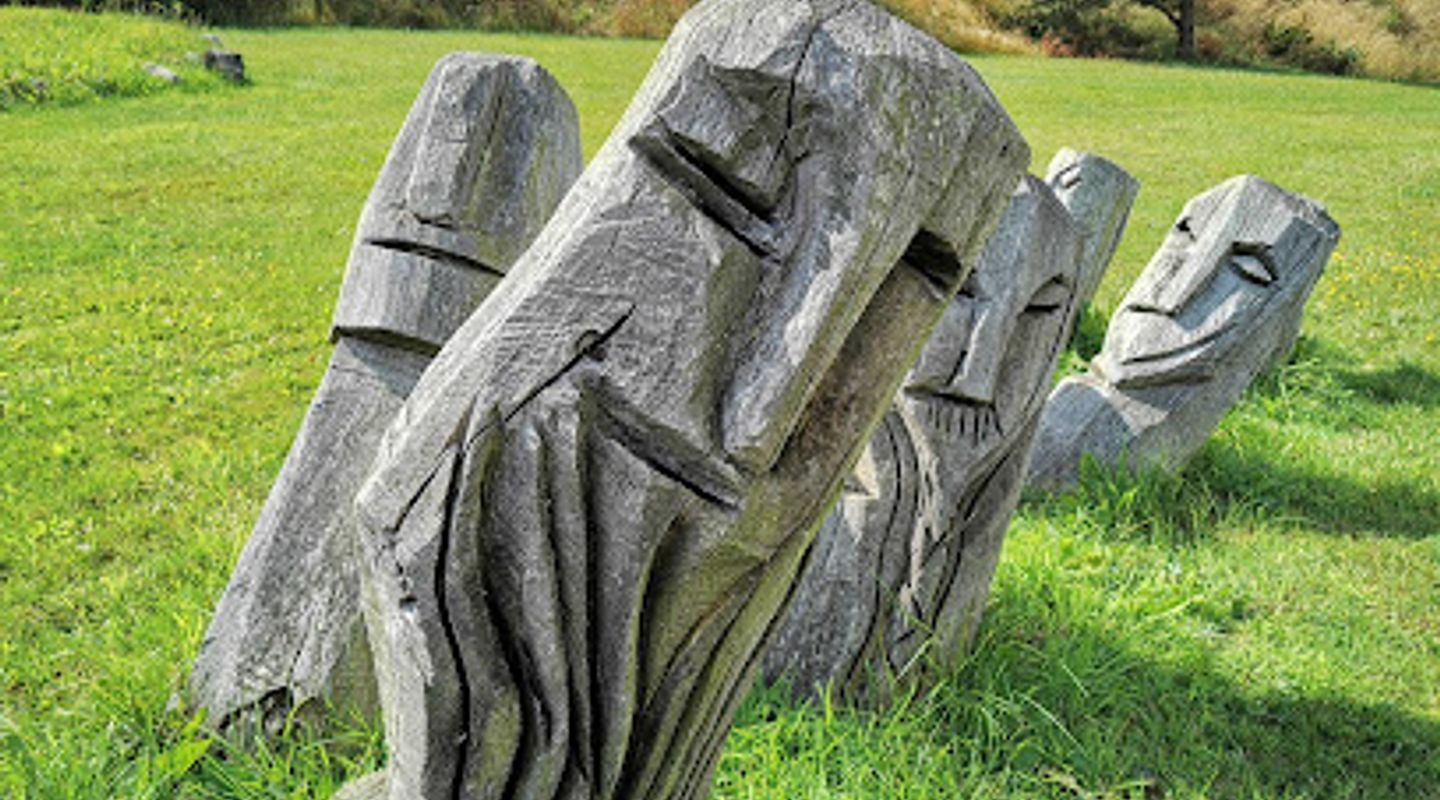
Beyond the core village, Hvolris extends across about 18 hectares of countryside. Paths lead through a sculpture grove where contemporary artists have responded to the site’s archaeology and myths with large‑scale works tucked among trees and glades. The combination of art and landscape adds another layer of storytelling, inviting you to think about how every generation reshapes the past.Families will find a nature playground, open grass for picnics and friendly farm animals such as sheep, goats and hens in and around the village enclosures. Children can roam between house yards, peer into animal pens and invent their own games among the fences and earthworks, while adults linger over details of construction or simply enjoy the valley views.
Café warmth and seasonal atmosphere
The main building gathers together a small café, shop and exhibition under one roof, creating a comfortable base in cooler or wetter weather. Simple refreshments, indoor seating and space to unpack brought food make it easy to stretch a visit into a leisurely half day. Large windows frame the surrounding slopes, underlining how strongly the museum is tied to its rural setting.Hvolris has a distinctly seasonal rhythm. In the main summer months the programme often includes themed days, workshops and living‑history events that fill the village with extra activity, smoke and sound. Outside peak periods the site becomes quieter, lending more space for contemplation, photography and unhurried walks through the valley. Whatever the season, the guiding idea remains the same: inviting you to slow down and step, for a while, into another time and another tempo.
Evendo Review Centre
 Google
Guest reviews
Best time to go
Quietest: Jan, Feb & Mar · before 8am or at 7pm
Busy times are Evendo estimates for a typical year, to help you plan. Actual crowds vary with events, school holidays and the weather.
Explore Hvolris Jernalderlandsby on the map
A handpicked selection of must-see spots near Hvolris Jernalderlandsby, mapped for you.
Get your free copy of our complete guide to Hvolris Jernalderlandsby, delivered straight to you.
Everything on this page, from opening hours and how to get there to Eve’s tips and the best time to go, in one PDF you can read offline, print or share.
Already have an account? Sign in
Your Hvolris Jernalderlandsby guide is ready.
We'll send it to · Not you? Sign out

Getting your guide ready…
We are putting together a fresh copy of the Hvolris Jernalderlandsby guide. This can take up to a minute.
This can take a few moments. If your browser asks, choose Allow so the download can start. You'll find the guide in your Downloads folder.
Nothing happened? Download it again
Sorry, the guide is taking longer than usual. Please try again in a minute, or get it by email instead.
Other nearby places you may find interesting
The closest places of the same kind, if this one is not quite what you had in mind.
-
-
-
-
-


Swipe for more places
More to explore near Hvolris Jernalderlandsby
-
 Best experiences near Hvolris Jernalderlandsby
-
 Best hotels near Hvolris Jernalderlandsby
-
 Best landmarks near Hvolris Jernalderlandsby
-
 Best attractions near Hvolris Jernalderlandsby
-
 Best shops near Hvolris Jernalderlandsby
-
 Best restaurants near Hvolris Jernalderlandsby
-
 Best bars near Hvolris Jernalderlandsby


Do you manage this location?
Take control to get all the benefits, like improved information, better appearance, and stronger visibility across AI-powered discovery.
Explore more

Explore more of Viborg
Discover Viborg, Denmark's hidden gem where medieval history, stunning nature, and vibrant culture converge for an unforgettable travel experience.
Explore Viborg
Explore more of Denmark
Discover Denmark: A perfect blend of history, modern design, and the cozy concept of hygge. Explore vibrant cities, serene landscapes, and world-class cuisine.
Explore Denmark