

Free Dikhil Region Travel Guide & Mobile App
Explore Dikhil Region with free travel guides. Discover regional history, expert tips, proposed trips, and audio guides on web or mobile app.


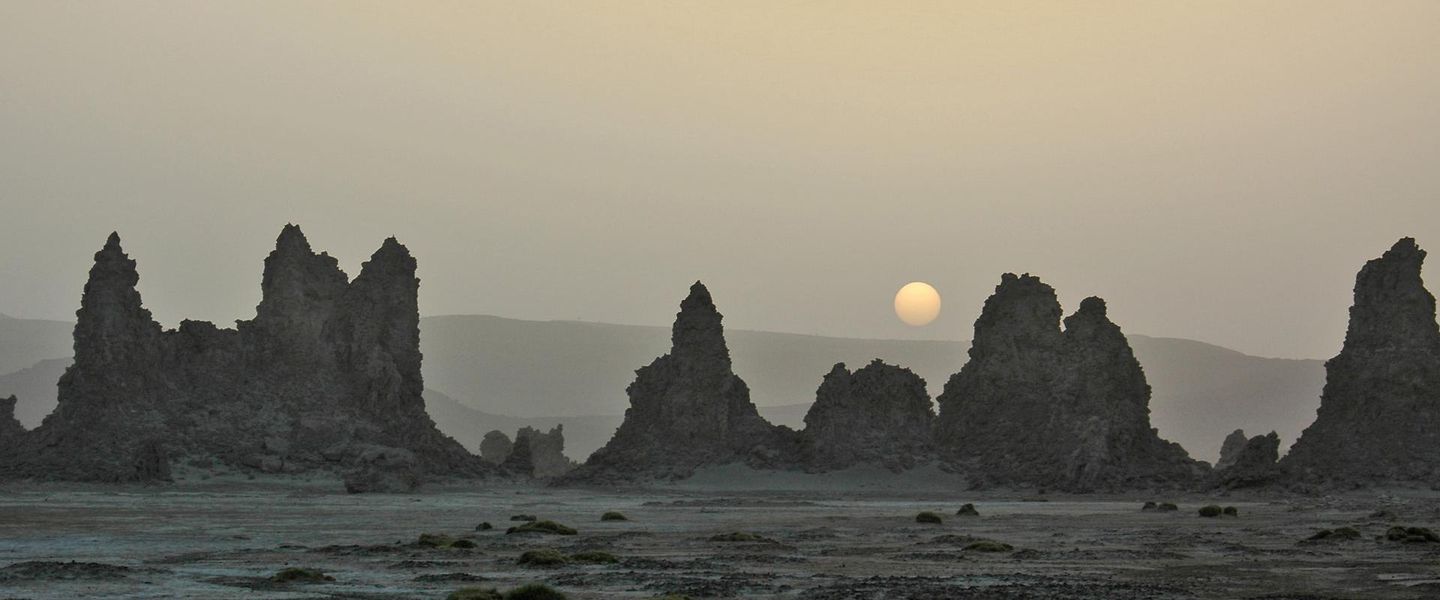


Explore Dikhil Region in Djibouti for Lake Abbé’s chimneys, Grand Bara’s salt plains, volcanic scenery and cross-border desert landscapes.
Read more about Dikhil Region
When is the best time to visit Dikhil Region?
Best: December–February · 28–29°C| Month | High (°C) | Rainfall (mm) |
|---|---|---|
| January (best) | 28 | 5 |
| February (best) | 29 | 4 |
| March | 31 | 3 |
| April | 33 | 3 |
| May | 35 | 1 |
| June | 37 | 2 |
| July | 38 | 20 |
| August | 38 | 25 |
| September | 36 | 10 |
| October | 34 | 3 |
| November | 31 | 3 |
| December (best) | 29 | 3 |
Getting to and around Dikhil Region
How to get there
Transportation
Top city travel guides in Dikhil Region
The cities of Dikhil Region, and the easiest places to base yourself.
-

-

-

-


Swipe for more cities
Destinations in Dikhil Region
Resorts, valleys and scenic spots worth a trip of their own.

Swipe for more destinations
Best attractions in Dikhil Region
Dikhil Region’s attractions are primarily geological, environmental and experiential. Lake Abbé is the principal draw, with pale salt margins, limestone chimneys and a broad basin that changes in character with water levels and light. It is also relevant for birdwatching, although access and wildlife visibility vary with season. The Grand Bara offers a very different landscape: an extensive seasonal salt plain where the scale of the open terrain, surrounding volcanic relief and pastoral use are more important than built facilities. Dikhil town provides a modest but useful contrast, with local markets, cultivated areas and an opportunity to observe everyday regional life. Routes towards Yoboki and Galafi pass through dry plains and rugged terrain shaped by faulting and volcanic activity. The region suits travellers interested in four-wheel-drive excursions, landscape photography, natural history and desert geography rather than conventional sightseeing. Because accommodation, fuel, marked trails and visitor services are sparse outside the main settlements, these attractions require preparation, local guidance and a willingness to travel slowly through a demanding environment.
-
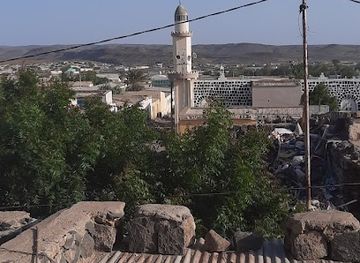
Mosque
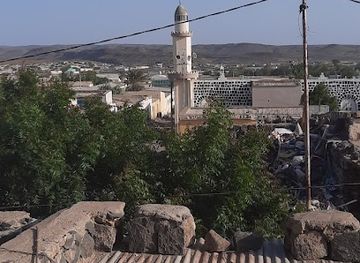
Mosquée de Dikhil
Discover the serene beauty and spiritual significance of Mosquée de Dikhil, a must-visit landmark in Djibouti.
Best landmarks in Dikhil Region
Lake Abbé’s limestone chimneys are Dikhil Region’s most recognisable natural landmarks. Rising from the saline basin, these eroded formations were built over time by mineral deposits associated with groundwater and the lake environment; their clustered silhouettes are especially distinctive in low light. The Grand Bara is a landmark on a different scale: its broad, pale depression and enclosing volcanic edges create one of the region’s clearest expressions of Djibouti’s rift landscapes. Dikhil town itself is a regional landmark in human terms, marking an established centre of administration, markets and settlement amid the southern interior’s sparse terrain. The road corridor towards Galafi also has geographical significance because it links Djibouti with Ethiopia across a landscape where pastoral routes predate the modern frontier. These places are not monumental in the European architectural sense, but they express the region’s geology, mobility and strategic location more clearly than a collection of isolated buildings could.
-
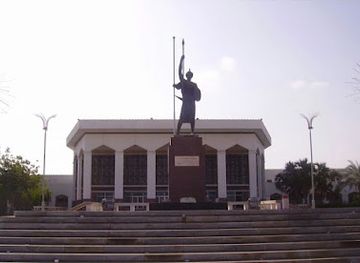
Historical landmark
The People's Palace
Explore the rich heritage of Djibouti at The People's Palace, a historical landmark that embodies the spirit and culture of the nation.
-
National park
Day Forest National Park
Discover Djibouti's hidden gem: Day Forest National Park, a lush mountain oasis teeming with unique flora, fauna, and breathtaking views.
-
Mosque
Mosquée de Dikhil
Discover the spiritual heart of Dikhil at its central mosque, a testament to the town's Islamic heritage and community life.
-
Coffee shop
Boutique Adam Ebraahim
Experience a cozy coffee retreat at Boutique Adam Ebraahim in Dikhil, Djibouti, offering delightful brews and a welcoming atmosphere for travelers.
Explore Dikhil Region on the map
Plan your trip on one map. See where the top cities, national parks and sights are, and book hotels and experiences in a few clicks.
Best hotels in Dikhil Region
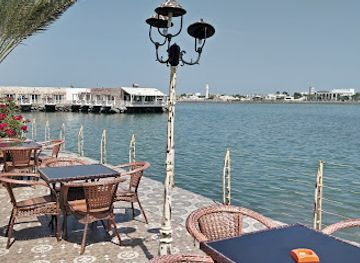
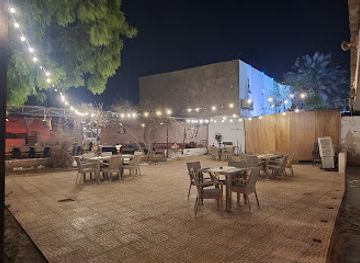
Best restaurants in Dikhil Region
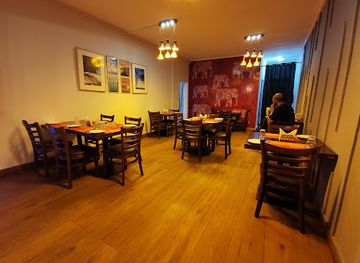
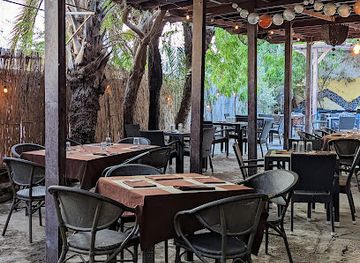
Dining in Dikhil Region is straightforward and closely connected with Djibouti’s wider food culture and pastoral economy. In Dikhil town, visitors are likely to find simple cafés and restaurants serving rice, pasta, grilled meat, soups, flatbreads and spiced dishes influenced by Somali, Afar, Ethiopian, Arab and wider Horn of Africa traditions. Goat and other meats are common, while tea is an important everyday drink. Fresh produce can be more limited and variable in the arid interior than in Djibouti City, so meals on remote excursions should be planned in advance. Around pastoral settlements, milk and other livestock products may be culturally significant, although availability and customs differ between communities. There is no substantial restaurant scene at Lake Abbé or the Grand Bara; organised trips generally rely on provisions, packed meals or simple camp cooking. Visitors should carry water and avoid assuming that a remote destination will have a shop or café.
-
Indian
Signatures Restaurant Djibouti
Experience exquisite Indian flavors at Signatures Restaurant Djibouti – where every meal is a celebration of taste.
-
Restaurant
Melting Pot
Savor the diverse culinary delights at Melting Pot, where every meal is an adventure in flavor amidst the vibrant culture of Djibouti.
-
Restaurant
Moonlight Restaurant
Experience the best of Djiboutian cuisine at Moonlight Restaurant - where local flavors meet international flair.
-
Seafood
Restaurant La Mer Rouge
Discover exquisite seafood and global flavors at Restaurant La Mer Rouge in Djibouti – a vibrant dining experience awaits!
Best bars in Dikhil Region
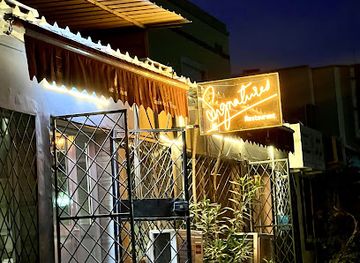
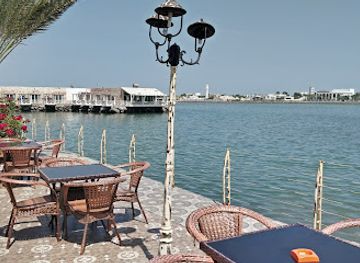
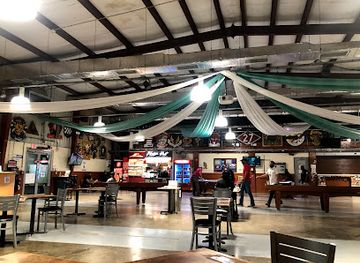
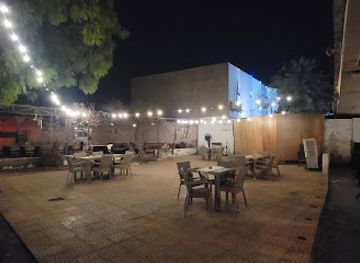
Dikhil Region does not have a major nightlife industry, and evening life is concentrated in Dikhil town rather than around the Grand Bara or Lake Abbé. The social scene is more likely to centre on cafés, tea, informal conversation and simple restaurants than on nightclubs or late-opening entertainment venues. In smaller settlements and pastoral areas, evenings are shaped by family and community life, with very limited visitor-oriented infrastructure. Alcohol is not central to the region’s public culture, and travellers should not expect the bar districts found in larger international cities. Remote camps may offer quiet evenings beneath clear skies, but visitors should follow the host or guide’s arrangements and avoid wandering after dark in unfamiliar terrain. Any available opening times and transport back to accommodation should be confirmed locally, as services can be limited and change seasonally.
-
Indian
Signatures Restaurant Djibouti
Discover the rich flavors of India at Signatures Restaurant Djibouti, where culinary artistry meets authentic dining experience.
-
Restaurant
Moonlight Restaurant
Experience the vibrant flavors of Djibouti at Moonlight Restaurant, where local and international cuisines blend for an unforgettable dining experience.
-
Pub
11 Degrees North
Experience the vibrant atmosphere and local flavors at 11 Degrees North, Djibouti's go-to pub for relaxation and enjoyment.
-
Seafood
Restaurant La Mer Rouge
Experience the exquisite flavors of seafood and international cuisine at Restaurant La Mer Rouge, a top dining destination in Djibouti.
Best nightclubs in Dikhil Region
Dikhil Region does not have a major nightlife industry, and evening life is concentrated in Dikhil town rather than around the Grand Bara or Lake Abbé. The social scene is more likely to centre on cafés, tea, informal conversation and simple restaurants than on nightclubs or late-opening entertainment venues. In smaller settlements and pastoral areas, evenings are shaped by family and community life, with very limited visitor-oriented infrastructure. Alcohol is not central to the region’s public culture, and travellers should not expect the bar districts found in larger international cities. Remote camps may offer quiet evenings beneath clear skies, but visitors should follow the host or guide’s arrangements and avoid wandering after dark in unfamiliar terrain. Any available opening times and transport back to accommodation should be confirmed locally, as services can be limited and change seasonally.
-
Night club
Club Hermes
Explore the vibrant nightlife of Djibouti at Club Hermes, where music and culture intertwine for an unforgettable experience.
-
Night club
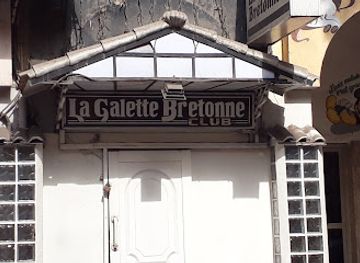
La Galette Bretonne
Discover the lively atmosphere of La Galette Bretonne, Djibouti's premier night club for music, dance, and local culture.
-
Night club
Ambassador
Discover the vibrant nightlife of Djibouti at Ambassador, where music, dance, and local culture come alive in an unforgettable experience.
-
 Bar
BarSafari Club Kempinski
Discover the vibrant nightlife at Safari Club Kempinski, where exquisite cocktails and a lively atmosphere await you in Djibouti.

Best shops in Dikhil Region
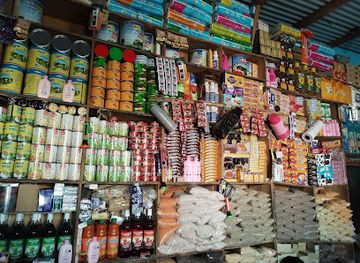
Shopping in Dikhil Region is practical and local rather than oriented towards large retail centres. Dikhil town is the main place to obtain water, food, basic provisions, fuel-related supplies and everyday goods before travelling into the desert. Small market stalls may offer household items, clothing and locally traded produce, while the selection can be modest compared with Djibouti City. Regional commerce reflects pastoral life, with livestock and food products playing a greater role than specialist tourism souvenirs. Visitors may find woven goods, simple handicrafts or locally available textiles, but should buy respectfully and avoid purchasing archaeological objects, fossils or natural materials that may have been taken from protected or sensitive sites. Packaged foods, tea and practical desert equipment are more useful purchases for an onward journey than decorative shopping. Carry cash, as card payment is unlikely to be available outside the most established businesses.
-
Shopping mall
Bawadi Mall Djibouti
Discover the best shopping, dining, and entertainment at Bawadi Mall, Djibouti's ultimate destination for leisure and culture.
-
Shopping mall
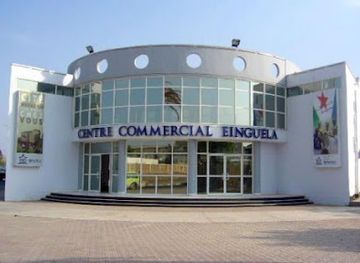
Centre Commercial d'Einguella
Explore the vibrant Centre Commercial d'Einguella in Djibouti for a unique shopping experience blending local culture and modern retail.
-
Store
Boutique Ibrahim Moussa
Discover the unique offerings of Boutique Ibrahim Moussa in Dikhil, where local craftsmanship meets warm hospitality.
-
Beauty salon
Djibouti dikhil
Explore the dual charm of Djibouti Dikhil, a beauty salon and bus ticket agency, where rejuvenation meets adventure planning in one vibrant location.


Get your free copy of our complete guide to Dikhil Region, delivered straight to you.
Everything on this page, from attractions and restaurants to essentials and local phrases, in one PDF you can read offline, print or share.
Already have an account? Sign in
Your Dikhil Region guide is ready.
We'll send it to · Not you? Sign out

Getting your guide ready…
We are putting together a fresh copy of the Dikhil Region guide. This can take up to a minute.
This can take a few moments. If your browser asks, choose Allow so the download can start. You'll find the guide in your Downloads folder.
Nothing happened? Download it again
Sorry, the guide is taking longer than usual. Please try again in a minute, or get it by email instead.
Dikhil Region essentials
Currency and Payment
Safety
Emergency Situations
Do's and Don'ts
Local Tips
From Eve
Local phrases worth knowing
You don't need to get them perfect. A few words go a long way, and locals appreciate the effort.
Basics
| English | Local | Say it |
|---|---|---|
| Hello | Nabad | [Nah-baad] |
| Goodbye | Nabad gelyo | [Nah-baad geh-lyo] |
| Yes | Haa | [Hah] |
| No | Maya | [Mah-yah] |
| Please/You're welcome | Fadlan | [Fah-dlan] |
| Thank you | Mahadsanid | [Mah-had-sah-nid] |
| Excuse me/Sorry | Iga raali ahow | [Ee-gah rah-lee ah-how] |
| How are you? | Sidee tahay? | [See-day tah-hay] |
| Fine. And you? | Wanaagsan. Adiguna? | [Wah-nahg-sahn. Ah-dee-guna?] |
| Do you speak English? | Ma ku hadashaa Ingiriis? | [Mah koo ha-dah-shah In-gi-rees?] |
| I don't understand | Ma fahmin | [Mah fah-meen] |
Eating & Drinking
| English | Local | Say it |
|---|---|---|
| I'd like to see the menu, please | Fadlan, waxaan jeclaan lahaa inaan arko menu-ga | [Fah-dlan, wee-han jek-lah-n lah-hah ee-n ar-koh meh-noo-gah] |
| I don't eat meat | Ma cuno hilib | [Mah koo-no hi-lib] |
| Cheers! | Karshe! | [Kar-sheh] |
| I would like to pay, please | Fadlan, waxaan jeclaan lahaa inaan bixiyo | [Fah-dlan, wee-han jek-lah-n lah-hah ee-n bi-xi-yo] |
Emergencies
| English | Local | Say it |
|---|---|---|
| Help! | Caawimaad! | [Cah-wee-maad] |
| Go away! | Ka tag! | [Kah tahg!] |
| Call the Police! | Wac booliska! | [Wahk boo-li-skah!] |
| Call a doctor! | Wac dhakhtar! | [Wahk dhahk-tar!] |
| I'm lost | Waxaan lumay | [Wah-xaan loo-may] |
| I'm ill | Waxaan xanuunsanahay | [Wah-xaan khan-oon-sah-nah-hay] |
Shopping
| English | Local | Say it |
|---|---|---|
| I'd like to buy... | Waxaan jeclaan lahaa inaan iibsado... | [Wah-xaan jek-lah-n lah-hah ee-n eeb-sah-do] |
| I'm just looking | Waxaan kaliya eegayaa | [Wah-xaan kah-li-ya ee-gah-ya] |
| How much is it? | Immisa ayey tahay? | [Ih-mi-sah ay-yay tah-hay?] |
| That's too expensive | Taasi waa qaali | [Tah-see wah kah-lee] |
| Can you lower the price? | Ma hoos u dhigaysaa qiimaha? | [Mah hoos oo dih-gah-ya qi-mah-ha?] |
Time & Numbers
| English | Local | Say it |
|---|---|---|
| What time is it? | Waa imisa saac? | [Wah ee-mi-sah sah-ac?] |
| It's one o'clock | Waa saacad kowaad | [Wah sah-acad koh-wahd] |
| Half past (10) | Bar iyo toban | [Bar ee-yoh toh-bahn] |
| Morning | Subax | [Soo-bahx] |
| Afternoon | Duhur | [Doo-hoor] |
| Evening | Fiid | [Fee-id] |
| Yesterday | Shalay | [Sha-lay] |
| Today | Maanta | [Maan-tah] |
| Tomorrow | Berri | [Be-ree] |
| 1 | Kuwan | [Koo-wahn] |
| 2 | Laba | [Lah-bah] |
| 3 | Saddex | [Sah-dex] |
| 4 | Afar | [Ah-far] |
| 5 | Shan | [Shan] |
| 6 | Lix | [Lix] |
| 7 | Todoba | [Tuh-doh-bah] |
| 8 | Sideed | [See-deed] |
| 9 | Sagaal | [Sah-gahl] |
| 10 | Toban | [Toh-bahn] |
Transport & Directions
| English | Local | Say it |
|---|---|---|
| Where's a/the...? | Xaggee ayuu ku yaalaa...? | [Hah-gee ah-yoo koo yah-lah...?] |
| What's the address? | Waa maxay ciwaanka? | [Wah mah-xay ee-wah-anka?] |
| Can you show me (on the map)? | Ma ii muujin kartaa (khariidadda)? | [Mah ee moo-jeen kar-tah (khah-ree-dah)?] |
| When's the next (bus)? | Goormee ayaa baska xiga? | [Goor-may ah-yah bah-skah hee-gah?] |
| A ticket (to ....) | Tikidh (u tag....) | [Tee-kid (oo tahg....)] |
History of Dikhil Region
Pastoral Communities and Ancient Desert Routes
Long before modern borders, the plains and lava fields of southwestern Djibouti were used by pastoral communities moving livestock between seasonal water sources and grazing areas. The region lies within a wider cultural zone inhabited by Afar and Somali-speaking peoples, whose knowledge of wells, salt depressions and desert routes made movement possible across an exceptionally arid environment. Exchange between the coast, the Ethiopian interior and the Gulf of Aden helped give the area importance beyond its sparse permanent settlement. Much of this history survives through pastoral practice, oral tradition and the continued use of old corridors rather than through monumental buildings.
The Afar Lowlands and Lake Abbé Environment
The Lake Abbé basin developed through the interaction of tectonic activity, volcanic geology and the waters of the Awash system. The lake and surrounding plains formed part of the broader Afar landscape, a geologically active zone where the African and Arabian tectonic plates are pulling apart. Changes in river flow and evaporation have repeatedly altered the lake’s extent, while mineral-rich water and exposed limestone helped create its characteristic chimneys. The landscape is therefore both a natural record of geological change and a longstanding setting for pastoral movement across the Djibouti–Ethiopia borderlands.
French Somaliland and the Southern Interior
During the period of French Somaliland, which became the French Territory of the Afars and the Issas in 1967, the administration extended its influence beyond the port of Djibouti through military posts, roads and limited government infrastructure. Dikhil gained importance as an administrative centre in the southern interior, while routes towards Ethiopia supported movement of people, animals and goods. Colonial control remained uneven in remote areas, where pastoral communities retained considerable autonomy. The period nevertheless established administrative patterns and transport links that influenced the region after independence.
The Colonial and Modern Border with Ethiopia
The modern frontier between Djibouti and Ethiopia formalised an older zone of movement and exchange. Places such as Galafi became associated with cross-border travel and trade, while the Lake Abbé landscape acquired a divided political geography even though its natural systems ignore national boundaries. The border has practical importance for travellers today: access, security procedures and local permissions can affect journeys near the frontier. The contrast between an old connective landscape and a modern international boundary is one of the region’s most significant historical themes.
Independence and Regional Administration
Djibouti became independent from France in 1977, and Dikhil continued as the centre of one of the country’s administrative regions. Independence brought a stronger national framework to an area historically shaped by pastoral mobility, cross-border relations and long distances between settlements. Government services, roads and communications have gradually expanded, although the region remains less developed than Djibouti City. Dikhil’s role as a regional capital reflects the continuing need to connect scattered communities with education, healthcare, administration and markets.
Contemporary Desert Travel and Conservation Challenges
In recent decades, Lake Abbé and the Grand Bara have become associated with Djibouti’s growing interest in nature-based and geological tourism. Their appeal rests on unusual landforms, wide desert scenery and bird habitats rather than substantial visitor infrastructure. At the same time, water scarcity, extreme heat, fragile soils and pressure on pastoral resources remain important realities. Tourism in Dikhil Region is therefore closely linked to responsible access: small-scale visits, local employment, careful waste management and respect for communities and internationally sensitive border areas are essential to preserving the landscape.
Dikhil Region in Photos
Browse through our photo collection highlighting the charm and character of the destination.
Neighbouring regions of Dikhil Region
The closest regions to Dikhil Region, if you have time for more than one.
-

-

-

-

-


Swipe for more regions
Explore more

Explore more of Djibouti
Discover Djibouti: A hidden gem in the Horn of Africa, where stunning landscapes, rich culture, and unique adventures await every traveler.
Explore Djibouti