

Free Grand Bara Desert Travel Guide & Mobile App
Explore Grand Bara Desert with free travel guides. Discover regional history, expert tips, proposed trips, and audio guides on web or mobile app.


Grand Bara Desert offers Djibouti’s vast salt plains, volcanic horizons, remote landscapes and an exacting four-wheel-drive journey from the capital.
Read more about Grand Bara Desert
When is the best time to visit Grand Bara Desert?
Best: December–February · 30–31°C| Month | High (°C) | Rainfall (mm) |
|---|---|---|
| January (best) | 30 | 5 |
| February (best) | 31 | 6 |
| March | 33 | 10 |
| April | 35 | 20 |
| May | 37 | 25 |
| June | 39 | 30 |
| July | 40 | 35 |
| August | 40 | 35 |
| September | 38 | 30 |
| October | 36 | 25 |
| November | 34 | 20 |
| December (best) | 31 | 10 |
Getting to and around Grand Bara Desert
How to get there
Transportation
Best landmarks in Grand Bara Desert
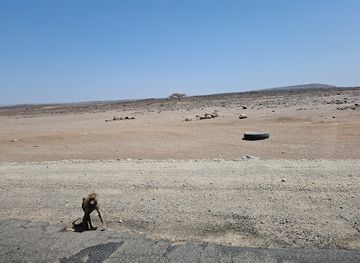
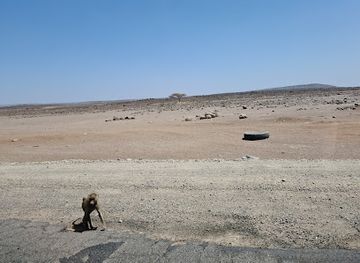
The defining landmark of Grand Bara is the salt basin itself: a broad, exceptionally level geological feature whose pale surface contrasts with the darker volcanic terrain around the southern Djibouti interior. Its appearance is not fixed. Dry conditions expose salt-encrusted ground and polygonal textures, while seasonal rain may leave shallow water that reflects the sky and nearby horizons. The surrounding low volcanic ridges and barren approaches provide the visual frame through which the plain is understood, although individual formations are not always marked or named for visitors. The basin also has cultural significance as part of a pastoral landscape shaped by movement between grazing areas and water sources. Unlike a fortress, monument or historic town, Grand Bara has no single constructed centrepiece; its importance is geographical, ecological and experiential. The absence of buildings is itself part of the landmark’s character, but it also means that visitors must not expect signs, viewpoints, toilets or formal paths. Guides should select safe stopping places and prevent vehicles from spreading unnecessary tracks across the surface.
-
Desert
Grand Bara
Explore the vast, surreal landscapes of Djibouti's Grand Bara desert, a former lakebed offering adventure and stark beauty.
Explore Grand Bara Desert on the map
Plan your trip on one map. See where the top cities, national parks and sights are, and book hotels and experiences in a few clicks.
Best hotels in Grand Bara Desert
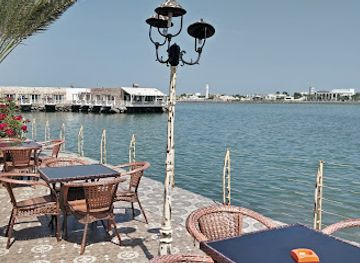
Best restaurants in Grand Bara Desert
Grand Bara has no established restaurant, café, market or food-service infrastructure, so visitors must bring provisions from Djibouti City or organise meals through their guide and driver. Food eaten during an excursion is generally practical travelling fare: bottled water, fruit, bread, rice, tinned goods and other items that withstand heat and transport. The wider Djiboutian culinary setting reflects Somali, Afar, Arab and French influences, with rice, pasta, grilled meat, flatbreads, spiced sauces and tea common in the country’s towns. Visitors should buy supplies before leaving the capital and carry all packaging back out of the desert. Do not rely on pastoral camps for food or water, since these resources serve local households and livestock and should never be assumed to be available to travellers. A desert trip is therefore not a dining destination in the conventional sense; its food culture is best understood through the wider national context and through respectful arrangements made with local guides.
-
Indian
Signatures Restaurant Djibouti
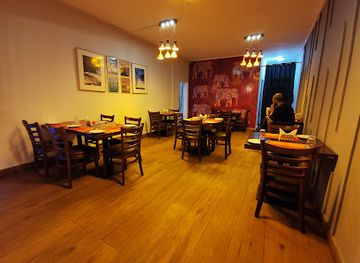
Experience authentic Indian cuisine at Signatures Restaurant in Djibouti – where every meal is a celebration of flavor and culture.
-
Restaurant
Melting Pot
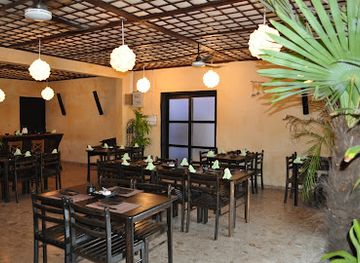
Experience the vibrant culinary scene of Djibouti at Melting Pot—where diverse flavors meet exceptional hospitality.
-
French
Café de la Gare
Discover the flavors of France at Café de la Gare in Djibouti – where culinary artistry meets local charm.
-
Restaurant
Moonlight Restaurant
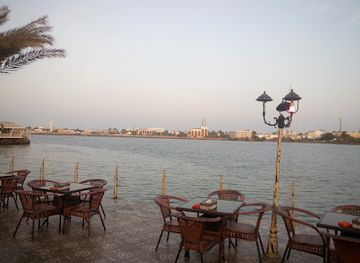
Discover authentic flavors at Moonlight Restaurant in Djibouti - where local cuisine meets a cozy atmosphere.

Best bars in Grand Bara Desert
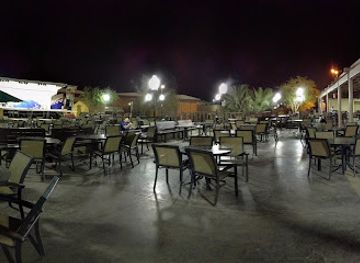
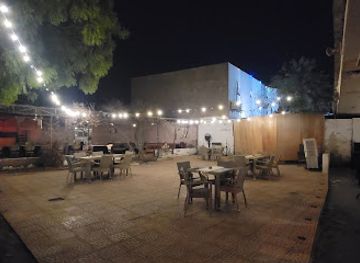
There is no nightlife scene in Grand Bara. After dark, the area has no bars, clubs, lit venues or regular entertainment, and camping should be undertaken only when organised with appropriate equipment, local knowledge and a clear safety plan. Evening activity is more likely to consist of watching the changing light, observing the stars and sharing a simple meal with a travelling group. Alcohol should not be treated as a necessary part of the experience, particularly on a remote journey where alertness and hydration matter. Visitors wanting restaurants, cafés, hotel bars or live evening activity must return to Djibouti City, where the country’s limited urban nightlife is concentrated. The desert’s night-time appeal lies in its darkness and silence rather than in commercial entertainment.
-
Restaurant
Moonlight Restaurant
Savor the vibrant flavors of Djibouti at Moonlight Restaurant, a culinary treasure offering a mix of local and international dishes in a warm atmosphere.
-
Pub
11 Degrees North
Discover the lively spirit of Djibouti at 11 Degrees North, a welcoming pub perfect for relaxation and socializing amidst vibrant local culture.
-
Seafood
Restaurant La Mer Rouge
Experience a culinary delight at Restaurant La Mer Rouge, where seafood meets diverse international flavors in a vibrant Djibouti setting.
-
Bar
Restaurant Le Longchamp مطبخ بن ماضي
Experience the vibrant flavors of Djibouti at Restaurant Le Longchamp, where local cuisine meets a welcoming atmosphere.

Best nightclubs in Grand Bara Desert
There is no nightlife scene in Grand Bara. After dark, the area has no bars, clubs, lit venues or regular entertainment, and camping should be undertaken only when organised with appropriate equipment, local knowledge and a clear safety plan. Evening activity is more likely to consist of watching the changing light, observing the stars and sharing a simple meal with a travelling group. Alcohol should not be treated as a necessary part of the experience, particularly on a remote journey where alertness and hydration matter. Visitors wanting restaurants, cafés, hotel bars or live evening activity must return to Djibouti City, where the country’s limited urban nightlife is concentrated. The desert’s night-time appeal lies in its darkness and silence rather than in commercial entertainment.
-
Desert
Grand Bara
Discover the breathtaking beauty of Grand Bara Desert in Djibouti, where golden sands meet striking landscapes and adventure awaits.
Best shops in Grand Bara Desert
Grand Bara offers no shops, craft outlets, markets or permanent trading facilities. All fuel, water, food, medicines, batteries and other necessities must be obtained before leaving Djibouti City, and visitors should not expect to purchase souvenirs in the desert. The most appropriate regional products to seek elsewhere in Djibouti include locally produced food items, woven goods and other crafts sold through established markets or shops, provided that their origin and legality are clear. Do not remove salt, stones, fossils, archaeological material or other natural objects from the basin, and avoid buying items that may have been taken from protected or culturally sensitive places. Shopping connected with a Grand Bara journey is therefore mainly logistical: preparing a responsible expedition and supporting legitimate local transport and guiding services rather than browsing a retail district.
-
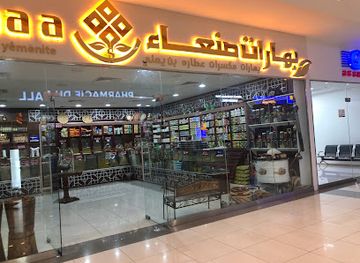
Shopping mall
Bawadi Mall Djibouti
Discover a vibrant shopping experience at Bawadi Mall Djibouti, where local culture meets global brands in a stunning retail environment.
-
Desert
Grand Bara
Discover the breathtaking expanse of Grand Bara, a stunning desert landscape in Djibouti offering unique adventures and spectacular views.
-
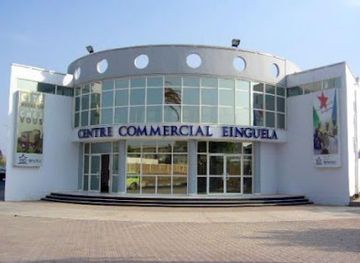
Shopping mall
Centre Commercial d'Einguella
Experience the heart of Djibouti at Centre Commercial d'Einguella – a vibrant shopping mall with local flair and international charm.
-
Store
Boutique Ibrahim Moussa
Explore the vibrant Boutique Ibrahim Moussa in Dikhil for authentic Djiboutian crafts, unique fashion, and memorable souvenirs.


Get your free copy of our complete guide to Grand Bara Desert, delivered straight to you.
Everything on this page, from attractions and restaurants to essentials and local phrases, in one PDF you can read offline, print or share.
Already have an account? Sign in
Your Grand Bara Desert guide is ready.
We'll send it to · Not you? Sign out

Getting your guide ready…
We are putting together a fresh copy of the Grand Bara Desert guide. This can take up to a minute.
This can take a few moments. If your browser asks, choose Allow so the download can start. You'll find the guide in your Downloads folder.
Nothing happened? Download it again
Sorry, the guide is taking longer than usual. Please try again in a minute, or get it by email instead.
Grand Bara Desert essentials
Currency and Payment
Safety
Emergency Situations
Do's and Don'ts
Local Tips
From Eve
Local phrases worth knowing
You don't need to get them perfect. A few words go a long way, and locals appreciate the effort.
Basics
| English | Local | Say it |
|---|---|---|
| Hello | Salam | [sah-lahm] |
| Goodbye | Nabad gelyo | [nah-bahd geh-lyoh] |
| Yes | Haa | [hah] |
| No | Maya | [mah-yah] |
| Please/You're welcome | Fadlan | [fad-lan] |
| Thank you | Mahadsanid | [mah-hahd-sah-nid] |
| Excuse me/Sorry | Iga raali ahow | [ee-gah rah-lee ah-how] |
| How are you? | Sidee tahay? | [see-dee tah-hay] |
| Fine. And you? | Wanaagsan. Adiga? | [wah-nahg-sahn. ah-dee-gah?] |
| Do you speak English? | Ma ku hadashaa Ingiriis? | [mah koo hah-dah-shah in-gee-rees?] |
| I don't understand | Ma fahmin | [mah fah-min] |
Eating & Drinking
| English | Local | Say it |
|---|---|---|
| I'd like to see the menu, please | Fadlan, waxaan jeclaan lahaa inaan arko menu-ka | [fad-lan, wee-han jeh-lahn lah-hah ee-nan ar-koh menu-kah] |
| I don't eat meat | Ma cunno hilib | [mah koon-no hee-lib] |
| Cheers! | Khadar | [kah-dahr] |
| I would like to pay, please | Fadlan, waxaan jeclaan lahaa inaan bixiyo | [fad-lan, wee-han jeh-lahn lah-hah ee-nan bee-kee-yoh] |
Emergencies
| English | Local | Say it |
|---|---|---|
| Help! | Caawimaad! | [cah-wee-mahd!] |
| Go away! | Ka tag! | [kah tahg!] |
| Call the Police! | Wac booliska! | [wahk boo-lis-kah!] |
| Call a doctor! | Wac dhakhtar! | [wahk dhahk-tahr!] |
| I'm lost | Waan lumay | [wah-n loo-may] |
| I'm ill | Waan xanuunsanahay | [wah-n khah-noon-sah-nah-hay] |
Shopping
| English | Local | Say it |
|---|---|---|
| I'd like to buy... | Waxaan rabaa inaan iibsado... | [wah-gaan rah-bah ee-nan eeb-sa-do...] |
| I'm just looking | Waxaan kaliya eegayaa | [wah-gaan kah-lee-yah eh-gah-yah] |
| How much is it? | Imisa ayey ku kacaysaa? | [ee-mee-sah ah-yay koo kah-kah-y-sah?] |
| That's too expensive | Taasi waa qaali | [tah-see wah ah-lee] |
| Can you lower the price? | Ma dhimi kartaa qiimaha? | [mah dhee-mee kar-tah qi-mah-ha?] |
Time & Numbers
| English | Local | Say it |
|---|---|---|
| What time is it? | Waa imisa saacad? | [wah ee-mee-sah sah-ahd?] |
| It's one o'clock | Waa saacad kow | [wah sah-ahd kow] |
| Half past (10) | Bar saac (10) | [bar sah-k (10)] |
| Morning | Subax | [soo-bahx] |
| Afternoon | Duhur | [doo-hoor] |
| Evening | Fiid | [fee-d] |
| Yesterday | Shalay | [sha-lay] |
| Today | Maanta | [maan-tah] |
| Tomorrow | Berri | [ber-ree] |
| 1 | Kow | [kow] |
| 2 | Laba | [lah-bah] |
| 3 | Saddex | [sahd-dex] |
| 4 | Afar | [ah-far] |
| 5 | Shan | [shan] |
| 6 | Lix | [lix] |
| 7 | Toddoba | [toh-doh-bah] |
| 8 | Siddeed | [si-deed] |
| 9 | Sagaal | [sah-gahl] |
| 10 | Toban | [toh-bahn] |
Transport & Directions
| English | Local | Say it |
|---|---|---|
| Where's a/the...? | Halkee ku yaalaa...? | [hal-kee koo yah-lah...?] |
| What's the address? | Waa maxay cinwaanka? | [wah mah-khay chin-wah-ahn-kah?] |
| Can you show me (on the map)? | Ma i tusin kartaa (khariidada)? | [mah ee too-sin kar-tah (khah-ree-dah-dah)?] |
| When's the next (bus)? | Goorma ayaa (baska) xiga? | [goor-mah ah-yah (bask-ah) hee-gah?] |
| A ticket (to ....) | Tigid (u ....) | [tee-gid (oo ....)] |
History of Grand Bara Desert
Pastoral Landscapes Before Colonial Rule
Long before modern borders, the Grand Bara basin formed part of a wider landscape used by pastoral communities moving between grazing areas and water sources. Afar and Issa Somali societies developed detailed knowledge of seasonal conditions, wells and routes across the arid interior. The plain was not an urban settlement, but its value lay in its position within a network of movement linking southern Djibouti with neighbouring parts of the Horn of Africa. This mobile history remains important to understanding why apparently empty desert landscapes can carry considerable cultural significance.
Caravan Routes and Regional Exchange
The southern Djibouti interior was connected to older commercial routes crossing the Horn of Africa. Livestock, hides, salt and other goods moved through a region where access to water determined the practical direction of travel. Grand Bara and nearby basins were part of this broader geography of passage rather than isolated natural curiosities. Commerce was conducted through relationships between pastoral groups, traders and settlements, and routes changed according to security, rainfall and political authority. The desert’s modern remoteness therefore conceals a long history of movement and exchange.
French Somaliland and the Port of Djibouti
From the late nineteenth century, French influence expanded around the Gulf of Tadjoura and the settlement that became Djibouti City. The territory, known as French Somaliland and later the French Territory of the Afars and Issas, was administered primarily through coastal and strategic centres, while the interior remained comparatively sparsely settled. Grand Bara’s significance during this period derived largely from its position within the southern approaches to the colony and from the logistical challenges of travel across an arid landscape.
Railway and Modern Regional Connections
The railway linking Djibouti with Ethiopia, developed during the colonial era and later modernised in sections, strengthened the port’s connection with the Ethiopian interior. Its route does not turn Grand Bara into a conventional rail destination, but the railway formed part of the wider transport system that altered movement and trade across southern Djibouti. Over time, established roads, vehicles and administrative boundaries supplemented older pastoral and caravan routes, linking remote landscapes more closely to the capital and regional centres.
Independence and the Republic of Djibouti
Djibouti became independent from France in 1977. Since then, Grand Bara has remained an undeveloped natural area within a country whose strategic importance is concentrated around its ports, military facilities and transport corridors. The desert illustrates the contrast between Djibouti’s internationally connected coastal economy and its sparsely serviced interior. Its landscape is also part of a national heritage that includes pastoral livelihoods, volcanic terrain and salt basins rather than only the monuments and infrastructure of Djibouti City.
Contemporary Desert Exploration
In the contemporary period, Grand Bara has attracted visitors interested in four-wheel-drive travel, photography, geological landscapes and the open spaces of the Horn of Africa. Occasional water coverage after rain can radically alter the appearance of the basin, while the dry season reveals its salt-encrusted character. Tourism remains limited and infrastructure is minimal, so the area is better understood as a guided wilderness excursion than as a developed attraction. Responsible travel is particularly important because tracks, waste and vehicle pressure can have a disproportionate effect on a fragile desert surface.
Grand Bara Desert in Photos
Browse through our photo collection highlighting the charm and character of the destination.
Neighbouring regions of Grand Bara Desert
The closest regions to Grand Bara Desert, if you have time for more than one.
-

-

-

-

-


Swipe for more regions
Explore more

Explore more of Djibouti
Discover Djibouti: A hidden gem in the Horn of Africa, where stunning landscapes, rich culture, and unique adventures await every traveler.
Explore Djibouti