

Free Azuay Region Travel Guide & Mobile App
Explore Azuay Region with free travel guides. Discover regional history, expert tips, proposed trips, and audio guides on web or mobile app.


Explore Azuay for Cuenca's heritage streets, Cañari history, Cajas páramo, craft towns and richly varied Andean valleys in southern Ecuador.
Read more about Azuay Region
When is the best time to visit Azuay Region?
Best: January–February, September · 18°C| Month | High (°C) | Rainfall (mm) |
|---|---|---|
| January (best) | 18 | 60 |
| February (best) | 18 | 65 |
| March | 18 | 70 |
| April | 18 | 75 |
| May | 18 | 80 |
| June | 18 | 75 |
| July | 18 | 70 |
| August | 18 | 65 |
| September (best) | 18 | 60 |
| October | 17 | 65 |
| November | 17 | 70 |
| December | 17 | 65 |
Getting to and around Azuay Region
How to get there
Transportation
Best attractions in Azuay Region
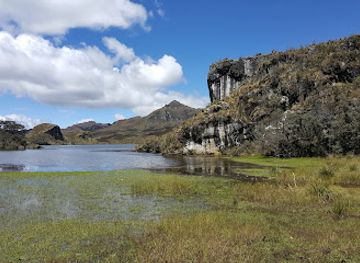
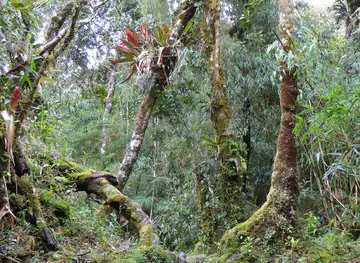
Azuay's attractions range from the museums, churches, plazas and river walks of Cuenca to high-altitude wilderness and small towns with enduring craft traditions. The city's Pumapungo complex provides context for Cañari and Inca history, while the historic centre rewards close attention to its churches, courtyards and republican façades. Cajas National Park is the province's principal natural destination, offering glacial lakes, páramo vegetation, birdwatching and challenging walking routes rather than conventional resort facilities. Gualaceo and Chordeleg add market culture, weaving, jewellery and ceramics, and can be combined with visits to the more temperate Paute valley. Girón is associated with rural scenery and the broad El Chorro waterfall, while Sígsig and Nabón offer agricultural landscapes, historic settlements and local craft traditions. Activities are shaped by altitude and weather: hiking, photography and nature observation are rewarding, but visitors should allow time for acclimatisation and carry proper rain and cold-weather protection.
-
Mercado 10 de Agosto
Discover the vibrant Mercado 10 de Agosto in Cuenca, where local flavors and artisan crafts come together in a lively atmosphere.
-
Tourist attraction
Mercado 9 de Octubre
Discover the authentic flavors and vibrant culture of Cuenca at Mercado 9 de Octubre, a bustling market filled with local delicacies and artisanal crafts.
-
Tourist attraction
Puente Roto
Explore the enchanting Puente Roto, a historical landmark in Cuenca, Ecuador, where stunning architecture meets serene natural beauty.
-
Park
Chordeleg Park
Explore the tranquility and beauty of Chordeleg Park, a green oasis perfect for relaxation and cultural immersion in Ecuador.
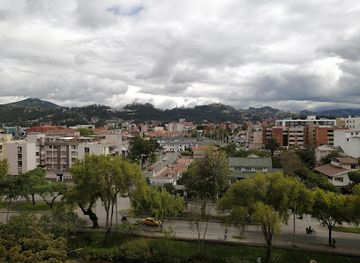
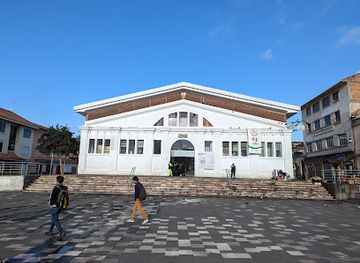
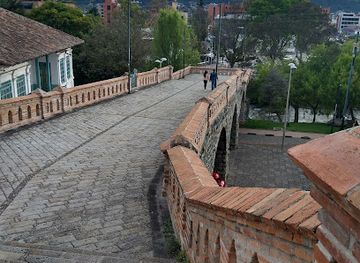
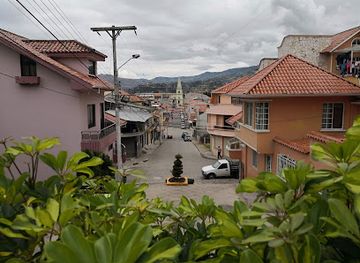
Best landmarks in Azuay Region
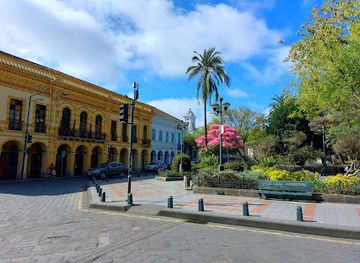
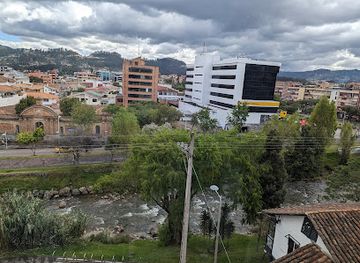
Cuenca Cathedral of the Immaculate Conception, commonly called the New Cathedral, is Azuay's most recognisable building, distinguished by its blue domes and prominent position beside Parque Calderón. The older El Sagrario, or Old Cathedral, reflects the city's earlier colonial religious centre, while the arched buildings and river terraces of El Barranco create a characteristic edge to the historic urban landscape. Pumapungo is important not only as a museum but also as a reminder of Cuenca's pre-Hispanic and Inca foundations. Beyond the capital, the craft town of Chordeleg has a distinctive central setting and a long association with jewellery, while Gualaceo's churches, market areas and river landscape express the character of the eastern valleys. Cajas National Park provides Azuay's defining natural landmarks: dark mountain lakes, rounded glacial basins, exposed rock and treeless páramo ridges. The El Chorro waterfall near Girón adds a more accessible rural landmark, set within a landscape of pasture, hills and cultivated valleys.
-
 Monument
Middle of the World City
Explore the unique equatorial experience at the Middle of the World City, where culture, science, and breathtaking views await every traveler.
-
Park
Calderon Park
Explore Calderon Park: A lush urban oasis in Cuenca, Ecuador, perfect for relaxation, recreation, and cultural experiences.
-
Park
El Paraíso Park
Experience the natural beauty and serene ambiance of El Paraíso Park, a must-visit oasis in Cuenca, Ecuador for tourists and nature lovers.
-
National park
Parque Nacional Cajas
Explore the breathtaking landscapes and unique biodiversity of Parque Nacional Cajas, a national park and a top tourist attraction in Ecuador.
Explore Azuay Region on the map
Plan your trip on one map. See where the top cities, national parks and sights are, and book hotels and experiences in a few clicks.
Best hotels in Azuay Region
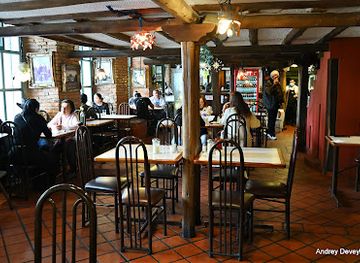
Best restaurants in Azuay Region
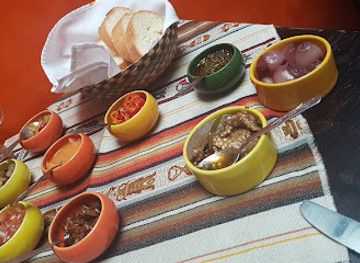
Azuay's food combines highland staples with produce from warmer valleys. In Cuenca, restaurants and traditional eateries serve mote, a hulled maize used in dishes such as mote pillo and mote sucio, alongside soups, pork, potatoes, llapingachos and trout from Andean waters. Cuy is available in some traditional settings and is a ceremonial or special-occasion food rather than an everyday choice for every visitor. Markets and simple lunch restaurants are useful for trying hornado, tamales, humitas and fruit juices, while cafés and contemporary kitchens reinterpret Ecuadorian ingredients. Gualaceo is known for local dishes including rosero, a fragrant maize-and-fruit drink traditionally associated with the area, and the Paute valley supplies fruit and other agricultural products. Cuenca has the province's broadest range of international, vegetarian and modern Ecuadorian dining, whereas smaller towns tend to centre on family-run restaurants, bakeries, market stalls and traditional food served around busy daytime periods.
-
Restaurant
Tiesto's Cafe Restaurant
Discover culinary excellence at Tiesto's Cafe Restaurant in Cuenca - where local flavors meet global cuisine.
-
Ecuadorian
Raymipampa Restaurant
Experience authentic Ecuadorian cuisine at Raymipampa Restaurant in Cuenca - where tradition meets flavor.
-
Restaurant
El Mercado
Experience culinary excellence at El Mercado in Cuenca, where local ingredients meet innovative cuisine in a vibrant atmosphere.
-
Restaurant
Cafe del Museo
Discover the flavors of Cuenca at Café del Museo – where gourmet coffee meets exquisite Ecuadorian cuisine in a charming setting.
Best bars in Azuay Region
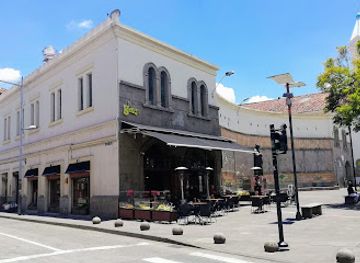
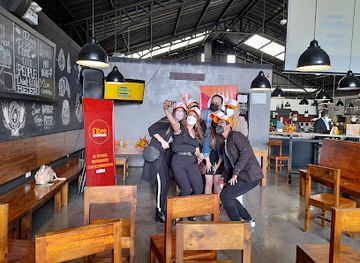
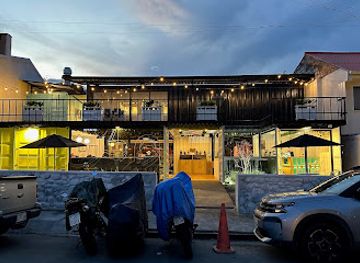
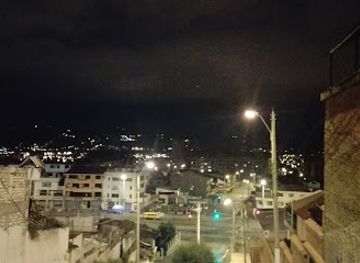
Cuenca has Azuay's most developed evening scene, concentrated around the historic centre, the El Barranco riverfront and nearby commercial streets. Visitors will find traditional bars, cafés, craft-beer venues, wine bars, live music and restaurants open into the evening, with university life contributing to a younger atmosphere in some areas. Nightclubs exist but are less central to the region's identity than social drinking, conversation, music and dining. In Gualaceo, Chordeleg, Paute, Girón and smaller communities, evenings generally focus on local restaurants, neighbourhood bars, festival occasions and gathering places rather than a large club circuit. Opening arrangements vary, and quieter streets should be approached with the same practical awareness used in any city. Alcohol is not necessary for experiencing Azuay's nightlife; cafés, cultural performances and evening walks in busy central areas provide alternatives.
-
Bar
Goza Espresso Bar
Discover the perfect blend of coffee culture and local charm at Goza Espresso Bar in Cuenca, Ecuador.
-
Pub
Golden Prague Pub - Cuenca
Discover the vibrant flavors of Golden Prague Pub in Cuenca, where local charm meets international cuisine in a lively atmosphere.
-
Restaurant
Chill & Chela Beer Garden
Savor American cuisine and craft brews at Chill & Chela Beer Garden, the ultimate spot for food lovers in Cuenca.
-
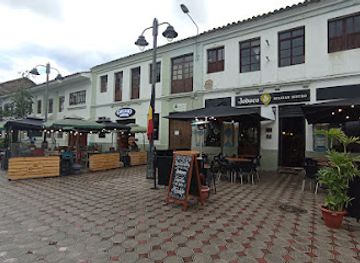
Belgian
Jodoco Belgian Bistro
Savor the essence of Belgium at Jodoco Belgian Bistro, where authentic flavors meet a cozy atmosphere in the heart of Cuenca.
Best nightclubs in Azuay Region
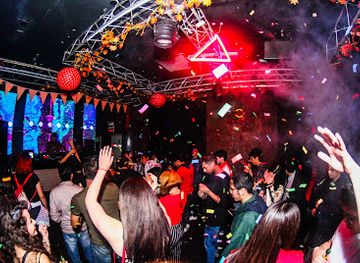
Cuenca has Azuay's most developed evening scene, concentrated around the historic centre, the El Barranco riverfront and nearby commercial streets. Visitors will find traditional bars, cafés, craft-beer venues, wine bars, live music and restaurants open into the evening, with university life contributing to a younger atmosphere in some areas. Nightclubs exist but are less central to the region's identity than social drinking, conversation, music and dining. In Gualaceo, Chordeleg, Paute, Girón and smaller communities, evenings generally focus on local restaurants, neighbourhood bars, festival occasions and gathering places rather than a large club circuit. Opening arrangements vary, and quieter streets should be approached with the same practical awareness used in any city. Alcohol is not necessary for experiencing Azuay's nightlife; cafés, cultural performances and evening walks in busy central areas provide alternatives.
-
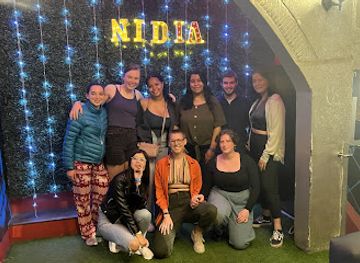
Disco club
Discoteca Nidia Fuzzion Party
Discover the vibrant nightlife of Cuenca at Discoteca Nidia Fuzzion Party, where music, dance, and unforgettable memories await.
-
Disco club
Pecado Morlaco
Discover Cuenca's nightlife at Pecado Morlaco, where electrifying beats and vibrant crowds create unforgettable memories.
-
Night club
El Oasis Night Club
Discover the energetic nightlife of Cuenca at El Oasis Night Club, where unforgettable music and vibrant dance await.
-
Disco club
HideOut Disco Club
Experience the vibrant nightlife of Cuenca at HideOut Disco Club, where music and dance intertwine to create unforgettable memories.

Best shops in Azuay Region
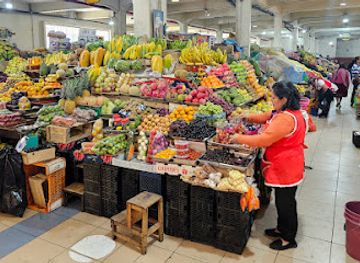
Cuenca offers Azuay's widest choice of shopping, from central artisan shops and galleries to markets, bookshops, food stores and contemporary retail. Visitors can look for local jewellery, ceramics, woven goods, leatherwork, woodcraft and textiles, but quality and materials vary, so established workshops and specialist retailers are preferable for valuable purchases. Chordeleg is particularly associated with gold and silver jewellery, filigree and craft shops, while Gualaceo is noted for textiles, woven belts, clothing and traditional products. Cuenca's markets provide opportunities to buy fruit, grains, spices, cheese and prepared foods, although travellers should pack perishable goods carefully. Regional coffee, chocolate, Ecuadorian spirits and packaged Andean foods make practical souvenirs. The internationally known Panama hat is made from toquilla straw and has strong Ecuadorian associations; in Azuay, ask sellers about provenance and finishing rather than assuming every hat was woven locally. Bargaining is generally more appropriate in informal markets than in fixed-price shops.
-
Shopping mall
Mall Del Río
Discover the vibrant shopping experience at Mall Del Río, Cuenca's premier destination for retail, dining, and entertainment.
-
Shopping mall
Mall Del Río
Discover Mall Del Río, the largest shopping mall in Cuenca, Ecuador, featuring diverse shops, dining, and entertainment for a perfect day out.
-
Market
Mercado 10 de Agosto
Discover the bustling Mercado 10 de Agosto, a vibrant market in Cuenca where local culture, delicious food, and unique crafts await your exploration.
-
Market
Mercado 9 de Octubre
Discover the authentic spirit of Cuenca at Mercado 9 de Octubre, a bustling market filled with local flavors, crafts, and vibrant culture.



Get your free copy of our complete guide to Azuay Region, delivered straight to you.
Everything on this page, from attractions and restaurants to essentials and local phrases, in one PDF you can read offline, print or share.
Already have an account? Sign in
Your Azuay Region guide is ready.
We'll send it to · Not you? Sign out

Getting your guide ready…
We are putting together a fresh copy of the Azuay Region guide. This can take up to a minute.
This can take a few moments. If your browser asks, choose Allow so the download can start. You'll find the guide in your Downloads folder.
Nothing happened? Download it again
Sorry, the guide is taking longer than usual. Please try again in a minute, or get it by email instead.
Azuay Region essentials
Currency and Payment
Safety
Emergency Situations
Do's and Don'ts
Local Tips
From Eve
Local phrases worth knowing
You don't need to get them perfect. A few words go a long way, and locals appreciate the effort.
Basics
| English | Local | Say it |
|---|---|---|
| Hello | Hola | [Ola] |
| Goodbye | Adiós | [A-dios] |
| Yes | Sí | [Si] |
| No | No | [No] |
| Please/You're welcome | Por favor | [Por fa-vor] |
| Thank you | Gracias | [Gra-sias] |
| Excuse me/Sorry | Disculpe | [Dis-kul-pe] |
| How are you? | ¿Cómo estás? | [Ko-mo es-tas] |
| Fine. And you? | Bien. ¿Y tú? | [Bien. I tu] |
| Do you speak English? | ¿Hablas inglés? | [A-blas in-gles] |
| I don't understand | No entiendo | [No en-tien-do] |
Eating & Drinking
| English | Local | Say it |
|---|---|---|
| I'd like to see the menu, please | Me gustaría ver el menú, por favor | [Me gus-ta-ria ver el me-nu, por fa-vor] |
| I don't eat meat | No como carne | [No ko-mo car-ne] |
| Cheers! | ¡Salud! | [Sa-lud] |
| I would like to pay, please | Me gustaría pagar, por favor | [Me gus-ta-ria pa-gar, por fa-vor] |
Emergencies
| English | Local | Say it |
|---|---|---|
| Help! | ¡Ayuda! | [A-yu-da] |
| Go away! | ¡Vete! | [Ve-te] |
| Call the Police! | ¡Llama a la policía! | [Ya-ma a la po-li-cia] |
| Call a doctor! | ¡Llama a un doctor! | [Ya-ma a un doc-tor] |
| I'm lost | Estoy perdido | [Es-toy per-di-do] |
| I'm ill | Estoy enfermo | [Es-toy en-fer-mo] |
Shopping
| English | Local | Say it |
|---|---|---|
| I'd like to buy... | Me gustaría comprar... | [Me gus-ta-ria kom-prar] |
| I'm just looking | Solo estoy mirando | [So-lo es-toy mi-ran-do] |
| How much is it? | ¿Cuánto cuesta? | [Kuan-to kwes-ta] |
| That's too expensive | Eso es demasiado caro | [E-so es de-ma-si-a-do ca-ro] |
| Can you lower the price? | ¿Puedes bajar el precio? | [Pwe-des ba-har el pre-cio] |
Time & Numbers
| English | Local | Say it |
|---|---|---|
| What time is it? | ¿Qué hora es? | [Ke o-ra es] |
| It's one o'clock | Es la una | [Es la u-na] |
| Half past (10) | Y diez | [I diez] |
| Morning | Mañana | [Ma-ña-na] |
| Afternoon | Tarde | [Tar-de] |
| Evening | Noche | [No-che] |
| Yesterday | Ayer | [A-yer] |
| Today | Hoy | [Hoy] |
| Tomorrow | Mañana | [Ma-ña-na] |
| 1 | Uno | [U-no] |
| 2 | Dos | [Dos] |
| 3 | Tres | [Tres] |
| 4 | Cuatro | [Kua-tro] |
| 5 | Cinco | [Sin-co] |
| 6 | Seis | [Seis] |
| 7 | Siete | [Sye-te] |
| 8 | Ocho | [O-cho] |
| 9 | Nueve | [Nwe-ve] |
| 10 | Diez | [Diez] |
Transport & Directions
| English | Local | Say it |
|---|---|---|
| Where's a/the...? | ¿Dónde hay un/una...? | [Don-de ai un/una] |
| What's the address? | ¿Cuál es la dirección? | [Kwal es la di-rek-sion] |
| Can you show me (on the map)? | ¿Puedes mostrarme (en el mapa)? | [Pwe-des mos-trar-me (en el ma-pa)] |
| When's the next (bus)? | ¿Cuándo es el próximo (bus)? | [Kuan-do es el pro-xim-o (bus)] |
| A ticket (to ....) | Un boleto (a ....) | [Un bo-le-to (a ....)] |
History of Azuay Region
Cañari Foundations Before the Incas
Long before Spanish colonisation, the Azuay highlands were home to Cañari communities whose political and cultural influence extended across much of southern Ecuador. Their settlement at Guapondelig occupied the broad basin where Cuenca now stands, while other communities developed in the surrounding valleys and mountains. Cañari agricultural knowledge, regional exchange networks, religious traditions and place names remain important to Azuay's historical identity. Archaeological evidence across the province reflects a settled Andean society adapted to sharply varying elevations rather than an isolated mountain population.
Inca Tomebamba and Imperial Expansion
The Inca incorporated the Cuenca basin into their empire during the late fifteenth century, developing Tomebamba as a major northern centre. Inca authority was established through administration, roads, architecture and the movement of people and resources, although Cañari participation and resistance shaped the resulting society. The strategic importance of the basin was increased by its position between the northern and southern Andes. Later accounts connected Tomebamba with the birth of Huayna Capac, but the city's broader significance lay in its role as an imperial political and ceremonial centre.
Spanish Foundation of Cuenca, 1557
The Spanish founded Santa Ana de los Ríos de Cuenca in 1557 on the site of the earlier Andean centre. Its planned streets, churches, civic buildings and surrounding estates introduced colonial institutions and reshaped patterns of landholding, labour and religious life. Cuenca became an important regional administrative and commercial settlement, linked to highland farms, craft production and routes towards Quito, Guayaquil and southern Ecuador. Much of the historic centre's street plan and architectural character developed from this colonial foundation, even though the city has changed substantially since then.
Independence and Republican Azuay
Cuenca declared independence from Spanish rule on 3 November 1820, during the wider struggles that transformed Ecuador and northern South America. The political transition was followed by the creation of republican institutions and the consolidation of Azuay as a major southern highland region. During the nineteenth century, commerce, agriculture, craft production and connections to coastal markets supported the growth of Cuenca and the surrounding towns. Churches, civic buildings and private houses were altered or rebuilt, producing the mixture of colonial inheritance and republican architecture visible today.
Crafts, Commerce and the Toquilla-Hat Trade
Azuay developed important textile, metalworking and hat-making traditions, with Cuenca serving as a centre for manufacture and export. The hat commonly known internationally as the Panama hat is made from toquilla straw, principally associated with coastal Ecuador, but Cuenca and other Azuay communities became significant places for finishing, trading and exporting the product. This commercial history illustrates the province's close links with both the Andean interior and the Pacific coast. Weaving, jewellery, embroidery and ceramics continue to support local livelihoods and cultural expression.
Cuenca's Historic Centre and UNESCO Recognition
Cuenca's historic centre was inscribed on the UNESCO World Heritage List in 1999 for its well-preserved urban form, architectural coherence and historical importance. The protected area includes colonial and republican buildings, churches, streets and public spaces shaped by earlier Spanish planning and local adaptations. Recognition encouraged conservation while also bringing greater international attention to the city. Azuay's heritage is broader than the formal historic centre, however: indigenous traditions, craft towns, rural landscapes and archaeological legacies remain essential to understanding the province.
Modern Conservation and Regional Change
In the twentieth and twenty-first centuries, Azuay experienced urban growth, migration, changing agricultural economies and expanding links with Ecuador's coast and other countries. Cuenca developed as a centre for education, healthcare, administration and cultural activity, while smaller towns retained strong craft and market identities. Protection of high-elevation environments, particularly Cajas National Park and its water resources, has become increasingly important alongside heritage conservation. Contemporary Azuay therefore combines a historic urban core with a changing economy and continuing Cañari, Andean and Ecuadorian cultural influences.
Azuay Region in Photos
Browse through our photo collection highlighting the charm and character of the destination.
Neighbouring regions of Azuay Region
The closest regions to Azuay Region, if you have time for more than one.
-

-

-

-
-


Swipe for more regions

