

Pastaza Region, Ecuador Travel Guide
Explore the Pastaza Region in Ecuador: a perfect blend of thrilling adventures, serene nature, and rich indigenous culture in the heart of the Amazon rainforest.
Nestled in the heart of Ecuador, the Pastaza Region is a treasure trove of natural beauty and cultural richness. This area is renowned for its lush rainforests, powerful rivers, and vibrant indigenous communities. Visitors will find themselves surrounded by breathtaking landscapes, from the roaring waterfalls to the serene Amazon Basin. The Pastaza River, a tributary of the mighty Amazon, offers thrilling opportunities for white-water rafting and kayaking, making it a magnet for adventure enthusiasts. For those seeking a more tranquil experience, the region's extensive network of trails provides ample opportunities for hiking and wildlife observation. The Puyo, the capital of Pastaza, serves as a gateway to these natural wonders and offers unique cultural experiences. Tourists can visit indigenous markets, where they can purchase handmade crafts and taste traditional foods. The local guides, often from indigenous communities, provide invaluable insights into the area's flora, fauna, and way of life. Beyond its natural and cultural allure, Pastaza is also a haven for eco-tourism. Numerous lodges and eco-friendly accommodations are scattered throughout the region, offering sustainable ways to experience the Amazon. Whether you're an adrenaline junkie, a nature lover, or a cultural explorer, the Pastaza Region promises an unforgettable adventure.

Know before you go
Hi, I'm Eve. Here are a few practical things to know before exploring Pastaza Region.
- Pack lightweight, quick-drying clothing to stay comfortable in the humid rainforest climate.
- Hire local guides to gain deeper insights into the region's natural and cultural heritage.
- Visit the Puyo market early in the morning for the freshest produce and most vibrant atmosphere.
- Bring insect repellent and sunscreen to protect yourself from mosquitoes and the tropical sun.
- Try to learn a few phrases in Spanish or the local indigenous languages to enhance your interactions with the locals.
Top City Travel Guides in Pastaza Region
The cities of Pastaza Region, and the easiest places to base yourself.


Destinations in Pastaza Region
Resorts, valleys and scenic spots worth a trip of their own.

Explore Pastaza Region: Things to Do, Places to Eat, Hotels & More
Handpicked recommendations for top attractions, local dining, accommodations, and more

Top Attractions & Sightseeing in Pastaza Region
Top-rated picks
Best Attractions

El Pailón del Diablo
Discover the enchanting beauty of El Pailón del Diablo, a breathtaking waterfall in Ecuador, surrounded by lush rainforests and stunning landscapes.

Mirador Miramera
Explore the stunning landscapes and serene atmosphere at Mirador Miramera, a must-visit scenic spot in Mera, Ecuador.

La Cordillera de los Llanganates
Explore La Cordillera de los Llanganates, a breathtaking national park in Ecuador offering stunning landscapes, rich biodiversity, and unforgettable adventure.

Parque Central 12 De Mayo
Explore Parque Central 12 De Mayo: A lush urban park in Puyo, Ecuador, perfect for relaxation, family fun, and cultural experiences.

Best landmarks in Pastaza Region
Top-rated picks
Best Landmarks

Middle of the World City
Experience the thrill of straddling the world's hemispheres at this iconic equatorial monument and cultural center just north of Quito.

Virgin of the Panecillo
Visit the iconic Virgin of the Panecillo in Quito for breathtaking views and a glimpse into Ecuador's rich history and artistry.

Malecon Boayaku Puyo
Experience breathtaking Amazonian views and vibrant culture at Puyo's iconic Malecón Boayaku, a must-visit Ecuadorian destination.

Parque Nacional Cotopaxi
Explore Ecuador's iconic Cotopaxi National Park: Hike a volcano, spot wildlife, and immerse yourself in breathtaking Andean scenery.

Best restaurants in Pastaza Region
Top-rated picks
Best Restaurants

YUKIS (COMIDA RAPIDA AMAZONICA)
Discover authentic Amazonian flavors at YUKIS - a beloved fast-food gem in Puyo offering delicious meals that celebrate local cuisine.

My marisquería
Experience the freshest seafood delights at My Marisquería in Puyo, where every dish tells a story of Ecuadorian coastal flavors.

Ecopark Hosteria Puyo
Discover tranquility at Ecopark Hosteria Puyo - where nature meets comfort in Ecuador's lush Amazon rainforest.

Cafe Escobar
Discover the vibrant flavors of Cafe Escobar in Puyo - your go-to spot for exceptional coffee and gourmet dining experiences.

Best bars in Pastaza Region
Top-rated picks
Best Bars

Zoorefugio Tarqui
Explore the vibrant wildlife at Zoorefugio Tarqui, a top zoo and tourist attraction in Puyo, Ecuador, that delights visitors of all ages with its exotic animals.

My marisquería
Experience the best seafood in Puyo at My Marisquería, where fresh catches and local flavors come together in a delightful dining experience.
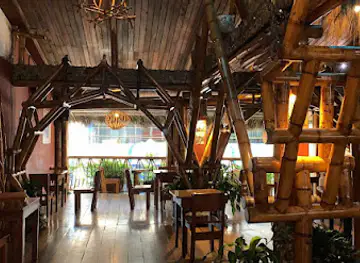
Cafe Escobar
Discover the heart of Ecuadorian cuisine at Cafe Escobar, where local flavors meet a cozy atmosphere in Puyo.

Cascada Hola Vida
Experience the breathtaking beauty of Cascada Hola Vida, a serene waterfall sanctuary in Puyo, Ecuador, perfect for nature lovers and adventure seekers alike.

Best nightclubs in Pastaza Region
Top-rated picks
Best Nightclubs

La Choza BAR
Experience the lively atmosphere of La Choza BAR in Puyo, where great drinks and local camaraderie create unforgettable nights.

Las Vegas
Explore Las Vegas, the ultimate destination for nightlife, entertainment, and unforgettable experiences in the heart of the desert.

LIV
LIV in Puyo: Where Ecuador's vibrant nightlife comes alive with music, dancing, and unforgettable moments.

Nigth Club Laguna Azul
Discover the vibrant nightlife of Shell at Laguna Azul, a must-visit night club that promises an unforgettable experience filled with music and dance.

Best shops in Pastaza Region
Top-rated picks
Best Shops

Quicentro
Discover Quito's Quicentro: A shopping paradise with diverse stores, dining options, and vibrant entertainment for the entire family.

Scala Shopping Mall
Experience the ultimate shopping adventure at Scala Shopping Mall in Quito, featuring designer stores, local boutiques, and diverse dining options.

Mall Del Río
Discover the vibrant shopping and entertainment experience at Mall Del Río, the premier shopping destination in Cuenca, Ecuador.

"Andes" Shopping Mall
Experience shopping, dining, and entertainment at the Andes Shopping Mall in Ambato, Ecuador - a must-visit destination for all travelers.

Explore Pastaza Region on the Map
A handpicked selection of must-see spots in Pastaza Region, mapped for you.
Pastaza Region Essentials
-
Pastaza Region is situated in the eastern part of Ecuador, within the Amazon rainforest. The most convenient way to get there is by flying into Mariscal Sucre International Airport in Quito. From Quito, you can take a domestic flight to Shell Mera Airport, which is located near Puyo, the capital of Pastaza. Alternatively, you can travel by bus from Quito to Puyo, which takes approximately 6-7 hours. There are also bus services from other major cities like Baños and Tena.
-
Within Pastaza, the primary modes of transportation include buses, taxis, and private vehicles. Buses are the most cost-effective way to travel between towns and villages. Taxis are readily available in Puyo and other larger towns, but it is advisable to agree on the fare beforehand. For exploring remote areas and the rainforest, hiring a local guide with a 4x4 vehicle is recommended. Renting a car is also an option, but be prepared for some challenging road conditions, especially during the rainy season.
-
The official currency in Ecuador is the US Dollar (USD). Credit and debit cards are accepted in most hotels, restaurants, and larger shops in Puyo, but cash is necessary when traveling to smaller towns and rural areas. ATMs are available in Puyo, but it's wise to carry sufficient cash for your needs, as ATMs may not be readily accessible in remote areas.
-
Pastaza Region is generally safe for tourists, but standard precautions should be taken. Avoid walking alone at night in unfamiliar areas and keep your belongings secure. Puyo is relatively safe, but exercise caution in crowded places to avoid pickpocketing. Certain remote areas may have higher crime rates, so it is best to travel with a local guide. Always be aware of your surroundings and follow the advice of locals.
-
In case of emergency, dial 911 for immediate assistance. Puyo has a hospital and several clinics, but medical facilities may be limited in more remote areas. It is recommended to have travel insurance that covers medical emergencies and evacuation. Pharmacies are available in Puyo for over-the-counter medications. Ensure you have a first-aid kit and any necessary medications when traveling to remote locations.
-
Fashion: Do dress modestly, especially when visiting indigenous communities. Avoid wearing flashy jewelry or expensive accessories. Religion: Do respect local customs and traditions, and seek permission before taking photos of religious ceremonies or sacred sites. Public Transport: Do be courteous and give up your seat for elderly passengers. Don’t eat or drink on public transport. Greetings: Do greet people with a friendly 'Hola' or 'Buenos días.' A handshake is common when meeting someone for the first time. Eating & Drinking: Do try local dishes and accept food offerings graciously. Don’t refuse hospitality, as it may be considered impolite.
-
To experience Pastaza Region like a local, visit the Puyo Market, where you can buy fresh produce and traditional Amazonian goods. Engage with locals, as they are often friendly and willing to share stories about their culture and way of life. Don’t miss the opportunity to visit indigenous communities and learn about their traditions and practices. Take a guided tour to explore the Amazon rainforest and discover its unique flora and fauna. For a unique experience, try a canoe trip on the Pastaza River.
When is the best time to visit Pastaza Region?
Useful Local Phrases for Pastaza Region
You don't need to speak the language perfectly. Even learning a few simple words can make conversations warmer—and locals usually appreciate the effort.
— Eve

Here are the phrases I use most often in Pastaza Region. Try a few—you'll be surprised how far they go! 😊
❤️
-
- HelloKawsay
[kaw-sai] - GoodbyeSumaq kawsay
[soo-mahk kaw-sai] - YesAri
[ah-ree] - NoMana
[mah-nah] - Please/You're welcomeAllichu
[ah-lee-choo] - Thank youYupaychani
[yoo-pie-chan-ee] - Excuse me/SorryDisculpa
[dis-kool-pah] - How are you?Imanalla kikinka?
[ee-mah-nah-yah kee-keen-kah] - Fine. And you?Allin. Kikinka?
[ah-lee-n. kee-keen-kah] - Do you speak English?Imanalla hablanka inglés?
[ee-mah-nah-yah ha-blan-kah een-glays] - I don't understandMana yachkani
[mah-nah yahch-kah-nee]
- HelloKawsay
-
- I'd like to see the menu, pleaseAllichu, quiero ver el menú
[ah-lee-choo, kye-roh vehr el meh-noo] - I don't eat meatMana mikuy carne
[mah-nah mee-koy kar-neh] - Cheers!Kawsay!
[kaw-sai] - I would like to pay, pleaseAllichu, quiero pagar
[ah-lee-choo, kye-roh pah-gar]
- I'd like to see the menu, pleaseAllichu, quiero ver el menú
-
- Help!¡Tiyuy!
[tee-yoo-ee] - Go away!Wañuy!
[wah-nyoo-ee] - Call the Police!Ñukaka llamay a la Policía!
[nyoo-kah-kah yah-mai ah lah poh-lee-see-ah] - Call a doctor!Ñukaka llamay a un doctor!
[nyoo-kah-kah yah-mai ah oon dok-tor] - I'm lostNukaka yachachina
[noo-kah-kah yah-chah-chee-nah] - I'm illNukaka yachana
[noo-kah-kah yah-chah-nah]
- Help!¡Tiyuy!
-
- I'd like to buy...Quiero comprar...
[kye-roh kom-prahr] - I'm just lookingNukaka sacha rikhuy
[noo-kah-kah sah-chah ree-khoy] - How much is it?Ima kawsay?
[ee-mah kaw-sai] - That's too expensiveKawsay chaymi chaylla
[kaw-sai chay-mee chay-yah] - Can you lower the price?¿Puedes bajar el precio?
[pwe-des bah-har el preh-syo]
- I'd like to buy...Quiero comprar...
-
- What time is it?Ima hora kawsay?
[ee-mah oh-rah kaw-sai] - It's one o'clockIma huk hora
[ee-mah hook oh-rah] - Half past (10)Pachakuna (10) kawsay
[pah-chah-kuna (10) kaw-sai] - MorningÑukaka aswan
[nyoo-kah-kah ah-swan] - AfternoonÑukaka chisi
[nyoo-kah-kah chee-see] - EveningÑukaka chisi siki
[nyoo-kah-kah chee-see see-kee] - YesterdayÑukaka wayna
[nyoo-kah-kah why-nah] - TodayÑukaka chay
[nyoo-kah-kah chay] - TomorrowÑukaka chay siki
[nyoo-kah-kah chay see-kee] - 1Huk
[hook] - 2Ishi
[ee-shee] - 3Kimsa
[keem-sah] - 4Tawa
[tah-wah] - 5Pichka
[peach-kah] - 6Sukta
[sook-tah] - 7Qanchis
[kan-chees] - 8Pusa
[poo-sah] - 9Ishwa
[eesh-wah] - 10Chunka
[choon-kah]
- What time is it?Ima hora kawsay?
-
- Where's a/the...?Maypin ... kawsay?
[my-peen ... kaw-sai] - What's the address?Imata direcciones?
[ee-mah-tah dee-rek-syo-nes] - Can you show me (on the map)?¿Puedes mostrarme (en el mapa)?
[pwe-des mos-trar-meh (en el mah-pah)] - When's the next (bus)?¿Ima kan bus?
[ee-mah kahn boos] - A ticket (to ....)Un pasaje (a ....)
[oon pah-sah-heh (ah ....)]
- Where's a/the...?Maypin ... kawsay?
History of Pastaza Region
-
Before the arrival of the Spanish, the region now known as Pastaza was inhabited by various indigenous groups, including the Shuar, Achuar, and the Kichwa. These groups had rich cultural traditions, complex social structures, and extensive knowledge of the Amazon rainforest. They lived in harmony with their environment, relying on hunting, fishing, and small-scale agriculture.
-
The Spanish conquest of Ecuador in the 16th century brought significant changes to the Pastaza region. The Spanish sought to exploit the area's natural resources, including gold and other minerals. The indigenous populations faced severe disruptions due to forced labor, diseases brought by the Europeans, and violent conflicts. Despite these challenges, many indigenous groups managed to preserve their cultures and traditions.
-
In the 17th and 18th centuries, Catholic missionaries, particularly the Jesuits, played a significant role in the Pastaza region. They established missions to convert the indigenous peoples to Christianity and to integrate them into the colonial economy. While some indigenous groups resisted these efforts, others were profoundly impacted, leading to cultural exchanges and transformations.
-
Following Ecuador's independence from Spain in 1822, the Pastaza region remained relatively isolated. However, the late 19th and early 20th centuries saw the rise of the rubber boom, which brought economic opportunities but also exploitation and hardship for the indigenous populations. Many were forced into labor under harsh conditions, leading to significant social and environmental impacts.
-
Pastaza was officially established as a province in 1959, named after the Pastaza River, one of the major waterways in the region. The creation of the province aimed to improve administrative control and promote development. The provincial capital, Puyo, became an important hub for commerce, education, and healthcare.
-
In recent decades, Pastaza has become a focal point for environmental and indigenous rights movements. Indigenous groups have organized to protect their lands and cultures from deforestation, oil extraction, and other environmental threats. These efforts have gained national and international attention, highlighting the importance of preserving the Amazon rainforest and respecting indigenous sovereignty.
Neighbouring Regions of Pastaza Region
The closest regions to Pastaza Region, if you have time for more than one.


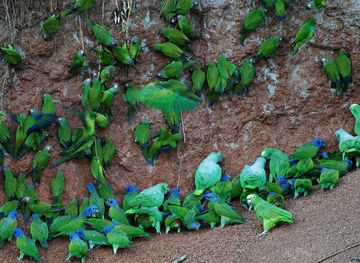
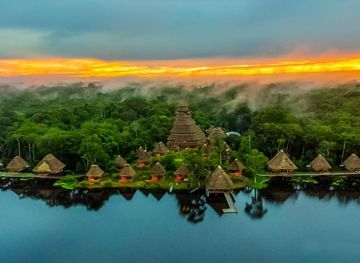


Your all‑in‑one travel companion app
Explore expert travel guides, compare and book tours, experiences, hotels, and more—all from the palm of your hand. Download now for seamless trip planning wherever your wanderlust takes you.


Explore More of Ecuador

Looking beyond Pastaza Region? Discover Ecuador for broader travel guides, local hot-spots, and regional highlights.
Explore EcuadorPastaza Region in Photos
Browse through our photo collection highlighting the charm and character of the destination.

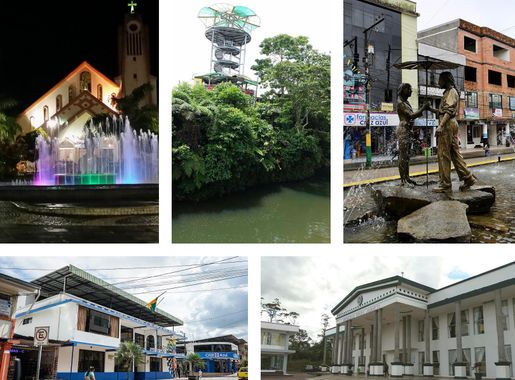


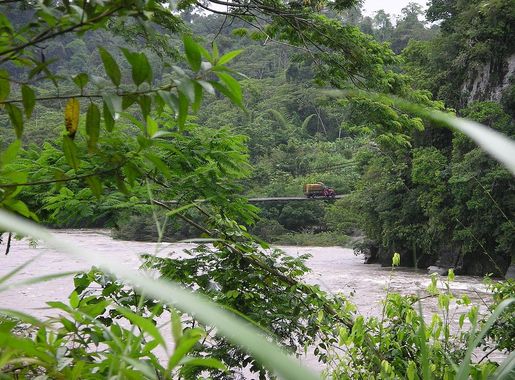


Discover the Untamed Wonders of Pastaza
Nestled in the heart of Ecuador, the Pastaza Region is a treasure trove of natural beauty and cultural richness. This area is renowned for its lush rainforests, powerful rivers, and vibrant indigenous communities. Visitors will find themselves surrounded by breathtaking landscapes, from the roaring waterfalls to the serene Amazon Basin. The Pastaza River, a tributary of the mighty Amazon, offers thrilling opportunities for white-water rafting and kayaking, making it a magnet for adventure enthusiasts. For those seeking a more tranquil experience, the region's extensive network of trails provides ample opportunities for hiking and wildlife observation. The Puyo, the capital of Pastaza, serves as a gateway to these natural wonders and offers unique cultural experiences. Tourists can visit indigenous markets, where they can purchase handmade crafts and taste traditional foods. The local guides, often from indigenous communities, provide invaluable insights into the area's flora, fauna, and way of life. Beyond its natural and cultural allure, Pastaza is also a haven for eco-tourism. Numerous lodges and eco-friendly accommodations are scattered throughout the region, offering sustainable ways to experience the Amazon. Whether you're an adrenaline junkie, a nature lover, or a cultural explorer, the Pastaza Region promises an unforgettable adventure.