

Free Wele-Nzas Travel Guide & Mobile App
Explore Wele-Nzas with free travel guides. Discover regional history, expert tips, proposed trips, and audio guides on web or mobile app.


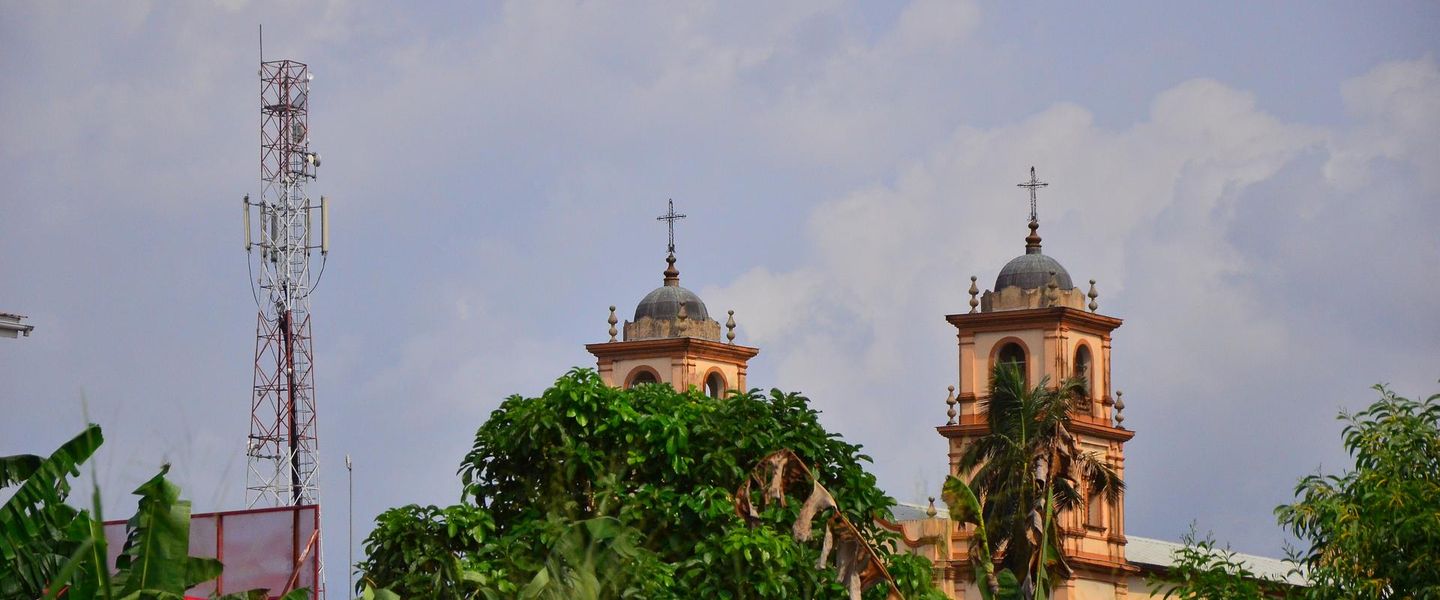


Explore Wele-Nzas in Equatorial Guinea for Fang culture, rainforest reserves, borderland towns and the grand civic architecture of Mongomo.
Read more about Wele-Nzas
When is the best time to visit Wele-Nzas?
Best: December–February · 28°C| Month | High (°C) | Rainfall (mm) |
|---|---|---|
| January (best) | 28 | 80 |
| February (best) | 28 | 90 |
| March | 29 | 100 |
| April | 29 | 110 |
| May | 28 | 120 |
| June | 28 | 130 |
| July | 27 | 140 |
| August | 28 | 150 |
| September | 28 | 130 |
| October | 28 | 110 |
| November | 28 | 100 |
| December (best) | 28 | 90 |
Getting to and around Wele-Nzas
How to get there
Transportation
Best attractions in Wele-Nzas
Wele-Nzas offers a relatively specialised travel experience built around rainforest, cultural observation and the planned urban landscape of Mongomo rather than a dense circuit of conventional tourist attractions. In Mongomo, visitors can see the Basilica of the Immaculate Conception and the broad civic spaces, formal buildings and sports facilities that reflect the region’s recent political importance. The town is also a useful base for understanding the contrast between state-developed urban infrastructure and surrounding forest-edge communities. Monte Temelón National Park and Nsork National Park provide the region’s principal nature-based possibilities, preserving tropical forest habitats with birdlife, plants and other wildlife; access, guiding and facilities should be arranged locally and expectations should remain realistic. The towns of Ebebiyin, Añisok and Aconibe offer glimpses of inland commerce, roadside life and regional movement, but are best approached as places to observe contemporary Equatorial Guinean life rather than as packaged sightseeing centres. Rural roads, village surroundings and forest margins can be rewarding for visitors with time, local introductions and appropriate permission, while organised cultural encounters should always respect community wishes.
-
National park
Parque Nacional del Monte Alén
Explore the breathtaking landscapes and rich biodiversity of Parque Nacional del Monte Alén, a paradise for nature lovers in Equatorial Guinea.
Best landmarks in Wele-Nzas
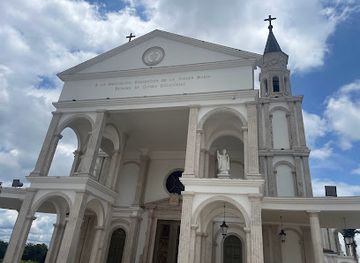
The Basilica of the Immaculate Conception in Mongomo is Wele-Nzas’s most recognisable architectural landmark, its monumental scale and formal setting reflecting the prominence assigned to the town in contemporary Equatorial Guinea. Around it, wide avenues and imposing civic buildings create an urban landscape that differs sharply from the region’s forest settlements and older roadside communities. Mongomo’s planned public architecture should be read as part of the country’s post-oil construction era rather than as colonial heritage. In the northern part of the province, the forested landscapes of Monte Temelón National Park form a natural landmark of ecological importance, while Nsork National Park represents another significant protected rainforest area in the south and east of the region. These parks are not monumental sites with extensive visitor infrastructure; their importance lies in habitat, landscape and conservation. The borderland setting around Ebebiyin is also geographically significant, demonstrating how roads, commerce and movement connect Wele-Nzas with Gabon and Cameroon, although border facilities themselves should not be photographed or treated as sightseeing attractions.
-
National park
Parque Nacional del Monte Alén
Discover the breathtaking biodiversity and stunning landscapes of Parque Nacional del Monte Alén in Equatorial Guinea, an eco-tourism paradise.
-
Basilica
Basilica of the Immaculate Conception, Mongomo
Explore the Basilica of the Immaculate Conception, Mongomo – an architectural marvel blending spirituality, beauty, and local culture in Equatorial Guinea.
-
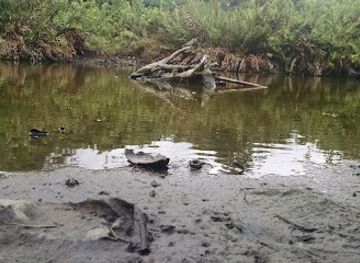
River
Benito River
Experience the tranquil beauty of Benito River in Equatorial Guinea, where nature and adventure come together in perfect harmony.
Explore Wele-Nzas on the map
Plan your trip on one map. See where the top cities, national parks and sights are, and book hotels and experiences in a few clicks.
Best hotels in Wele-Nzas
Best restaurants in Wele-Nzas
Dining in Wele-Nzas is predominantly local and practical, with the greatest choice found in Mongomo and other larger towns. Meals commonly draw on the wider culinary traditions of mainland Equatorial Guinea and Central Africa: rice, cassava, plantain, yams, vegetables, chicken, fish and meat may appear in stews, grilled dishes or sauces, often with chilli and other aromatic ingredients. Forest products and locally grown produce can be encountered in markets and informal eateries, although availability varies by season and town. Small restaurants, hotel dining rooms and roadside establishments are more common than a specialised fine-dining scene. Visitors should expect service to be unhurried and menus to change according to supplies. Bottled water is a sensible choice, and travellers heading into rural districts should carry snacks because food options become sparse beyond the main settlements. Spanish influence is visible in some urban menus, but the most distinctive meals are generally connected to Central African ingredients and Fang-influenced household cooking rather than imported international cuisine.
-
Hotel
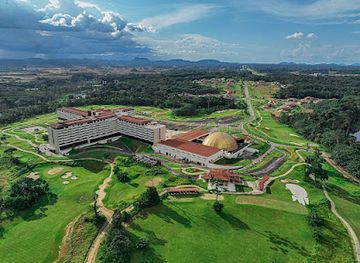
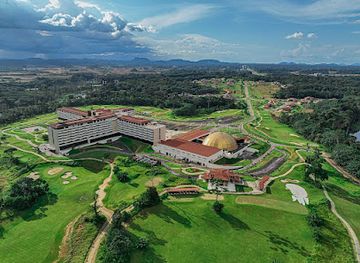
Grand Hotel Djibloho
Discover luxury at Grand Hotel Djibloho in Ciudad de la Paz - your gateway to relaxation and adventure in Equatorial Guinea.
-
Fine Dining
La Luna
Experience fine dining at La Luna in Malabo - where exquisite flavors meet elegant ambiance.
-
Hotel
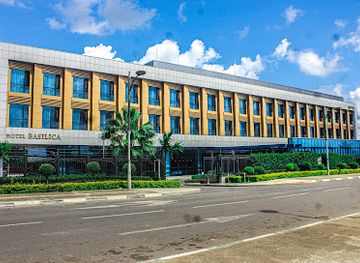
Basilica Hotel
Discover elegance and comfort at Basilica Hotel in Mongomo - your perfect getaway in Equatorial Guinea.
-
Restaurant
El Rancho Restaurant
Discover authentic Equatorial Guinean cuisine at El Rancho Restaurant in Malabo—where every dish tells a story.

Best bars in Wele-Nzas
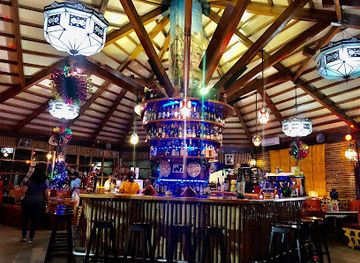
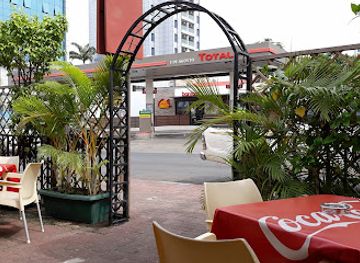
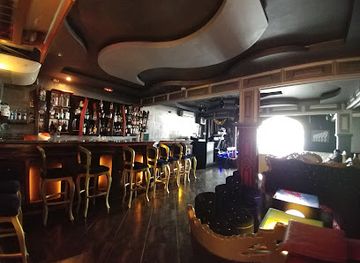
Evening life in Wele-Nzas is concentrated in Mongomo and the larger towns, where hotel lounges, modest bars, cafés and local gathering places provide more activity than formal nightclub districts. Music, conversation and televised sport are common features of urban evenings, while rural communities generally have a quieter social rhythm and fewer dedicated venues. Mongomo’s planned setting and dispersed development mean that nightlife is not organised around one compact entertainment quarter. Ebebiyin has a more commercially active border-town atmosphere, but opening arrangements and individual venues can change, so local advice is useful. Visitors should not assume that alcohol is necessary for socialising: restaurants, churches, markets and community events are also important parts of evening life. In remote areas, darkness, limited transport and weak communications make it prudent to return to accommodation early unless a trusted local host has arranged the outing.
-
Fine Dining
La Luna
Discover La Luna, Malabo's premier fine dining destination, where local flavors meet international cuisine in an elegant setting.
-
Pizza
Bidji Binia
Experience the vibrant flavors of Italy at Bidji Binia, the premier pizza restaurant in Malabo, Equatorial Guinea, offering a delicious escape for every pizza lover.
-
Restaurant
L'Atelier
Discover the flavors of Equatorial Guinea at L'Atelier, where local cuisine meets a vibrant dining atmosphere in Malabo.
-
Gastropub
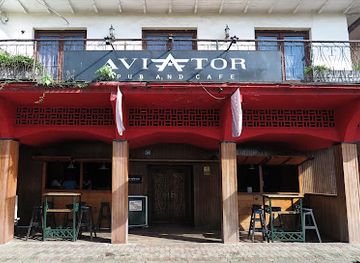
Aviator Pub and Café
Experience the vibrant fusion of American cuisine and local entertainment at Aviator Pub and Café in Malabo.

Best shops in Wele-Nzas
Shopping in Wele-Nzas is primarily practical and local, with markets and small independent shops in Mongomo, Ebebiyin, Añisok and other towns providing food, household goods, clothing and everyday supplies. Markets are the best places to see the region’s agricultural economy, where seasonal produce such as plantains, cassava, vegetables and fruit may be sold alongside prepared foods. Visitors may find woven articles, carvings or other locally made objects, but craft availability is uneven and purchases should be made respectfully rather than treating cultural items as souvenirs without context. Mongomo has the broadest selection of formal shops and hotel-based retail, while Ebebiyin’s position near the borders gives its commerce a more strongly regional and cross-border character. Packaged food, bottled drinks and basic travel supplies are easier to obtain in the main towns than in forest districts. There is no need to expect a major luxury-shopping environment; the value of shopping here lies in observing local trade and buying useful regional produce through established, respectful transactions.
-
Hotel
Grand Hotel Djibloho
Discover unmatched luxury and wellness at Grand Hotel Djibloho – a premier resort in the heart of Equatorial Guinea, designed for relaxation and adventure.
-
Market
SEMU Mercado
Explore Malabo's SE-MU Mercado, a bustling market where local culture, food, and crafts come together for an unforgettable experience.
-
Supermarket
Supermercado Champion
Discover the vibrant local culture and diverse products at Supermercado Champion, the heart of shopping in Ebebiyin, Gabon.
-
National park
Parque Nacional del Monte Alén
Immerse yourself in the natural wonders of Parque Nacional del Monte Alén, a national park of rich biodiversity and breathtaking landscapes in Equatorial Guinea.

Get your free copy of our complete guide to Wele-Nzas, delivered straight to you.
Everything on this page, from attractions and restaurants to essentials and local phrases, in one PDF you can read offline, print or share.
Already have an account? Sign in
Your Wele-Nzas guide is ready.
We'll send it to · Not you? Sign out

Getting your guide ready…
We are putting together a fresh copy of the Wele-Nzas guide. This can take up to a minute.
This can take a few moments. If your browser asks, choose Allow so the download can start. You'll find the guide in your Downloads folder.
Nothing happened? Download it again
Sorry, the guide is taking longer than usual. Please try again in a minute, or get it by email instead.
Wele-Nzas essentials
Currency and Payment
Safety
Emergency Situations
Do's and Don'ts
Local Tips
From Eve
Local phrases worth knowing
You don't need to get them perfect. A few words go a long way, and locals appreciate the effort.
Basics
| English | Local | Say it |
|---|---|---|
| Hello | Hola | [oh-lah] |
| Goodbye | Adiós | [ah-dee-ohs] |
| Yes | Sí | [see] |
| No | No | [noh] |
| Please/You're welcome | Por favor | [por fah-vor] |
| Thank you | Gracias | [grah-syahs] |
| Excuse me/Sorry | Perdón | [pehr-dohn] |
| How are you? | ¿Cómo estás? | [koh-moh es-tahs] |
| Fine. And you? | Bien. ¿Y tú? | [byen ee too] |
| Do you speak English? | ¿Hablas inglés? | [ah-blahs een-glehs] |
| I don't understand | No entiendo | [noh en-tyen-doh] |
Eating & Drinking
| English | Local | Say it |
|---|---|---|
| I'd like to see the menu, please | Me gustaría ver el menú, por favor | [meh goo-stah-ree-ah vehr el meh-noo por fah-vor] |
| I don't eat meat | No como carne | [noh koh-moh kar-neh] |
| Cheers! | ¡Salud! | [sah-lood] |
| I would like to pay, please | Me gustaría pagar, por favor | [meh goo-stah-ree-ah pah-gar por fah-vor] |
Emergencies
| English | Local | Say it |
|---|---|---|
| Help! | ¡Ayuda! | [ah-yoo-dah] |
| Go away! | ¡Vete! | [veh-teh] |
| Call the Police! | ¡Llama a la policía! | [yah-mah ah lah poh-lee-see-ah] |
| Call a doctor! | ¡Llama a un doctor! | [yah-mah ah oon dok-tor] |
| I'm lost | Estoy perdido | [es-toy pehr-dee-doh] |
| I'm ill | Estoy enfermo | [es-toy en-fehr-moh] |
Shopping
| English | Local | Say it |
|---|---|---|
| I'd like to buy... | Me gustaría comprar... | [meh goo-stah-ree-ah kom-prar] |
| I'm just looking | Solo estoy mirando | [so-lo es-toy mee-ran-doh] |
| How much is it? | ¿Cuánto cuesta? | [kwahn-toh kwes-tah] |
| That's too expensive | Eso es muy caro | [eh-so es mwee kah-roh] |
| Can you lower the price? | ¿Puedes bajar el precio? | [pweh-des bah-har el preh-syoh] |
Time & Numbers
| English | Local | Say it |
|---|---|---|
| What time is it? | ¿Qué hora es? | [keh oh-rah es] |
| It's one o'clock | Es la una | [es lah oo-nah] |
| Half past (10) | Y media (10) | [ee meh-dee-ah] |
| Morning | Mañana | [mah-nyah-nah] |
| Afternoon | Tarde | [tar-deh] |
| Evening | Noche | [noh-cheh] |
| Yesterday | Ayer | [ah-yer] |
| Today | Hoy | [oy] |
| Tomorrow | Mañana | [mah-nyah-nah] |
| 1 | Uno | [oo-no] |
| 2 | Dos | [dohs] |
| 3 | Tres | [tres] |
| 4 | Cuatro | [kwah-troh] |
| 5 | Cinco | [seen-koh] |
| 6 | Seis | [says] |
| 7 | Siete | [syay-teh] |
| 8 | Ocho | [oh-choh] |
| 9 | Nueve | [nweh-veh] |
| 10 | Diez | [dyehs] |
Transport & Directions
| English | Local | Say it |
|---|---|---|
| Where's a/the...? | ¿Dónde está un/una...? | [dohn-deh es-tah oon/oo-nah] |
| What's the address? | ¿Cuál es la dirección? | [kwahl es lah dee-rehk-syohn] |
| Can you show me (on the map)? | ¿Puedes mostrarme (en el mapa)? | [pweh-des mos-trar-meh en el mah-pah] |
| When's the next (bus)? | ¿Cuándo es el próximo (autobús)? | [kwahn-doh es el prohk-si-moh] |
| A ticket (to ...) | Un billete (a ...) | [oon bee-yeh-teh ah] |
History of Wele-Nzas
Early Fang Settlement and Forest Society
Before European colonial rule, the territory now known as Wele-Nzas formed part of the forest and savannah-edge world inhabited principally by Fang-speaking communities. Settlement patterns, farming, hunting, exchange and kinship networks connected communities across what are now the borders of Equatorial Guinea, Gabon and Cameroon. Political authority was generally organised through local communities and lineage relationships rather than a single central kingdom. This regional history remains important in understanding the continued use of Fang and the cultural links that cross modern frontiers.
Spanish Colonial Expansion in the Mainland Interior
Spain consolidated control over mainland Equatorial Guinea, then known as Río Muni, during the late nineteenth and early twentieth centuries. Colonial administration gradually extended inland through military posts, missions, roads and trading networks. The interior was governed through arrangements that altered local authority and encouraged the spread of Catholic Christianity and Spanish-language schooling. Wele-Nzas remained more rural and less commercially developed than the coastal zones, but colonial infrastructure established many of the administrative and religious foundations later visible in towns such as Mongomo and Ebebiyin.
Missions, Christianity and Colonial Agriculture
Catholic missions became important institutions across mainland Equatorial Guinea during the colonial period, providing religious instruction, schooling and medical services while also advancing Spanish cultural influence. Agriculture and forest products connected inland communities to colonial trading centres, although the region did not acquire the plantation economy associated with parts of Bioko. Churches, mission compounds and the adoption of Christianity consequently became significant elements of social change. Contemporary religious buildings in Wele-Nzas belong to a much later period, but they stand within this longer history of Christianisation.
Independence and the Turbulence of the 1970s
Equatorial Guinea became independent from Spain in 1968. The first decade of independence brought severe political repression, economic disruption and the departure of many Spanish residents and skilled personnel. These changes affected the entire country, including the inland districts of Río Muni, where education, administration and transport networks suffered. The period also accelerated the importance of state institutions in towns such as Mongomo. Its legacy helps explain why the country’s modern administrative and urban landscape cannot be understood solely through its colonial buildings or precolonial traditions.
The Mongomo Region and the Nguema Political Era
Mongomo and its surrounding area became especially prominent during the presidency of Teodoro Obiang Nguema Mbasogo, who originated from the district. Since the late twentieth century, substantial public investment has transformed Mongomo through formal avenues, government facilities, sports infrastructure and major religious architecture. The development created a striking contrast between the planned urban centre and the more lightly serviced rural landscape around it. It also made Mongomo one of the most politically significant places in contemporary Equatorial Guinea, although access to some official sites remains controlled.
Oil Wealth and Protected Forest Landscapes
The expansion of Equatorial Guinea’s petroleum industry from the 1990s changed national finances and funded major infrastructure projects, including roads, airports and civic construction on the mainland. Wele-Nzas benefited from this investment, particularly around Mongomo and key transport corridors, but oil wealth did not remove the practical differences between urban centres and remote forest communities. At the same time, protected areas such as Monte Temelón and Nsork represent efforts to retain rainforest habitats in a country where conservation, development and access remain closely connected.
Wele-Nzas in Photos
Browse through our photo collection highlighting the charm and character of the destination.
Neighbouring regions of Wele-Nzas
The closest regions to Wele-Nzas, if you have time for more than one.
-

-

-

-

-


Swipe for more regions
Explore more
Explore more of Equatorial Guinea
Discover Equatorial Guinea – A captivating blend of colonial history, lush rainforests, pristine beaches, and vibrant culture in the heart of Central Africa.
Explore Equatorial Guinea