

Southern Red Sea, Eritrea Travel Guide
Discover Eritrea's Southern Red Sea: a hidden gem with pristine beaches, vibrant marine life, and rich historical heritage. Perfect for diving, snorkeling, and cultural exploration.
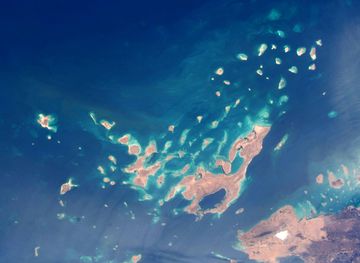
The Southern Red Sea in Eritrea is a hidden gem, offering a wealth of natural beauty and rich cultural heritage. This region is a paradise for marine enthusiasts, with its clear blue waters and vibrant coral reefs. Snorkeling and diving here allow you to explore a stunning underwater world teeming with colorful fish and marine life. The pristine beaches are perfect for relaxation, providing a serene escape from the hustle and bustle of daily life. Eritrea's Southern Red Sea coast is also steeped in history. The ancient port city of Adulis, once an essential hub for trade between Africa and the Mediterranean, offers a glimpse into the past with its archaeological treasures. Touring this historic site, you can see remnants of ancient buildings and artifacts that tell the story of a once-thriving civilization. The local culture adds another layer of richness to your visit. The friendly and welcoming people of the region offer a unique blend of traditions and customs. Sampling local cuisine, such as fresh seafood and traditional Eritrean dishes, is a must. The Southern Red Sea in Eritrea is not just a destination; it's an experience that captivates and inspires every traveler.

Know before you go
Hi, I'm Eve. Here are a few practical things to know before exploring Southern Red Sea.
- Bring your own snorkeling or diving gear as rental options may be limited.
- Visit the ancient port city of Adulis early in the morning to avoid the heat.
- Respect local customs and dress modestly, especially in rural areas.
- Try to learn a few basic phrases in Tigrinya or Arabic to better connect with locals.
- Carry cash as ATMs and card payment options might not be widely available.
Destinations in Southern Red Sea
Resorts, valleys and scenic spots worth a trip of their own.


Best restaurants in Southern Red Sea
Top-rated picks
Best Restaurants

Asseb Restaurant
Discover Asseb Restaurant: A cozy coffee shop in Āssab offering rich flavors and authentic Eritrean hospitality.

family fresh juice
Experience the vibrant taste of fresh juices at Family Fresh Juice in Āssab, Eritrea - perfect for families seeking delicious refreshments.

Best bars in Southern Red Sea
Top-rated picks
Best Bars

Ghibabo Restaurant And Pizzeria
Savor the essence of Italy with authentic dishes at Ghibabo Restaurant And Pizzeria in Asmara, Eritrea.

Hubaysh District isolate Chaabaa Walid Chaabaa
Experience the vibrant culture and local charm at Chaabaa Walid Chaabaa, a must-visit bar in Yemen's enchanting Hubaysh District.

Bar Royal
Discover the warm ambiance and delicious offerings at Bar Royal, a cozy cafeteria in the heart of Asmara, Eritrea.

Cherhi
Discover the breathtaking beauty of Cherhi, a serene scenic spot in Asmara, Eritrea, perfect for relaxation and cultural exploration.

Best shops in Southern Red Sea
Top-rated picks
Best Shops

Asseb Restaurant
Discover the authentic flavors of Eritrea at Asseb Restaurant, a cozy coffee shop in the heart of Āssab.
,Afar,red,sea
Experience the vibrant store scene of Āssab, where local culture meets the enchanting allure of the Red Sea.
Dankalia, afar
Explore the breathtaking landscapes and rich culture of Dankalia, Afar, a hidden coastal gem in Eritrea waiting to be discovered.
Daui rori Érythrée
Experience authentic Eritrean flavors at Daui rori Érythrée, where high-quality local meats meet culinary tradition.

Explore Southern Red Sea on the Map
A handpicked selection of must-see spots in Southern Red Sea, mapped for you.
Southern Red Sea Essentials
-
Southern Red Sea in Eritrea can be accessed primarily through Asmara International Airport (ASM) in Asmara, the capital city of Eritrea. From Asmara, you can take a domestic flight to Assab Airport (ASA) or Massawa International Airport (MSW), which are closer to the Southern Red Sea region. Alternatively, you can travel by road using buses or private cars, though the journey can be long and the road conditions may vary.
-
Within the Southern Red Sea region, transportation options include taxis, minibuses, and rented vehicles. Taxis are widely available and can be hired for both short trips and longer excursions. Minibuses serve as a common mode of public transportation, connecting various towns and villages. Renting a car can offer more flexibility, but ensure you have a reliable map or GPS, as signage can be limited.
-
The official currency in Eritrea is the Eritrean Nakfa (ERN). Credit card usage is limited, particularly in smaller towns and rural areas, so it is advisable to carry enough cash. ATMs are scarce, and it’s best to withdraw cash in Asmara before traveling to the Southern Red Sea region. Currency exchange services are available at airports and in major cities.
-
Southern Red Sea is generally safe for tourists, but it is essential to exercise standard precautions. Avoid walking alone at night and be cautious in less populated areas. Petty crimes like pickpocketing can occur in crowded places, so keep an eye on your belongings. Certain remote areas may have limited security presence, so it’s best to travel in groups and inform someone of your travel plans.
-
In case of emergency, dial 114 for police assistance, 115 for medical emergencies, and 116 for fire services. It is highly recommended to have comprehensive travel insurance that includes medical coverage. Major towns in the Southern Red Sea region have medical facilities, but for severe health issues, you may need to be transported to a larger city such as Asmara. Pharmacies are available for minor health concerns.
-
Fashion: Do dress modestly, particularly when visiting religious sites or rural areas. Avoid wearing revealing clothing. Religion: Do respect local customs and traditions. It is courteous to cover your head when visiting mosques. Public Transport: Do be respectful and give up your seat to elderly passengers. Avoid eating and drinking on public transport. Greetings: Do greet people with a handshake. A slight bow or nod is also acceptable. Eating & Drinking: Do try local dishes and accept food offerings graciously. Don’t refuse hospitality, as it is considered impolite.
-
To experience Southern Red Sea like a local, visit the traditional markets where you can buy fresh produce and handmade crafts. Engage with locals; they are often friendly and willing to share stories about their culture and history. Don't miss visiting the Dahlak Archipelago for its stunning marine life and historical significance. For a unique experience, try traditional Eritrean coffee ceremonies and sample local seafood delicacies.
When is the best time to visit Southern Red Sea?
Useful Local Phrases for Southern Red Sea
You don't need to speak the language perfectly. Even learning a few simple words can make conversations warmer—and locals usually appreciate the effort.
— Eve

Here are the phrases I use most often in Southern Red Sea. Try a few—you'll be surprised how far they go! 😊
❤️
-
- HelloSelam
[seh-lahm] - GoodbyeDehrih
[deh-reeh] - YesIye
[ee-yeh] - NoAye
[ah-yeh] - Please/You’re welcomeIyew
[ee-yew] - Thank youYekarim
[yeh-kah-reem] - Excuse me/SorrySelamta
[seh-lahm-tah] - How are you?Kemey alek?
[keh-may ah-lek] - Fine. And you?Kemey, wey alek?
[keh-may, weh ah-lek] - Do you speak English?Englisht keldin?
[en-gli-sht kel-din] - I don’t understandNih alekha n'zi
[nee-ah ah-leh-khah n'zee]
- HelloSelam
-
- I’d like to see the menu, pleaseMenyu keldin, iyew
[men-yoo kel-din, ee-yew] - I don’t eat meatAni b'lahm n'zi
[ah-nee beh-lahm n'zee] - Cheers!B'halay
[b'hal-eye] - I would like to pay, pleaseHesab keldin, iyew
[heh-sab kel-din, ee-yew]
- I’d like to see the menu, pleaseMenyu keldin, iyew
-
- Help!Aydin!
[ah-yee-din] - Go away!T'kel!
[t'kel] - Call the Police!Polisi keldin!
[po-lee-see kel-din] - Call a doctor!Doktor keldin!
[dok-tor kel-din] - I’m lostAni zayb
[ah-nee zah-yb] - I’m illAni a'la
[ah-nee ah-lah]
- Help!Aydin!
-
- I’d like to buy...Ani b'ay keldin...
[ah-nee b'eye kel-din...] - I’m just lookingAni zeyzey
[ah-nee zay-zay] - How much is it?Kemey yih?
[keh-may yeeh] - That’s too expensiveDihrih zeyh g'hal
[dee-hreeh zay g'hal] - Can you lower the price?Yek'hal g'hal zey?
[yeh-khal g'hal zay?]
- I’d like to buy...Ani b'ay keldin...
-
- What time is it?Kemey zey?
[keh-may zay?] - It’s one o’clockKedy zeyh
[keh-dee zay] - Half past (10)Duhari (10)
[doo-ha-ree (10)] - MorningB'lahm
[b'lahm] - AfternoonG'hal
[g'hal] - EveningB'hal
[b'hal] - YesterdayHafi
[ha-fi] - TodayHati
[ha-tee] - TomorrowB'lahmti
[b'lahm-tee] - 1Hadi
[ha-dee] - 2K'lu
[k'loo] - 3Selasa
[se-lah-sah] - 4Arba
[ahr-bah] - 5Hamush
[ha-mush] - 6Sita
[see-tah] - 7Seb'a
[seh-bah] - 8Semanya
[seh-mah-nee-yah] - 9T'isha
[t'ee-shah] - 10Asara
[ah-sah-rah]
- What time is it?Kemey zey?
-
- Where's a/the...?Hadi t'kel ...?
[ha-dee t'kel ...?] - What’s the address?Kedem keldin?
[keh-dem kel-din?] - Can you show me (on the map)?Map keldin zey?
[map kel-din zay?] - When's the next (bus)?B'hal zey?
[b'hal zay?] - A ticket (to ....)Tiket (to ...)
[ti-ket (to ...)]
- Where's a/the...?Hadi t'kel ...?
History of Southern Red Sea
-
Adulis, located in the Southern Red Sea region of Eritrea, was a prominent ancient port city that played a crucial role in the trade networks of the Axumite Empire. Established around the 3rd century BCE, Adulis became a bustling hub for commerce, connecting the interior of Africa with the Mediterranean world and the Indian Ocean. Goods such as ivory, gold, textiles, and spices were traded through this port, making it a melting pot of cultures and influences. The ruins of Adulis today offer a glimpse into its past grandeur, with remnants of warehouses, residential structures, and religious buildings.
-
The Axumite Empire, which flourished from approximately the 1st to the 7th century CE, had a significant presence in the Southern Red Sea region. The empire's strategic location allowed it to control trade routes between Africa, Arabia, and the wider ancient world. The Axumites are known for their impressive architectural achievements, including the famous obelisks and stelae. However, the decline of the Axumite Empire in the 7th century, due to various factors such as overextension, trade route shifts, and environmental changes, marked a turning point in the history of the Southern Red Sea region.
-
In the 16th century, the Ottoman Empire extended its influence to the Red Sea coast, including parts of the Southern Red Sea region of Eritrea. The Ottomans established fortifications and trading posts, integrating the area into their expansive empire. This period saw the introduction of Ottoman architectural styles and administrative practices, which left a lasting mark on the local culture. The coastal town of Assab, for example, served as an important Ottoman outpost and remains a key port city to this day.
-
The late 19th and early 20th centuries saw the Southern Red Sea region come under Italian colonial rule. Italy's ambitions in the Horn of Africa led to the establishment of Eritrea as an Italian colony in 1890. The Italians invested in infrastructure, including the development of port facilities in Assab to support their colonial and military endeavors. This period also saw the construction of roads, buildings, and other public works that have influenced the region's modern landscape. The legacy of Italian colonialism is still evident in the architectural and cultural remnants found across the Southern Red Sea region.
-
The mid-20th century was marked by Eritrea's struggle for independence from Ethiopian annexation, which began in earnest in the early 1960s. The Southern Red Sea region played a significant role in the Eritrean War of Independence, providing strategic coastal access and serving as a base for the Eritrean People's Liberation Front (EPLF). The rugged terrain and proximity to the Red Sea made it a crucial area for guerrilla warfare and supply routes. Eritrea eventually achieved independence in 1993, and the history of the struggle remains a vital part of the region's identity.
-
The Southern Red Sea region is a mosaic of ethnic groups, including the Afar, Tigrinya, and Saho, each with their unique cultural heritage and traditions. The Afar people, known for their nomadic lifestyle, have a rich oral tradition, music, and dance that reflect their connection to the land and sea. Traditional crafts, such as basket weaving and pottery, are still practiced, preserving ancient techniques passed down through generations. Festivals and ceremonies play an essential role in community life, celebrating everything from religious events to seasonal changes, demonstrating the region's vibrant cultural tapestry.
Neighbouring Regions of Southern Red Sea
The closest regions to Southern Red Sea, if you have time for more than one.




Your all‑in‑one travel companion app
Explore expert travel guides, compare and book tours, experiences, hotels, and more—all from the palm of your hand. Download now for seamless trip planning wherever your wanderlust takes you.


Explore More of Eritrea

Looking beyond Southern Red Sea? Discover Eritrea for broader travel guides, local hot-spots, and regional highlights.
Explore EritreaSouthern Red Sea in Photos
Browse through our photo collection highlighting the charm and character of the destination.


Southern Red Sea: Eritrea's Aquatic Jewel
The Southern Red Sea in Eritrea is a hidden gem, offering a wealth of natural beauty and rich cultural heritage. This region is a paradise for marine enthusiasts, with its clear blue waters and vibrant coral reefs. Snorkeling and diving here allow you to explore a stunning underwater world teeming with colorful fish and marine life. The pristine beaches are perfect for relaxation, providing a serene escape from the hustle and bustle of daily life. Eritrea's Southern Red Sea coast is also steeped in history. The ancient port city of Adulis, once an essential hub for trade between Africa and the Mediterranean, offers a glimpse into the past with its archaeological treasures. Touring this historic site, you can see remnants of ancient buildings and artifacts that tell the story of a once-thriving civilization. The local culture adds another layer of richness to your visit. The friendly and welcoming people of the region offer a unique blend of traditions and customs. Sampling local cuisine, such as fresh seafood and traditional Eritrean dishes, is a must. The Southern Red Sea in Eritrea is not just a destination; it's an experience that captivates and inspires every traveler.