

Free Zoba Debubawi Keyih Bahri Travel Guide & Mobile App
Explore Zoba Debubawi Keyih Bahri with free travel guides. Discover regional history, expert tips, proposed trips, and audio guides on web or mobile app.


Explore Zoba Debubawi Keyih Bahri for Assab’s Red Sea coast, Afar culture, volcanic desert landscapes and Eritrea’s remote southeastern frontier.
Read more about Zoba Debubawi Keyih Bahri
When is the best time to visit Zoba Debubawi Keyih Bahri?
Best: December–February · 30–31°C| Month | High (°C) | Rainfall (mm) |
|---|---|---|
| January (best) | 30 | 1 |
| February (best) | 31 | 1 |
| March | 32 | 2 |
| April | 34 | 3 |
| May | 37 | 1 |
| June | 39 | 1 |
| July | 39 | 2 |
| August | 38 | 4 |
| September | 37 | 2 |
| October | 34 | 1 |
| November | 32 | 1 |
| December (best) | 30 | 1 |
Getting to and around Zoba Debubawi Keyih Bahri
How to get there
Transportation
Destinations in Zoba Debubawi Keyih Bahri
Resorts, valleys and scenic spots worth a trip of their own.
-

-


Swipe for more destinations
Best attractions in Zoba Debubawi Keyih Bahri
-
Desert
Danakil Desert
Discover the extraordinary landscapes and unique geothermal wonders of the Danakil Desert, one of Earth's most extreme and beautiful destinations.
-
National park
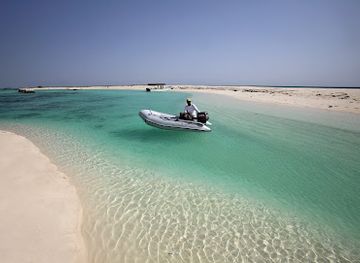
Dahlak Marine National Park
Explore the stunning Dahlak Marine National Park, a serene haven of marine life, rich culture, and breathtaking landscapes in Eritrea's pristine waters.
-
Tourist attraction
Ayaba Jazira
Experience the natural beauty and cultural richness of Ayaba Jazira, a hidden gem in Eritrea perfect for relaxation and exploration.
-
Tourist attraction
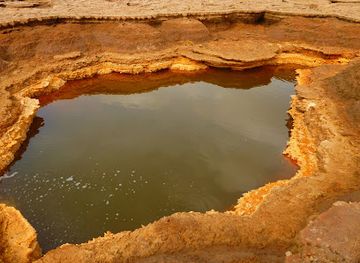
Black Water Spring
Explore the breathtaking Black Water Spring in Dalol, Ethiopia, where vibrant colors and geothermal wonders await your discovery.

Best landmarks in Zoba Debubawi Keyih Bahri
Assab’s harbour is the region’s defining built landmark, linking the town to the Red Sea routes that shaped its colonial and modern history. Its importance is strategic and economic rather than monumental, and access to working port areas may be controlled. Within the town, surviving traces of Italian colonial planning and low-rise architecture provide reminders of the settlement’s development after Italy established its Red Sea foothold in the nineteenth century, although the remains are dispersed rather than presented as a single heritage quarter. The Bay of Assab forms the region’s major natural landmark, combining an open coastal horizon with islands, reefs, tidal flats and intensely arid shores. Inland, the volcanic and salt-affected terrain of the Danakil lowlands creates a stark geological landscape extending across national borders; Eritrean sections should not be approached without official permission and suitable local support. The most significant landmarks here are consequently a combination of port, coastline and desert geology, set within a sensitive frontier where military, environmental and administrative restrictions affect access.
-
Historical landmark
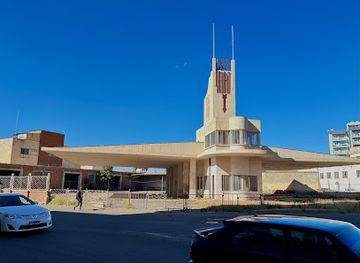
Fiat Tagliero ፡ፍያት ታሌሮ
Discover the iconic Fiat Tagliero, a modernist architectural gem in Asmara, Eritrea, reflecting the city's cultural heritage and colonial history.
-
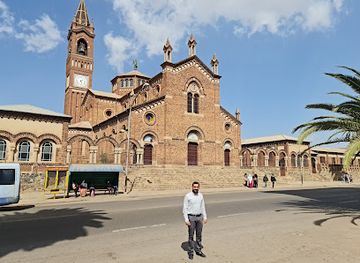
Catholic cathedral
ኣስመራ ካቴድራል | Cathedral Our Lady of the Rosary
Discover the breathtaking Cathedral of Our Lady of the Rosary in Asmara, a stunning blend of Italian Renaissance and Eritrean architecture, rich in history and spirituality.
-
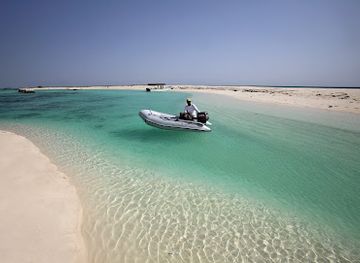
National park
Dahlak Marine National Park
Discover the enchanting beauty of Dahlak Marine National Park, a haven for marine life and culture off the coast of Eritrea.
-
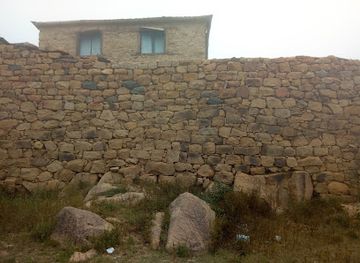
Monastery
Debre Bizen
Explore the serene beauty of Debre Bizen Monastery in Nefasit, Eritrea, a sacred site steeped in history and tranquility, perfect for spiritual reflection.
Explore Zoba Debubawi Keyih Bahri on the map
Plan your trip on one map. See where the top cities, national parks and sights are, and book hotels and experiences in a few clicks.
Best hotels in Zoba Debubawi Keyih Bahri
Best restaurants in Zoba Debubawi Keyih Bahri

Best bars in Zoba Debubawi Keyih Bahri
Nightlife in the Southern Red Sea Region is limited and concentrated in Assab. Evening activity is more likely to consist of conversation in cafés, tea and coffee, hotel-based dining or informal gatherings than a developed club scene. A small number of local establishments may serve alcoholic drinks, but availability, licensing and opening arrangements can change, and visitors should follow local rules. There is no dependable basis for planning around nightclubs, live-music programmes or seasonal parties. Outside Assab, settlements are widely dispersed and evenings are generally quiet, with darkness, heat and transport limitations discouraging late movement. The waterfront may be pleasant at dusk, but visitors should avoid restricted port areas and should not walk through unfamiliar districts without local guidance. Nightlife is therefore best understood as a modest urban contrast to the region’s desert and pastoral environment, not as a principal reason for visiting.
-
 Bar
BarBar selam ባር ሰላም ( እንዳ ሳባ)
Experience the vibrant culture and welcoming atmosphere of Bar Selam in Adi Kontsi, a must-visit destination for travelers in Eritrea.
-
Bar
Bar Jima
Discover the vibrant atmosphere of Bar Jima in Asmara, where local culture meets delightful drinks and friendly faces.
-
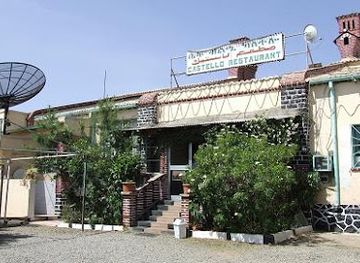
Restaurant
Castello Bar And Restaurant
Experience the essence of Eritrean cuisine at Castello Bar And Restaurant in Asmara, where every dish tells a story.
-
Restaurant
Bar Hiwnet
Discover the authentic flavors of Eritrea at Bar Hiwnet, a top-rated restaurant in Asmara offering delicious local dishes and warm hospitality.

Best nightclubs in Zoba Debubawi Keyih Bahri
-
Night club
منتجع بن المخا
Discover the vibrant nightlife of Mocha at منتجع بن المخا, a top nightclub for dancing, music, and unforgettable experiences.
-
Bar
Adonai’s bar
Experience the vibrant atmosphere of Adonai’s Bar in Dhu Bellu, where culture and hospitality meet for an unforgettable night out.
-
Disco club
Jerusalem
Experience the dynamic nightlife of Jerusalem with its vibrant disco clubs, where music and culture come alive under the stars.
Best shops in Zoba Debubawi Keyih Bahri
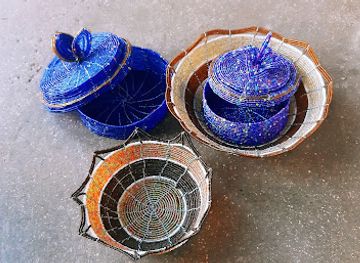
Shopping in Zoba Debubawi Keyih Bahri is practical and local rather than oriented towards souvenirs or luxury retail. Assab has the region’s broadest choice of small shops and market stalls, where visitors may find basic clothing, household goods, food provisions, tea, coffee and imported essentials. Market availability can vary, and specialist travel equipment, medicines and international food brands should be obtained before reaching the region. Opportunities to buy locally made crafts are modest but may include woven goods, simple leather items, beads or products associated with Afar and Red Sea trading traditions; purchase directly and respectfully rather than treating cultural objects as curiosities. Salt and dried food products may be encountered in the wider lowland economy, but visitors should check what may legally be exported and avoid removing geological material from restricted sites. There is no extensive shopping district or dependable range of galleries and designer shops, so the most useful purchases are usually provisions and practical supplies for onward travel.
Get your free copy of our complete guide to Zoba Debubawi Keyih Bahri, delivered straight to you.
Everything on this page, from attractions and restaurants to essentials and local phrases, in one PDF you can read offline, print or share.
Already have an account? Sign in
Your Zoba Debubawi Keyih Bahri guide is ready.
We'll send it to · Not you? Sign out

Getting your guide ready…
We are putting together a fresh copy of the Zoba Debubawi Keyih Bahri guide. This can take up to a minute.
This can take a few moments. If your browser asks, choose Allow so the download can start. You'll find the guide in your Downloads folder.
Nothing happened? Download it again
Sorry, the guide is taking longer than usual. Please try again in a minute, or get it by email instead.
Zoba Debubawi Keyih Bahri essentials
Currency and Payment
Safety
Emergency Situations
Do's and Don'ts
Local Tips
From Eve
Local phrases worth knowing
You don't need to get them perfect. A few words go a long way, and locals appreciate the effort.
Basics
| English | Local | Say it |
|---|---|---|
| Hello | Selam | [Se-lam] |
| Goodbye | Dehan adren | [De-han ad-ren] |
| Yes | Ewe | [E-we] |
| No | Ayb | [Ayb] |
| Please/You're welcome | Iwedihalehu | [I-we-di-ha-le-hu] |
| Thank you | Yekenyeley | [Ye-ken-ye-le-y] |
| Excuse me/Sorry | Ewedihalehu | [E-we-di-ha-le-hu] |
| How are you? | Kemey alekhu? | [Ke-mey a-le-khu] |
| Fine. And you? | Tena yistilign. Kemey alekhu? | [Te-na yis-ti-lign. Ke-mey a-le-khu] |
| Do you speak English? | Englizi tigrigna alen? | [En-gli-zi ti-gri-gna a-len] |
| I don't understand | Ayiwedihalehu | [A-yi-we-di-ha-le-hu] |
Eating & Drinking
| English | Local | Say it |
|---|---|---|
| I'd like to see the menu, please | Menyu nikhul, ibel | [Men-yu ni-khul, i-bel] |
| I don't eat meat | Anki ayt'alu baso | [An-ki ay-ta-lu ba-so] |
| Cheers! | L'chaim! | [L'chai-m] |
| I would like to pay, please | Ibel nikhul, yihde | [I-bel ni-khul, yi-hde] |
Emergencies
| English | Local | Say it |
|---|---|---|
| Help! | Amlak! | [Am-lak] |
| Go away! | Hageru! | [Ha-ge-ru] |
| Call the Police! | Polis zeydewu! | [Po-lis ze-y-de-wu] |
| Call a doctor! | Doktor zeydewu! | [Dok-tor ze-y-de-wu] |
| I'm lost | Anki mesk'ek! | [An-ki mes-k'ek] |
| I'm ill | Anki mesk'ek! | [An-ki mes-k'ek] |
Shopping
| English | Local | Say it |
|---|---|---|
| I'd like to buy... | Aykhalu... | [Ay-kha-lu] |
| I'm just looking | Ine giber alekhu | [I-ne gi-ber a-le-khu] |
| How much is it? | K'ulu aye? | [Ku-lu a-ye] |
| That's too expensive | K'ulu b'zi d'ego | [Ku-lu b'zi d'e-go] |
| Can you lower the price? | T'kal alekhu b'zi? | [T'kal a-le-khu b'zi] |
Time & Numbers
| English | Local | Say it |
|---|---|---|
| What time is it? | K'ulu zeyt? | [Ku-lu ze-yt] |
| It's one o'clock | K'ulu zeyt'ki | [Ku-lu ze-yt'ki] |
| Half past (10) | K'ulu s'ra (10) | [Ku-lu s'ra (10)] |
| Morning | Bela | [Be-la] |
| Afternoon | D'ne | [D'ne] |
| Evening | Ere | [E-re] |
| Yesterday | Bela zeyt | [Be-la ze-yt] |
| Today | Zeyt | [Ze-yt] |
| Tomorrow | Hadi | [Ha-di] |
| 1 | Hadi | [Ha-di] |
| 2 | K'ulu | [Ku-lu] |
| 3 | Selasa | [Se-la-sa] |
| 4 | Arba | [Ar-ba] |
| 5 | Hamsa | [Ham-sa] |
| 6 | Sita | [Si-ta] |
| 7 | Seb'a | [Se-b'a] |
| 8 | Sem'en | [Se-me-en] |
| 9 | T'sha | [T'sha] |
| 10 | Ashera | [A-she-ra] |
Transport & Directions
| English | Local | Say it |
|---|---|---|
| Where's a/the...? | Eza k'ulu? | [E-za ku-lu] |
| What's the address? | Eza zeyt? | [E-za ze-yt] |
| Can you show me (on the map)? | T'kal alekhu y'k'ek'ku? | [T'kal a-le-khu y'k'-ek'-ku] |
| When's the next (bus)? | K'ulu zeyt'ki (bus)? | [Ku-lu ze-yt'ki (bus)] |
| A ticket (to ....) | Tik'eta (k'ulu ...) | [Ti-ke-ta (ku-lu ...)] |
History of Zoba Debubawi Keyih Bahri
Afar Pastoral Networks and Red Sea Exchange
For centuries, the lowlands around Assab and the southern Eritrean coast formed part of a wider Afar cultural and trading zone extending towards Djibouti and northeastern Ethiopia. Pastoralists adapted to scarce water and seasonal grazing, while coastal settlements participated in the movement of salt, livestock and other goods. Political authority was often dispersed among local leaders rather than concentrated in a single urban state. These relationships across the desert and sea help explain the region’s enduring cultural links beyond Eritrea’s modern borders.
The Italian Acquisition of Assab, 1869–1882
Italy’s involvement in the region began with the acquisition of Assab Bay in 1869 by the Rubattino shipping company, followed by transfer to the Italian government in 1882. Assab became Italy’s first foothold on the Red Sea and a base for commercial and colonial expansion. The settlement’s importance rested on its harbour and position near routes linking the Red Sea with the Gulf of Aden. This period introduced new administrative structures and infrastructure while placing local communities within a European colonial project.
Colonial Port Development
Under Italian rule, Assab developed as a port and administrative settlement within the colony of Eritrea. Roads, harbour facilities and basic urban infrastructure connected the town more closely with the wider coastal territory, although development remained limited by the harsh environment and the port’s distance from the colony’s northern centres. Italian colonial architecture and street planning left a modest imprint on Assab. The economic system, however, depended heavily on colonial priorities and did not transform the sparsely populated interior into a densely settled region.
British Military Administration after the Second World War
When Italy was defeated in East Africa during the Second World War, British forces administered Eritrea for a transitional period. Assab and other Red Sea facilities acquired renewed strategic importance because the coast supported maritime movement through the Red Sea and Gulf of Aden. The post-war years brought uncertainty over Eritrea’s constitutional future. Debate about independence, federation or incorporation unfolded during a period when the region’s ports and transport links were valued for both commercial and military purposes.
Federation, Annexation and the Eritrean Struggle
In 1952, Eritrea was federated with Ethiopia under a United Nations arrangement, but the federal system was progressively dismantled before Ethiopia annexed Eritrea in 1962. The resulting independence struggle lasted three decades. Southern coastal and desert areas were strategically significant because of their ports, roads and proximity to Ethiopia and Djibouti. The war disrupted economic life and displaced communities, while control of the Red Sea coast remained a central military and political objective.
Independence and the Port of Assab
Eritrea achieved de facto independence in 1991 and formal independence in 1993. Assab remained an important port and regional centre in the new state, serving the southern lowlands and retaining strategic value despite its distance from Asmara. Relations with Ethiopia later deteriorated sharply, and the 1998–2000 Eritrean–Ethiopian War affected the port and surrounding region. The border conflict reinforced the area’s military sensitivity and contributed to restrictions on movement near frontier zones.
A Restricted Contemporary Frontier
Today, Zoba Debubawi Keyih Bahri is shaped by its strategic coastline, sparse infrastructure and proximity to Djibouti and Ethiopia. Assab remains the principal urban centre, while much of the region continues to be inhabited through pastoral, coastal and small-scale commercial activities. Travel is subject to permits and security controls, and the region has not developed the broad visitor infrastructure found in some international Red Sea destinations. Its contemporary identity therefore combines Afar cultural continuity, port history and the realities of a heavily managed borderland.
Zoba Debubawi Keyih Bahri in Photos
Browse through our photo collection highlighting the charm and character of the destination.
Neighbouring regions of Zoba Debubawi Keyih Bahri
The closest regions to Zoba Debubawi Keyih Bahri, if you have time for more than one.
-

-

-
-

-


Swipe for more regions

