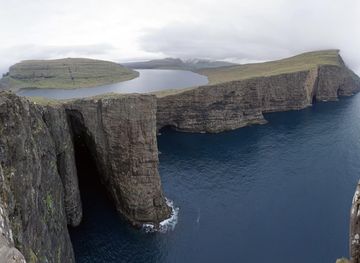
Nólsoy Island Travel Guide - Free Web & App
Your ultimate guide to Nólsoy Island. Discover top landmarks, proposed trips, and local tips. Free on the web or via the Evendo companion app.


Nólsoy Island in the Faroe Islands offers ferry-accessed village life, sea cliffs, birdwatching, hiking and the historic Borðan lighthouse near Tórshavn.
An Island Across the Sound
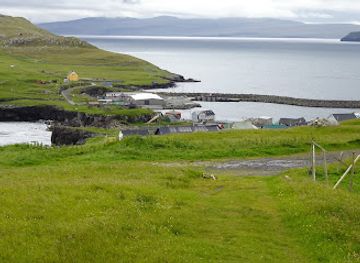
Nólsoy lies just east of Tórshavn, separated from the Faroese capital by a short stretch of open water but possessing a distinctly rural character. The island is long and narrow, with a single settlement, Nólsoy village, gathered around a sheltered harbour on the western side. Most visitors arrive by ferry from Tórshavn, and the crossing provides an immediate sense of the island’s relationship with the sea: the capital recedes behind you while steep slopes, grassy ridges and exposed headlands come into view.Read more about Nólsoy Island
Birds, Cliffs and Open Landscapes
Village and Cultural Identity
When is the best time to visit Nólsoy Island?
Best: June–August · 14–16°C| Month | High (°C) | Rainfall (mm) |
|---|---|---|
| January | 7 | 150 |
| February | 6 | 120 |
| March | 6 | 100 |
| April | 7 | 90 |
| May | 11 | 80 |
| June (best) | 14 | 70 |
| July (best) | 16 | 70 |
| August (best) | 16 | 80 |
| September | 15 | 90 |
| October | 13 | 100 |
| November | 10 | 120 |
| December | 8 | 130 |
Getting to and around Nólsoy Island
How to get there
Transportation
Best landmarks in Nólsoy Island
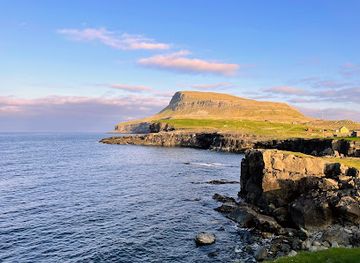
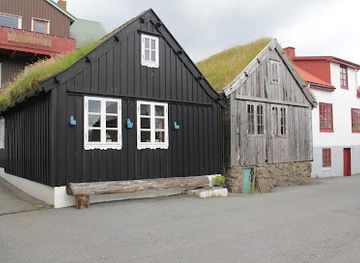
Borðan lighthouse at Nólsoy’s southern tip is the island’s most recognisable built landmark, standing at a strategically exposed point overlooking the Atlantic approaches to the Faroes. The lighthouse and its surrounding headland are reached as part of a substantial walk from the village, with the journey itself revealing the scale of the island’s open maritime setting. Nólsoy village forms a cultural landmark in its own right through its compact harbour, traditional Faroese houses and continuing connection with fishing and seafaring. The island’s basalt ridges, grassy uplands and steep coastal slopes are its principal natural landmarks, while its bird colonies give the shoreline ecological importance. Nólsoyar Páll’s association with the island adds a strong historical dimension, linking the landscape to Faroese maritime independence, poetry and national identity.
-
Cafe
Maggie's café
Experience the best of Nólsoy at Maggie's Café, where local flavors meet breathtaking views in the heart of the Faroe Islands.
-
Island
Nólsoy
Discover the captivating beauty and rich culture of Nólsoy, a serene island escape in the Faroe Islands for nature lovers and adventurers alike.
-
Ferry service
Nólsoy Harbor
Discover Nólsoy Harbor: Your gateway to breathtaking landscapes and serene island adventures in the heart of the Faroe Islands.
-
Tourist information center
Visit Nólsoy
Explore Nólsoy, a serene island in the Faroe Islands, renowned for its stunning landscapes, rich culture, and unique wildlife experiences.
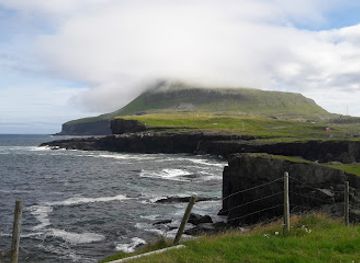
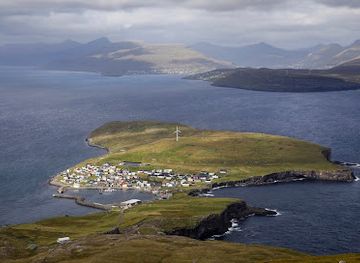
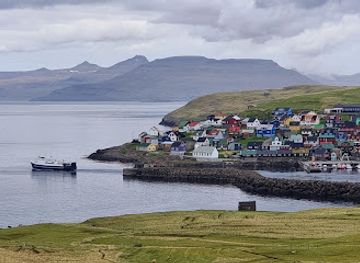
Explore Nólsoy Island on the map
Plan your trip on one map. See where the top attractions, landmarks, restaurants and hotels are, and book hotels and experiences in a few clicks.
Best hotels in Nólsoy Island
Best restaurants in Nólsoy Island
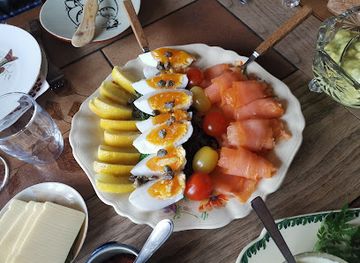
Nólsoy has a very small dining scene, so visitors should not expect the range of restaurants found in Tórshavn. Food may be available through limited local arrangements or seasonal refreshments, but opening times and availability should be confirmed rather than assumed. The safest approach for a walking day is to bring provisions from Tórshavn, particularly water and food for the route to Borðan. Tórshavn, directly across the sound, provides the Faroe Islands’ broadest concentration of cafés, restaurants, bakeries and shops, with menus shaped by local seafood, lamb, dairy products and contemporary Nordic cooking. Visitors staying on Nólsoy can experience the hospitality of a small island settlement, but should be self-sufficient and respectful of local resources. Regional specialities are more reliably encountered in the capital and other larger Faroese communities than on the island itself.
Best bars in Nólsoy Island
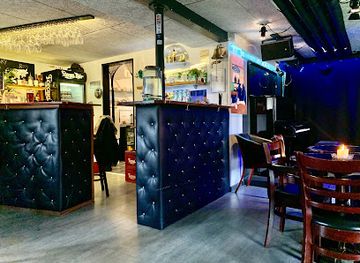
Nólsoy is not a nightlife destination and has no established club district or extensive evening entertainment infrastructure. Evenings centre on the quiet atmosphere of the village, the harbour and the surrounding hills, with social life shaped by the small resident community rather than a visitor-oriented bar scene. Any local pub or seasonal event should be regarded as community-based and subject to change, not as a guaranteed facility. Tórshavn, across the sound, offers the Faroe Islands’ main choice of pubs, bars, live music and cultural venues, although ferry arrangements mean that visitors should not assume they can return to Nólsoy late at night. Those staying on the island are more likely to spend the evening watching changing light over the water, listening to seabirds or enjoying the stillness of a remote settlement.
Best shops in Nólsoy Island
Shopping on Nólsoy is limited to the needs of a small island community, so visitors should buy substantial provisions and outdoor essentials in Tórshavn before crossing the sound. There is no extensive retail district, craft market or dependable choice of specialist shops on the island. Any local artworks, handmade items or community-produced goods are likely to be encountered through small-scale arrangements rather than permanent commercial premises, and availability should not be presumed. Tórshavn is the most practical nearby place for Faroese food products, knitwear, design, books and locally made souvenirs, while other larger settlements across the islands provide additional independent shops. On Nólsoy, the most meaningful form of cultural shopping is often connected with supporting local makers or community initiatives when these are openly available, while respecting that the village is a home and workplace rather than a themed retail environment.
-
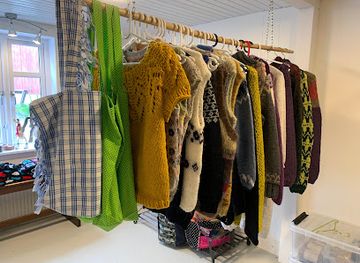
Clothing store
Handmade in Nólsoy
Explore the artistry of the Faroe Islands at Handmade in Nólsoy, a unique clothing store showcasing authentic local craftsmanship.
-
Grocery store
Matvørubúðin
Explore Matvørubúðin in Nólsoy for local groceries and a taste of Faroese culture amidst breathtaking landscapes.
Get your free copy of our complete guide to Nólsoy Island, delivered straight to you.
Everything on this page, from attractions and restaurants to essentials and local phrases, in one PDF you can read offline, print or share.
Already have an account? Sign in
Your Nólsoy Island guide is ready.
We'll send it to · Not you? Sign out

Getting your guide ready…
We are putting together a fresh copy of the Nólsoy Island guide. This can take up to a minute.
This can take a few moments. If your browser asks, choose Allow so the download can start. You'll find the guide in your Downloads folder.
Nothing happened? Download it again
Sorry, the guide is taking longer than usual. Please try again in a minute, or get it by email instead.
Nólsoy Island essentials
Currency and Payment
Safety
Emergency Situations
Do's and Don'ts
Local Tips
From Eve
Local phrases worth knowing
You don't need to get them perfect. A few words go a long way, and locals appreciate the effort.
Basics
| English | Local | Say it |
|---|---|---|
| Hello | Halló | [ha-lo] |
| Goodbye | Farvæl | [far-væl] |
| Yes | Ja | [ya] |
| No | Nei | [nay] |
| Please/You're welcome | Vænta | [væn-ta] |
| Thank you | Takk fyri | [tak fur-ee] |
| Excuse me/Sorry | Fyrigef | [fyr-i-gev] |
| How are you? | Hvussu gongur tú? | [hvus-su gon-gur too] |
| Fine. And you? | Godt. Og tú? | [got oh too] |
| Do you speak English? | Talar tú enskt? | [ta-lar too en-skt] |
| I don't understand | Eg skilji ikki | [eg shil-yi i-chi] |
Eating & Drinking
| English | Local | Say it |
|---|---|---|
| I'd like to see the menu, please | Eg vil síggja menuin, takk | [eg vil see-jya me-nu-in tak] |
| I don't eat meat | Eg eta ikki kjøt | [eg eh-ta i-chi shøt] |
| Cheers! | Skál! | [skawl] |
| I would like to pay, please | Eg vil gjalda, takk | [eg vil gyal-da tak] |
Emergencies
| English | Local | Say it |
|---|---|---|
| Help! | Hjálp! | [hyowlp] |
| Go away! | Far burtur! | [far bur-tur] |
| Call the Police! | Ringi eftir politi! | [ring-i ef-tir po-li-tee] |
| Call a doctor! | Ringi eftir læknari! | [ring-i ef-tir læk-na-ri] |
| I'm lost | Eg er týstur | [eg air tees-tur] |
| I'm ill | Eg er sjúkur | [eg air shoo-kur] |
Shopping
| English | Local | Say it |
|---|---|---|
| I'd like to buy... | Eg vil keypa... | [eg vil kee-pa] |
| I'm just looking | Eg er bara at síggja | [eg air ba-ra at see-jya] |
| How much is it? | Hvat kostar tað? | [kvat kost-ar thah] |
| That's too expensive | Tað er ov dyrt | [thah air ov di-rt] |
| Can you lower the price? | Kanstu lækkja prís? | [kan-stu læk-ya prees] |
Time & Numbers
| English | Local | Say it |
|---|---|---|
| What time is it? | Hvat er klokkan? | [kvat air klok-an] |
| It's one o'clock | Tað er eitt | [thah air ay-it] |
| Half past (10) | Hálf tið (10) | [howlf tid (10)] |
| Morning | Morgun | [mor-gun] |
| Afternoon | Hádegi | [haw-de-gi] |
| Evening | Kvøld | [kvul-d] |
| Yesterday | Í gjár | [ee dyar] |
| Today | Í dag | [ee daw] |
| Tomorrow | Í morgin | [ee mor-gin] |
| 1 | Ein | [ayn] |
| 2 | Tvær | [tver] |
| 3 | Tríggir | [tree-gir] |
| 4 | Fýra | [fee-ra] |
| 5 | Fimm | [fim] |
| 6 | Seks | [seks] |
| 7 | Sjey | [shay] |
| 8 | Átta | [awt-ta] |
| 9 | Niðan | [nee-than] |
| 10 | Tíggju | [tee-gyu] |
Transport & Directions
| English | Local | Say it |
|---|---|---|
| Where's a/the...? | Hvar er ein/tey...? | [kvar air ayn/tey] |
| What's the address? | Hvat er adressan? | [kvat air ad-dres-san] |
| Can you show me (on the map)? | Kan tú vísa mær (á kortinum)? | [kan too vee-sa mae-ir ow kort-in-um] |
| When's the next (bus)? | Nær kemur næsti (bussin)? | [nair kyu-mer nes-ti bus-in] |
| A ticket (to ....) | Ein billett (til ....) | [ayn bil-et til] |
History of Nólsoy Island
Basalt Foundations and Early Settlement
Nólsoy, like the other Faroe Islands, is formed from layers of basalt created by ancient volcanic activity. Its position beside the approaches to Tórshavn made the island part of the settled maritime landscape of the Faroes from the Norse period onwards. The community developed around farming, fishing and the practical use of the sea, with the western harbour providing shelter and access to the larger settlements on Streymoy. As on other Faroese islands, life was historically organised around small coastal villages and the seasonal demands of livestock, seabirds and fishing rather than extensive arable agriculture.
A Maritime Community
Nólsoy’s history has been closely tied to boats and seafaring. The island’s residents depended on rowing and sailing routes to reach neighbouring communities, trade goods and pursue fishing, while its location near Tórshavn connected it to the main commercial centre of the Faroes. The exposed coast also demanded local knowledge of currents, weather and landing places. Fishing and small-scale farming remained central to community life as the Faroese economy gradually shifted towards more organised commercial fisheries and improved transport links.
Nólsoyar Páll and Faroese Identity
The island is the birthplace of Poul Poulsen, better known as Nólsoyar Páll, who lived from 1766 until his disappearance at sea in 1809. He was a sailor, poet and outspoken critic of the Danish trade monopoly that restricted Faroese commerce. His vessel, Royndin Fríða, became associated with attempts to strengthen local seafaring and economic independence. Nólsoyar Páll’s poetry and public life later gave him an important place in Faroese national consciousness, making Nólsoy one of the country’s significant cultural reference points despite its small population.
Lighthouse, Conservation and Modern Access
The lighthouse at Borðan, at Nólsoy’s southern end, reflects the continuing importance of safer navigation around the Faroese coastline. Modern Nólsoy is linked to Tórshavn by scheduled ferry rather than a road connection, preserving the island’s separate rhythm while making day visits possible. Its bird colonies and exposed coastal habitats have also become part of the island’s visitor identity. Conservation-minded travel is particularly important because breeding seabirds are sensitive to disturbance, and weather can make the open hills and shoreline demanding even for experienced walkers.
Nólsoy Island in Photos
Browse through our photo collection highlighting the charm and character of the destination.
Cities in Nólsoy Island
The towns and cities of Nólsoy Island, and the easiest places to base yourself.

Swipe for more cities
Neighbouring destination travel guides
The closest destinations to Nólsoy Island, if you have time for more than one.
-
-

-
-

-


Swipe for more destinations