

Free Hvalvík Travel Guide & Mobile App
Plan your Hvalvík trip with Evendo. Get free guides to top attractions, restaurants, hotels, and bars. Web access or download the mobile app.


Hvalvík in the Faroe Islands offers a peaceful village base on Streymoy for historic churches, coastal walks, dramatic scenery and island culture.
Village by the Sound
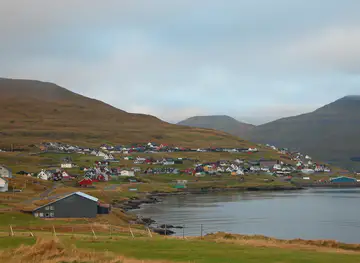
Hvalvík lies on the eastern coast of Streymoy, facing the narrow Sundini sound and the mountains of neighbouring Eysturoy. The settlement is small, peaceful and unmistakably Faroese, with brightly painted houses, turf-roofed buildings and a shoreline shaped by the meeting of steep land and open water. Its name means ‘Whale Bay’, reflecting the close relationship between Faroese communities and the sea, although everyday life here is now defined as much by homes, roads and local routines as by traditional maritime practices.Read more about Hvalvík
A Historic Wooden Church
Exploring the Surrounding Landscape
When is the best time to visit Hvalvík?
Best: June–August · 10–12°C| Month | High (°C) | Rainfall (mm) |
|---|---|---|
| January | 7 | 140 |
| February | 7 | 130 |
| March | 7 | 120 |
| April | 7 | 100 |
| May | 8 | 90 |
| June (best) | 10 | 80 |
| July (best) | 12 | 80 |
| August (best) | 12 | 90 |
| September | 11 | 100 |
| October | 10 | 110 |
| November | 8 | 120 |
| December | 7 | 140 |
Getting to and around Hvalvík
How to get there
Transportation
Best attractions in Hvalvík
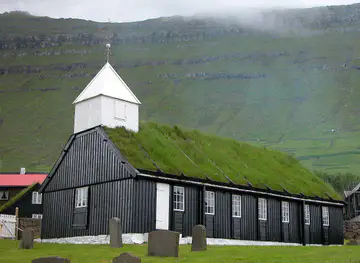
Hvalvík’s principal attraction is its setting: a small coastal village gathered beside Sundini, with steep mountains rising across the water and traditional houses arranged along the shoreline. Hvalvík Church, completed in 1829, is the essential cultural sight, its dark wooden walls and turf roof offering a vivid example of historic Faroese church architecture. The village roads provide quiet views of the sound, grazing land and neighbouring settlements, while the nearby community of Streymnes extends the same rural landscape. Haldórsvík, further north, is known for its distinctive octagonal church, and the wider roads of northern Streymoy lead towards dramatic scenery and the historic settlement of Saksun. Those destinations are outside Hvalvík itself, but make natural additions to a carefully planned island drive. The appeal here is not a large collection of ticketed sights, but the chance to observe an inhabited Faroese landscape where weather, sea and architecture remain closely connected.
-
Tourist attraction
Múlafossur Waterfall
Witness the breathtaking Múlafossur Waterfall in the Faroe Islands, where cascading waters meet dramatic cliffs and stunning landscapes.
43 min drive · 23 km from city centre
-
Tourist attraction
Gjógv Natural Harbour
Discover Gjógv Natural Harbour: A picturesque Faroese village with dramatic cliffs, a unique sea-filled gorge, and tranquil charm.
36 min drive · 16 km from city centre
-
Tourist attraction
View on Mullafossur and Gasadalur village
Experience the iconic Múlafossur Waterfall in the Faroe Islands, where cascading waters meet dramatic cliffs and charming village life.
43 min drive · 23 km from city centre
-
Sculpture
The Seal Woman (Kópakonan)
A bronze statue in Mikladalur, Faroe Islands, honoring the captivating legend of the Seal Woman and the dramatic coastal scenery.
41 min drive · 21 km from city centre


Best landmarks in Hvalvík
Hvalvík Church is the village’s defining landmark and one of the Faroe Islands’ most important surviving wooden churches. Completed in 1829, it has a compact timber form, white details and a turf-covered roof that express the practical architectural vocabulary of traditional Faroese religious buildings. Its position close to Sundini gives it an unusually strong relationship with the landscape. The village itself is also a cultural landmark in miniature, with traditional houses and farm structures showing how settlements adapted to narrow coastal ground beneath steep mountains. Across the surrounding area, the church at Haldórsvík provides a contrasting rural landmark with its unusual octagonal plan, while the roads and shorelines around Streymoy reveal the historic importance of sound, pasture and mountain passes. Hvalvík’s significance lies in this combination of a preserved building and an intact village setting rather than in monumental civic architecture.
-
Historical place
Kirkjubømúrurin
Discover the historic charm and breathtaking landscapes of Kirkjubøur, the cultural heart of the Faroe Islands, where ancient history meets natural beauty.
49 min drive · 29 km from city centre
-
Tourist attraction
Múlafossur Waterfall
Discover the breathtaking Múlafossur Waterfall in Gasadalur, an iconic natural wonder of the Faroe Islands, where cascading water meets dramatic cliffs.
43 min drive · 23 km from city centre
-
Tourist attraction
Gjógv Natural Harbour
Explore the breathtaking Gjógv Natural Harbour in the Faroe Islands, where dramatic cliffs meet serene waters in a picturesque village escape.
36 min drive · 16 km from city centre
-
Tourist attraction
Fossá
Discover Fossá, a breathtaking waterfall in the Faroe Islands, where nature's beauty meets tranquil serenity, perfect for photography and exploration.
22 min drive · 7.2 km from city centre


Explore Hvalvík on the map
Plan your Hvalvík trip on one map. See where the top attractions, landmarks, restaurants, bars and hotels are, find what's near where you're staying, and book hotels and experiences in a few clicks.
Best hotels in Hvalvík
Best restaurants in Hvalvík
Hvalvík has limited dining infrastructure, so visitors should not expect a concentrated restaurant quarter or a broad choice of evening eateries. Food arrangements are more reliably found in larger settlements elsewhere on Streymoy, while self-catering is practical for travellers staying in rural accommodation. Faroese cooking draws on the islands’ maritime and pastoral traditions, with fish, lamb, potatoes, fermented or dried preparations and locally made dairy products appearing in homes and specialist menus across the country. In Hvalvík, the most authentic food experience is often connected with the wider rhythm of village life rather than a formal dining scene: provisions bought before travelling, coffee in a nearby settlement or a meal based on local ingredients. Always check availability in advance, particularly outside the main tourist season, when rural services may be reduced.
-
Restaurant
Fríða Kaffihús
Discover authentic Faroese cuisine at Fríða Kaffihús in Klaksvík – where delicious food meets rich local history.
43 min drive · 23 km from city centre
-
Restaurant
Vestmanna Tourist Centre
Vestmanna Tourist Centre: Launchpad for bird cliff boat adventures, Faroese dining, wax museum wonders, and souvenirs amid Streymoy's fjord drama.
22 min drive · 7.4 km from city centre
-
Scandinavian
Katrina Christiansen
Discover authentic Scandinavian flavors at Katrina Christiansen in Tórshavn – an unforgettable dining experience amidst stunning island scenery.
44 min drive · 24 km from city centre
-
Restaurant
Angus Steakhouse
Discover premium steaks and local flavors at Angus Steakhouse in Tórshavn - where culinary excellence meets Faroese tradition.
44 min drive · 24 km from city centre


Best bars in Hvalvík
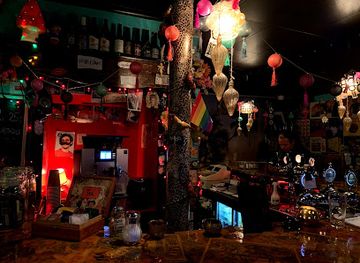
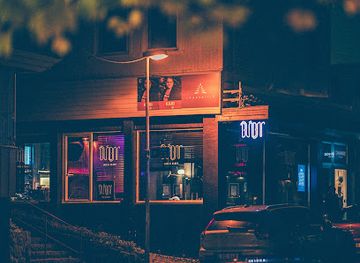
Hvalvík does not have a conventional nightlife district, nightclub scene or selection of late-opening bars. Evenings are generally quiet, shaped by the weather, long summer light and the social life of homes and small communities. Travellers seeking Faroese craft beer, cocktails, live music or more organised entertainment will find a broader choice in Tórshavn, while larger villages elsewhere may have occasional cafés or community events. In Hvalvík, the evening experience is more atmospheric than commercial: a walk beside Sundini in summer light, the sound of weather moving through the village and views across the water after dark. Anyone driving after drinking should make arrangements in advance, as rural distances, narrow roads and changing conditions make an improvised journey unwise.
-
Irish pub
Irish Pub Torshavn
Discover authentic Irish hospitality at Irish Pub Torshavn, where great food and drinks meet a lively atmosphere in the heart of the Faroe Islands.
44 min drive · 24 km from city centre
-
Bar
Sirkus Bar
Experience Tórshavn's nightlife at Sirkus Bar, where local charm meets modern flair in a vibrant setting.
44 min drive · 24 km from city centre
-
Bar
Mikkeller Tórshavn
Discover the rich flavors of craft beers at Mikkeller Tórshavn, a must-visit bar in the heart of the Faroe Islands.
44 min drive · 24 km from city centre
-
Brewpub
OY Brewing
Experience the best of Faroese craft beer and local cuisine at OY Brewing, a charming brewpub in the heart of Tórshavn.
43 min drive · 23 km from city centre


Best nightclubs in Hvalvík
Hvalvík does not have a conventional nightlife district, nightclub scene or selection of late-opening bars. Evenings are generally quiet, shaped by the weather, long summer light and the social life of homes and small communities. Travellers seeking Faroese craft beer, cocktails, live music or more organised entertainment will find a broader choice in Tórshavn, while larger villages elsewhere may have occasional cafés or community events. In Hvalvík, the evening experience is more atmospheric than commercial: a walk beside Sundini in summer light, the sound of weather moving through the village and views across the water after dark. Anyone driving after drinking should make arrangements in advance, as rural distances, narrow roads and changing conditions make an improvised journey unwise.
-
Irish pub
Irish Pub Torshavn
Discover the heart of Tórshavn at Irish Pub Torshavn, where authentic Irish cuisine meets Faroese charm in a cozy atmosphere.
44 min drive · 24 km from city centre
-
Bar
Sirkus Bar
Experience the vibrant nightlife of Tórshavn at Sirkus Bar, a lively spot for locals and tourists alike, showcasing the best of Faroese culture.
44 min drive · 24 km from city centre
-
Bar
Glitnir
Discover the vibrant nightlife of Tórshavn at Glitnir, a lively bar offering a unique blend of local culture and unforgettable experiences.
44 min drive · 24 km from city centre
-
Bar
Blábar
Experience the vibrant nightlife of Tórshavn at Blábar, where locals and travelers gather for exquisite drinks and unforgettable memories.
44 min drive · 24 km from city centre


Best shops in Hvalvík
Hvalvík is not a shopping destination and has no substantial retail district, department store or market quarter. Visitors should purchase food, fuel, outdoor essentials and practical supplies in larger settlements before travelling into northern Streymoy, particularly when staying in self-catering accommodation. Shopping in the wider Faroe Islands is more closely associated with Faroese woollen goods, knitwear, locally produced food, design objects and practical outdoor clothing than with Hvalvík-specific souvenirs. In villages, small-scale sales and craft activity may be seasonal or informal, so availability should not be assumed. The most meaningful local purchases are usually products made elsewhere in the islands but connected to Faroese traditions, such as wool garments, ceramics, preserves or dried foods. Respect private property and do not treat working farm buildings or homes as shops unless they are clearly presented as such.
-
Grocery store
Bónus Norðskála
Discover local flavors at Bónus Norðskála, the premier grocery store in the Faroe Islands, offering fresh produce and unique Faroese delicacies.
8 min drive · 2.8 km from city centre
-
Supermarket
Á handil
Discover the best of local and international products at Á handil, Vestmanna's top supermarket in the stunning Faroe Islands.
22 min drive · 7.4 km from city centre
-
Supermarket
Bónus
Explore the flavors of the Faroe Islands at Bónus, your affordable supermarket destination in Hoyvík with local and international products.
42 min drive · 22 km from city centre
-
Grocery store
FK fuglafjørður
Explore the flavors of the Faroe Islands at FK Fuglafjørður, your go-to grocery store for local delicacies and fresh produce.
33 min drive · 13 km from city centre


Get your free copy of our complete guide to Hvalvík, delivered straight to you.
Everything on this page, from attractions and restaurants to essentials and local phrases, in one PDF you can read offline, print or share.
Already have an account? Sign in
Your Hvalvík guide is ready.
We'll send it to · Not you? Sign out

Getting your guide ready…
We are putting together a fresh copy of the Hvalvík guide. This can take up to a minute.
This can take a few moments. If your browser asks, choose Allow so the download can start. You'll find the guide in your Downloads folder.
Nothing happened? Download it again
Sorry, the guide is taking longer than usual. Please try again in a minute, or get it by email instead.
Hvalvík essentials
Currency and Payment
Safety
Emergency Situations
Do's and Don'ts
Local Tips
From Eve
Local phrases worth knowing
You don't need to get them perfect. A few words go a long way, and locals appreciate the effort.
Basics
| English | Local | Say it |
|---|---|---|
| Hello | Halló | [ha-loh] |
| Goodbye | Farvæl | [far-vayl] |
| Yes | Ja | [yah] |
| No | Nei | [nay] |
| Please/You're welcome | Vælkomin | [vayl-koh-min] |
| Thank you | Takk fyri | [tahk fur-ee] |
| Excuse me/Sorry | Fyrirgef mær | [fur-ee-gev mair] |
| How are you? | Hvussu hevur tú tað? | [kvoos-so hey-vur too tah] |
| Fine. And you? | Godur. Og tú? | [goh-dur oh too] |
| Do you speak English? | Talar tú enskt? | [tah-lar too enskt] |
| I don't understand | Eg skilji ikki | [ay shil-yee ih-kee] |
Eating & Drinking
| English | Local | Say it |
|---|---|---|
| I'd like to see the menu, please | Eg vil síggja matseðilin, vænta | [ay vil see-ya mat-seh-dil-in vaint-ah] |
| I don't eat meat | Eg eti ikki kjøt | [ay et-ee ih-kee chyut] |
| Cheers! | Skál! | [skowl] |
| I would like to pay, please | Eg vil gjalda, vænta | [ay vil chal-dah vaint-ah] |
Emergencies
| English | Local | Say it |
|---|---|---|
| Help! | Hjálp! | [hyawlp] |
| Go away! | Far burtur! | [far boor-tur] |
| Call the Police! | Ring til Løgregluna! | [ring til lur-ee-greh-gloo-nah] |
| Call a doctor! | Ring til ein læknari! | [ring til iyn layk-nah-ree] |
| I'm lost | Eg er tapaður | [ay air tah-pow-dur] |
| I'm ill | Eg er sjúkur | [ay air shyoo-kur] |
Shopping
| English | Local | Say it |
|---|---|---|
| I'd like to buy... | Eg vil keypa... | [ay vil kheep-ah] |
| I'm just looking | Eg bara gloyma | [ay bah-rah glow-mah] |
| How much is it? | Hvat kostar tað? | [kvat koh-stahr tah] |
| That's too expensive | Tað er ov dýrt | [tah air ohv deer-t] |
| Can you lower the price? | Kann tú lægga prísin? | [kan too lay-gah pree-sin] |
Time & Numbers
| English | Local | Say it |
|---|---|---|
| What time is it? | Hvat er klokkan? | [kvat air klohk-kahn] |
| It's one o'clock | Tað er eitt | [tah air ayt] |
| Half past (10) | Hálvgjøgnum tíggju | [howl-vgyohnum tee-gyu] |
| Morning | Morgun | [mohr-goon] |
| Afternoon | Eftirmiðdagur | [eft-ir-midh-dah-goor] |
| Evening | Kvøld | [kvwold] |
| Yesterday | Í gjár | [ee ghyow-r] |
| Today | Í dag | [ee dahg] |
| Tomorrow | Í morgin | [ee mohr-geen] |
| 1 | Eitt | [ayt] |
| 2 | Tvær | [tva-ir] |
| 3 | Tríggir | [tree-gyir] |
| 4 | Fýra | [fear-ah] |
| 5 | Fimm | [feem] |
| 6 | Seks | [seks] |
| 7 | Sjey | [shay] |
| 8 | Átta | [owt-tah] |
| 9 | Niðan | [nee-than] |
| 10 | Tíggju | [tee-gyu] |
Transport & Directions
| English | Local | Say it |
|---|---|---|
| Where's a/the...? | Hvar er ein/the...? | [kvar air iyn/the] |
| What's the address? | Hvat er adressan? | [kvat air ah-dress-an] |
| Can you show me (on the map)? | Kannst tú vísa mær (á kortinum)? | [kanst too vee-sah mair (ow kohr-tin-um)] |
| When's the next (bus)? | Nær kemur næsti (buss)? | [nyar keh-moor nyest-ee boos] |
| A ticket (to ....) | Eitt miða (til ....) | [ayt mee-tha til] |
History of Hvalvík
A Settlement on Streymoy
Hvalvík developed on the eastern side of Streymoy beside the sheltered waters of Sundini. Like many Faroese settlements, its early history is tied to small-scale farming, fishing and the practical use of narrow coastal strips below steep mountain slopes. The name Hvalvík, meaning ‘Whale Bay’, reflects the vocabulary of a society whose geography and subsistence were closely connected with the sea. Written records for Faroese villages become clearer during the late medieval and early modern periods, but the exact date of Hvalvík’s first settlement is not securely established. Its position also connected it with neighbouring communities on Streymoy and across the sound on Eysturoy.
Parish Life and Rural Society
For centuries, Hvalvík formed part of the religious and agricultural landscape of northern Streymoy. Community life centred on seasonal work, boat-based fishing, sheep husbandry and shared religious observance, with houses and farm buildings arranged according to the limited level ground available beside the shore. The village’s relationship with Streymnes and other nearby settlements illustrates the collaborative structure of traditional Faroese society, in which parishes, farms and coastal communities depended on one another while remaining separated by mountains and water. Faroese language, Lutheran traditions and customary forms of communal work continued to shape local identity as outside connections gradually increased.
The Church of 1829
Hvalvík Church was completed in 1829, making it one of the clearest surviving examples of the wooden church tradition that once served many Faroese villages. Its timber construction reflects the scarcity of local building stone and the islanders’ long experience of working with imported wood, tar and turf. The church’s modest scale suited a rural congregation, while its position near the shore made it a visible communal landmark. Still associated with worship, the building offers a direct link between present-day Hvalvík and the religious life of nineteenth-century Faroese communities.
Roads, Ferries and Modern Connections
Hvalvík remained a relatively isolated settlement until improved maritime and road connections made movement between villages easier. For much of Faroese history, boats and footpaths were essential for reaching neighbouring communities, markets and parish institutions. Modern roads now connect Hvalvík with Streymoy’s larger settlements and with routes leading towards Eysturoy, while ferries have been supplemented by bridges and subsea tunnels elsewhere in the islands. These changes have reduced the isolation of villages such as Hvalvík without removing the importance of weather, terrain and distance from daily life.
A Contemporary Faroese Village
Today Hvalvík retains the physical character of a small coastal settlement while participating in the wider social and economic life of the Faroe Islands. Traditional houses, the historic church, cultivated plots and open pasture remain visible alongside modern homes and transport infrastructure. The village is not an urban attraction or a resort, and its significance lies in the continuity of ordinary Faroese settlement: a community shaped by the sea, mountains, Lutheran heritage and changing connections with the rest of the archipelago. Visitors encounter history here through the landscape and surviving buildings rather than through a large museum or formal historic quarter.
Hvalvík in Photos
Browse through our photo collection highlighting the charm and character of the destination.
Cities near Hvalvík
The closest cities to Hvalvík, if you have time for more than one stop.
-

-
-
-

-


Swipe for more cities
Explore more
Explore more of Faroe Islands
Discover the Faroe Islands: A land of rugged beauty, rich history, and tranquil villages, perfect for nature lovers and adventurers seeking an off-the-beaten-path destination.
Explore Faroe Islands