

Free Oulu Travel Guide & Mobile App
Plan your Oulu trip with Evendo. Get free guides to top attractions, restaurants, hotels, and bars. Web access or download the mobile app.


Oulu, Finland blends riverside history, Arctic culture, celebrated cycling routes, modern museums, seaside Nallikari and lively local experiences year-round.
A Northern City Shaped by Water
Oulu stands on the northern shore of the Gulf of Bothnia, where the Oulujoki River reaches the Baltic Sea. Finland’s fifth-largest city has a distinctly northern character: broad skies, birch-lined waterways, crisp winters and long summer evenings define its setting, while a youthful university population gives the centre an energetic cultural life. The compact core is easy to explore on foot, with the market square, riverside paths, pedestrianised Rotuaari and Oulu Cathedral forming a natural introduction to the city.Read more about Oulu
History, Markets and Modern Culture
Seaside Landscapes and Seasonal Light
When is the best time to visit Oulu?
Best: June–August · 19–23°C| Month | High (°C) | Rainfall (mm) |
|---|---|---|
| January | -5 | 20 |
| February | -5 | 18 |
| March | -1 | 14 |
| April | 7 | 11 |
| May | 13 | 8 |
| June (best) | 19 | 6 |
| July (best) | 23 | 5 |
| August (best) | 19 | 9 |
| September | 13 | 12 |
| October | 7 | 16 |
| November | 1 | 20 |
| December | -3 | 24 |
Getting to and around Oulu
How to get there
Transportation
Best attractions in Oulu
Oulu’s principal sights are concentrated within an approachable central area. Begin at Oulu Market Square and the Market Hall, where the waterfront setting and the Toripolliisi statue introduce the city’s trading identity, then follow the river towards Oulu Cathedral and the Northern Ostrobothnia Museum. The Oulu Museum of Art presents Finnish and regional art in the wider Myllytulli cultural district, while the Hupisaaret Islands offer a quieter network of bridges, streams and leafy paths close to the centre. For a change of landscape, Nallikari provides a broad sandy beach, coastal walking and views across the Gulf of Bothnia. The former Oulu Castle site in the riverside park recalls the town’s fortified beginnings, although the castle itself no longer survives. Seasonal events, galleries and cycle routes add further ways to experience the city beyond its principal buildings.
-
Tourist attraction
Oulu market square
Experience the heart of Oulu! Discover local flavors, unique crafts, and vibrant culture at the historic Market Square.
5 min walk · 0.4 km from city centre
-
Children's amusement center
HopLop Oulu
Endless indoor fun for the whole family at Oulu's premier children's amusement center, featuring climbing structures, ball pits & interactive games!
7 min drive · 2.4 km from city centre
-
Tourist attraction
Oulu Market Hall
Experience Oulu's heart at the historic Market Hall: local flavors, unique crafts, and a taste of Finnish tradition since 1901.
5 min walk · 0.4 km from city centre
-
Tourist attraction
Oulu Art Museum
Explore contemporary and regional art in a unique industrial setting at the Oulu Art Museum. A cultural gem in Northern Finland.
10 min walk · 0.8 km from city centre


Best landmarks in Oulu
Oulu Cathedral is the city’s most recognisable historic church, a nineteenth-century rebuilding after the Great Fire of 1822 and an important expression of the reconstructed centre. Nearby, the Market Hall and the wooden and stone buildings around Oulu Market Square preserve the civic and commercial atmosphere of an old port town, while the Toripolliisi statue has become a familiar modern symbol of the square. The remains of Oulu Castle are represented chiefly by the riverside park and archaeological traces on the former castle island, recalling the strategic settlement that preceded the present city. The Northern Ostrobothnia Museum provides context for these landmarks and the wider region. Along the river, the pedestrian bridges and green spaces of Hupisaaret are less monumental but significant in showing how Oulu’s waterways remain part of its urban identity.
-
Shopping mall
Kauppakeskus Valkea
Discover Kauppakeskus Valkea in Oulu: a vibrant shopping mall with trendy stores, delicious dining, and a lively atmosphere perfect for all travelers.
8 min walk · 0.6 km from city centre
-
Movie theater
Elokuvateatteri Star
Discover the ultimate cinematic experience at Elokuvateatteri Star in Oulu, featuring the latest films in a cozy and modern setting.
15 min walk · 1.2 km from city centre
-
Shopping mall
Ideapark Oulu
Explore Ideapark Oulu, a vibrant shopping mall offering diverse retail, dining, and entertainment experiences in the heart of Oulu, Finland.
20 min drive · 6.7 km from city centre
-
Restaurant
Toripolliisi
Experience authentic Finnish cuisine at Toripolliisi, a historic restaurant and iconic landmark in the heart of Oulu, Finland.
5 min walk · 0.4 km from city centre


Explore Oulu on the map
Plan your Oulu trip on one map. See where the top attractions, landmarks, restaurants, bars and hotels are, find what's near where you're staying, and book hotels and experiences in a few clicks.
Best hotels in Oulu
Best restaurants in Oulu
Oulu’s food culture reflects Northern Ostrobothnia’s forests, farms, rivers and coast. Fish from the Gulf of Bothnia and inland waters, potatoes, rye bread, dairy products, mushrooms and wild berries appear regularly in local and Finnish cooking, while reindeer and other game may feature on menus influenced by the wider north. Leipäjuusto, a mild squeaky cheese traditionally served warm with cloudberry jam, is a familiar northern speciality. The Market Hall is a practical place to encounter Finnish produce, bakery goods and casual meals, while cafés around the centre provide coffee, pastries and light lunches in the country’s strong café tradition. Restaurants range from informal modern Finnish kitchens to international dining, with central streets and the market area offering the greatest concentration. Seasonal ingredients and straightforward preparation are more characteristic than a single defining Oulu dish.
-
Restaurant
Toripolliisi
Experience authentic Finnish cuisine at Toripolliisi in Oulu - where every dish tells a story of local tradition and flavor.
5 min walk · 0.4 km from city centre
-
Hamburger
Kauppuri 5
Discover the vibrant flavors of Kauppuri 5 in Oulu - where delicious hamburgers meet a lively gastropub atmosphere.
5 min walk · 0.4 km from city centre
-
Restaurant
Cafe Rooster
Experience Finnish hospitality at Café Rooster in Oulu—where delightful cuisine meets vibrant ambiance.
7 min walk · 0.6 km from city centre
-
Pizza
Pizzeria Da Mario
Experience authentic Italian pizza at Pizzeria Da Mario in Oulu - where quality meets tradition in every slice.
7 min walk · 0.5 km from city centre


Best bars in Oulu
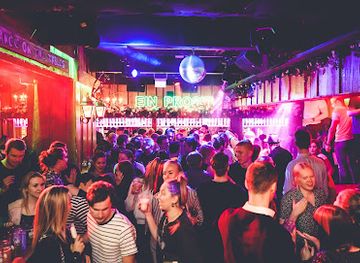
Oulu’s evening scene is shaped by its university population, compact centre and strong music culture rather than by a large club district. Bars and cafés around Rotuaari, the market area and nearby central streets range from relaxed pubs and beer venues to cocktail-focused spaces, while live music and student events provide much of the city’s social energy. Concerts, theatre and cultural programming offer alternatives to drinking, particularly at established arts venues and during festivals. Summer evenings draw people towards outdoor terraces and the riverfront; in winter, intimate indoor venues become more prominent. Nightlife is active by northern Finnish standards but remains relatively compact, and the atmosphere varies considerably between a weekday evening, a university event and a major concert. Finnish licensing rules and venue entry policies apply, so opening arrangements should be checked locally.
-
Pub
Leskinen
Discover the heart of Oulu's nightlife at Leskinen, a cozy pub with an extensive drink selection and a welcoming atmosphere.
7 min walk · 0.5 km from city centre
-
Irish pub
Irish Pub St. Michael (Arctic Vodka Oy)
Discover the authentic Irish pub experience in Oulu with live music, delicious cuisine, and a warm atmosphere at Irish Pub St. Michael.
7 min walk · 0.6 km from city centre
-
Bar
Pub Graali
Discover the vibrant nightlife of Oulu at Pub Graali, where local brews and live music create an unforgettable atmosphere for all visitors.
6 min walk · 0.5 km from city centre
-
Bar
Jumpru Pub
Experience Oulu's nightlife at Jumpru Pub, where delicious food, local brews, and live music create the perfect evening ambiance.
6 min walk · 0.4 km from city centre


Best nightclubs in Oulu
Oulu’s evening scene is shaped by its university population, compact centre and strong music culture rather than by a large club district. Bars and cafés around Rotuaari, the market area and nearby central streets range from relaxed pubs and beer venues to cocktail-focused spaces, while live music and student events provide much of the city’s social energy. Concerts, theatre and cultural programming offer alternatives to drinking, particularly at established arts venues and during festivals. Summer evenings draw people towards outdoor terraces and the riverfront; in winter, intimate indoor venues become more prominent. Nightlife is active by northern Finnish standards but remains relatively compact, and the atmosphere varies considerably between a weekday evening, a university event and a major concert. Finnish licensing rules and venue entry policies apply, so opening arrangements should be checked locally.
-
Night club
45 Special
Discover Oulu's nightlife at 45 Special, where live music, delicious food, and vibrant atmosphere come together for an unforgettable experience.
9 min walk · 0.7 km from city centre
-
Karaoke bar
Bar IHKU
Discover the vibrant nightlife at Bar IHKU, Oulu's favorite karaoke bar where every night is a celebration of music and fun.
7 min walk · 0.5 km from city centre
-
Karaoke bar
Pepper's Karaoke Bar
Discover Oulu's vibrant nightlife at Pepper's Karaoke Bar, where great music, drinks, and camaraderie await in an inviting atmosphere.
10 min walk · 0.8 km from city centre
-
Night club
Heidi's Bier Bar
Experience the vibrant nightlife of Oulu at Heidi's Bier Bar, a lively night club and bar with an extensive drink menu and pulsating atmosphere.
8 min walk · 0.6 km from city centre


Best shops in Oulu
Shopping in Oulu combines everyday Finnish retail with small-scale local produce and design. The Market Hall and market square are the most characterful places to look for food gifts, seasonal produce, baked goods and northern specialities, while the pedestrianised Rotuaari area and central shopping streets contain department stores, fashion retailers, cafés and practical services. Independent shops and galleries offer Finnish design, jewellery, ceramics, textiles and craft items, although selection and opening arrangements vary. Visitors interested in regional flavours may find cloudberry products, rye goods, preserves and other northern foods more distinctive than mass-produced souvenirs. Larger shopping centres serve local residents beyond the historic core, whereas the market area gives a stronger sense of Oulu’s relationship with the surrounding countryside and coast. Finland’s design tradition is well represented, but genuine local provenance is worth checking when buying handmade products.
-
Shopping mall
Kauppakeskus Valkea
Experience the ultimate shopping and dining adventure at Kauppakeskus Valkea, Oulu's premier shopping mall with diverse stores and gourmet delights.
8 min walk · 0.6 km from city centre
-
Department store
Sokos Oulu
Discover Finnish fashion and local specialties at Sokos Oulu, a premier department store in Oulu's vibrant city center.
9 min walk · 0.7 km from city centre
-
Clothing store
H&M
Explore affordable and stylish clothing for the whole family at H&M in Oulu, Finland's fashion hub.
8 min walk · 0.6 km from city centre
-
Clothing store
Veljekset Halonen Oy
Explore Veljekset Halonen Oy in Oulu, Finland, for a unique shopping experience filled with stylish clothing and footwear.
9 min walk · 0.7 km from city centre


Get your free copy of our complete guide to Oulu, delivered straight to you.
Everything on this page, from attractions and restaurants to essentials and local phrases, in one PDF you can read offline, print or share.
Already have an account? Sign in
Your Oulu guide is ready.
We'll send it to · Not you? Sign out

Getting your guide ready…
We are putting together a fresh copy of the Oulu guide. This can take up to a minute.
This can take a few moments. If your browser asks, choose Allow so the download can start. You'll find the guide in your Downloads folder.
Nothing happened? Download it again
Sorry, the guide is taking longer than usual. Please try again in a minute, or get it by email instead.
Oulu essentials
Currency and Payment
Safety
Emergency Situations
Do's and Don'ts
Local Tips
From Eve
Local phrases worth knowing
You don't need to get them perfect. A few words go a long way, and locals appreciate the effort.
Basics
| English | Local | Say it |
|---|---|---|
| Hello | Hei | [hey] |
| Goodbye | Näkemiin | [nah-keh-meen] |
| Yes | Kyllä | [kuh-lah] |
| No | Ei | [ay] |
| Please/You're welcome | Ole hyvä | [oh-leh hoo-vah] |
| Thank you | Kiitos | [kee-tohss] |
| Excuse me/Sorry | Anteeksi | [ahn-teh-ehk-see] |
| How are you? | Miten menee? | [mee-ten meh-neh] |
| Fine. And you? | Hyvin. Entä sinä? | [huh-veen. en-ta see-na] |
| Do you speak English? | Puhutko englantia? | [poo-hoot-koh eng-lahn-tee-ah] |
| I don't understand | En ymmärrä | [ayn um-mahr-rah] |
Eating & Drinking
| English | Local | Say it |
|---|---|---|
| I'd like to see the menu, please | Haluan nähdä ruokalistan, kiitos | [hah-loo-ahn neh-dah roo-kah-lee-stahn, kee-tohss] |
| I don't eat meat | En syö lihaa | [ayn syuh lee-hah] |
| Cheers! | Kippis! | [keep-pees] |
| I would like to pay, please | Haluan maksaa, kiitos | [hah-loo-ahn mahk-sah, kee-tohss] |
Emergencies
| English | Local | Say it |
|---|---|---|
| Help! | Apua! | [ah-poo-ah] |
| Go away! | Mene pois! | [meh-neh poh-ees] |
| Call the Police! | Soita poliisille! | [soi-tah poh-lees-seel-leh] |
| Call a doctor! | Soita lääkärille! | [soi-tah la-ykah-ri-leh] |
| I'm lost | Olen eksynyt | [oh-lehn ek-suh-nuut] |
| I'm ill | Olen sairas | [oh-lehn sah-ee-rahs] |
Shopping
| English | Local | Say it |
|---|---|---|
| I'd like to buy... | Haluaisin ostaa... | [hah-luh-ai-sin oh-stah] |
| I'm just looking | Katson vain | [kaht-sohn vain] |
| How much is it? | Paljonko se maksaa? | [pahl-yohn-koh seh mahk-sah] |
| That's too expensive | Se on liian kallis | [seh ohn lee-ahn kahl-liss] |
| Can you lower the price? | Voisitko laskea hintaa? | [voy-see-tkoh lah-skehah hin-tah] |
Time & Numbers
| English | Local | Say it |
|---|---|---|
| What time is it? | Paljonko kello on? | [pahl-yohn-koh keh-loh ohn] |
| It's one o'clock | Kello on yksi | [keh-loh ohn oohk-see] |
| Half past (10) | Puoli (kymmenen) | [poo-oh-lee kuhm-meh-nehn] |
| Morning | Aamu | [ah-moo] |
| Afternoon | Iltapäivä | [eel-tah-pah-ee-vah] |
| Evening | Ilta | [eel-tah] |
| Yesterday | Eilen | [ay-lenn] |
| Today | Tänään | [tah-nah-ahn] |
| Tomorrow | Huomenna | [hoo-oh-men-nah] |
| 1 | Yksi | [oohk-see] |
| 2 | Kaksi | [kahk-see] |
| 3 | Kolme | [kohl-meh] |
| 4 | Neljä | [nell-yah] |
| 5 | Viisi | [vee-see] |
| 6 | Kuusi | [koo-see] |
| 7 | Seitsemän | [sayt-seh-mahn] |
| 8 | Kahdeksan | [kah-dehk-sahn] |
| 9 | Yhdeksän | [uh-dehk-sahn] |
| 10 | Kymmenen | [kuhm-meh-nehn] |
Transport & Directions
| English | Local | Say it |
|---|---|---|
| Where's a/the...? | Missä on... | [mee-ssah ohn] |
| What's the address? | Mikä on osoite? | [mee-kah ohn oh-soi-teh] |
| Can you show me (on the map)? | Voitko näyttää minulle (kartalla)? | [voyt-koh neh-tah min-uhl-leh kar-tahl-lah] |
| When's the next (bus)? | Milloin on seuraava (bussi)? | [mee-loh-een ohn seh-ur-ah-vah boos-see] |
| A ticket (to ....) | Lippu (....) | [leep-poo] |
History of Oulu
A River Trading Settlement
Oulu was founded by King Charles IX of Sweden in 1605 at the mouth of the Oulujoki River, a strategic position for trade between inland Northern Ostrobothnia and the Gulf of Bothnia. The river connected the town with forests, agricultural settlements and routes reaching eastwards, while the coast opened links to Swedish ports. Early commerce centred on fish, timber and other natural resources, and the settlement developed around its harbour and market functions. A castle was built on an island in the river estuary in the late sixteenth century, before the official foundation of the town, although little of the structure survives. Oulu’s geographical position continued to shape its economy and urban identity long after the original fortifications disappeared.
Tar, Timber and Regional Commerce
During the seventeenth and eighteenth centuries, Oulu became an important centre for the export of tar, a product used to waterproof ships and vital to Baltic maritime trade. Tar was brought down the Oulujoki from inland production areas and shipped through the town’s harbour, linking local forests and rural communities to wider European markets. Timber, fish and agricultural goods added to the commercial flow. Fires, wars and the shifting channels of the river repeatedly affected the settlement, and Oulu suffered during conflicts between Sweden and Russia. The town’s trading heritage remains visible in the Market Hall, the central market square and the riverfront, even though the port’s earlier commercial dominance has diminished.
The Great Fire and New Oulu
A major fire destroyed much of Oulu in 1822, a disaster that led to a comprehensive redesign of the town. The rebuilding followed a plan associated with architect Carl Ludvig Engel, whose work also influenced the reconstruction of Helsinki and other Finnish towns. Wider streets, open spaces and more systematic wooden construction were intended to reduce the risk of future fires. Oulu Cathedral, rebuilt after the fire on the site of an earlier church, became one of the defining buildings of the renewed centre. Although later development has altered the nineteenth-century townscape, the fire and reconstruction explain the scale of several central streets and the enduring presence of Empire-style architecture.
From Port Town to Industrial City
In the nineteenth century, Oulu remained a regional commercial centre while its economy broadened beyond tar to include timber, sawmilling, paper-related activity and other forms of industry. Improved transport links strengthened connections with the rest of Finland, and steamship traffic supported trade across the Gulf of Bothnia. Urban institutions, schools and civic organisations expanded as the population grew. The city also became a service centre for the surrounding northern region, a role reflected today in its museums, public institutions and university. Industrialisation brought prosperity but also tied Oulu’s fortunes to changing markets and the wider transformation of Finland from a predominantly agrarian society into a modern industrial state.
War, Reconstruction and Expansion
The twentieth century brought political upheaval, wartime disruption and rapid urban growth. Oulu’s position in northern Finland made it part of the wider history of the Finnish Civil War and the Second World War, while post-war reconstruction reshaped the city’s architecture and infrastructure. New residential districts spread beyond the old centre, and roads, schools and public services were built for a growing population. The University of Oulu, founded in 1958, became a major force in education, research and regional development. Its presence helped broaden the city’s cultural and economic outlook, adding a strong student community to Oulu’s older identity as a river port and administrative centre.
Technology and Northern Urban Life
From the late twentieth century, Oulu developed a national reputation for technology, telecommunications research and high-skilled industry. The university, research organisations and technology businesses helped create an economy associated with innovation as well as traditional regional sectors. This transformation influenced the city’s public image, employment patterns and contemporary architecture, while cultural institutions continued to preserve Northern Ostrobothnia’s heritage. Oulu’s selection as European Capital of Culture for 2026 reflects the city’s attempt to connect this modern, internationally oriented identity with local communities, northern nature and regional traditions. Today, historic market buildings, post-war neighbourhoods, technology campuses and extensive cycleways form layers of a city that has repeatedly adapted to changing economic conditions.
Oulu in Photos
Browse through our photo collection highlighting the charm and character of the destination.
Cities near Oulu
The closest cities to Oulu, if you have time for more than one stop.
-
-
-

-

-


Swipe for more cities
Explore more

Explore more of Finland
Explore Finland, where the Midnight Sun meets the Northern Lights, offering a unique blend of natural beauty, rich culture, and unforgettable experiences.
Explore Finland