

Free Kuopio Travel Guide & Mobile App
Plan your Kuopio trip with Evendo. Get free guides to top attractions, restaurants, hotels, and bars. Web access or download the mobile app.


Kuopio blends Finnish lake scenery, Karelian flavours, lively markets and Puijo views with museums, saunas and outdoor adventures in eastern Finland.
Lake Country and Urban Character
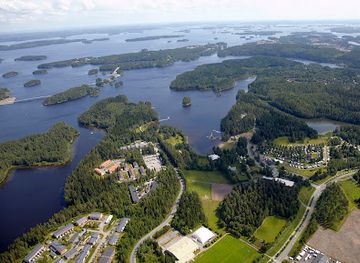
Kuopio rises among the wooded hills and blue waterways of Finnish Lakeland, with the broad expanse of Lake Kallavesi shaping both its outlook and its daily life. The city centre is compact and easy to explore on foot, yet the surrounding municipality stretches through a distinctly rural landscape of islands, forests and lakeshores. Market Square forms the social heart, where the covered market hall, cafés and the distinctive local speciality kalakukko reflect Kuopio’s strong Savonian identity.Read more about Kuopio
Views, Heritage and Culture
Life Beside Kallavesi
When is the best time to visit Kuopio?
Best: June–August · 20–23°C| Month | High (°C) | Rainfall (mm) |
|---|---|---|
| January | -5 | 25 |
| February | -4 | 20 |
| March | 1 | 15 |
| April | 8 | 10 |
| May | 15 | 5 |
| June (best) | 20 | 7 |
| July (best) | 23 | 10 |
| August (best) | 20 | 15 |
| September | 14 | 20 |
| October | 9 | 25 |
| November | 4 | 30 |
| December | -2 | 35 |
Getting to and around Kuopio
How to get there
Transportation
Best attractions in Kuopio
Kuopio’s principal attractions bring together lake scenery, regional culture and accessible outdoor spaces. At Market Square, the covered market hall and surrounding stalls offer an immediate introduction to local life and Savonian food traditions, while the Kuopio Museum explores the natural and cultural history of the region. Puijo Hill provides walking trails, winter sports and a high observation point above the forests and islands of Lake Kallavesi. Down by the water, Kuopio Harbour is a departure point for seasonal lake cruises and a pleasant route towards Väinölänniemi, whose peninsula has beaches, paths and open views. The Kuopio City Theatre and VB Photographic Centre add cultural depth, and the Orthodox Cathedral offers a quieter architectural stop near the centre. For a wider sense of the region, nearby rural landscapes and lake islands can be explored by organised excursion, boat or well-planned independent outing.
-
Tourist attraction
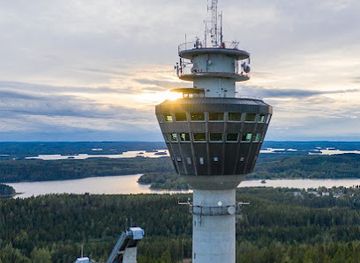
Puijo tower
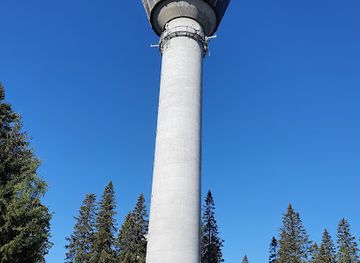
Experience breathtaking panoramic views of the Finnish Lakeland from the iconic Puijo Tower in Kuopio. A historic landmark with a revolving restaurant.
6 min drive · 2.1 km from city centre
-
Tourist attraction
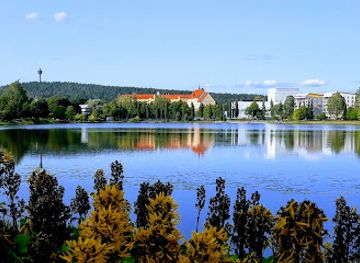
Valkeisenlammen puisto
Discover Kuopio's Valkeisenlammen Park: a blend of nature, history, and recreation in a beautiful urban setting. Perfect for all ages!
10 min walk · 0.8 km from city centre
-
Tourist attraction
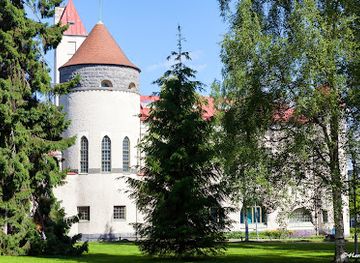
Museum of Kuopio
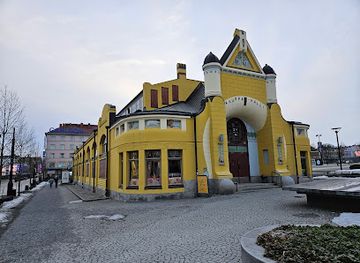
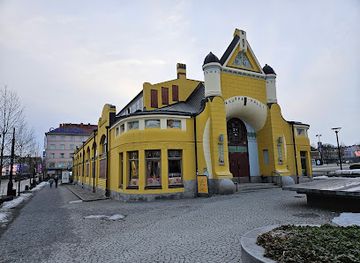
Explore culture and nature in a stunning Art Nouveau setting. Discover the soul of Northern Savonia at Kuopio Museum!
7 min walk · 0.6 km from city centre
-
Tourist attraction
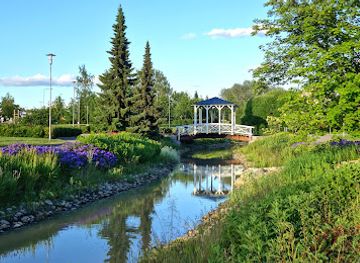
Hapelähde Park
Escape to Hapelähde Park in Kuopio: A picturesque oasis with vibrant flowers, playful streams, and recreational fun for everyone, all day, every day.
10 min walk · 0.8 km from city centre
Best landmarks in Kuopio
Kuopio Cathedral is one of the city’s most recognisable historic buildings, a neoclassical stone church completed in 1816 and closely associated with Kuopio’s nineteenth-century role as a regional religious centre. Nearby, the City Hall represents the civic confidence of the late nineteenth century, while the covered Market Hall anchors the commercial life of the central square and reflects the city’s enduring food traditions. The Orthodox Cathedral of Saint Nicholas adds a different religious and architectural presence to the centre, recalling the established Orthodox heritage of eastern Finland. Beyond the central streets, Puijo Tower has become a defining modern landmark through its elevated position above the lake-and-forest landscape. Väinölänniemi is less monumental but culturally important as a long-established public recreational peninsula, linking Kuopio’s urban identity with swimming, sport and the waters of Kallavesi.
-
Market
Kuopio Market
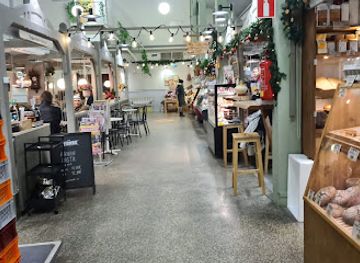
Experience the vibrant Kuopio Market, a lively hub of local culture, delightful flavors, and unique crafts in the heart of Finland.
2 min walk · 0.2 km from city centre
-
Tourist attraction
Puijo tower
Discover breathtaking views and rich experiences at Puijo Tower in Kuopio, Finland, a must-visit attraction for every traveler.
6 min drive · 2.1 km from city centre
-
Hotel
Spa Hotel Rauhalahti
Experience ultimate relaxation and leisure at Spa Hotel Rauhalahti in Kuopio with wellness facilities, exquisite dining, and beautiful Finnish nature.
10 min drive · 3.2 km from city centre
-
Children's amusement center
HopLop Kuopio
Discover the ultimate family adventure at HopLop Kuopio, where children can play, explore, and have fun in a safe and vibrant environment.
7 min drive · 2.2 km from city centre
Explore Kuopio on the map
Plan your Kuopio trip on one map. See where the top attractions, landmarks, restaurants, bars and hotels are, find what's near where you're staying, and book hotels and experiences in a few clicks.
Best hotels in Kuopio
Best restaurants in Kuopio
Kuopio’s food culture is rooted in Savo, where lake fish, rye, berries, mushrooms and pork feature prominently. The city’s emblematic speciality is kalakukko, a dense rye loaf traditionally baked around fish such as vendace or perch, while fried vendace, known locally as muikku, is widely associated with market and lakeside eating. The market square and its covered market hall are useful places to encounter regional products, pastries and casual food, including Karelian pastries and seasonal berries. Central restaurants range from traditional Finnish cooking to contemporary menus that reinterpret forest and lake ingredients, while cafés provide coffee, sweet bakes and savoury snacks in the unhurried Finnish style. Local dining is shaped by both Savonian heritage and the student population, so the centre also includes international cuisines, vegetarian choices and informal restaurants alongside established regional dishes.
-
Restaurant
Amarillo, Kuopio
Experience vibrant Tex-Mex flavors blended with Finnish hospitality at Amarillo Kuopio – where every meal is a celebration.
4 min walk · 0.3 km from city centre
-
Finnish
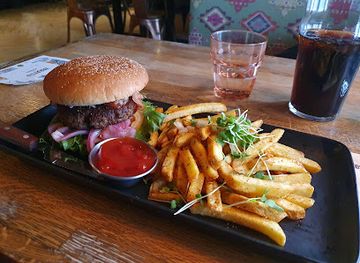
Muikkuravintola Sampo
Discover authentic Finnish cuisine at Muikkuravintola Sampo in Kuopio - where tradition meets taste in every dish.
10 min walk · 0.8 km from city centre
-
Italian
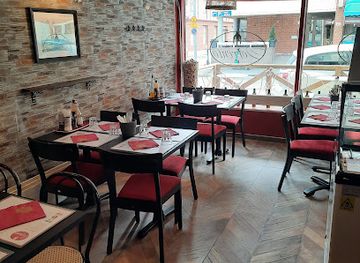
Pizzeria Sorrento
Experience authentic Italian cuisine at Pizzeria Sorrento in Kuopio - where every bite is a delicious journey through Italy.
10 min walk · 0.8 km from city centre
-
Greek
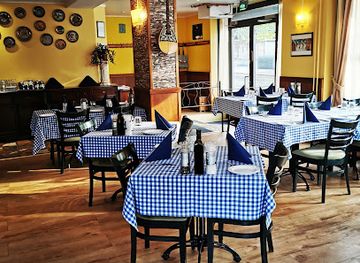
Ravintola Kreeta
Discover authentic Greek flavors at Ravintola Kreeta in Kuopio - a culinary gem offering delightful Mediterranean dishes in a warm atmosphere.
8 min walk · 0.6 km from city centre
Best bars in Kuopio
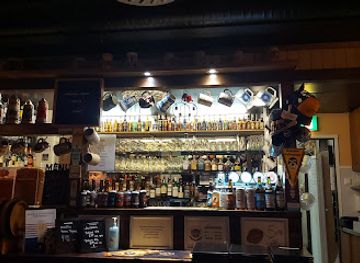
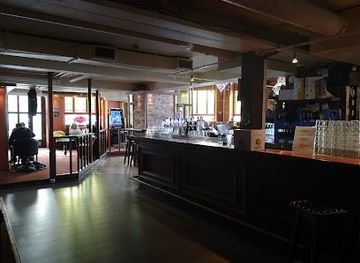
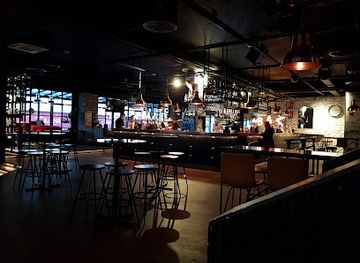
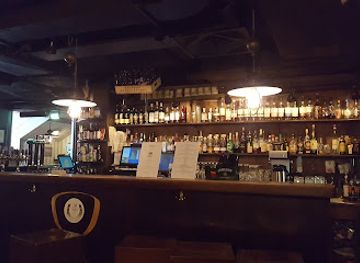
Kuopio’s evening scene is concentrated around the city centre, particularly the streets near Market Square and the pedestrian sections of Kauppakatu. The selection includes Finnish pubs, beer and cocktail bars, cafés that stay open into the evening, live music and student-oriented venues, with the busiest atmosphere often appearing towards the end of the week. The harbour adds seasonal terraces and lakeside views in summer, while winter evenings favour warm interiors and cultural events. Nightclubs exist but Kuopio’s nightlife is more modest than Helsinki’s or Tampere’s, and local entertainment also includes the Kuopio City Theatre, concerts and event programming at cultural venues. Visitors should expect Finnish licensing and age rules to be observed carefully, and should check current venue information because opening patterns and programmes can change.
-
Gastropub
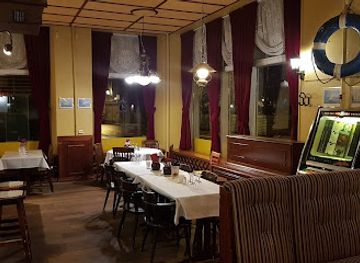
Bierstube
Discover the flavors of Finland at Bierstube, Kuopio's premier gastropub offering a delightful mix of local dishes and international brews.
5 min walk · 0.4 km from city centre
-
Pub
Ale Pupi
Discover Ale Pupi in Kuopio: a lively pub offering a diverse drink selection and a cozy atmosphere for an unforgettable night out.
5 min walk · 0.4 km from city centre
-
Bar
Apteekkari Kuopio
Apteekkari Kuopio offers a lively atmosphere and a diverse drink selection, perfect for experiencing the vibrant nightlife of this beautiful Finnish city.
5 min walk · 0.4 km from city centre
-
Beer Garden
Olutravintola Malja
Experience the vibrant atmosphere of Olutravintola Malja, a premier beer garden and wine bar in Kuopio, where local flavors and conviviality meet.
6 min walk · 0.5 km from city centre
Best nightclubs in Kuopio
Kuopio’s evening scene is concentrated around the city centre, particularly the streets near Market Square and the pedestrian sections of Kauppakatu. The selection includes Finnish pubs, beer and cocktail bars, cafés that stay open into the evening, live music and student-oriented venues, with the busiest atmosphere often appearing towards the end of the week. The harbour adds seasonal terraces and lakeside views in summer, while winter evenings favour warm interiors and cultural events. Nightclubs exist but Kuopio’s nightlife is more modest than Helsinki’s or Tampere’s, and local entertainment also includes the Kuopio City Theatre, concerts and event programming at cultural venues. Visitors should expect Finnish licensing and age rules to be observed carefully, and should check current venue information because opening patterns and programmes can change.
-
Night club
Jolene Happy Bar
Experience vibrant nightlife at Jolene Happy Bar in Kuopio, featuring karaoke, cocktails, and a lively atmosphere perfect for a night out.
5 min walk · 0.4 km from city centre
-
Night club
Makasiiniravintola Albatrossi
Discover the lively nightlife of Kuopio at Makasiiniravintola Albatrossi, a vibrant night club and bar offering a unique atmosphere and diverse drink selection.
14 min walk · 1.1 km from city centre
-
Pub
Leopardi
Discover the vibrant nightlife of Kuopio at Leopardi, where karaoke meets a cozy pub atmosphere for an unforgettable evening.
20 min drive · 6.6 km from city centre
-
Bar
SporttiPubi Futari
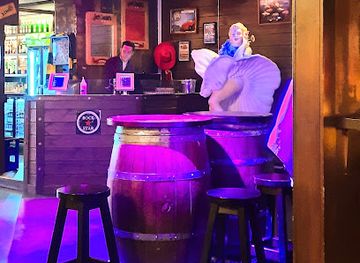
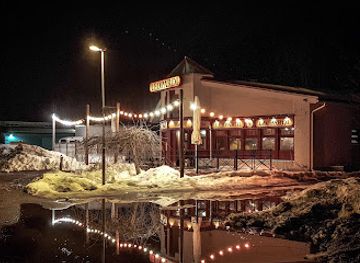
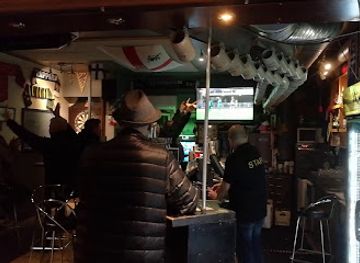
Experience the vibrant nightlife at SporttiPubi Futari, a top bar in Kuopio, Finland, known for its excellent drinks and friendly atmosphere.
4 min walk · 0.4 km from city centre

Best shops in Kuopio
Shopping in Kuopio is centred on Market Square, the covered market hall and the pedestrian streets leading through the compact centre. Market stalls and food retailers offer kalakukko, vendace products, rye breads, berry preserves, sweets and other Finnish specialities that travel well, while seasonal produce gives the square a changing character. Kauppakatu and nearby central streets combine national chains with cafés, everyday shops, independent businesses and specialist retailers, and the city’s shopping centres provide a weatherproof alternative during the darker months. Visitors interested in Finnish design can look for locally made crafts, textiles, woodwork, ceramics and small design goods, though stock varies between shops and seasons. The market hall is particularly useful for experiencing Kuopio’s regional identity, whereas the surrounding retail streets show its contemporary life as an educational and commercial centre.
-
Shopping mall
Matkus Shopping Center
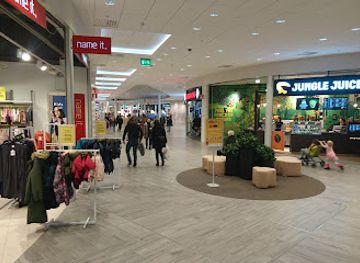
Discover the ultimate shopping experience at Matkus Shopping Center, where fashion, food, and fun come together in Kuopio.
26 min drive · 8.6 km from city centre
-
Market
Kuopio Market
Explore the heart of Kuopio at Kuopio Market, a vibrant destination for local produce, crafts, and Finnish culture.
2 min walk · 0.2 km from city centre
-
Department store
Sokos Kuopio
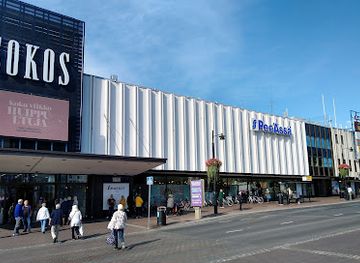
Discover a wide range of Finnish and international brands at Sokos Kuopio, a premier department store in the heart of Kuopio, Finland.
1 min walk · 0.1 km from city centre
-
Shopping mall
Apaja Shopping Center
Explore Kuopio's Apaja Shopping Center – a vibrant destination for shopping, dining, and entertainment, perfect for every traveler.
3 min walk · 0.2 km from city centre
Get your free copy of our complete guide to Kuopio, delivered straight to you.
Everything on this page, from attractions and restaurants to essentials and local phrases, in one PDF you can read offline, print or share.
Already have an account? Sign in
Your Kuopio guide is ready.
We'll send it to · Not you? Sign out

Getting your guide ready…
We are putting together a fresh copy of the Kuopio guide. This can take up to a minute.
This can take a few moments. If your browser asks, choose Allow so the download can start. You'll find the guide in your Downloads folder.
Nothing happened? Download it again
Sorry, the guide is taking longer than usual. Please try again in a minute, or get it by email instead.
Kuopio essentials
Currency and Payment
Safety
Emergency Situations
Do's and Don'ts
Local Tips
From Eve
Local phrases worth knowing
You don't need to get them perfect. A few words go a long way, and locals appreciate the effort.
Basics
| English | Local | Say it |
|---|---|---|
| Hello | Moi | [moy] |
| Goodbye | Näkemiin | [nakemiin] |
| Yes | Kyllä | [kuh-lah] |
| No | Ei | [ay] |
| Please/You're welcome | Ole hyvä | [oh-le hu-vah] |
| Thank you | Kiitos | [kee-tohss] |
| Excuse me/Sorry | Anteeksi | [ahn-tehk-see] |
| How are you? | Miten menee? | [mee-ten meh-nay] |
| Fine. And you? | Hyvin kiitos. Entä sinä? | [hoo-veen kee-tohss. en-tah see-nah] |
| Do you speak English? | Puhutko englantia? | [poo-hut-koh eng-lahn-tee-ah] |
| I don't understand | En ymmärrä | [en um-mar-rah] |
Eating & Drinking
| English | Local | Say it |
|---|---|---|
| I'd like to see the menu, please | Saisinko ruokalistan, kiitos | [sai-sin-koh roo-oh-kah-lis-tan, kee-tohss] |
| I don't eat meat | En syö lihaa | [en syoh lee-hah] |
| Cheers! | Kippis! | [kip-pis] |
| I would like to pay, please | Haluan maksaa, kiitos | [ha-lu-ahn mahk-saah, kee-tohss] |
Emergencies
| English | Local | Say it |
|---|---|---|
| Help! | Apua! | [ah-pu-ah] |
| Go away! | Mene pois! | [meh-neh poys] |
| Call the Police! | Soita poliisille! | [soi-tah poh-lee-see-leh] |
| Call a doctor! | Soita lääkärille! | [soi-tah lah-kah-rih-leh] |
| I'm lost | Olen eksyksissä | [oh-len ek-syks-is-sah] |
| I'm ill | Olen sairas | [oh-len sair-ahs] |
Shopping
| English | Local | Say it |
|---|---|---|
| I'd like to buy... | Haluaisin ostaa... | [ha-lu-ai-sin ohs-tah] |
| I'm just looking | Katselen vain | [kaht-seh-len vain] |
| How much is it? | Paljonko se maksaa? | [pahl-yon-koh seh mahk-sah] |
| That's too expensive | Se on liian kallis | [se ohn lee-ahn kahl-lis] |
| Can you lower the price? | Voitteko laskea hintaa? | [voyt-teh-koh lahs-keh hin-tah] |
Time & Numbers
| English | Local | Say it |
|---|---|---|
| What time is it? | Mitä kello on? | [mee-tah kel-lo ohn] |
| It's one o'clock | Kello on yksi | [kel-lo ohn uuk-see] |
| Half past (10) | Puoli (kymmenen) | [poy-lee kum-meh-nen] |
| Morning | Aamu | [ah-moo] |
| Afternoon | Iltapäivä | [eeltah-pai-vah] |
| Evening | Ilta | [eel-tah] |
| Yesterday | Eilen | [ay-len] |
| Today | Tänään | [tah-nan] |
| Tomorrow | Huomenna | [hwo-men-nah] |
| 1 | Yksi | [uuk-see] |
| 2 | Kaksi | [kahk-see] |
| 3 | Kolme | [kohl-meh] |
| 4 | Neljä | [nel-yah] |
| 5 | Viisi | [vee-see] |
| 6 | Kuusi | [koo-see] |
| 7 | Seitsemän | [sate-seh-man] |
| 8 | Kahdeksan | [kah-dehk-sahn] |
| 9 | Yhdeksän | [yhd-ehk-sahn] |
| 10 | Kymmenen | [kum-meh-nen] |
Transport & Directions
| English | Local | Say it |
|---|---|---|
| Where's a/the...? | Missä on...? | [mis-seh ohn] |
| What's the address? | Mikä on osoite? | [mee-kah ohn oh-soi-teh] |
| Can you show me (on the map)? | Voitko näyttää minulle (kartalla)? | [voyt-koh nayt-taah min-uhl-le (kart-tah-lah)] |
| When's the next (bus)? | Milloin on seuraava (bussi)? | [mil-loin ohn se-oo-raa-vah (boos-see)] |
| A ticket (to ....) | Yksi lippu (....) | [uuk-see lip-poo] |
History of Kuopio
Early Savonian Settlement
The Kuopio region developed within the historical landscape of Savo, where farming, fishing, forestry and movement across the waterways shaped settlement patterns for centuries. Rather than growing around a single ancient urban centre, the area consisted of dispersed communities connected by Lake Kallavesi and surrounding routes. Kuopio became a parish in the sixteenth century, and its position among eastern Finland’s lakes gradually gave it administrative and commercial importance. Savonian speech, food traditions and rural customs remain central to the city’s cultural identity, while the surrounding forests and waterways still resemble the environment that determined earlier patterns of life.
The Founding of Kuopio
King Gustav III founded Kuopio as a town in 1775, and it received city rights in 1782. The settlement was intended to strengthen administration and trade in Savo, with its location beside Kallavesi offering access to an extensive inland water network. Early Kuopio was modest in scale, but the street plan and civic institutions established during this period created the foundation for the present city centre. The market area, waterfront connections and administrative role all developed in relation to the town’s position between rural communities and the wider commercial world of eastern Finland.
A Nineteenth-Century Regional Centre
During the nineteenth century, Kuopio grew as the administrative, religious and commercial centre of Savo. The establishment of the Diocese of Kuopio in 1850 reinforced its ecclesiastical importance, while trade in agricultural produce, timber and other regional goods strengthened the market town’s economy. Kuopio Cathedral, completed in 1816, became one of the city’s defining buildings, and civic construction gradually gave the centre a more formal character. Improved lake transport connected Kuopio with other Finnish towns, enabling people, goods and ideas to circulate more efficiently through the lake district.
Railways, Industry and Urban Growth
The arrival of the railway in 1889 changed Kuopio’s relationship with the rest of Finland. Rail transport complemented the established lake routes, accelerated commerce and made the city more accessible for travel and regional administration. The late nineteenth and early twentieth centuries brought new schools, businesses and public buildings, while forestry and related industries became increasingly significant in the regional economy. Kuopio’s growth was not industrial on the scale of Finland’s largest cities, but the combination of rail, inland shipping, trade and public institutions established the urban framework visible in the central streets today.
War, Reconstruction and Modern Finland
Kuopio, like the rest of Finland, was affected by the upheavals of the Second World War and the post-war resettlement of people from territories ceded by Finland. The decades that followed brought housing construction, expanded public services and a gradual transformation from a compact market town into a regional city. The University of Kuopio was founded in 1972, later becoming part of the University of Eastern Finland, and strengthened the city’s role in medicine, health sciences and education. Modern Kuopio has also expanded through municipal mergers, bringing more rural landscapes and lakeshore communities into the city.
A Contemporary Lakeland City
Today Kuopio combines its historic role as Savo’s regional centre with a strong identity based on lake landscapes, outdoor recreation, education and food culture. The market square remains a social and commercial focus, while the harbour, Puijo and extensive forests express the city’s relationship with nature. Events, university life and cultural institutions contribute to a contemporary urban rhythm, yet local traditions such as kalakukko, vendace dishes and summer lakeside activities remain prominent. This balance between regional heritage and modern public life is central to Kuopio’s character within eastern Finland.
Kuopio in Photos
Browse through our photo collection highlighting the charm and character of the destination.
Cities near Kuopio
The closest cities to Kuopio, if you have time for more than one stop.
-

-

-

-

-


Swipe for more cities
Explore more

Explore more of Finland
Explore Finland, where the Midnight Sun meets the Northern Lights, offering a unique blend of natural beauty, rich culture, and unforgettable experiences.
Explore Finland