

Free Rovaniemi Travel Guide & Mobile App
Plan your Rovaniemi trip with Evendo. Get free guides to top attractions, restaurants, hotels, and bars. Web access or download the mobile app.


Rovaniemi, Finland’s Arctic capital, brings together Lapland culture, Santa Claus Village, northern lights, snowy nature and year-round outdoor adventures.
Arctic Capital and River City
Rovaniemi lies close to the Arctic Circle at the meeting point of the Ounasjoki and Kemijoki rivers, serving as the administrative and cultural centre of Finnish Lapland. Its broad streets, low-rise buildings and surrounding forests give it a spacious character, while the changing seasons shape everyday life: long summer evenings bring hiking and river excursions, and winter turns the surrounding landscape into a setting for snow sports and northern-lights outings.Read more about Rovaniemi
Designed for a New Lapland
Culture, Nature and Arctic Traditions
When is the best time to visit Rovaniemi?
Best: June–August · 18–22°C| Month | High (°C) | Rainfall (mm) |
|---|---|---|
| January | -7 | 12 |
| February | -7 | 9 |
| March | -2 | 9 |
| April | 4 | 12 |
| May | 10 | 18 |
| June (best) | 18 | 36 |
| July (best) | 22 | 51 |
| August (best) | 18 | 48 |
| September | 11 | 33 |
| October | 5 | 26 |
| November | 0 | 23 |
| December | -4 | 17 |
Getting to and around Rovaniemi
How to get there
Transportation
Best attractions in Rovaniemi
Rovaniemi's attractions combine Arctic science, Lapland culture and accessible outdoor scenery. Arktikum, beside the Ounasjoki, introduces the region's environment, history and Indigenous Sámi cultures through exhibitions and a striking glass-roofed gallery. Nearby, the Science Centre Pilke explores forests, timber and northern livelihoods, while Korundi House of Culture presents contemporary art in a former bus depot. Santa Claus Village, north of the centre on the Arctic Circle, offers themed visitor facilities and seasonal activities, and is distinct from the city centre itself. Ounasvaara provides trails, viewpoints and winter sports close to town, with the landscape changing from bright summer woodland to snow-covered slopes. The riverside, the reconstructed civic centre and the Rovaniemi Local History Museum in nearby Pöykkölä add quieter ways to explore the area's past and present.
-
Theme park
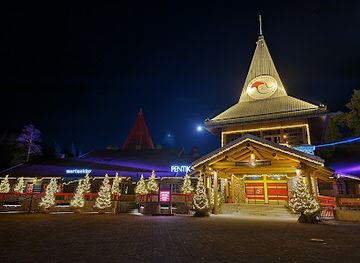
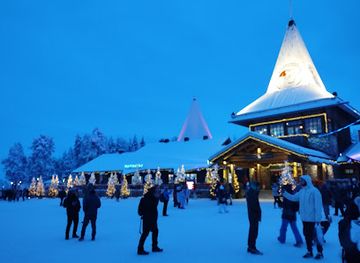
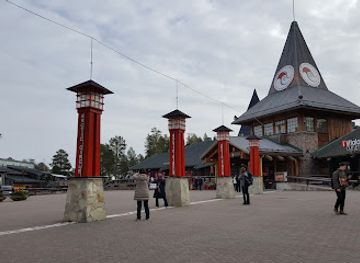
Santa Claus Village
Experience the enchanting spirit of Christmas year-round at Santa Claus Village in Rovaniemi, where magic and adventure await every traveler.
26 min drive · 8.6 km from city centre
-
Tour agency
Nordic Unique Travels
Experience the enchanting beauty of Finnish Lapland with Nordic Unique Travels, your premier tour agency in Rovaniemi.
6 min drive · 1.9 km from city centre
-
Tourist attraction
Santa Claus Office
Visit the Santa Claus Office in Rovaniemi, Finland, the official home of Santa Claus, for a magical experience filled with festive cheer year-round.
26 min drive · 8.6 km from city centre
-
 Hotel
HotelSanta Claus Holiday Village
Discover the enchanting Santa Claus Holiday Village in Rovaniemi, where cozy accommodations meet festive activities in the heart of the Arctic.
25 min drive · 8.4 km from city centre


Best landmarks in Rovaniemi
Rovaniemi's landmarks express both wartime loss and post-war renewal. The civic centre formed around Alvar Aalto's town hall, library and theatre is the clearest architectural statement of the rebuilt city, with the wider street plan recalling reindeer antlers. Rovaniemi Lutheran Church, completed in the 1950s, belongs to the same reconstruction period and is known for its large interior fresco. The Jätkänkynttilä Bridge crosses the Kemijoki with a central illuminated feature resembling a lumberjack's candle, acknowledging the region's forestry history. Arktikum's long glass roof has become a recognisable part of the riverfront, while the Arctic Circle marker at Santa Claus Village represents the city's modern tourism identity. Together these structures show how Rovaniemi's civic, religious, economic and visitor histories overlap.
-
Theme park
Santa Claus Village
Discover the magic of Santa Claus Village in Rovaniemi, Finland – a year-round Christmas destination filled with enchanting experiences and festive adventures.
26 min drive · 8.6 km from city centre
-
Tour agency
Nordic Unique Travels
Discover the enchanting beauty of Finnish Lapland with Nordic Unique Travels, your gateway to unforgettable adventures in Rovaniemi.
6 min drive · 1.9 km from city centre
-
Tourist attraction
Santa Claus Office
Discover the enchanting Santa Claus Office in Rovaniemi, where holiday magic meets Arctic charm, perfect for families and Christmas lovers.
26 min drive · 8.6 km from city centre
-
Hotel
Santa Claus Holiday Village
Discover the enchanting Santa Claus Holiday Village in Rovaniemi, where winter magic meets Finnish hospitality and adventure awaits around every corner.
25 min drive · 8.4 km from city centre
Explore Rovaniemi on the map
Plan your Rovaniemi trip on one map. See where the top attractions, landmarks, restaurants, bars and hotels are, find what's near where you're staying, and book hotels and experiences in a few clicks.
Best hotels in Rovaniemi
Best restaurants in Rovaniemi
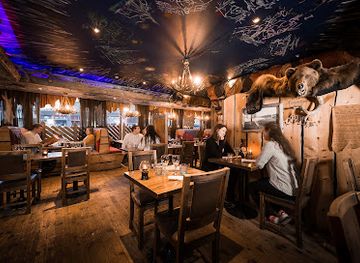
Rovaniemi's food culture draws on the ingredients and traditions of northern Finland, including reindeer, Arctic char, salmon, game, forest mushrooms, berries and locally gathered herbs. Menus may present Lapland specialities in traditional forms or adapt them through contemporary Nordic cooking, while salmon soup, rye bread and berry desserts offer more familiar introductions to regional flavours. Central Rovaniemi contains restaurants, cafés and casual venues aimed at residents as well as visitors, and the market area and local food shops provide opportunities to encounter seasonal produce. Reindeer meat is culturally and economically significant in Lapland, but it should be understood within Sámi and northern Finnish contexts rather than treated as a novelty. Vegetarian and international options are also available, particularly around the centre and student-oriented areas.
-
Finnish
Nili Restaurant
Experience authentic Finnish cuisine at Nili Restaurant in Rovaniemi—where tradition meets taste in an enchanting setting.
6 min drive · 2.1 km from city centre
-
Coffee shop
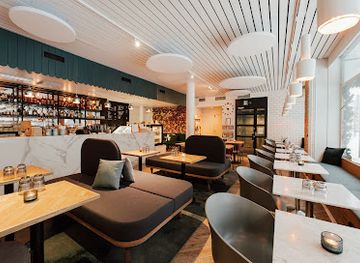
Cafe & Bar 21
Experience Rovaniemi's vibrant café culture at Café & Bar 21 - indulge in exquisite coffees, creative cocktails, and delicious tapas.
5 min drive · 1.7 km from city centre
-
Restaurant
Amarillo, Rovaniemi
Experience vibrant Tex-Mex flavors at Amarillo in Rovaniemi—where culinary tradition meets local Finnish charm.
6 min drive · 2.1 km from city centre
-
Bistro
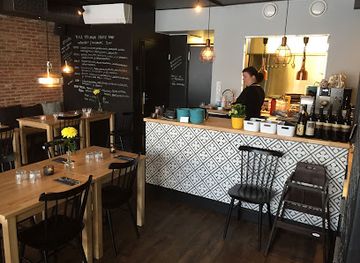
Ravintola Roka Street Bistro
Experience authentic Finnish cuisine at Ravintola Roka Street Bistro in Rovaniemi – where local flavors meet cozy ambiance.
5 min drive · 1.7 km from city centre
Best bars in Rovaniemi
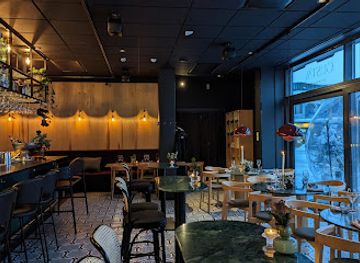
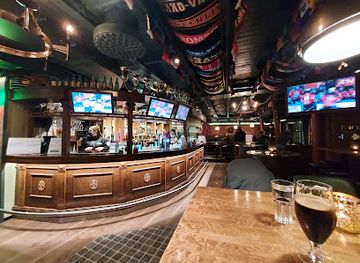
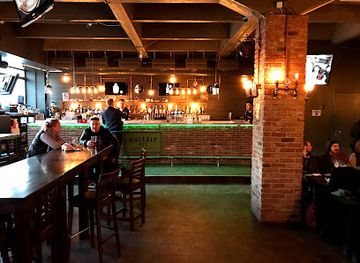
Rovaniemi's evening scene is compact and varied rather than metropolitan. Central bars range from relaxed pubs and sports-oriented venues to cocktail-focused rooms, while student life connected with the University of Lapland contributes to occasional live music, club nights and cultural events. Restaurants and hotel bars provide quieter settings, and the city also hosts concerts, theatre and performances at venues such as the Rovaniemi Theatre and Korundi House of Culture. Winter brings a strong after-dark atmosphere because of the long hours of darkness, although nightlife remains shaped by the city's regional-capital scale. Visitors should expect distances between venues to be walkable in the centre but potentially difficult in icy conditions, and should check current event information rather than assume a fixed club programme.
-
Coffee shop
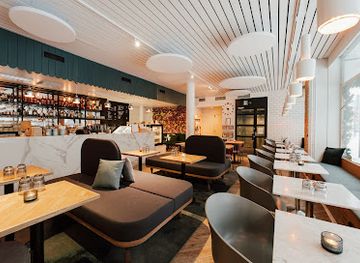
Cafe & Bar 21
Discover the delightful fusion of flavors at Cafe & Bar 21 in Rovaniemi, where coffee, cocktails, and culinary creativity meet.
5 min drive · 1.7 km from city centre
-
Restaurant
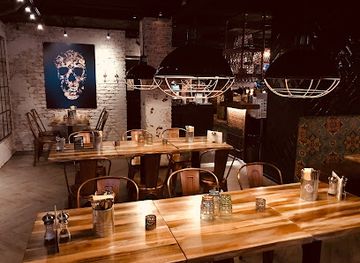
Gustav Kitchen & Bar
Experience exquisite Finnish cuisine at Gustav Kitchen & Bar in Rovaniemi, where local ingredients and modern cooking unite.
6 min drive · 2.0 km from city centre
-
Irish pub
Oliver's Corner
Experience the vibrant spirit of Ireland at Oliver's Corner, a lively pub in Rovaniemi, Finland, with delicious food and an extensive drink selection.
6 min drive · 2.0 km from city centre
-
Bar
The People's Pub
Experience the vibrant nightlife of Rovaniemi at The People's Pub, where local charm meets affordable fun in the heart of Finnish Lapland.
5 min drive · 1.7 km from city centre
Best nightclubs in Rovaniemi
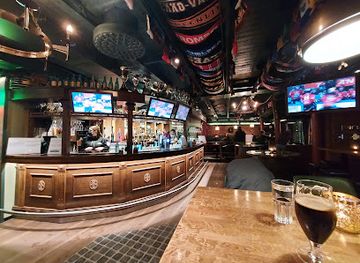
Rovaniemi's evening scene is compact and varied rather than metropolitan. Central bars range from relaxed pubs and sports-oriented venues to cocktail-focused rooms, while student life connected with the University of Lapland contributes to occasional live music, club nights and cultural events. Restaurants and hotel bars provide quieter settings, and the city also hosts concerts, theatre and performances at venues such as the Rovaniemi Theatre and Korundi House of Culture. Winter brings a strong after-dark atmosphere because of the long hours of darkness, although nightlife remains shaped by the city's regional-capital scale. Visitors should expect distances between venues to be walkable in the centre but potentially difficult in icy conditions, and should check current event information rather than assume a fixed club programme.
-
Irish pub
Oliver's Corner
Experience authentic Irish hospitality at Oliver's Corner, a lively pub in Rovaniemi offering delicious food, drinks, and unforgettable nights.
6 min drive · 2.0 km from city centre
-
Night club
The People's Pub
Discover the lively ambiance of The People's Pub, Rovaniemi's favorite nightspot for drinks, music, and unforgettable memories.
5 min drive · 1.7 km from city centre
-
Bar
Rovaniemen Oluthuone
Experience the vibrant atmosphere of Rovaniemen Oluthuone, Rovaniemi's ultimate bar and pub with a delightful beer garden and a wide selection of local brews.
6 min drive · 1.9 km from city centre
-
Bar
Pub Red Pepper
Discover the lively nightlife at Pub Red Pepper in Rovaniemi, where warm ambiance meets a diverse drink menu and live music entertainment.
18 min walk · 1.4 km from city centre


Best shops in Rovaniemi
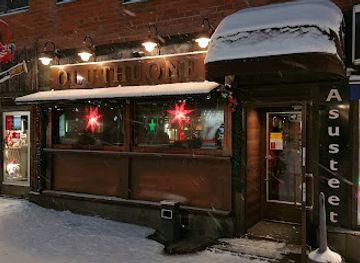
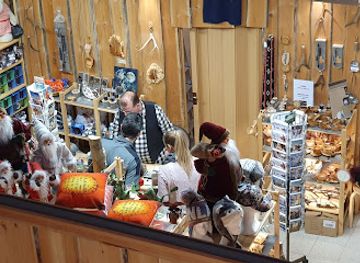
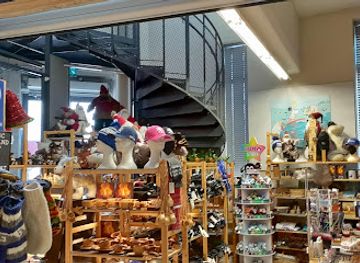
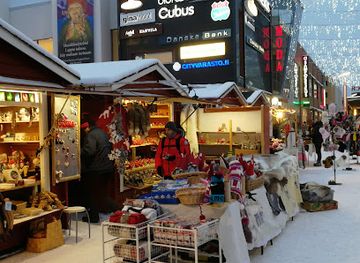
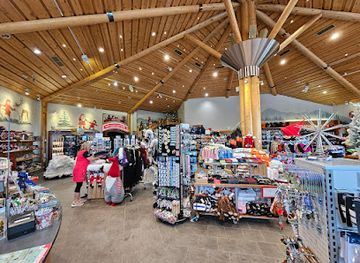
Shopping in Rovaniemi centres on the pedestrian-friendly city core, where department stores, supermarkets, specialist shops, cafés and independent retailers serve both residents and visitors. Local products often reflect Lapland's materials and landscape: Sámi-inspired or Sámi-made handicrafts, reindeer leather, wool, woodwork, knives, jewellery and berry-based foods are among the goods encountered in reputable shops and craft outlets. Visitors should distinguish authentic Sámi handicraft from generic Arctic-themed souvenirs and look for clear information about origin and maker. The market area offers a more local, seasonal atmosphere when stalls are operating, while Santa Claus Village contains many tourism-oriented shops outside the central retail district. Finnish design, outdoor clothing and practical cold-weather equipment also suit Rovaniemi's role as a regional service centre.
-
Shopping mall
Kauppakeskus Rinteenkulma (Shopping Center Rinteenkulma)
Discover a vibrant shopping experience at Kauppakeskus Rinteenkulma, Rovaniemi’s top shopping destination with diverse stores and dining options.
5 min drive · 1.7 km from city centre
-
Shopping mall
Shopping Centre Revontuli
Discover the vibrant Shopping Centre Revontuli in Rovaniemi, where shopping, dining, and entertainment meet in a modern setting.
5 min drive · 1.6 km from city centre
-
Shopping mall
Sampokeskus
Explore Sampokeskus, the ultimate shopping destination in Rovaniemi, featuring diverse stores, delightful eateries, and entertainment for all ages.
5 min drive · 1.8 km from city centre
-
Christmas store
Santa Claus
Discover the enchanting Santa Claus Christmas Store in Rovaniemi, where festive magic and unique holiday gifts await every visitor.
25 min drive · 8.4 km from city centre
Get your free copy of our complete guide to Rovaniemi, delivered straight to you.
Everything on this page, from attractions and restaurants to essentials and local phrases, in one PDF you can read offline, print or share.
Already have an account? Sign in
Your Rovaniemi guide is ready.
We'll send it to · Not you? Sign out

Getting your guide ready…
We are putting together a fresh copy of the Rovaniemi guide. This can take up to a minute.
This can take a few moments. If your browser asks, choose Allow so the download can start. You'll find the guide in your Downloads folder.
Nothing happened? Download it again
Sorry, the guide is taking longer than usual. Please try again in a minute, or get it by email instead.
Rovaniemi essentials
Currency and Payment
Safety
Emergency Situations
Do's and Don'ts
Local Tips
From Eve
Local phrases worth knowing
You don't need to get them perfect. A few words go a long way, and locals appreciate the effort.
Basics
| English | Local | Say it |
|---|---|---|
| Hello | Hei | [hay] |
| Goodbye | Näkemiin | [nah-keh-meen] |
| Yes | Kyllä | [kuu-laa] |
| No | Ei | [ay] |
| Please/You're welcome | Ole hyvä | [oh-le hu-vaa] |
| Thank you | Kiitos | [kee-tohs] |
| Excuse me/Sorry | Anteeksi | [ahn-tehk-see] |
| How are you? | Kuinka voit? | [kween-kah voyt] |
| Fine. And you? | Hyvin. Entä sinä? | [hoo-vin. en-ta see-nah] |
| Do you speak English? | Puhutko englantia? | [poo-hoot-koh eng-lahn-tee-ah] |
| I don't understand | En ymmärrä | [ayn um-mah-rah] |
Eating & Drinking
| English | Local | Say it |
|---|---|---|
| I'd like to see the menu, please | Saisinko ruokalistan, kiitos | [sai-sin-koh roo-kah-lis-tahn, kee-tohs] |
| I don't eat meat | En syö lihaa | [ayn syoy lee-haa] |
| Cheers! | Kippis! | [keep-pees] |
| I would like to pay, please | Haluan maksaa, kiitos | [hah-loo-ahn mahk-sah, kee-tohs] |
Emergencies
| English | Local | Say it |
|---|---|---|
| Help! | Apua! | [ah-poo-ah] |
| Go away! | Mene pois! | [meh-neh poys] |
| Call the Police! | Soita poliisille! | [soy-tah poh-lees-ee-leh] |
| Call a doctor! | Soita lääkärille! | [soy-tah lah-kah-rih-leh] |
| I'm lost | Olen eksyksissä | [oh-lehn eks-uhk-see-sah] |
| I'm ill | Olen sairas | [oh-lehn sair-ahs] |
Shopping
| English | Local | Say it |
|---|---|---|
| I'd like to buy... | Haluan ostaa... | [hah-loo-ahn os-taa] |
| I'm just looking | Katson vain | [kaht-sohn vain] |
| How much is it? | Paljonko se maksaa? | [pahl-yon-koh seh mahk-sah] |
| That's too expensive | Se on liian kallis | [se ohn lee-ahn kahl-lis] |
| Can you lower the price? | Voitko laskea hintaa? | [voit-koh lahs-kehah hin-tah-ah] |
Time & Numbers
| English | Local | Say it |
|---|---|---|
| What time is it? | Mitä kello on? | [mee-tah kel-lo ohn] |
| It's one o'clock | Kello on yksi | [kel-lo ohn uuk-see] |
| Half past (10) | Puoli (kymmenen) | [pwoh-lee kuum-meh-nen] |
| Morning | Aamu | [ah-moo] |
| Afternoon | Iltapäivä | [eel-tah-pai-vah] |
| Evening | Ilta | [eel-tah] |
| Yesterday | Eilen | [eye-len] |
| Today | Tänään | [ta-naan] |
| Tomorrow | Huomenna | [hwoh-men-nah] |
| 1 | Yksi | [uuk-see] |
| 2 | Kaksi | [kahk-see] |
| 3 | Kolme | [kohl-meh] |
| 4 | Neljä | [nel-yah] |
| 5 | Viisi | [vee-see] |
| 6 | Kuusi | [koo-see] |
| 7 | Seitsemän | [sate-smaan] |
| 8 | Kahdeksan | [kah-dehk-sahn] |
| 9 | Yhdeksän | [uud-ehk-saan] |
| 10 | Kymmenen | [kuum-meh-nen] |
Transport & Directions
| English | Local | Say it |
|---|---|---|
| Where's a/the...? | Missä on... | [mis-sah ohn] |
| What's the address? | Mikä on osoite? | [mee-kah ohn oh-soi-teh] |
| Can you show me (on the map)? | Voitko näyttää minulle (kartalla)? | [voyt-koh nay-stah min-ool-leh (kar-tal-lah)] |
| When's the next (bus)? | Milloin on seuraava (bussi)? | [mil-loin ohn seu-rah-vah (boos-see)] |
| A ticket (to ....) | Lippu (....) | [lip-poo] |
History of Rovaniemi
River Settlements and Lapland Exchange
Rovaniemi developed at the meeting point of the Kemijoki and Ounasjoki rivers, a location that supported movement, fishing, hunting and trade across the inland north. Settlement in the surrounding region long predates the modern town, and local history is closely connected with the Sámi peoples and later Finnish communities whose livelihoods followed the seasons. The river junction also made the area a natural meeting place for commerce between the coast and the interior. The name Rovaniemi is generally linked to an old Sámi term associated with a wooded or forested ridge, reflecting the landscape in which the settlement grew.
Parish, Market and Administrative Centre
Rovaniemi became an established parish in the nineteenth century as administration, agriculture, river transport and trade expanded in Finnish Lapland. The settlement's position made it an important market and service centre for a large rural hinterland, while roads and improved communications strengthened its regional role. Timber floating on the rivers and forestry-related commerce became significant parts of the local economy. Rather than developing as a dense industrial city, Rovaniemi grew as a northern service centre, linking smaller communities with government offices, education, shops and transport connections.
Railway and Northern Connectivity
The arrival of the railway in the early twentieth century connected Rovaniemi more closely with southern Finland and accelerated its development as the principal transport hub of Lapland. Rail travel supported trade, administration and the movement of people, while roads gradually opened wider access to the northern interior. The town's growing importance was reinforced when Rovaniemi became the seat of the provincial administration for Lapland. These changes helped shift its economy from a local river and market settlement towards a regional capital whose influence extended across a large and sparsely populated part of Finland.
The Lapland War and Destruction
Rovaniemi suffered catastrophic destruction during the Lapland War of 1944–45, when German forces withdrew from northern Finland and used scorched-earth tactics. Much of the town was burned, leaving only scattered buildings standing. The destruction transformed Rovaniemi's physical appearance and created the conditions for a comprehensive post-war reconstruction rather than a gradual rebuilding of the previous townscape. The event remains central to local memory, and the rebuilt city reflects both the severity of wartime loss and the determination to restore Rovaniemi as Lapland's administrative and economic centre.
Alvar Aalto's Rebuilding Plan
Architect Alvar Aalto prepared the master plan for post-war Rovaniemi, designing a city centre suited to a modern regional capital. Its most discussed feature is the plan's reindeer-antler form, in which major roads spread from the centre in branching lines. Aalto also shaped the civic core through buildings and urban spaces that included the town hall, library and theatre, creating an architectural ensemble characteristic of Finland's reconstruction era. The plan did not recreate the pre-war town; instead, it gave Rovaniemi a new identity based on functional modernism, broad streets and public institutions.
Urban Growth and Arctic Identity
Rovaniemi was granted town status in 1960 and city status in 1961, formalising its emergence as the main urban centre of Finnish Lapland. The post-war economy broadened through public administration, education, forestry, tourism and transport, while the University of Lapland strengthened the city's cultural and intellectual role. From the late twentieth century, Arctic research, nature-based tourism and the international popularity of Santa Claus Village added new dimensions to Rovaniemi's identity. Today the city balances its role as a working regional capital with heritage, Sámi and Lapland culture, winter tourism and the environmental realities of life in the far north.
Rovaniemi in Photos
Browse through our photo collection highlighting the charm and character of the destination.
Cities near Rovaniemi
The closest cities to Rovaniemi, if you have time for more than one stop.
-

-

-

-

-


Swipe for more cities
Explore more

Explore more of Finland
Explore Finland, where the Midnight Sun meets the Northern Lights, offering a unique blend of natural beauty, rich culture, and unforgettable experiences.
Explore Finland