Background

Struthof: A Haunting Memorial

A somber journey into the past at the only Nazi concentration camp on French soil, a place of remembrance, education, and reflection in the Vosges Mountains.

4.6

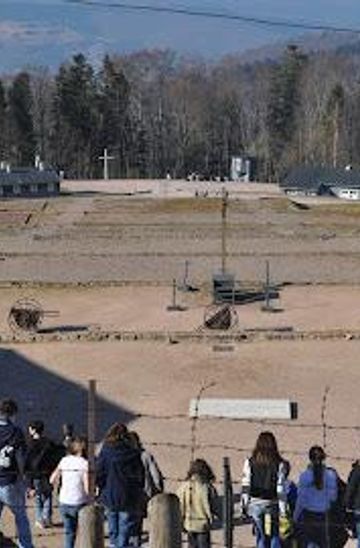
Struthof, also known as Natzweiler-Struthof, stands as a chilling reminder of Nazi atrocities. Located in the Vosges Mountains, it was the only concentration camp established by the Nazis on French territory. From 1941 to 1945, over 52,000 prisoners from across Europe were deported here, enduring forced labor, starvation, and horrific medical experiments. The camp's gas chamber, used for experimentation, adds another layer of horror to its history. Today, Struthof serves as a memorial and museum, offering visitors a somber yet essential experience. Explore the remaining barracks, crematorium, and the European Centre of Deported Resistance Members (CERD) to understand the camp's history, the lives of its prisoners, and the broader context of the Nazi concentration camp system. The site demands respect and reflection, urging visitors to remember the victims and learn from the past. Despite its remote location, the site is accessible by car and offers free parking, ensuring that this important historical site remains open to all who seek to understand and remember.

A brief summary to Struthof

  • Tuesday 9 am-5:30 pm
  • Wednesday 9 am-5:30 pm
  • Thursday 9 am-5:30 pm
  • Friday 9 am-5:30 pm
  • Saturday 9 am-5:30 pm
  • Sunday 9 am-5:30 pm

Local tips

  • Wear comfortable shoes, as the terrain is uneven and involves walking.
  • Dress respectfully, as this is a memorial site.
  • Allow ample time for your visit to fully absorb the experience; plan for at least 3-4 hours.
  • Consider visiting the gas chamber, located 1.5 km from the main camp, to fully understand the extent of the atrocities.
  • Check the weather forecast before your visit, as the mountain climate can be unpredictable.
widget icon

Getting There

  • Driving

    From Strasbourg, take the A35 towards Colmar, then follow signs for Schirmeck and Molsheim. Take the exit for Saint-Dié/Schirmeck/Mutzig. Cross Schirmeck and continue to Rothau. At the entrance of Rothau, follow the signs for 'Camp du Struthof' (do not enter Natzwiller). The site is approximately 60 km from Strasbourg, about an hour's drive. Free parking is available at the entrance to the European Centre of Deported Resistance Members. Note that motorhomes and camper vans are not allowed in the main parking areas but can park in designated areas nearby.

  • Public Transport

    From Strasbourg, take a train to Rothau. From Rothau, there is a bus (Line 253) that goes to Struthof. Check the bus schedule in advance as services may be limited, especially on weekends and holidays. Alternatively, a taxi from Rothau to Struthof will cost approximately €20-€30.

Unlock the Best of Struthof

Buy tickets

    No tickets available

Book tours with entry

    No tours available

Book tours without entry

    No tours available

Discover more about Struthof

Natzweiler-Struthof, a place of immense historical significance and profound sorrow, is a former Nazi concentration camp located near Natzwiller in the Alsace region of France. Situated in the Vosges Mountains, approximately 60 kilometers southwest of Strasbourg, it stands as the only concentration camp established by the Nazis on French soil, a chilling testament to the reach of Nazi terror during World War II. Established in May 1941, Konzentrationslager Natzweiler-Struthof (KL Natzweiler) served as a forced labor camp and a site for heinous medical experiments. The camp complex eventually expanded to include around 70 satellite camps, primarily located in Germany. The main camp at Struthof was initially intended to exploit a nearby quarry of pink granite, deemed valuable for construction projects in the Reich. However, its function quickly evolved into a brutal system of forced labor, political imprisonment, and racial persecution. Over its years of operation, Natzweiler-Struthof imprisoned approximately 52,000 individuals from across Europe, representing a diverse array of nationalities, political affiliations, and social backgrounds. Among those incarcerated were political prisoners, resistance fighters, prisoners of war, Jews, Roma, homosexuals, and Jehovah's Witnesses. The camp's population swelled dramatically in 1943, particularly with the influx of Nacht und Nebel (Night and Fog) prisoners – individuals deemed enemies of the Reich who were to disappear without a trace. Life within the camp was characterized by unimaginable suffering. Prisoners endured backbreaking labor in the quarry and in factories producing war materials, often working under starvation rations and brutal conditions. Disease was rampant, medical care was virtually nonexistent, and acts of violence by SS guards were commonplace. The camp's crematorium stands as a stark reminder of the systematic extermination that occurred within its walls. Adding to the camp's horrors was an experimental gas chamber, constructed in August 1943 at the behest of Nazi medical professors. This chamber was used to conduct experiments on prisoners, including the gassing of over 80 Jewish individuals whose remains were intended for use in a macabre anatomical collection at the University of Strasbourg. These experiments, conducted under the guise of scientific research, represent some of the most depraved acts committed by the Nazi regime. As Allied forces advanced in late 1944, the Nazis began evacuating Natzweiler-Struthof, dispersing prisoners to its satellite camps and eventually forcing them on death marches towards other concentration camps further east. The main camp was liberated by American troops in November 1944, but the satellite camps continued to operate until the end of the war. By the time of its final closure, an estimated 22,000 people had perished within the Natzweiler-Struthof system. Today, Natzweiler-Struthof stands as a memorial site and museum, dedicated to preserving the memory of its victims and educating future generations about the horrors of the Holocaust. Visitors can explore the remains of the camp, including several reconstructed barracks, the crematorium, and the former gas chamber. The European Centre of Deported Resistance Members (CERD), located on the site, offers exhibits and educational resources that provide context for the camp's history and the broader themes of resistance and deportation during World War II. The National Cemetery and the Deportation Memorial, located near the camp, serve as additional sites of remembrance and reflection. The cemetery contains the graves of over 1,000 French citizens who died in deportation, while the memorial features a towering lighthouse-like structure that symbolizes the flame of remembrance. A visit to Natzweiler-Struthof is a deeply moving and emotionally challenging experience. It requires a willingness to confront the darkest aspects of human history and to reflect on the importance of tolerance, justice, and the preservation of human dignity. While the site is partially accessible to visitors with reduced mobility, the challenging terrain and the somber nature of the location may present difficulties for some. The site is generally open from Tuesday to Sunday, with varying hours depending on the season. It is typically closed in January and on certain holidays. Admission fees are charged for entry to the museum and exhibitions, with reduced rates available for students and other groups. Guided tours are available in French, and audio guides are available in several languages, including English, German, Italian, Spanish and Dutch. Reservations are required for groups of more than 10 people. Natzweiler-Struthof serves as a powerful reminder of the atrocities committed during the Nazi era and the importance of vigilance in the face of hatred and intolerance. It is a place of remembrance, education, and reflection, urging visitors to learn from the past and to work towards a future where such horrors never happen again.

Popular Experiences near Struthof

Popular Hotels near Struthof

Select Currency