Hôtel-Dieu de Lyon, Lyon Travel Guide
Free Guide: Discover the grandeur of Lyon's Hôtel-Dieu, a meticulously restored historical landmark transformed into a vibrant hub of luxury, gastronomy, and culture on the Rhône's edge.


A brief summary of Hôtel-Dieu de Lyon
Discover the grandeur of Lyon's Hôtel-Dieu, a meticulously restored historical landmark transformed into a vibrant hub of luxury, gastronomy, and culture on the Rhône's edge.
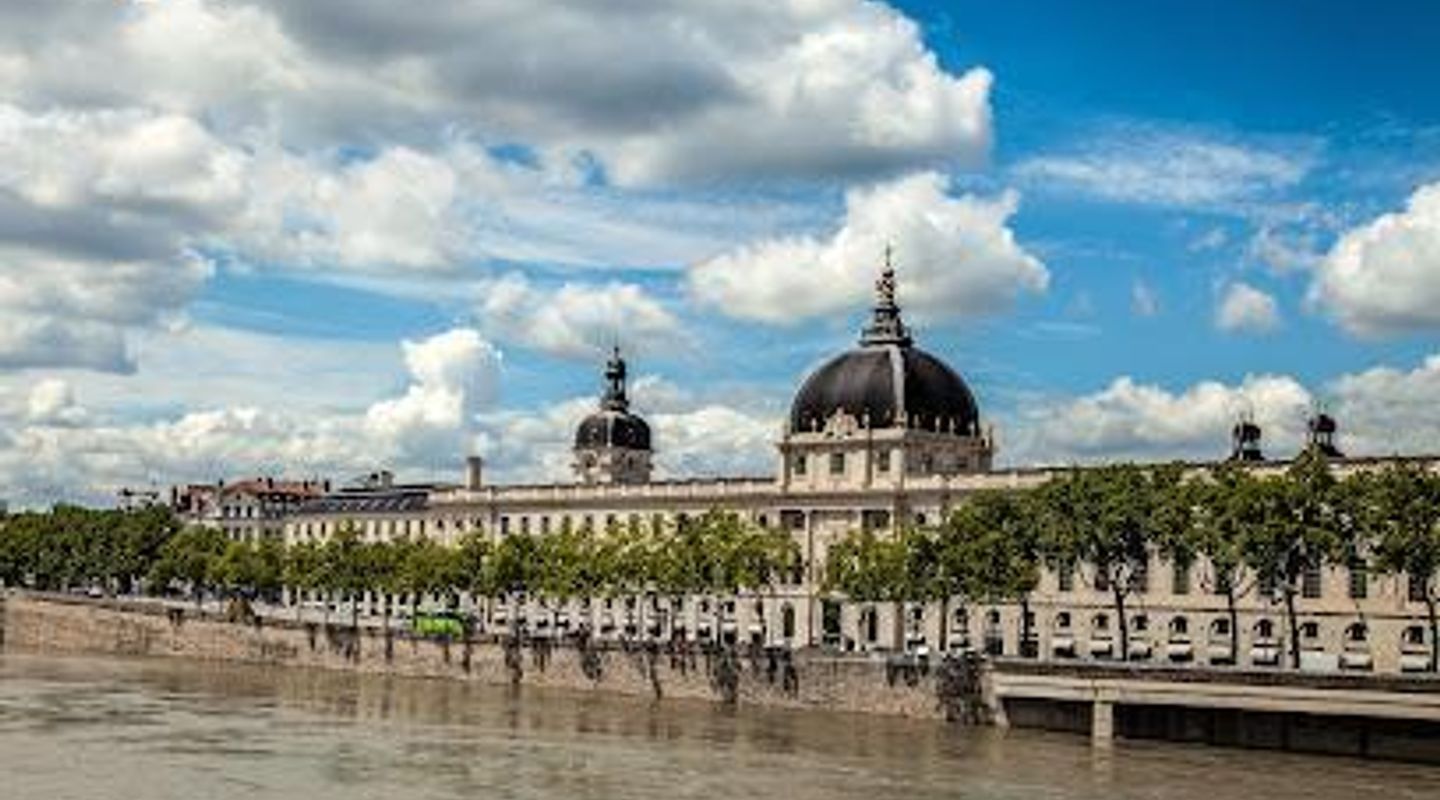
The Hôtel-Dieu de Lyon, a magnificent testament to Renaissance architecture, stands proudly on the banks of the Rhône River. Originally founded in the 12th century, the current structure, largely dating back to the 17th and 18th centuries, served as a hospital for over eight centuries. Its iconic dome, designed by Soufflot, dominates the Lyon skyline. Today, after extensive restoration, the Hôtel-Dieu has been transformed into a vibrant complex housing a luxury hotel, gourmet restaurants, boutique shops, and event spaces, seamlessly blending its historical grandeur with modern amenities. Visitors can explore its courtyards, admire its architecture, and delve into its rich past, making it a captivating destination for history buffs, architecture enthusiasts, and anyone seeking a unique cultural experience in Lyon.
- Address
- 1 Pl. de l'Hôpital, 69002 Lyon
- Website
Getting there
Public Transport
Walking
Taxi/Ride-Share
Discover more about Hôtel-Dieu de Lyon
Overview
The Hôtel-Dieu de Lyon, a monumental edifice with a history stretching back to the Middle Ages, is far more than just a building; it's a living chronicle of Lyon's evolution. Founded in the 12th century, initially by the Brothers Hospitallers, the Hôtel-Dieu served as a sanctuary for the sick, the poor, and pilgrims traveling through the region. Its location on the banks of the Rhône River was strategically chosen, providing easy access for those arriving by boat and facilitating the transport of goods and supplies. Over the centuries, the Hôtel-Dieu underwent numerous transformations, reflecting the changing architectural styles and medical practices of each era. The most significant reconstruction occurred in the 17th and 18th centuries, under the direction of renowned architects like Germain Soufflot, best known for designing the Panthéon in Paris. Soufflot's vision for the Hôtel-Dieu was one of grandeur and functionality, creating a space that was both aesthetically pleasing and conducive to healing. His iconic dome, a masterpiece of neoclassical architecture, became a symbol of Lyon and a testament to the city's ambition. For over eight centuries, the Hôtel-Dieu functioned as a hospital, witnessing countless births, deaths, and medical breakthroughs. Generations of doctors, nurses, and support staff dedicated their lives to caring for the sick and alleviating suffering within its walls. The Hôtel-Dieu played a crucial role in Lyon's healthcare system, serving as a center for medical research and training. Its legacy as a place of healing is deeply ingrained in the city's collective memory. In the early 21st century, the Hôtel-Dieu faced a new chapter in its history. As modern hospitals emerged with advanced facilities, the aging structure became increasingly obsolete. In 2003, the decision was made to relocate the hospital to a new site, leaving the Hôtel-Dieu vacant and in need of a new purpose. A massive restoration project was undertaken to breathe new life into the historic building, transforming it into a multi-use complex that would honor its past while embracing the future. The restoration of the Hôtel-Dieu was a monumental undertaking, requiring years of meticulous planning and execution. Architects, historians, and artisans worked together to preserve the building's original features while adapting it to meet the needs of a modern audience. The courtyards were revitalized, the facades were cleaned, and the interiors were carefully renovated to create a seamless blend of old and new. Today, the Hôtel-Dieu de Lyon stands as a shining example of urban regeneration. It is no longer a hospital, but a vibrant destination that attracts visitors from around the world. The complex houses a luxury hotel, offering guests a unique opportunity to stay in a historic landmark. Gourmet restaurants tantalize the taste buds with innovative cuisine, while boutique shops showcase the best of French craftsmanship. The Hôtel-Dieu also features event spaces, hosting conferences, exhibitions, and cultural performances throughout the year. Visitors to the Hôtel-Dieu can explore its vast courtyards, each with its own distinct character and charm. The Cour d'Honneur, the main courtyard, is a grand space that reflects the building's neoclassical architecture. The Cour Saint-Henri, named after the hospital's founder, offers a more intimate setting with its lush gardens and tranquil atmosphere. The Cour du Midi, located on the south side of the building, is a sunny spot that is perfect for relaxing and enjoying the views of the Rhône River. The Hôtel-Dieu's iconic dome is a must-see for any visitor. Standing at a height of 32 meters, the dome offers panoramic views of Lyon's skyline. Visitors can climb to the top of the dome to admire the city's landmarks, including the Fourvière Basilica, the Croix-Rousse district, and the Confluence Museum. The Hôtel-Dieu de Lyon is more than just a collection of buildings; it is a place of history, culture, and innovation. It is a testament to the city's ability to adapt and evolve while preserving its heritage. Whether you are interested in architecture, history, or simply seeking a unique cultural experience, the Hôtel-Dieu is a destination that will captivate and inspire you. Its transformation from a hospital to a vibrant complex is a story of resilience and reinvention, making it a true gem of Lyon's cultural landscape. The blend of historical grandeur and modern amenities creates an unforgettable experience for all who visit. The Hôtel-Dieu stands as a symbol of Lyon's rich past and its vibrant future, a place where history and innovation come together in perfect harmony.
Evendo Review Centre
 Google
Guest reviews
Explore Hôtel-Dieu de Lyon on the map
A handpicked selection of must-see spots near Hôtel-Dieu de Lyon, mapped for you.
Get your free copy of our complete guide to Hôtel-Dieu de Lyon, delivered straight to you.
Everything on this page, from opening hours and how to get there to Eve’s tips and the best time to go, in one PDF you can read offline, print or share.
Already have an account? Sign in
Your Hôtel-Dieu de Lyon guide is ready.
We'll send it to · Not you? Sign out

Getting your guide ready…
We are putting together a fresh copy of the Hôtel-Dieu de Lyon guide. This can take up to a minute.
This can take a few moments. If your browser asks, choose Allow so the download can start. You'll find the guide in your Downloads folder.
Nothing happened? Download it again
Sorry, the guide is taking longer than usual. Please try again in a minute, or get it by email instead.
Unlock the best of Hôtel-Dieu de Lyon
Skip-the-line tickets, guided tours with entry, and walking tours of the area, booked in a few clicks.


Other nearby places you may find interesting
The closest places of the same kind, if this one is not quite what you had in mind.
-
-
-
-
-


Swipe for more places
More to explore near Hôtel-Dieu de Lyon

 Best experiences near Hôtel-Dieu de Lyon
 Best hotels near Hôtel-Dieu de Lyon
 Best landmarks near Hôtel-Dieu de Lyon
 Best attractions near Hôtel-Dieu de Lyon
 Best shops near Hôtel-Dieu de Lyon
 Best restaurants near Hôtel-Dieu de Lyon
 Best bars near Hôtel-Dieu de Lyon
Do you manage this location?
Take control to get all the benefits, like improved information, better appearance, and stronger visibility across AI-powered discovery.
Explore more

Explore more of Lyon
Explore Lyon, France's culinary heart, rich in history, culture, and world-class cuisine, nestled between the Rhône and Saône rivers.
Explore Lyon
Explore more of France
Explore France: A land of romance, history, and unparalleled beauty, from the iconic streets of Paris to the serene landscapes of Provence and the luxury of the French Riviera.
Explore France