

Quartier Saint-Maclou (Rouen) Travel Guide - Free
Explore Quartier Saint-Maclou in Rouen with Evendo's free guide. Find the best shops, historic streets, restaurants, and gems on web or mobile.


Quartier Saint-Maclou in Rouen reveals Gothic heritage, the Aître Saint-Maclou, rue Damiette antiques, cafés and historic lanes beside the Seine.
Medieval Streets and Sacred Architecture
Quartier Saint-Maclou occupies the historic eastern side of central Rouen, where narrow streets lead between the cathedral quarter and the former textile districts along the Robec. Its identity is anchored by the Church of Saint-Maclou, one of Normandy’s most accomplished Flamboyant Gothic buildings, and the Aître Saint-Maclou, an atmospheric former parish charnel house whose timber galleries preserve an unusually vivid reminder of medieval attitudes towards death. Around them, rue Damiette, rue Martainville and the lanes leading towards rue Eau-de-Robec create a compact area of half-timbered façades, antique shops, cafés, galleries and small businesses.Read more about Quartier Saint-Maclou
A Quarter of Craft, Trade and Everyday Life
Walking the Eastern Old Town
Best attractions in Quartier Saint-Maclou
The principal attraction is the Aître Saint-Maclou, a rare former charnel-house complex arranged around a courtyard with timber galleries and carved details linked to death and burial; its cultural spaces give the historic site a continuing public role. Opposite, the Church of Saint-Maclou rewards close attention to its intricate Flamboyant Gothic façade, sculpted portals and complex roofline, as well as to the quieter interior. Rue Damiette provides a different kind of sightseeing, combining old façades with antique and design shops, while rue Martainville leads through one of eastern Rouen’s most characterful historic streets. Towards rue Eau-de-Robec, traces of the watercourse and textile-working past create a more intimate urban landscape. The nearby Musée Le Secq des Tournelles is a useful addition to an itinerary but belongs to the adjacent Saint-Laurent area rather than Saint-Maclou itself.
-
Historical landmark
Aitre Saint Maclou
Discover Rouen's Aître Saint-Maclou: A historic cemetery transformed into a vibrant center for culture, art, and remembrance.
1 min walk · 0.1 km from neighbourhood centre
-
Catholic church
St. Maclou Catholic Church
Discover St. Maclou Catholic Church in Rouen: a stunning example of Flamboyant Gothic architecture with intricate details and rich history.
1 min walk · 0.1 km from neighbourhood centre


Best landmarks in Quartier Saint-Maclou
The Church of Saint-Maclou is the quarter’s defining landmark, a late medieval Gothic building distinguished by its elaborate western front, sculptural portals and distinctive architectural silhouette. Its presence explains the parish structure around which much of the neighbourhood developed. The Aître Saint-Maclou is equally significant in a different way: its courtyard galleries, timber construction and mortality-themed carving preserve the physical memory of a historic cemetery and charnel house. Rue Damiette and rue Martainville form important architectural settings rather than isolated monuments, with timber-framed houses and narrow plots recording the density of old Rouen. Rue Eau-de-Robec adds an infrastructural landmark in the form of the remembered watercourse that supported mills and textile work in the eastern city. Together these places show how religious, domestic and productive functions occupied the same compact urban landscape.
-
Monument
Le Gros-Horloge
Discover the charm of Le Gros-Horloge in Rouen, a stunning medieval clock tower that blends history and architecture in a picturesque setting.
7 min walk · 0.6 km from neighbourhood centre
-
Museum
Historial Jeanne d’Arc
Discover the captivating story of Joan of Arc at Historial Jeanne d'Arc, a must-visit museum in Rouen for history enthusiasts.
3 min walk · 0.2 km from neighbourhood centre
-
Historical landmark
Aitre Saint Maclou
Discover the historical tranquility of Aitre Saint Maclou in Rouen, where medieval architecture meets serene gardens.
1 min walk · 0.1 km from neighbourhood centre
-
Catholic church
St. Maclou Catholic Church
Experience the exquisite Gothic architecture and serene ambiance of St. Maclou Catholic Church in the heart of Rouen, France.
1 min walk · 0.1 km from neighbourhood centre

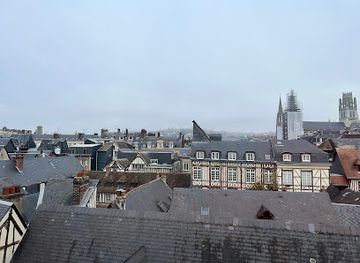


Explore Quartier Saint-Maclou on the map
A handpicked selection of must-see spots in Quartier Saint-Maclou, mapped for you.
Best hotels in Quartier Saint-Maclou
Best restaurants in Quartier Saint-Maclou
Dining in Quartier Saint-Maclou is woven into the old-town streets rather than concentrated in one formal food quarter. Cafés and restaurants around the church, rue Damiette and the approaches to rue Martainville cater to visitors exploring the heritage sites, while bakeries and everyday food shops give the area a more local rhythm. The wider historic centre brings the strongest choice of Normandy cooking, crêpes, simple French lunches, pastries and international food within a short walk, but the Saint-Maclou core is best understood as a mixed neighbourhood scene rather than a single culinary speciality district. Historic buildings often create small, atmospheric dining rooms, and terraces become part of the street life in suitable weather. Visitors should distinguish established opening times from the changing schedules of independent businesses, particularly outside the busiest daytime and evening periods.
-
French
Les Fils à Maman Rouen
Experience authentic French cuisine at Les Fils à Maman Rouen, where tradition meets modern flair in every dish.
1 min walk · 0.1 km from neighbourhood centre
-
French
La Petite Bouffe
Discover authentic French cuisine at La Petite Bouffe in Rouen, where every dish tells a story of tradition and flavor.
2 min walk · 0.2 km from neighbourhood centre
-
Traditional restaurant
Le P'Tit Bec
Experience authentic French cuisine at Le P'Tit Bec in Rouen - where tradition meets taste in every delightful dish.
3 min walk · 0.2 km from neighbourhood centre
-
French
Restaurant La Petite Auberge
Experience authentic French cuisine at Restaurant La Petite Auberge in Rouen – where tradition meets taste in a charming setting.
1 min walk · 0.1 km from neighbourhood centre


Best bars in Quartier Saint-Maclou
Evenings in Quartier Saint-Maclou are centred more on restaurants, cafés and conversation than on a dense concentration of nightclubs. The narrow streets around rue Damiette and the church can feel sociable after dark, while the broader central area provides more bars and late-evening choices within walking distance. The quarter’s historic architecture lends itself to a relaxed pre-dinner or post-dinner stroll, but residential doorways and older buildings make noise a consideration. Larger student and club-oriented nightlife is more commonly associated with other parts of central Rouen, so Saint-Maclou suits visitors seeking a drink in an old-town setting rather than a dedicated club circuit. Evening cultural events at heritage venues may add activity, although programmes and availability vary.
-
Irish pub
O'Kallaghan's
Discover the vibrant atmosphere and authentic Irish spirit at O'Kallaghan's in Rouen, where every visit feels like coming home.
4 min walk · 0.3 km from neighbourhood centre
-
Pub
Le Saxo
Experience Rouen's vibrant nightlife at Le Saxo, a lively pub offering an excellent selection of drinks and local entertainment.
3 min walk · 0.2 km from neighbourhood centre
-
Lounge
Milk
Discover Milk in Rouen: A cozy lounge offering exquisite cocktails, rich coffee, and a warm atmosphere for a perfect evening out.
2 min walk · 0.1 km from neighbourhood centre
-
Bar
The Sound of the Horn
Experience the vibrant atmosphere of The Sound of the Horn, a lively bar and dart venue in Rouen, perfect for drinks and socializing.
2 min walk · 0.2 km from neighbourhood centre


Best nightclubs in Quartier Saint-Maclou
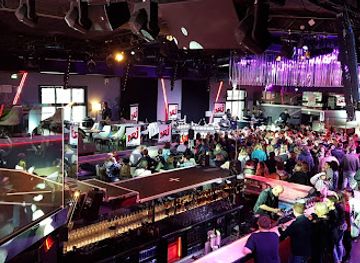
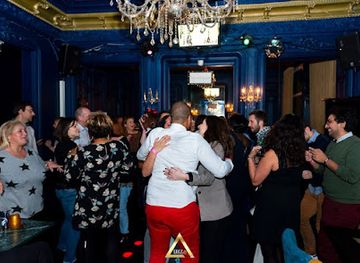
Evenings in Quartier Saint-Maclou are centred more on restaurants, cafés and conversation than on a dense concentration of nightclubs. The narrow streets around rue Damiette and the church can feel sociable after dark, while the broader central area provides more bars and late-evening choices within walking distance. The quarter’s historic architecture lends itself to a relaxed pre-dinner or post-dinner stroll, but residential doorways and older buildings make noise a consideration. Larger student and club-oriented nightlife is more commonly associated with other parts of central Rouen, so Saint-Maclou suits visitors seeking a drink in an old-town setting rather than a dedicated club circuit. Evening cultural events at heritage venues may add activity, although programmes and availability vary.
-
Disco club
So Rouen
Discover So Rouen, the ultimate disco club and lounge, where vibrant nightlife meets exquisite dining in the heart of Rouen.
7 min drive · 2.2 km from neighbourhood centre
-
Lounge
Milk
Experience the vibrant atmosphere of Milk in Rouen, where exceptional cocktails meet cozy lounge vibes, perfect for any occasion.
2 min walk · 0.1 km from neighbourhood centre
-
Disco club
Ibiza Club Rouen
Experience the vibrant nightlife of Rouen at Ibiza Club, a premier disco club and bar with electrifying music and an unforgettable atmosphere.
14 min walk · 1.1 km from neighbourhood centre
-
Night club
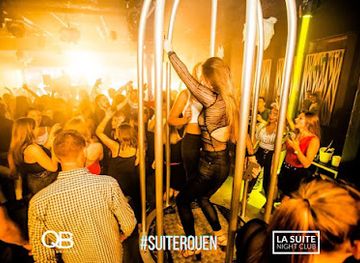
La Suite Club
Discover the vibrant nightlife of Rouen at La Suite Club, where music and dance come alive in a captivating atmosphere.
14 min walk · 1.2 km from neighbourhood centre

Best shops in Quartier Saint-Maclou
Shopping in Saint-Maclou has a strongly independent and heritage-oriented character. Rue Damiette is known for antique, vintage, decorative and design-related businesses, making it more rewarding for browsing distinctive objects than for conventional high-street shopping. The surrounding historic lanes contain smaller specialist premises and creative outlets, while bakeries and practical shops serve residents and visitors. There is no single large market defining the neighbourhood, and the area should not be mistaken for Rouen’s main retail district; the strongest city-centre chains and department-store shopping lie elsewhere. Instead, the appeal comes from the relationship between merchandise and setting, with old façades, compact interiors and the eastern quarter’s historic trades providing the context. Stock, opening patterns and the mix of businesses can change, so visitors should treat the streets as a browsing area rather than a guaranteed catalogue of particular shops.
-
Department store
Printemps Rouen
Explore the ultimate shopping destination at Printemps Rouen, where fashion, beauty, and lifestyle meet in a stunning department store experience.
6 min walk · 0.4 km from neighbourhood centre
-
Department store
Galeries Lafayette Rouen
Discover Galeries Lafayette Rouen: A Luxurious Shopping Experience in the Heart of Normandy's Historic City.
6 min walk · 0.5 km from neighbourhood centre
-
Video game store
La boutique de l'occas
Explore La Boutique de l'Ocas in Rouen for a diverse selection of video games, tech gadgets, and community events in a charming setting.
3 min walk · 0.3 km from neighbourhood centre
-
Gift shop
ABYstyle
Explore ABYstyle in Rouen for unique gifts and collectibles that celebrate French artistry and popular culture.
6 min walk · 0.5 km from neighbourhood centre


Quartier Saint-Maclou essentials
Getting There
Getting Around
Safety
Emergency Situations
Do's and Don'ts
Local Tips

From Eve
Local phrases worth knowing
You don't need to get them perfect. A few words go a long way, and locals appreciate the effort.
Basics
| English | Local | Say it |
|---|---|---|
| Hello | Bonjour | [bohn-zhoor] |
| Goodbye | Au revoir | [oh rev-wahr] |
| Yes | Oui | [wee] |
| No | Non | [nohn] |
| Please/You're welcome | S'il vous plaît / De rien | [seel voo pleh / deh ryen] |
| Thank you | Merci | [mehr-see] |
| Excuse me/Sorry | Excusez-moi / Désolé | [ehk-skew-zay mwah / day-zoh-lay] |
| How are you? | Comment ça va? | [koh-mohn sah vah] |
| Fine. And you? | Bien. Et vous? | [byen. ay voo] |
| Do you speak English? | Parlez-vous anglais? | [par-lay voo ahn-glay] |
| I don't understand | Je ne comprends pas | [zhuh nuh kohm-prahnd pah] |
Eating & Drinking
| English | Local | Say it |
|---|---|---|
| I'd like to see the menu, please | Je voudrais voir la carte, s'il vous plaît | [zhuh voo-dray vwahr lah kart, seel voo pleh] |
| I don't eat meat | Je ne mange pas de viande | [zhuh nuh mahnj pah duh vyand] |
| Cheers! | Santé! | [sahn-tay] |
| I would like to pay, please | Je voudrais payer, s'il vous plaît | [zhuh voo-dray pay-ay, seel voo pleh] |
Emergencies
| English | Local | Say it |
|---|---|---|
| Help! | Au secours! | [oh seh-coor] |
| Go away! | Allez-vous-en! | [ah-lay voo-zahn] |
| Call the Police! | Appelez la police! | [ah-peh-lay lah poh-lees] |
| Call a doctor! | Appelez un médecin! | [ah-peh-lay uh may-deh-sahn] |
| I'm lost | Je suis perdu | [zhuh swee pair-doo] |
| I'm ill | Je suis malade | [zhuh swee mah-lahd] |
Shopping
| English | Local | Say it |
|---|---|---|
| I'd like to buy... | Je voudrais acheter... | [zhuh voo-dray ah-shet-ay] |
| I'm just looking | Je regarde juste | [zhuh ruh-gard zhoost] |
| How much is it? | Combien ça coûte? | [kohm-byen sah koot] |
| That's too expensive | C'est trop cher | [say troh shair] |
| Can you lower the price? | Pouvez-vous baisser le prix? | [poo-vez voo bay-say luh pree] |
Time & Numbers
| English | Local | Say it |
|---|---|---|
| What time is it? | Quelle heure est-il? | [kell uh-ruh eh-teel] |
| It's one o'clock | Il est une heure | [eel eh oon uh-ruh] |
| Half past (10) | Dix heures et demie | [dees uh-ruh eh duh-mee] |
| Morning | Matin | [mah-tahn] |
| Afternoon | Après-midi | [ah-pray mee-dee] |
| Evening | Soir | [swahr] |
| Yesterday | Hier | [ee-air] |
| Today | Aujourd'hui | [oh-zhoor-dwee] |
| Tomorrow | Demain | [duh-mahn] |
| 1 | Un | [uhn] |
| 2 | Deux | [duh] |
| 3 | Trois | [twah] |
| 4 | Quatre | [kat] |
| 5 | Cinq | [sank] |
| 6 | Six | [sees] |
| 7 | Sept | [set] |
| 8 | Huit | [weet] |
| 9 | Neuf | [nuff] |
| 10 | Dix | [dees] |
Transport & Directions
| English | Local | Say it |
|---|---|---|
| Where's a/the...? | Où est...? | [oo eh...] |
| What's the address? | Quelle est l'adresse? | [kell eh la-dress] |
| Can you show me (on the map)? | Pouvez-vous me montrer (sur la carte)? | [poo-vez voo muh mohn-tray (sir lah kart)] |
| When's the next (bus)? | Quand est le prochain (bus)? | [kahn eh luh proh-shahn (bus)] |
| A ticket (to ....) | Un billet (pour ....) | [uhn bee-yay (poor)] |
History of Quartier Saint-Maclou
The Medieval Saint-Maclou Parish
The quarter developed around the parish dedicated to Saint Maclou, a Breton saint whose cult was established in several parts of medieval Normandy. Its position east of Rouen’s cathedral core placed it close to routes leading towards the Robec valley and the city’s working districts. The parish church became the principal architectural expression of the area, while tightly packed houses, workshops and commercial premises formed the urban fabric around it. The surviving street pattern, particularly around rue Martainville and rue Damiette, still conveys the dense scale of this medieval and early modern part of Rouen.
The Aître and Public Memory
The Aître Saint-Maclou was created as a parish cemetery and charnel house during the period when Rouen’s burial grounds were under severe pressure. Its timber-framed galleries and decorated beams were constructed and altered over the sixteenth and seventeenth centuries, producing the unusual courtyard complex visible today. Carved motifs associated with death, burial and mortality reflect the function of the site rather than a decorative theme added for tourists. The Aître’s survival preserves evidence of the parish’s religious, social and sanitary history, including the way urban communities managed the dead in a crowded city.
Water, Textiles and Eastern Rouen
The eastern old town was linked to the Robec, a watercourse that supported mills, workshops and textile production in the wider area. Rue Eau-de-Robec preserves the memory of this relationship in its name and surviving water-edge character, although the modern streetscape no longer functions as a medieval industrial channel. Linen, wool and other textile trades helped shape Rouen’s economy, bringing workers, merchants and service businesses into the neighbourhoods around Saint-Maclou. The quarter’s narrow plots and mixed residential-commercial buildings are partly legacies of this long history of small-scale production and trade.
Heritage Renewal and Cultural Use
Like much of Rouen’s historic centre, Quartier Saint-Maclou experienced changing fortunes as commerce, transport and housing patterns shifted during the nineteenth and twentieth centuries. Conservation gradually became central to the area’s identity, particularly as its medieval buildings and timber façades came to be treated as valuable urban heritage. Restoration of the Aître and improvements to the surrounding historic streets supported a cultural and visitor economy without erasing the quarter’s residential character. Today, antique dealing, cafés, creative businesses and heritage activities coexist with everyday life around the church and the old Robec corridor.
Quartier Saint-Maclou in Photos
Browse through our photo collection highlighting the charm and character of the destination.
Neighbourhoods near Quartier Saint-Maclou
The closest neighbourhoods to Quartier Saint-Maclou, if you have time for more than one stop.
-
-

-


Swipe for more neighbourhoods
Explore more
Explore more of Rouen
Rouen, France, pairs Gothic architecture and Joan of Arc history with Seine-side museums, medieval lanes, markets and Normandy cuisine for city sightseeing.
Explore Rouen