

Free Kortrijk Travel Guide & Mobile App
Plan your Kortrijk trip with Evendo. Get free guides to top attractions, restaurants, hotels, and bars. Web access or download the mobile app.


Kortrijk combines medieval guild halls, the Broel Towers, design culture and riverside walks with West Flanders food, fashion and heritage to explore.
Medieval Heritage and River Life
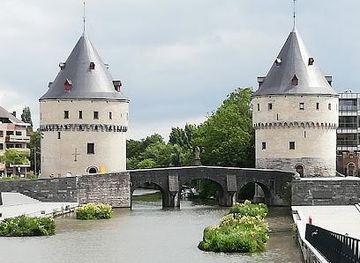
Kortrijk is a compact city in West Flanders, close to the French border and shaped by the River Lys. Its historic centre brings together medieval guild architecture, elegant civic buildings and remnants of the fortified city, with the Broel Towers standing as the most recognisable survivors of its defensive past. Around the Grote Markt, stepped gables and lively terraces frame the Belfry, while the Begijnhof offers a quieter sequence of whitewashed houses beside the Church of Our Lady.Read more about Kortrijk
Design, Culture and Contemporary Character
Exploring West Flanders
When is the best time to visit Kortrijk?
Best: June–August · 20–22°C| Month | High (°C) | Rainfall (mm) |
|---|---|---|
| January | 8 | 70 |
| February | 8 | 60 |
| March | 11 | 60 |
| April | 14 | 60 |
| May | 18 | 70 |
| June (best) | 20 | 80 |
| July (best) | 22 | 90 |
| August (best) | 22 | 90 |
| September | 19 | 80 |
| October | 15 | 80 |
| November | 12 | 80 |
| December | 8 | 70 |
Getting to and around Kortrijk
How to get there
Transportation
Best attractions in Kortrijk
Kortrijk’s compact centre rewards gradual exploration rather than a checklist of distant sights. The Belfry rises above the Grote Markt, where historic façades and cafés establish the city’s civic heart, while the nearby Begijnhof offers a tranquil ensemble of whitewashed houses and the Church of Our Lady. Across the Leie, the Broel Towers provide one of the city’s defining views and a tangible reminder of its medieval fortifications. Texture, housed in a former flax warehouse, explores the region’s linen and textile heritage through objects, personal stories and industrial context. The Groeninge Monument and surrounding memorial spaces connect the city to the Battle of the Golden Spurs. Along the river, landscaped banks and former industrial areas create room for walking and cycling, while Kortrijk 1302 interprets the battle and its later cultural significance. Together, these attractions show how commerce, conflict, craft and contemporary design have shaped the city.
-
Heritage preservation
Broel Towers
Visit Broel Towers in Kortrijk for a captivating journey through medieval history and stunning architectural beauty along the River Leie.
4 min walk · 0.3 km from city centre
-
Performing arts theater
Courtrai City Theater
Experience the vibrant cultural scene at Courtrai City Theater, a performing arts hub in Kortrijk showcasing exceptional performances.
3 min walk · 0.2 km from city centre
-
Heritage preservation
Belfry of Courtrai
Experience the rich history and stunning architecture of the Belfry of Courtrai, a UNESCO World Heritage site in the heart of Kortrijk, Belgium.
1 min walk · 0.1 km from city centre
-
Park
Queen Astrid Park
Explore the beauty of Queen Astrid Park in Kortrijk, a peaceful sanctuary featuring lush landscapes and recreational fun for all ages.
10 min walk · 0.8 km from city centre


Best landmarks in Kortrijk
The Belfry of Kortrijk, rising from the Grote Markt, is the city’s principal civic landmark and part of the historic market square’s layered architectural setting. The Broel Towers, positioned on opposite banks of the Lys, are surviving medieval defence towers and symbols of Kortrijk’s relationship with the river. The Begijnhof, with its small houses, chapel and carefully enclosed layout, represents the long religious and social presence of beguines in the city. The Church of Our Lady contains important historical associations with the former collegiate complex, while the Town Hall on the Grote Markt expresses the civic importance of the medieval and early modern town. Beyond the centre, the Groeninge Monument commemorates the Flemish victory of 1302 and the Groeningepoort marks the memory of the battlefield. Together, these structures connect Kortrijk’s religious life, municipal authority, military history and regional identity.
-
Heritage preservation
Beguinage of Courtrai
Explore the serene Beguinage of Courtrai, a UNESCO World Heritage site filled with historic charm and tranquil gardens in the heart of Belgium.
2 min walk · 0.2 km from city centre
-
Heritage preservation
Broel Towers
Explore the iconic Broel Towers in Kortrijk, a historical gem showcasing Belgium's rich architectural heritage and medieval history.
4 min walk · 0.3 km from city centre
-
Heritage preservation
Belfry of Courtrai
Explore the Belfry of Courtrai, a UNESCO World Heritage site showcasing stunning Gothic architecture and breathtaking views of Kortrijk.
1 min walk · 0.1 km from city centre
-
Technology museum
TEXTURE - Flax & River Lys Museum
Explore the textile heritage of Kortrijk at TEXTURE - Flax & River Lys Museum, where innovation meets tradition in an engaging museum experience.
9 min walk · 0.7 km from city centre


Explore Kortrijk on the map
Plan your Kortrijk trip on one map. See where the top attractions, landmarks, restaurants, bars and hotels are, find what's near where you're staying, and book hotels and experiences in a few clicks.
Best hotels in Kortrijk
Best restaurants in Kortrijk
Kortrijk’s dining culture reflects West Flanders and the wider Belgian tradition of carefully made, generous food rather than a single distinctive local cuisine. Menus commonly draw on beef, pork, poultry, seasonal vegetables, North Sea fish and farmhouse produce, with Belgian fries, stews and rich sauces appearing in traditional brasseries. Beer is an important part of the table, and cafés often offer local and regional bottles alongside lighter meals. Around the Grote Markt, Onze-Lieve-Vrouwestraat and the central shopping lanes, visitors find cafés, bakeries, casual restaurants and more polished dining rooms, while market activity and specialist food shops provide opportunities for cheese, chocolate and baked goods. The city’s textile past is not usually expressed through food, but its position between inland Flanders and the French border helps explain the mixture of Flemish comfort cooking, French-influenced technique and contemporary Belgian menus.
-
Irish pub
Irish Mary's
Experience authentic Irish hospitality at Irish Mary's in Kortrijk - where great food meets great company!
4 min walk · 0.3 km from city centre
-
Hamburger
Paul's Fresh Food Boutique
Discover delicious burgers made from fresh ingredients at Paul's Fresh Food Boutique in Kortrijk - a culinary gem for every burger lover.
6 min walk · 0.5 km from city centre
-
Grill
Ribs 'n Beer Kortrijk
Experience delicious grilled meats and local beers at Ribs 'n Beer in Kortrijk - the perfect dining spot for meat lovers.
2 min walk · 0.2 km from city centre
-
French
Balthazar café-bistro
Discover the charm of French cuisine at Balthazar Café-Bistro in Kortrijk - where every meal is a celebration of taste and tradition.
7 min walk · 0.5 km from city centre


Best bars in Kortrijk
Evenings in Kortrijk centre on convivial cafés, beer bars, wine-led venues and restaurants rather than a large-scale nightclub scene. The Grote Markt and surrounding streets are the principal areas for a drink after sightseeing, with terraces in warmer weather and quieter interiors during the colder months. Belgian beer culture is central, but the city also supports cocktail bars, cafés and venues used for live music or cultural programming. Concerts, theatre and exhibitions at local cultural institutions provide alternatives to bar-hopping, while events connected with Kortrijk Xpo can bring temporary evening activity beyond the historic core. The atmosphere is generally sociable and regional rather than relentlessly late-night; visitors should expect nightlife to vary according to the day, season and event calendar, and should check current venue information rather than assume every place operates late.
-
Irish pub
Irish Mary's
Discover the warmth of Irish culture at Irish Mary's, a charming pub in Kortrijk offering traditional fare and a lively atmosphere.
4 min walk · 0.3 km from city centre
-
Cocktail bar
La Bodeguita del Medio
Experience the vibrant cocktail culture at La Bodeguita del Medio in Kortrijk, where expertly crafted drinks meet a lively atmosphere.
3 min walk · 0.3 km from city centre
-
Pub
Gainsbar
Experience the vibrant atmosphere and local flavors at Gainsbar, Kortrijk's favorite pub and beer hall.
4 min walk · 0.3 km from city centre
-
Cocktail bar
The Lab - Social Club Kortrijk
Experience the vibrant nightlife of Kortrijk at The Lab - Social Club, where expertly crafted cocktails and entertainment await.
3 min walk · 0.2 km from city centre


Best nightclubs in Kortrijk
Evenings in Kortrijk centre on convivial cafés, beer bars, wine-led venues and restaurants rather than a large-scale nightclub scene. The Grote Markt and surrounding streets are the principal areas for a drink after sightseeing, with terraces in warmer weather and quieter interiors during the colder months. Belgian beer culture is central, but the city also supports cocktail bars, cafés and venues used for live music or cultural programming. Concerts, theatre and exhibitions at local cultural institutions provide alternatives to bar-hopping, while events connected with Kortrijk Xpo can bring temporary evening activity beyond the historic core. The atmosphere is generally sociable and regional rather than relentlessly late-night; visitors should expect nightlife to vary according to the day, season and event calendar, and should check current venue information rather than assume every place operates late.
-
Cocktail bar
The Lab - Social Club Kortrijk
Experience the vibrant nightlife of Kortrijk at The Lab, a social club known for its exquisite cocktails and lively atmosphere.
3 min walk · 0.2 km from city centre
-
Karaoke bar
Karaoke Pitch
Experience the ultimate night out at Karaoke Pitch in Kortrijk, Belgium - where music, laughter, and cocktails come together for an unforgettable evening.
19 min walk · 1.5 km from city centre
-
Club
Go Loco @ Poco-Loco - Kortrijk
Unleash your energy at Go Loco @ Poco-Loco, Kortrijk's premier nightlife destination for dancing and socializing in an electrifying atmosphere.
17 min walk · 1.3 km from city centre
-
Night club
the Cantor
Experience the vibrant nightlife at De Cantor, Kortrijk's premier night club, where music, dancing, and affordable drinks come together for an unforgettable evening.
10 min drive · 3.4 km from city centre


Best shops in Kortrijk
Shopping in Kortrijk is concentrated in the pedestrianised centre around the Grote Markt, Lange Steenstraat, Steenpoort and K in Kortrijk, combining familiar Belgian and international retailers with independent shops, cafés and specialist businesses. The central streets are convenient for fashion, homeware and gifts, while bakeries, chocolatiers, cheese shops and delicatessens offer edible souvenirs associated with Belgian food culture. Market trading and seasonal events add a more local dimension, although the exact selection and days vary. Visitors interested in the region’s heritage can look for linen and textile-related goods, reflecting Kortrijk’s historic flax industry, as well as Belgian beer, confectionery and design objects. The city’s retail character is urban but manageable: modern shopping is interwoven with older façades and squares rather than isolated in a single suburban complex.
-
Shopping mall
Ring Kortrijk
Discover Ring Kortrijk: A shopping paradise blending retail, dining, and entertainment in the heart of Belgium.
6 min drive · 2.0 km from city centre
-
Shopping mall
K in Kortrijk
Discover K in Kortrijk: Your ultimate shopping destination with diverse stores, delicious dining, and fun entertainment in the heart of Kortrijk, Belgium.
5 min walk · 0.4 km from city centre
-
Store
Euro Shop Kortrijk
Explore Euro Shop Kortrijk for an exciting shopping adventure with diverse products and unbeatable prices in the heart of Belgium.
14 min walk · 1.1 km from city centre
-
Electronics store
MediaMarkt Kortrijk
Explore cutting-edge gadgets and electronics at MediaMarkt Kortrijk, the ultimate destination for tech enthusiasts in Belgium.
5 min walk · 0.4 km from city centre


Get your free copy of our complete guide to Kortrijk, delivered straight to you.
Everything on this page, from attractions and restaurants to essentials and local phrases, in one PDF you can read offline, print or share.
Already have an account? Sign in
Your Kortrijk guide is ready.
We'll send it to · Not you? Sign out

Getting your guide ready…
We are putting together a fresh copy of the Kortrijk guide. This can take up to a minute.
This can take a few moments. If your browser asks, choose Allow so the download can start. You'll find the guide in your Downloads folder.
Nothing happened? Download it again
Sorry, the guide is taking longer than usual. Please try again in a minute, or get it by email instead.
Kortrijk essentials
Currency and Payment
Safety
Emergency Situations
Do's and Don'ts
Local Tips
From Eve
Local phrases worth knowing
You don't need to get them perfect. A few words go a long way, and locals appreciate the effort.
Basics
| English | Local | Say it |
|---|---|---|
| Hello | Hallo | [ha-lo] |
| Goodbye | Tot ziens | [tot zeens] |
| Yes | Ja | [ya] |
| No | Nee | [nee] |
| Please/You're welcome | Alstublieft | [al-stu-bleeft] |
| Thank you | Dank u | [dank oo] |
| Excuse me/Sorry | Sorry | [sor-ee] |
| How are you? | Hoe gaat het? | [hoo gaat het] |
| Fine. And you? | Goed. En met jou? | [hoed. en met yow] |
| Do you speak English? | Spreekt u Engels? | [spreekt oo engels] |
| I don't understand | Ik begrijp het niet | [ik buh-greypt het neet] |
Eating & Drinking
| English | Local | Say it |
|---|---|---|
| I'd like to see the menu, please | Ik wil graag de menukaart zien, alstublieft | [ik vil khraag de menu-kart zien, al-stu-bleeft] |
| I don't eat meat | Ik eet geen vlees | [ik eet khayn vlays] |
| Cheers! | Proost! | [prohst] |
| I would like to pay, please | Ik wil graag betalen, alstublieft | [ik vil khraag buh-tah-len, al-stu-bleeft] |
Emergencies
| English | Local | Say it |
|---|---|---|
| Help! | Help! | [help] |
| Go away! | Ga weg! | [gha wekh] |
| Call the Police! | Bel de politie! | [bel de po-lee-see] |
| Call a doctor! | Bel een dokter! | [bel ayn dok-ter] |
| I'm lost | Ik ben verdwaald | [ik ben fer-dwahld] |
| I'm ill | Ik ben ziek | [ik ben zayk] |
Shopping
| English | Local | Say it |
|---|---|---|
| I'd like to buy... | Ik wil graag kopen... | [ik vil khraag koh-pen] |
| I'm just looking | Ik ben gewoon aan het kijken | [ik ben guh-woon ahn het kee-ken] |
| How much is it? | Hoeveel kost het? | [hoo-veyl kost het] |
| That's too expensive | Dat is te duur | [dat is tuh doo-r] |
| Can you lower the price? | Kunt u de prijs verlagen? | [kunt oo duh preys ver-la-ghen] |
Time & Numbers
| English | Local | Say it |
|---|---|---|
| What time is it? | Hoe laat is het? | [hoo laht is het] |
| It's one o'clock | Het is één uur | [het is ayn oor] |
| Half past (10) | Half tien | [half teen] |
| Morning | Ochtend | [ohk-tent] |
| Afternoon | Namiddag | [na-mit-dahkh] |
| Evening | Avond | [ah-vont] |
| Yesterday | Gisteren | [ghis-te-ren] |
| Today | Vandaag | [vahn-dahkh] |
| Tomorrow | Morgen | [mor-ghen] |
| 1 | Eén | [aayn] |
| 2 | Twee | [tway] |
| 3 | Drie | [dree] |
| 4 | Vier | [veer] |
| 5 | Vijf | [vayf] |
| 6 | Zes | [zehs] |
| 7 | Zeven | [zeh-ven] |
| 8 | Acht | [ah-kh-t] |
| 9 | Negen | [nay-khen] |
| 10 | Tien | [teen] |
Transport & Directions
| English | Local | Say it |
|---|---|---|
| Where's a/the...? | Waar is een/de...? | [vahr is ayn/de] |
| What's the address? | Wat is het adres? | [vat is het ah-dres] |
| Can you show me (on the map)? | Kunt u mij dat laten zien (op de kaart)? | [kunt oo may daht la-ten zeen (op de kart)] |
| When's the next (bus)? | Wanneer is de volgende (bus)? | [ven-er is de vol-gen-de (bus)] |
| A ticket (to ....) | Een ticket (naar ....) | [ayn ticket (nar)] |
History of Kortrijk
Roman Roots and Early Settlement
Kortrijk developed near an important crossing of the River Lys, in a landscape already occupied before the medieval town emerged. The Romans established a settlement known as Cortoriacum in the region, connected to wider roads and river routes. Although much of the visible city belongs to later centuries, the Roman name survives in the modern form Kortrijk and indicates the strategic importance of the site. After the decline of Roman authority, settlement patterns changed, but the river crossing remained valuable. Medieval growth was encouraged by local waterways, agricultural production and the town’s position between the interior of Flanders and northern France.
Medieval Cloth and Urban Growth
During the high Middle Ages, Kortrijk became an important centre within the commercial and political landscape of the County of Flanders. Cloth production and trade brought wealth, while the town’s markets and river access supported an expanding urban community. Religious foundations, civic institutions and defensive works developed alongside this prosperity. The Begijnhof, founded in the thirteenth century, reflects the presence of beguines, women who lived in a religious community without taking monastic vows. The Belfry, guild buildings and defensive towers visible today are later or reconstructed reminders of the civic confidence created during this period.
The Battle of the Golden Spurs
On 11 July 1302, the Battle of the Golden Spurs took place near Kortrijk during the conflict between the French crown and the towns of Flanders. Flemish urban militias defeated a French force of knights, an event that became a powerful symbol in later Flemish historical memory. The battle was fought outside the modern centre, near the Groeninge field, rather than in the town’s streets. Its name refers to the gilded spurs collected from fallen French knights. In the nineteenth and twentieth centuries, the event was drawn into Flemish cultural and political narratives, and 11 July is now celebrated as the official holiday of the Flemish Community.
Burgundian Rule and Conflict
The incorporation of Flanders into the Burgundian state in the fifteenth century brought Kortrijk into a larger political structure linking prosperous towns across the Low Countries. Trade, religious foundations and civic life continued, although the region experienced repeated military pressures and political upheaval. The city’s strategic location made it vulnerable during conflicts involving France, the Habsburg Netherlands and later European powers. Fortifications were altered and damaged over time, explaining why only fragments and selected towers survive. The Broel Towers, standing on opposite sides of the Lys, are particularly important remnants of the medieval defensive system.
Textile Industry and Industrial Change
From the early modern period into the nineteenth and twentieth centuries, textile production remained central to Kortrijk’s economy. Flax cultivation in the surrounding region supplied raw material for linen, while spinning, weaving and finishing connected the city to international markets. Industrialisation transformed production and the urban landscape, bringing factories, warehouses and new working neighbourhoods alongside older commercial streets. The textile trade also shaped family life, labour relations and migration. Today, the Texture museum preserves and interprets this history, while the Leie’s renovated banks and former industrial areas show how the city has adapted parts of its manufacturing inheritance for public and cultural use.
War, Reconstruction and Renewal
Kortrijk suffered damage during both World Wars, particularly during the First World War when the city’s position near the Western Front brought military activity and disruption. The Second World War brought occupation and further hardship before liberation in 1944. Reconstruction and post-war modernisation altered parts of the centre, but numerous historic buildings remained or were restored. In recent decades, investment in public spaces, the Leie waterfront and cultural institutions has strengthened the city’s contemporary identity. Kortrijk now combines a preserved medieval core with design-led urban projects, events and services associated with a regional Belgian centre.
Travel experiences inspired by this city


Swipe for more travel diaries
Kortrijk in Photos
Browse through our photo collection highlighting the charm and character of the destination.
Cities near Kortrijk
The closest cities to Kortrijk, if you have time for more than one stop.
-
-

-
-

-


Swipe for more cities
Explore more

Explore more of Belgium
Discover Belgium: A blend of medieval charm, culinary delights, and stunning landscapes. Explore historic cities, savor exquisite chocolates, and enjoy a perfect getaway.
Explore Belgium