

Vieux Rouen (Rouen) Travel Guide - Free
Explore Vieux Rouen in Rouen with Evendo's free guide. Find the best shops, historic streets, restaurants, and gems on web or mobile.


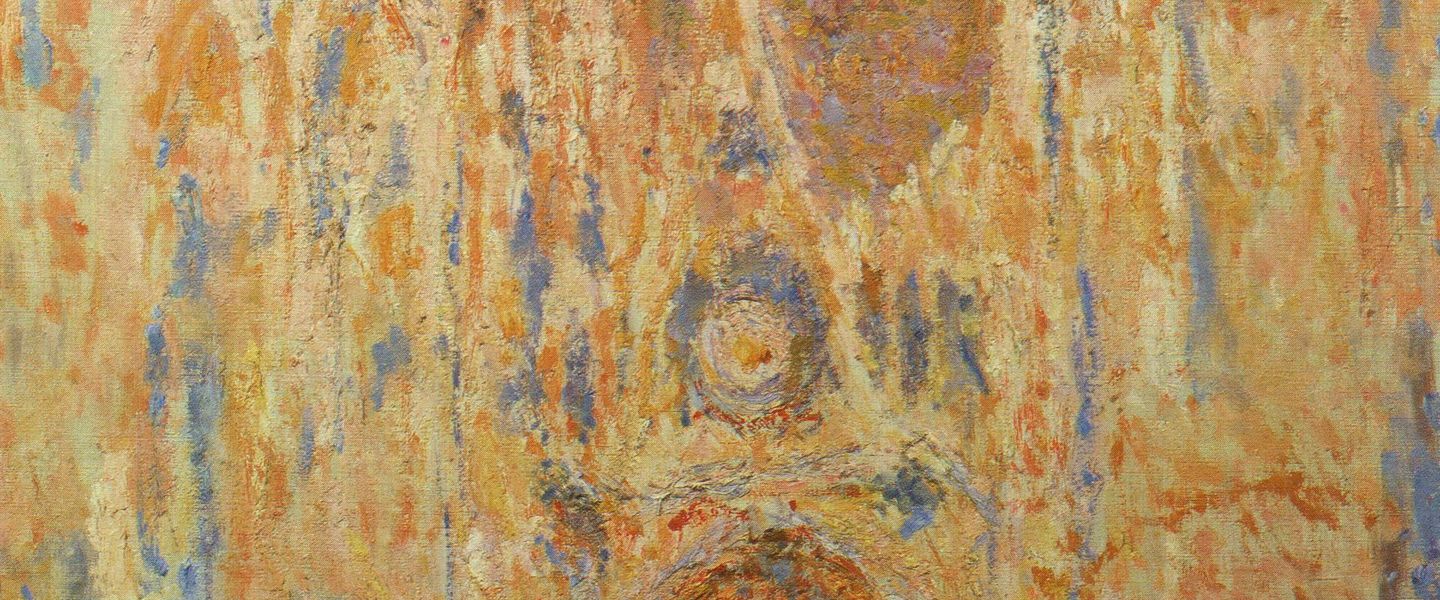


Vieux Rouen blends Gothic churches, half-timbered lanes, cathedral views, museum visits, Norman cuisine and lively cafés in France’s historic Rouen centre.
A Historic Centre Shaped by the Seine
Vieux Rouen occupies the historic core of Rouen, where narrow streets, medieval churches and carefully restored timber-framed houses gather around the cathedral and the old market quarter. The area is compact enough to explore on foot, yet its layered architecture makes every turn revealing: Gothic façades stand beside Renaissance details, classical townhouses and buildings reconstructed after wartime damage. The Seine lies just beyond the central streets, while the pedestrianised Rue du Gros-Horloge forms the principal link between the cathedral and the Place du Vieux-Marché.Read more about Vieux Rouen
Churches, Courtyards and Cultural Memory
Markets, Food and Everyday Street Life
Best attractions in Vieux Rouen
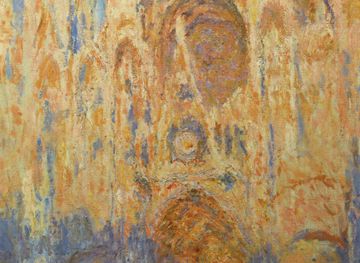
Vieux Rouen's attractions are concentrated within an exceptionally walkable historic centre. Notre-Dame de Rouen provides the central visual reference, with its celebrated Gothic façade, deep interior and association with Claude Monet's cathedral paintings. From there, Rue du Gros-Horloge leads beneath the Renaissance clock arch towards the Place du Vieux-Marché, where the Historial Jeanne d'Arc and the modern Church of Joan of Arc interpret the city's connection with the fifteenth-century heroine. Saint-Maclou, the Aître Saint-Maclou and the former abbey church of Saint-Ouen offer contrasting encounters with medieval and early-modern Rouen. Cultural visits can continue at the Musée Le Secq des Tournelles, housed in a former church and devoted to wrought iron, while the Musée des Beaux-Arts lies just beyond the tightest historic streets. Squares, courtyards, independent galleries and the approach to the Seine make the area rewarding between formal visits.
-
Tourist attraction
place du Vieux-Marché
Discover Rouen's Place du Vieux-Marché: where history, architecture, and vibrant market life converge in a captivating experience.
5 min walk · 0.4 km from neighbourhood centre
-
Monument
Le Gros-Horloge
Discover Rouen's iconic 14th-century astronomical clock, a masterpiece of engineering and a symbol of the city's rich history.
3 min walk · 0.2 km from neighbourhood centre
-
Catholic church
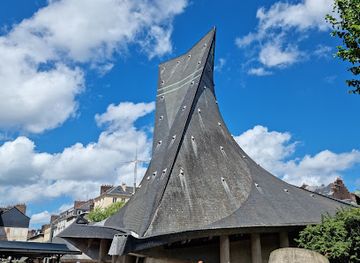
St Joan of Arc's Church
A modern church in Rouen honoring Joan of Arc, built on the site of her martyrdom, featuring stunning stained glass and symbolic architecture.
5 min walk · 0.4 km from neighbourhood centre
-
Observation deck
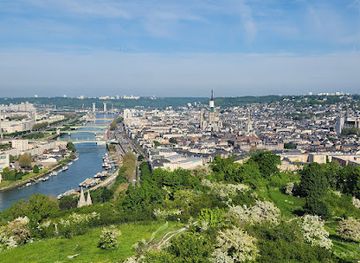
Rouen Panorama De La Côte Sainte Catherine
Experience Rouen's beauty from above: panoramic views, historic charm, and natural splendor await at Côte Sainte-Catherine.
5 min drive · 1.5 km from neighbourhood centre


Best landmarks in Vieux Rouen
The landmark structure of Vieux Rouen is Notre-Dame de Rouen, whose layered Gothic architecture and high west façade dominate the historic centre. Nearby, the Gros-Horloge combines a medieval gateway with a Renaissance clock mechanism and remains one of the clearest symbols of the city. Saint-Maclou is notable for its richly ornamented late-Gothic design, while the Aître Saint-Maclou preserves a rare Renaissance ossuary courtyard decorated with macabre carvings and motifs. The former abbey church of Saint-Ouen, facing its public garden, reflects the scale and importance of Rouen's monastic institutions. The archiepiscopal buildings associated with the cathedral and Joan of Arc's trial add historical depth, as does the Place du Vieux-Marché, the traditional market area linked to Joan of Arc's execution. Together these places show how religion, civic authority, commerce and memory shaped the neighbourhood.
-
Cathedral
Cathédrale Notre-Dame de Rouen
Discover the grandeur of Cathédrale Notre-Dame de Rouen, a stunning Gothic masterpiece and a historic landmark in the heart of Normandy.
4 min walk · 0.3 km from neighbourhood centre
-
Tourist attraction
place du Vieux-Marché
Explore the historic Place du Vieux-Marché in Rouen, a lively square offering rich history and a vibrant fresh food market experience.
5 min walk · 0.4 km from neighbourhood centre
-
Monument
Le Gros-Horloge
Discover the majestic Le Gros-Horloge, Rouen's iconic 14th-century astronomical clock, a must-see monument steeped in history and charm.
3 min walk · 0.2 km from neighbourhood centre
-
Museum
Historial Jeanne d’Arc
Explore the life and legacy of Joan of Arc at the Historial Jeanne d'Arc, a captivating museum in Rouen that brings history to life.
4 min walk · 0.3 km from neighbourhood centre


Explore Vieux Rouen on the map
A handpicked selection of must-see spots in Vieux Rouen, mapped for you.
Best hotels in Vieux Rouen
Best restaurants in Vieux Rouen
Dining in Vieux Rouen ranges from traditional Norman cooking to contemporary cafés, international restaurants, crêperies, bakeries and informal places suited to a short break between monuments. The streets around Rue du Gros-Horloge and the Place du Vieux-Marché contain much of the visitor-facing choice, while Rue Eau-de-Robec has a more intimate setting around older buildings and former watercourse routes. Regional flavours appear through cider, Normandy cheeses, butter, seafood, apples and pastries, although the centre is not limited to a single culinary tradition. Market food and bakery stops offer an easy way to sample local produce without committing to a long meal. Restaurants occupy historic façades and compact premises, so menus and service styles vary considerably; checking current arrangements is sensible, particularly outside the busiest periods. The best dining experiences complement a day of walking rather than relying solely on views of the main monuments.
-
Haute French
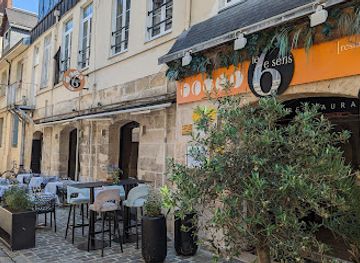
Le 6ème Sens
Experience exquisite haute French cuisine at Le 6ème Sens in Rouen, where every dish promises a delightful culinary journey.
7 min walk · 0.5 km from neighbourhood centre
-
Restaurant
Marcel Apéro Bistro
Discover authentic French cuisine at Marcel Apéro Bistro in Rouen's historic Vieux Marché square - where flavor meets tradition.
6 min walk · 0.5 km from neighbourhood centre
-
French
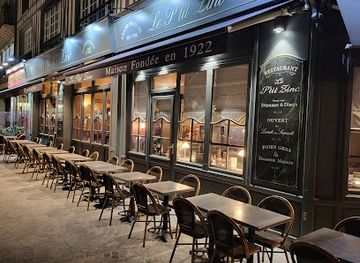
le P'tit Zinc
Discover le P'tit Zinc: A hidden gem in Rouen serving exquisite French cuisine in a charming bistro setting.
5 min walk · 0.4 km from neighbourhood centre
-
Fine Dining
Cancan
Discover Cancan in Rouen - where fine dining meets artistic culinary mastery amidst elegant surroundings.
6 min walk · 0.5 km from neighbourhood centre


Best bars in Vieux Rouen
Nightlife in Vieux Rouen is centred more on bars, cafés and restaurants than on large nightclubs. The Place du Vieux-Marché and streets near Rue du Gros-Horloge attract evening diners and drinkers, while bars around Rue Eau-de-Robec contribute a more local, small-scale atmosphere. Historic premises, student-friendly cafés and contemporary cocktail or beer venues coexist with quieter residential lanes, so the character changes noticeably within a few minutes' walk. The centre can feel animated around dinner and later at weekends, but it is not uniformly loud, and many streets become calm once restaurants close. Live music and cultural events may appear in individual venues or city institutions, though programmes vary. Visitors should keep noise down when leaving bars, particularly near homes, and should distinguish the intimate centre from Rouen's larger clubbing areas elsewhere in the city.
-
Bar
Le Prime Time
Discover the vibrant atmosphere and exquisite beverages at Le Prime Time, the go-to bar for tourists in Rouen, France.
7 min walk · 0.5 km from neighbourhood centre
-
Bar
Delirium Café Rouen
Experience the vibrant atmosphere and extensive beer selection at Delirium Café Rouen, the ultimate destination for beer lovers and night owls.
3 min walk · 0.3 km from neighbourhood centre
-
Cocktail bar
L’Absinthe Cocktail
Experience the vibrant nightlife of Rouen at L’Absinthe Cocktail, where creative mixology meets exquisite tapas in a charming setting.
5 min walk · 0.4 km from neighbourhood centre
-
Bar
Le Popcorn
Experience the vibrant nightlife of Rouen at Le Popcorn, a lively bar with craft cocktails and local brews in a cozy atmosphere.
7 min walk · 0.6 km from neighbourhood centre


Best nightclubs in Vieux Rouen
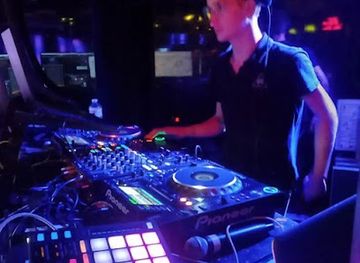
Nightlife in Vieux Rouen is centred more on bars, cafés and restaurants than on large nightclubs. The Place du Vieux-Marché and streets near Rue du Gros-Horloge attract evening diners and drinkers, while bars around Rue Eau-de-Robec contribute a more local, small-scale atmosphere. Historic premises, student-friendly cafés and contemporary cocktail or beer venues coexist with quieter residential lanes, so the character changes noticeably within a few minutes' walk. The centre can feel animated around dinner and later at weekends, but it is not uniformly loud, and many streets become calm once restaurants close. Live music and cultural events may appear in individual venues or city institutions, though programmes vary. Visitors should keep noise down when leaving bars, particularly near homes, and should distinguish the intimate centre from Rouen's larger clubbing areas elsewhere in the city.
-
Disco club
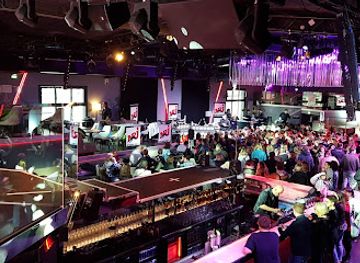
So Rouen
Experience the vibrant nightlife at So Rouen, where gourmet dining meets electrifying dance floors in the heart of Rouen.
5 min drive · 1.8 km from neighbourhood centre
-
Disco club
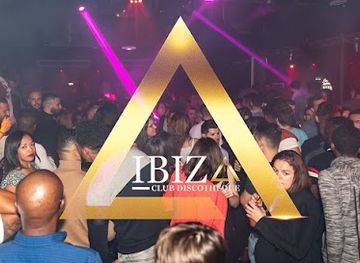
Ibiza Club Rouen
Experience the vibrant nightlife at Ibiza Club Rouen, where music, dance, and fun come together in a stunning disco atmosphere.
9 min walk · 0.7 km from neighbourhood centre
-
Night club
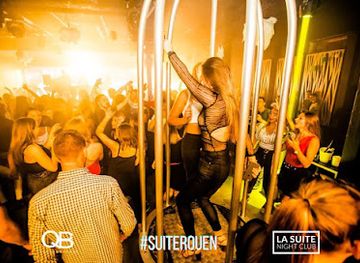
La Suite Club
Dive into Rouen's nightlife at La Suite Club, a dynamic dance club featuring live music, themed events, and an electric atmosphere for all night owls.
14 min walk · 1.1 km from neighbourhood centre
-
Night club
Le BOHO Club
Dive into Rouen's nightlife at Le BOHO Club, where music, dancing, and a vibrant atmosphere guarantee an unforgettable night out.
6 min walk · 0.4 km from neighbourhood centre
Best shops in Vieux Rouen
Shopping in Vieux Rouen is concentrated along the pedestrianised Rue du Gros-Horloge, the approaches to the Place du Vieux-Marché and the smaller streets surrounding the cathedral and Saint-Maclou. Visitors find bakeries, confectioners, cafés, bookshops, galleries, gift shops and independent retailers among the historic façades, alongside familiar high-street names. The commercial atmosphere is strongest on the main pedestrian route, while side streets offer more specialist and locally oriented browsing. Market activity around the Place du Vieux-Marché brings produce, flowers and prepared foods into the neighbourhood at designated times, linking present-day commerce with the area's long trading history. Normandy products such as cider, cheeses, biscuits and apple-based specialities are widely represented, although stock varies between businesses. The centre is better suited to small purchases and browsing than to a single large shopping complex, and many of its pleasures come from the architecture between shops.
-
Department store
Printemps Rouen
Explore Printemps Rouen, a premier department store offering a diverse selection of fashion, beauty, and luxury goods in the heart of Normandy.
3 min walk · 0.2 km from neighbourhood centre
-
Department store
Galeries Lafayette Rouen
Discover style and elegance at Galeries Lafayette Rouen, the premier department store for fashion, beauty, and accessories in the heart of Rouen.
5 min walk · 0.4 km from neighbourhood centre
-
Gift shop
ABYstyle
Explore ABYstyle in Rouen for unique gifts and collectibles that capture the essence of popular culture and French artistry.
1 min walk · 0.1 km from neighbourhood centre
-
Collectibles store
La Muchette
Explore unique antiques and collectibles at La Muchette, a charming store in Rouen that offers a glimpse into the region's rich history and culture.
6 min walk · 0.5 km from neighbourhood centre


Vieux Rouen essentials
Getting There
Getting Around
Safety
Emergency Situations
Do's and Don'ts
Local Tips

From Eve
Local phrases worth knowing
You don't need to get them perfect. A few words go a long way, and locals appreciate the effort.
Basics
| English | Local | Say it |
|---|---|---|
| Hello | Bonjour | [bohn-zhoor] |
| Goodbye | Au revoir | [oh ruh-vwahr] |
| Yes | Oui | [wee] |
| No | Non | [nohn] |
| Please/You're welcome | S'il vous plaît/De rien | [seel voo pleh/dee ryen] |
| Thank you | Merci | [mehr-see] |
| Excuse me/Sorry | Excusez-moi/Désolé | [ehk-skew-zay mwa/day-zoh-lay] |
| How are you? | Comment ça va? | [koh-mohn sah vah] |
| Fine. And you? | Bien. Et vous? | [byen. ay voo] |
| Do you speak English? | Parlez-vous anglais? | [par-lay voo ahn-glay] |
| I don't understand | Je ne comprends pas | [zhuh nuh kohm-prahnd pah] |
Eating & Drinking
| English | Local | Say it |
|---|---|---|
| I'd like to see the menu, please | Je voudrais voir le menu, s'il vous plaît | [zhuh voo-dray vwar luh muh-noo, seel voo pleh] |
| I don't eat meat | Je ne mange pas de viande | [zhuh nuh mahnj pah duh vyand] |
| Cheers! | Santé! | [sahn-tay] |
| I would like to pay, please | Je voudrais payer, s'il vous plaît | [zhuh voo-dray pay-ay, seel voo pleh] |
Emergencies
| English | Local | Say it |
|---|---|---|
| Help! | Au secours! | [oh suh-koor] |
| Go away! | Allez-vous en! | [ah-lay voo zahn] |
| Call the Police! | Appelez la Police! | [ah-puh-lay lah poh-lees] |
| Call a doctor! | Appelez un médecin! | [ah-puh-lay uh mayd-sahn] |
| I'm lost | Je suis perdu | [zhuh swee pair-doo] |
| I'm ill | Je suis malade | [zhuh swee mah-lahd] |
Shopping
| English | Local | Say it |
|---|---|---|
| I'd like to buy... | Je voudrais acheter... | [zhuh voo-dray zah-shtay...] |
| I'm just looking | Je regarde juste | [zhuh ruh-gahrd zhoost] |
| How much is it? | Combien ça coûte? | [kohm-byen sah koot] |
| That's too expensive | C'est trop cher | [say troh shay] |
| Can you lower the price? | Pouvez-vous baisser le prix? | [poo-vay voo bay-say luh pree] |
Time & Numbers
| English | Local | Say it |
|---|---|---|
| What time is it? | Quelle heure est-il? | [kell uhr eh-teel] |
| It's one o'clock | Il est une heure | [eel eh oon uhr] |
| Half past (10) | Dix et demie | [dee ay duh-mee] |
| Morning | Matin | [mah-tahn] |
| Afternoon | Après-midi | [ah-prey mee-dee] |
| Evening | Soir | [swahr] |
| Yesterday | Hier | [yehr] |
| Today | Aujourd'hui | [oh-zhoor-dwee] |
| Tomorrow | Demain | [duh-mahn] |
| 1 | Un | [uhn] |
| 2 | Deux | [duh] |
| 3 | Trois | [trwah] |
| 4 | Quatre | [kah-truh] |
| 5 | Cinq | [sank] |
| 6 | Six | [sees] |
| 7 | Sept | [sept] |
| 8 | Huit | [weet] |
| 9 | Neuf | [nuff] |
| 10 | Dix | [dee] |
Transport & Directions
| English | Local | Say it |
|---|---|---|
| Where's a/the...? | Où est un/le...? | [oo eh uh/luh] |
| What's the address? | Quelle est l'adresse? | [kell eh la-dress] |
| Can you show me (on the map)? | Pouvez-vous me montrer (sur la carte)? | [poo-vay voo muh mohn-tray (surr lah kart)] |
| When's the next (bus)? | Quand est le prochain (bus)? | [kahn eh luh proh-shahn (bus)] |
| A ticket (to ....) | Un billet (pour ....) | [uhn bee-yay (poor)] |
History of Vieux Rouen
Medieval Rouen and the Cathedral Quarter
The historic centre developed around the Roman and medieval city of Rouen, whose position on the Seine made it an important centre of administration, religion and trade in Normandy. The cathedral quarter became the principal ecclesiastical focus, while streets leading towards the river and market areas supported craftsmen and merchants. Much of the visible medieval plan survives in the narrow street pattern, although individual buildings have been altered repeatedly. Notre-Dame de Rouen grew through successive campaigns from the twelfth century onwards, and its presence helped establish the dense historic core that visitors recognise today.
Markets, Guilds and Gothic Churches
During the later Middle Ages, commerce and skilled trades shaped the streets around the cathedral, the Gros-Horloge and the market areas. Churches including Saint-Maclou and Saint-Ouen reflected the wealth and institutional importance of the city, while timber-framed houses accommodated workshops, shops and households above narrow plots. The Gros-Horloge became both a civic gateway and a public timepiece, expressing the authority of the city and its calendar. The old market quarter also acquired lasting associations with food trading and public gathering, functions that remain visible around the Place du Vieux-Marché.
Religious Change and Joan of Arc
The sixteenth century brought religious conflict and changes to Rouen's institutions, but the historic centre retained its concentration of churches, civic buildings and commercial streets. Joan of Arc was tried in Rouen in 1431 and executed in the medieval market area; the present Place du Vieux-Marché commemorates that association, although its modern appearance is very different from the setting of the trial. The archiepiscopal complex now houses the Historial Jeanne d'Arc, which interprets the proceedings through multimedia displays and places the episode within the political and religious tensions of late-medieval Normandy.
War Damage and Modern Restoration
Industrial growth and modern urban change affected the old centre, but its historic character remained unusually legible. Bombing during the Second World War damaged parts of Rouen, including areas around the cathedral and the riverside approaches, and subsequent restoration combined repair with selective rebuilding. Later conservation work helped preserve timber-framed houses, churches and the Gros-Horloge while adapting former religious and civic buildings for public use. Today, Vieux Rouen functions as both a lived central district and a major heritage area, with tourism, local commerce, cultural institutions and everyday city life occupying the same streets.
Vieux Rouen in Photos
Browse through our photo collection highlighting the charm and character of the destination.
Neighbourhoods near Vieux Rouen
The closest neighbourhoods to Vieux Rouen, if you have time for more than one stop.
-

-

-


Swipe for more neighbourhoods
Explore more
Explore more of Rouen
Rouen, France, pairs Gothic architecture and Joan of Arc history with Seine-side museums, medieval lanes, markets and Normandy cuisine for city sightseeing.
Explore Rouen