

Compans-Caffarelli (Toulouse) Travel Guide - Free
Explore Compans-Caffarelli in Toulouse with Evendo's free guide. Find the best shops, historic streets, restaurants, and gems on web or mobile.


Compans-Caffarelli in Toulouse pairs a Japanese garden, canal walks, conference venues and easy metro access with a calm, modern urban atmosphere.
A Central District with a Different Rhythm
Compans-Caffarelli occupies a useful position just north of Toulouse’s historic centre, between the Canal de Brienne, the busy boulevards around the city centre and the university and business districts beyond. Its character is more spacious and contemporary than that of the old town: broad avenues, office buildings, apartment blocks, conference facilities and landscaped public areas shape a district designed largely through late twentieth-century redevelopment. Yet the area is not simply a business quarter. Its best-known space, the Jardin japonais Pierre-Baudis, gives Compans-Caffarelli a remarkably tranquil centre, with ponds, bridges, clipped vegetation and a tea pavilion inspired by Japanese garden traditions.Read more about Compans-Caffarelli
The Japanese Garden and Canal Landscape
Business, Culture and Everyday Life
Best attractions in Compans-Caffarelli
The principal attraction in Compans-Caffarelli is the Jardin japonais Pierre-Baudis, a carefully designed garden with a pond, bridges, stone features, clipped trees and a traditional-style pavilion that offers a contemplative contrast to Toulouse’s modern business architecture. The surrounding Jardin Compans-Caffarelli adds lawns, mature planting and paths suitable for a gentle urban walk. Along the district’s edges, the Canal de Brienne provides a different kind of sightseeing, with towpaths and water views leading towards the Garonne and the historic centre. The Centre de Congrès Pierre Baudis is primarily a working events venue rather than a conventional tourist sight, but its contemporary architecture and public forecourt help explain the neighbourhood’s civic role. Visitors interested in urban change can also explore the broad boulevards, office developments and public spaces created on former institutional and military land.
-
Botanical garden
Pierre-Baudis Japanese Garden
Experience tranquility in Toulouse at the Pierre-Baudis Japanese Garden, a serene escape inspired by Kyoto's historic landscapes.
2 min walk · 0.1 km from neighbourhood centre
-
Tourist attraction
Jardin Compans-Caffarelli
Discover a serene escape in Toulouse at Jardin Compans-Caffarelli, featuring a Japanese garden, tranquil pond, and tributes to sister cities.
2 min walk · 0.1 km from neighbourhood centre
-
Tourist attraction
Statue de Carlos Gardel
A tribute to Carlos Gardel, the 'King of Tango,' in his likely birthplace of Toulouse, celebrating the global legacy of Argentine tango music and culture.
2 min walk · 0.2 km from neighbourhood centre


Best landmarks in Compans-Caffarelli
The Jardin japonais Pierre-Baudis is Compans-Caffarelli’s defining landmark, not only for its Japanese-inspired composition but also for the way it gives a distinct identity to a district of offices and conference buildings. Its pond, bridges, stone arrangements and pavilion create a carefully framed landscape unusual in Toulouse. The Canal de Brienne is an older infrastructural landmark, linking the city’s waterways with the Garonne and preserving a tree-lined corridor along the neighbourhood’s edge. The Centre de Congrès Pierre Baudis represents the area’s later transformation into a business and institutional quarter, while the wide boulevards and modern blocks reveal the scale of redevelopment on former military and administrative land. Compans metro station is a practical rather than monumental landmark, but its presence connects the district’s contemporary identity with Toulouse’s expanding public-transport network.
-
Botanical garden
Pierre-Baudis Japanese Garden
Discover the tranquil beauty of the Pierre-Baudis Japanese Garden in Toulouse, where nature and Japanese culture harmoniously intertwine.
2 min walk · 0.1 km from neighbourhood centre
-
Plaza
Place Saint-Pierre
Discover the vibrant atmosphere of Place Saint-Pierre, a charming plaza in Toulouse, perfect for relaxation, dining, and cultural exploration.
12 min walk · 1.0 km from neighbourhood centre
-
Garden
Jardin Compans-Caffarelli
Explore the beauty of Jardin Compans-Caffarelli, an enchanting garden in Toulouse offering a blend of tranquility and vibrant nature.
2 min walk · 0.1 km from neighbourhood centre
-
Tourist attraction
Statue de Carlos Gardel
Discover the rich cultural heritage of tango at the Statue of Carlos Gardel in Toulouse, an iconic monument celebrating music and artistry.
2 min walk · 0.2 km from neighbourhood centre


Explore Compans-Caffarelli on the map
A handpicked selection of must-see spots in Compans-Caffarelli, mapped for you.
Best hotels in Compans-Caffarelli
Best restaurants in Compans-Caffarelli
Compans-Caffarelli’s dining scene reflects its role as a business, conference and residential district rather than a dedicated restaurant quarter. Around the metro station, boulevard Lascrosses and the streets near the convention centre, visitors find practical cafés, hotel dining rooms, bakeries and restaurants serving French and international food to office workers, students and conference delegates. The range is most useful at lunchtime and early evening, while the atmosphere is generally more functional than that of the restaurant streets in central Toulouse. The neighbourhood’s proximity to the historic centre means that a much broader choice is available within a short walk, but it is worth distinguishing those nearby establishments from Compans-Caffarelli itself. The district’s food identity is therefore tied less to one celebrated speciality than to an internationally oriented, convenient pattern of everyday dining shaped by offices, higher education and temporary visitors.
-
Restaurant
The Botanist Pub
Discover The Botanist Pub: A Vibrant Irish Tapas Bar in Toulouse Offering Delicious Food and Lively Entertainment.
5 min walk · 0.4 km from neighbourhood centre
-
French
Aux Pieds sous la Table
Discover authentic French cuisine at Aux Pieds sous la Table in Toulouse - where every meal is a celebration of flavor and tradition.
6 min walk · 0.5 km from neighbourhood centre
-
Fine Dining
Restaurant Michel Sarran
Experience exquisite French cuisine at Restaurant Michel Sarran in Toulouse - where culinary artistry meets exceptional service.
7 min walk · 0.6 km from neighbourhood centre
-
Restaurant
Barricot
Discover Barricot: An exquisite restaurant in Toulouse offering authentic French cuisine made with fresh local ingredients.
2 min walk · 0.2 km from neighbourhood centre


Best bars in Compans-Caffarelli
Compans-Caffarelli is not one of Toulouse’s principal nightlife districts, and its evening character is usually quieter than that of Saint-Pierre, the Carmes or the streets around place Saint-Georges. Hotel bars, restaurants and a limited selection of casual drinking venues serve conference visitors, local workers and students, particularly near boulevard Lascrosses and the convention centre. The Jardin japonais and office precincts are not entertainment zones after dark, so the neighbourhood suits a calm drink or an early meal more readily than club-hopping. Visitors seeking live music, late-night bars or larger dance venues generally need to continue towards the historic centre, which is nearby but belongs to different quarters. Evening walkers should remember that a business district can become relatively still once offices close and should use well-lit routes around the metro and canal.
-
Bar
The Botanist Pub
Experience the vibrant atmosphere of The Botanist Pub in Toulouse, where delicious Irish cuisine meets exceptional drinks and a lively ambiance.
5 min walk · 0.4 km from neighbourhood centre
-
Bar
BlastoDice
Experience the perfect blend of board games, tapas, and vibrant atmosphere at BlastoDice in Toulouse, a must-visit bar for gamers and food lovers.
5 min walk · 0.4 km from neighbourhood centre
-
Restaurant
Le Grand Zinc
Experience the vibrant culinary scene at Le Grand Zinc, a beloved restaurant in Toulouse offering exquisite tapas and local brews in a lively atmosphere.
4 min walk · 0.3 km from neighbourhood centre
-
Bar
Le Cactus
Discover the vibrant atmosphere of Le Cactus, a perfect blend of bar, brasserie, and coffee shop in the heart of Toulouse.
4 min walk · 0.3 km from neighbourhood centre


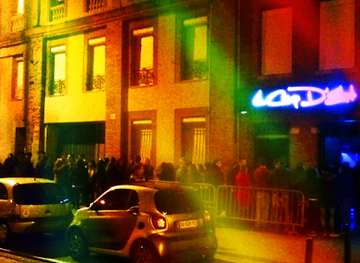
Best nightclubs in Compans-Caffarelli
Compans-Caffarelli is not one of Toulouse’s principal nightlife districts, and its evening character is usually quieter than that of Saint-Pierre, the Carmes or the streets around place Saint-Georges. Hotel bars, restaurants and a limited selection of casual drinking venues serve conference visitors, local workers and students, particularly near boulevard Lascrosses and the convention centre. The Jardin japonais and office precincts are not entertainment zones after dark, so the neighbourhood suits a calm drink or an early meal more readily than club-hopping. Visitors seeking live music, late-night bars or larger dance venues generally need to continue towards the historic centre, which is nearby but belongs to different quarters. Evening walkers should remember that a business district can become relatively still once offices close and should use well-lit routes around the metro and canal.
-
Adult entertainment club
L'Ecrin
Experience the allure of L'Ecrin in Toulouse, where adult entertainment meets fine dining and captivating performances for a night to remember.
5 min walk · 0.4 km from neighbourhood centre
-
Disco club
Péniche le Cri de la mouette
Discover the vibrant nightlife of Toulouse at Péniche le Cri de la Mouette, a unique floating disco club with great music and stunning views.
9 min walk · 0.7 km from neighbourhood centre
-
Disco club
Beta club Toulouse
Dive into the electrifying nightlife of Beta Club Toulouse, a premier disco club featuring pulsating beats and a vibrant atmosphere.
7 min walk · 0.5 km from neighbourhood centre
-
Night club
The Coup d'Etat
Discover the vibrant nightlife of Toulouse at The Coup d'Etat, where music, dance, and fun come together in a dynamic atmosphere.
10 min walk · 0.8 km from neighbourhood centre


Best shops in Compans-Caffarelli
Shopping in Compans-Caffarelli is mainly practical and service-oriented, with cafés, bakeries, pharmacies, convenience shops and small food businesses distributed around boulevard Lascrosses, the metro station and the office and residential streets. It does not have the specialist market culture or concentrated independent retail found in parts of Toulouse’s historic centre. Visitors staying locally may find the area useful for everyday provisions, while those looking for fashion, antiques, books, crafts or regional food should continue towards the central shopping streets and markets outside the neighbourhood. The commercial pattern reflects Compans-Caffarelli’s planning and functions: offices, higher education, hotels and housing rather than a historic trading street. The garden and canal are consequently more significant visitor experiences than retail destinations, although the surrounding services make the district convenient for a longer stay.
-
Shopping mall
Reflets Compans
Discover the vibrant shopping hub of Reflets Compans in Toulouse, offering diverse shops, dining options, and a unique cultural experience.
2 min walk · 0.2 km from neighbourhood centre
-
Vaporizer store
Vapostore Toulouse (Compans) - Cigarette Electronique
Explore an extensive selection of vaping products and accessories at Vapostore Toulouse, your go-to destination for electronic cigarettes in the heart of the city.
2 min walk · 0.2 km from neighbourhood centre
-
Home goods store
GiFi Toulouse Compans
Discover unique home goods and local treasures at GiFi Toulouse Compans, your ultimate shopping destination in the heart of France.
2 min walk · 0.2 km from neighbourhood centre
-
Home goods store
Habitat Toulouse
Discover stylish home goods, furniture, and decor at Habitat Toulouse, the ultimate destination for home enthusiasts in the heart of the city.
2 min walk · 0.2 km from neighbourhood centre


Compans-Caffarelli essentials
Getting There
Getting Around
Safety
Emergency Situations
Do's and Don'ts
Local Tips

From Eve
Local phrases worth knowing
You don't need to get them perfect. A few words go a long way, and locals appreciate the effort.
Basics
| English | Local | Say it |
|---|---|---|
| Hello | Bonjour | [bon-zhoor] |
| Goodbye | Au revoir | [oh-re-vwahr] |
| Yes | Oui | [wee] |
| No | Non | [nohn] |
| Please/You're welcome | S'il vous plaît/De rien | [seel voo pleh/dee ryen] |
| Thank you | Merci | [mehr-see] |
| Excuse me/Sorry | Excusez-moi/Désolé | [ex-kew-zay mwa/day-zoh-lay] |
| How are you? | Comment ça va? | [koh-mohn sah vah] |
| Fine. And you? | Bien. Et vous? | [byen. ay voo] |
| Do you speak English? | Parlez-vous anglais? | [par-lay voo ahn-glay] |
| I don't understand | Je ne comprends pas | [zhuh nuh kohm-prahnd pah] |
Eating & Drinking
| English | Local | Say it |
|---|---|---|
| I'd like to see the menu, please | Je voudrais voir la carte, s'il vous plaît | [zhuh voo-dray vwar lah kart, seel voo pleh] |
| I don't eat meat | Je ne mange pas de viande | [zhuh nuh mahnj pah duh vee-and] |
| Cheers! | Santé! | [sahn-tay] |
| I would like to pay, please | Je voudrais payer, s'il vous plaît | [zhuh voo-dray pay-ay, seel voo pleh] |
Emergencies
| English | Local | Say it |
|---|---|---|
| Help! | Au secours! | [oh se-coor] |
| Go away! | Allez-vous en! | [al-lay voo zahn] |
| Call the Police! | Appelez la police! | [ah-peh-lay lah po-lees] |
| Call a doctor! | Appelez un médecin! | [ah-peh-lay uh meh-deh-sahn] |
| I'm lost | Je suis perdu | [zhuh swee pair-doo] |
| I'm ill | Je suis malade | [zhuh swee mah-lahd] |
Shopping
| English | Local | Say it |
|---|---|---|
| I'd like to buy... | Je voudrais acheter... | [zhuh voo-dray ash-tay...] |
| I'm just looking | Je ne fais que regarder | [zhuh nuh feh keh ruh-gar-day] |
| How much is it? | Combien ça coûte? | [kohm-byen sah koot] |
| That's too expensive | C'est trop cher | [say troh shair] |
| Can you lower the price? | Pouvez-vous baisser le prix? | [poo-vez voo beh-say luh pree] |
Time & Numbers
| English | Local | Say it |
|---|---|---|
| What time is it? | Quelle heure est-il? | [kell ur eh-teel] |
| It's one o'clock | Il est une heure | [eel eh oon ur] |
| Half past (10) | Dix et demie | [dee ay duh-mee] |
| Morning | Matin | [ma-tan] |
| Afternoon | Après-midi | [ah-pray-mee-dee] |
| Evening | Soir | [swahr] |
| Yesterday | Hier | [year] |
| Today | Aujourd'hui | [oh-zhoor-dwee] |
| Tomorrow | Demain | [duh-man] |
| 1 | Un | [uhn] |
| 2 | Deux | [duh] |
| 3 | Trois | [twah] |
| 4 | Quatre | [kat] |
| 5 | Cinq | [sank] |
| 6 | Six | [sees] |
| 7 | Sept | [set] |
| 8 | Huit | [wheat] |
| 9 | Neuf | [nuff] |
| 10 | Dix | [dee] |
Transport & Directions
| English | Local | Say it |
|---|---|---|
| Where's a/the...? | Où est...? | [oo eh...] |
| What's the address? | Quelle est l'adresse? | [kell eh la-dress] |
| Can you show me (on the map)? | Pouvez-vous me montrer (sur la carte)? | [poo-vez voo muh mohn-tray (sur lah kart)] |
| When's the next (bus)? | Quand est le prochain (bus)? | [kahn eh luh pro-shahn (bus)] |
| A ticket (to ....) | Un billet (pour ....) | [uhn bee-yay (poor)] |
History of Compans-Caffarelli
Military Names and Open Ground
The name Compans-Caffarelli preserves the memory of two military figures associated with France’s Napoleonic period: General Jean-Dominique Compans and General Marie-François Auguste de Caffarelli du Falga. The area north of Toulouse’s old centre was long shaped by military land uses, barracks and institutional premises rather than by the dense medieval street pattern found south of the Capitol. Its position outside the historic core also left room for large plots and later infrastructure, helping to explain why the contemporary neighbourhood has a more open layout than adjoining central quarters.
The Canal de Brienne Connection
The Canal de Brienne, opened in 1776, forms an important historical and geographical reference for Compans-Caffarelli. Built to link the Canal du Midi with the Garonne, it allowed boats to avoid the difficult passage around the Bazacle and became part of Toulouse’s wider waterway network. Although the canal belongs to a much larger transport system, its towpath and tree-lined banks helped preserve a linear landscape beside the later-developed district. Today the waterway provides a visible link between Toulouse’s engineering history and the neighbourhood’s modern public spaces.
From Barracks to Business Quarter
During the later twentieth century, former military sites in the Compans-Caffarelli area were progressively released for urban redevelopment. Large plots were reorganised for offices, higher education, housing, hotels, public gardens and conference facilities, creating the business and institutional district recognised today. The transformation changed the area from a predominantly military landscape into a mixed urban quarter, while the retention of broad roads and open spaces gave it a different scale from the adjoining historic centre. The Centre de Congrès Pierre Baudis became one of the clearest expressions of this new civic and commercial role.
The Japanese Garden and Metro Era
The Jardin japonais was created within the Compans-Caffarelli redevelopment as a deliberately composed public garden reflecting Japanese landscape principles, and it later took the name Pierre-Baudis, honouring the former mayor of Toulouse. Its ponds, bridges and planted spaces introduced a strong cultural and visual identity to an otherwise modern district. A further change came with the opening of Toulouse Métro Line B in 2007, which gave Compans-Caffarelli a dedicated station and strengthened its connections with the city centre, universities and other northern districts.
Compans-Caffarelli in Photos
Browse through our photo collection highlighting the charm and character of the destination.
Neighbourhoods near Compans-Caffarelli
The closest neighbourhoods to Compans-Caffarelli, if you have time for more than one stop.
-

-
-

-


Swipe for more neighbourhoods
Explore more

Explore more of Toulouse
Toulouse, France’s Pink City, combines Roman and medieval heritage with aerospace museums, riverside walks, lively markets, southern cuisine and culture.
Explore Toulouse